
You may be wondering… Uzbekistan? Really?! What an odd choice, Silleck family. It feels a bit random – 4,000 kilometers in the opposite direction of any sensible route from Tokyo to Colorado. Rest assured, your confusion is entirely justified, as we had the exact same reaction! A former Soviet republic and only open to foreign travelers since 2016, Uzbekistan has not (until recently) been high on many American’s travel agendas.
When planning our year, we intentionally left three weeks open at the end of our itinerary for an unplanned adventure. Our goal was to stay flexible, listen to the universe as the year unfolded, connect with other travelers, and see if any obscure or unexpected destinations called to us. Our favorite time to ask for recommendations was while we were in remote places – on boats in Indonesia, trekking through valleys in Nepal, or riding in the back of open pickup trucks in northern Laos. And surprisingly, one recommendation kept popping up again and again: “You really need to explore Uzbekistan.”
The first time someone mentioned Uzbekistan, we just looked at each other and shrugged, honestly, it wasn’t even on our radar. But months later, we were still hearing the same glowing reviews from fellow travelers. The universe, and a bunch of random earth-wandering backpackers, seemed to agree… so, we finally decided to listen. After all, we couldn’t imagine another time in the near future when we’d have the time and flexibility to make the journey. So why not now?!
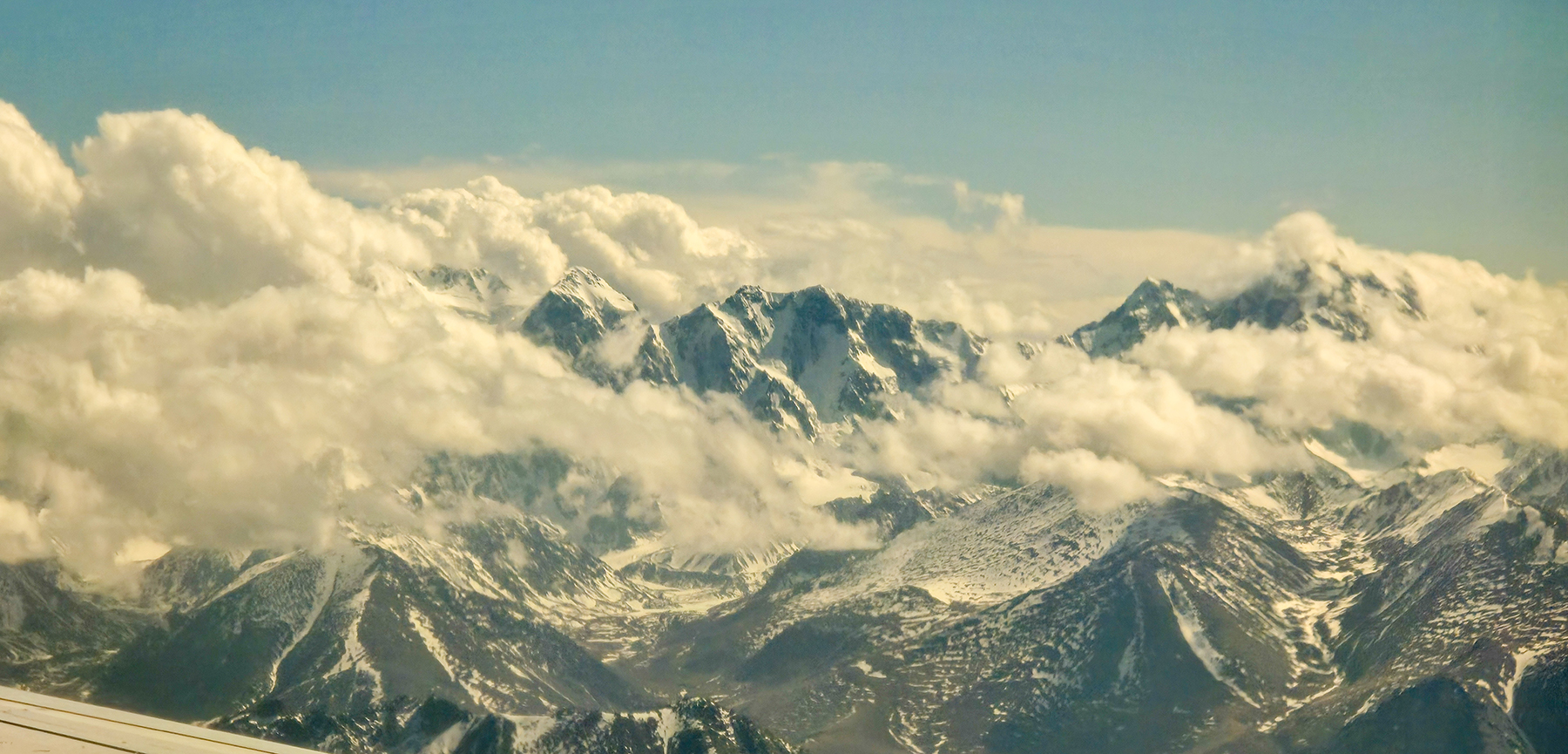
Our journey from Tokyo to Samarkand, Uzbekistan was an adventure in and of itself. Not surprisingly, there’s no direct route. We found ourselves traveling for 32 hours, riding low-cost Chinese airlines through very turbulent skies. We transferred through the most isolated major city on the planet (Urumqi, China), over the Tianshan mountains, on a flight path that also crossed over Kyrgyzstan and Tajikistan. When our flight finally landed in Samarkand at midnight, we stumbled our way through a fairly disorganized immigration process, arrived at our accommodation, and immediately collapsed.




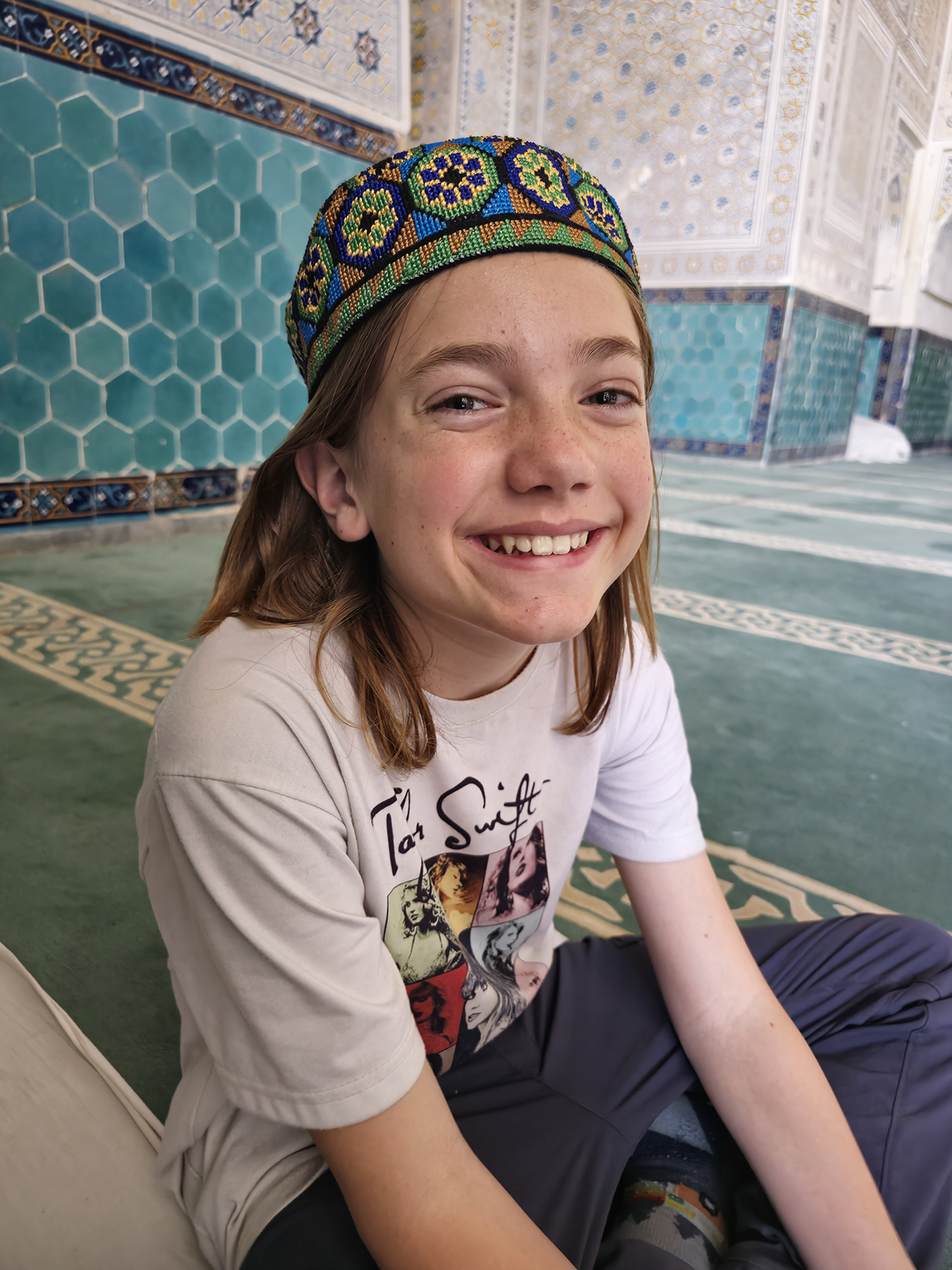
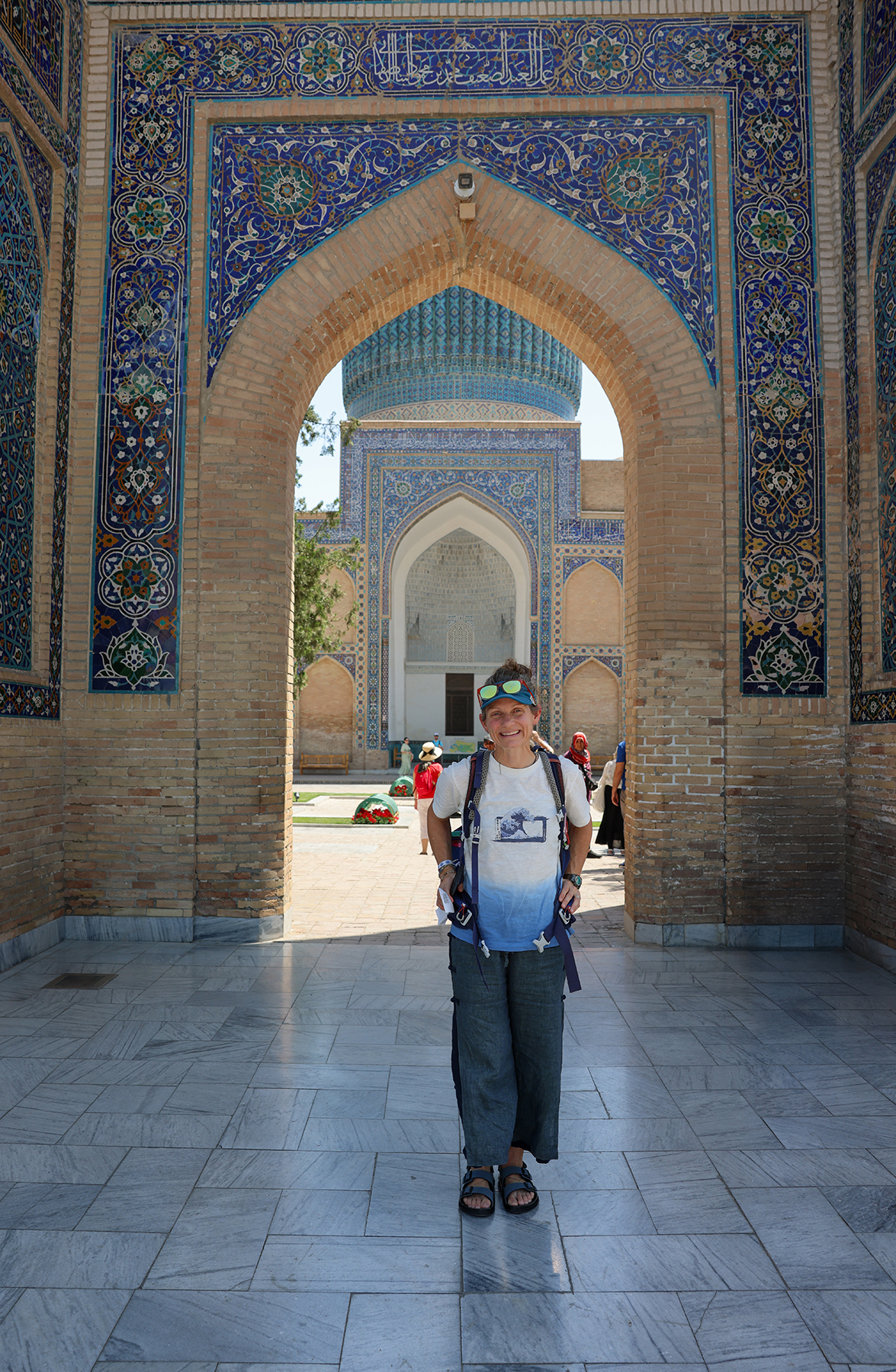
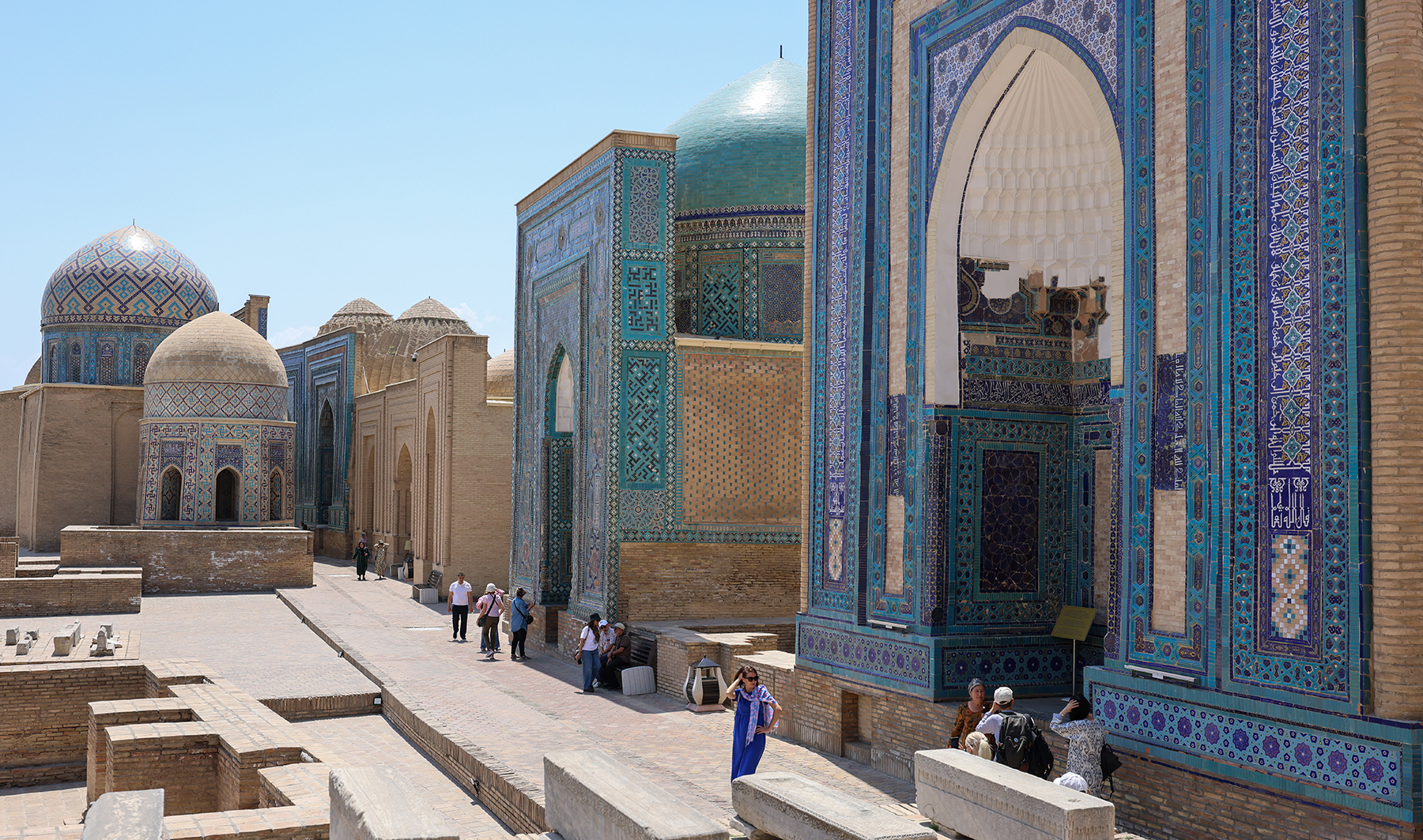
The next morning we woke to discover spectacular architecture and delicious cuisine in a magical place that felt very foreign. Our open-air breakfast consisted of fresh cherries and strawberries, pancakes, honey, and plates of fresh cheese and meats accompanied by local tea. As we wandered the streets of central Samarkand, we instantly understood why this UNESCO World Heritage Site has captured the hearts of weary travelers along the Silk Road for millennia. Perhaps Alexander the Great said it best: “Everything I heard about Samarkand is true, except for one thing: it turned out to be more beautiful than I could imagine.”

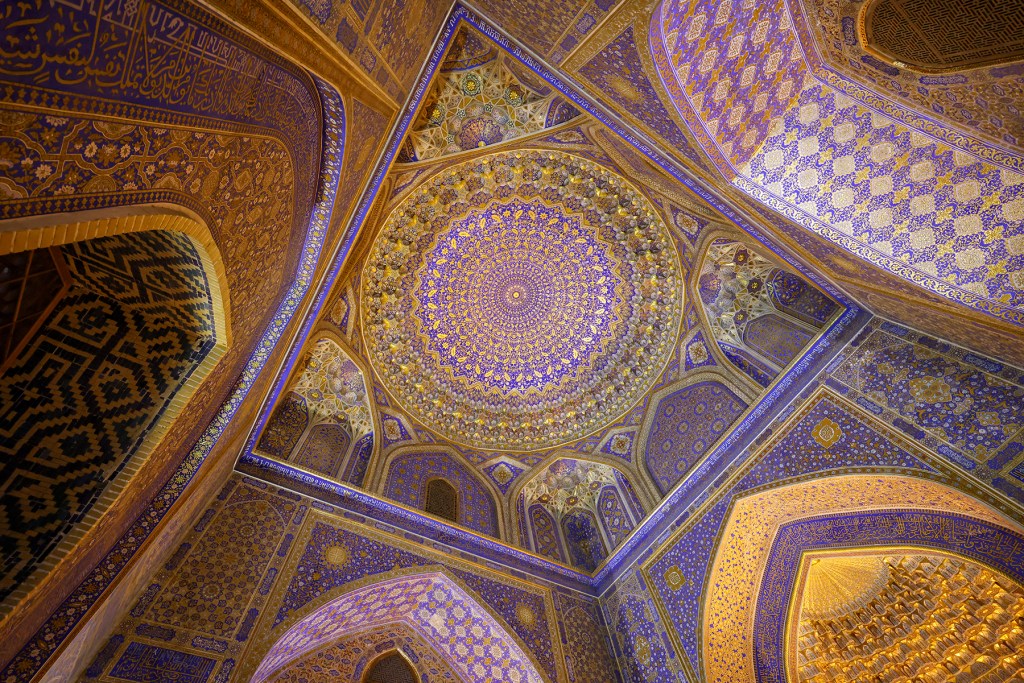
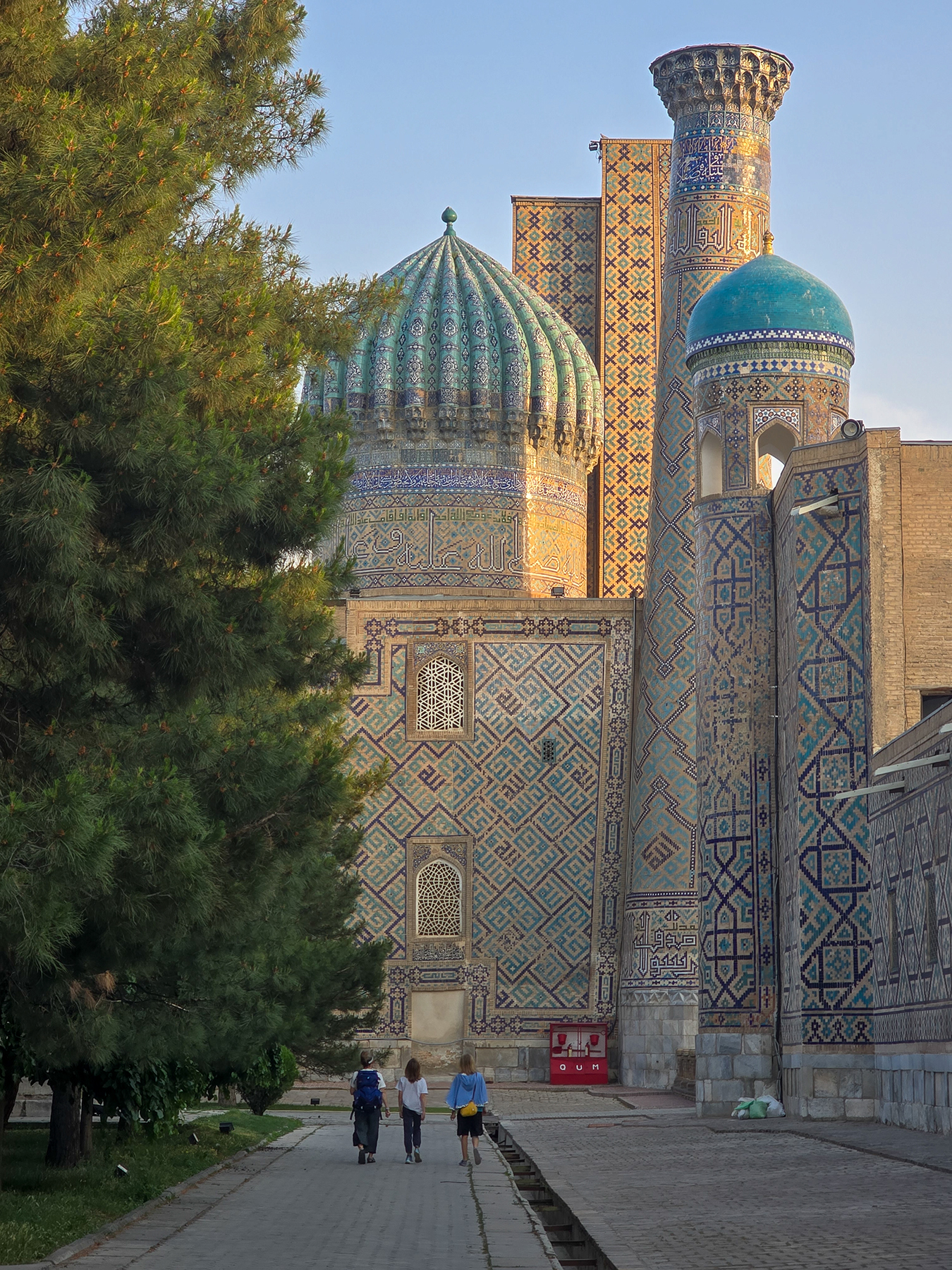
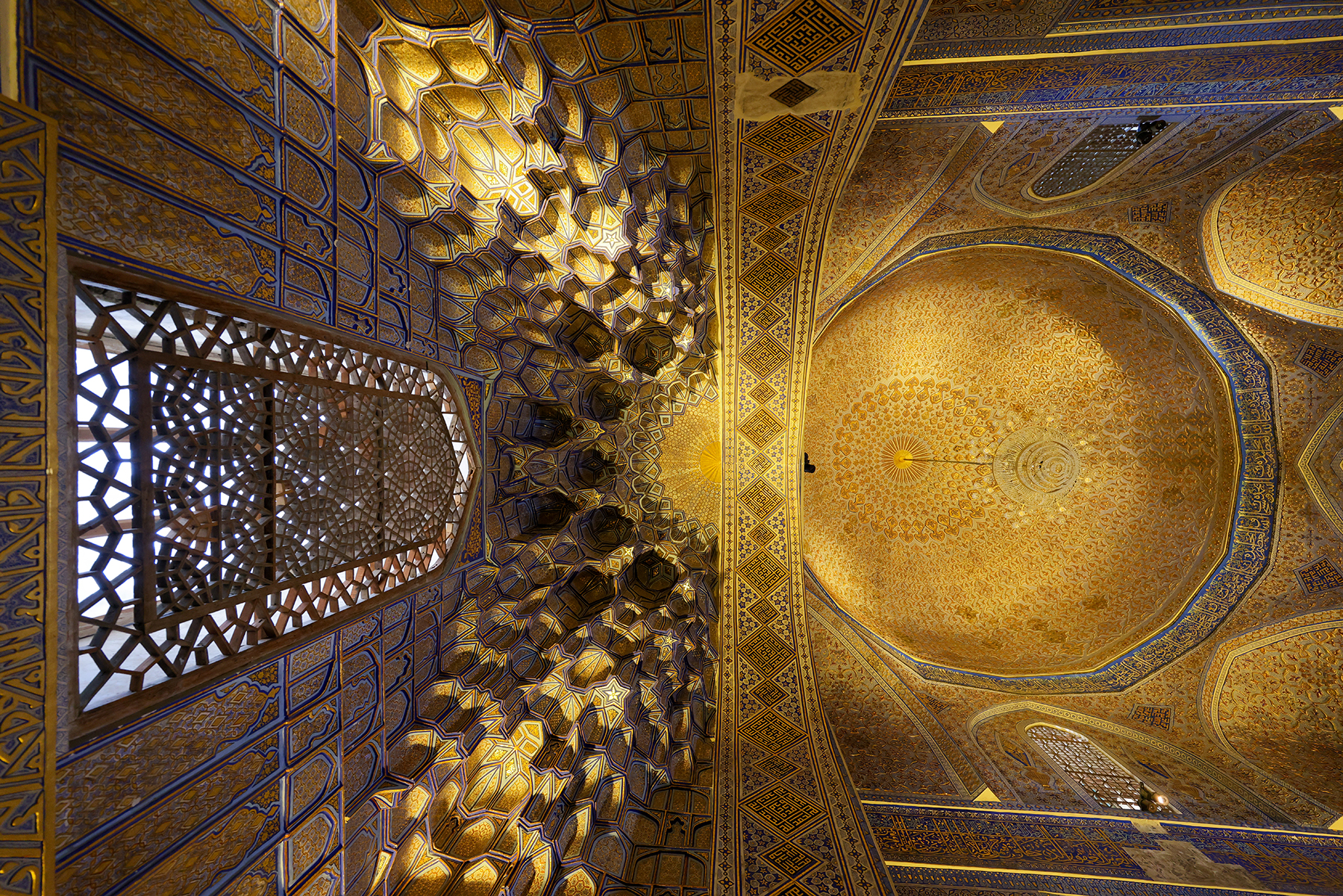
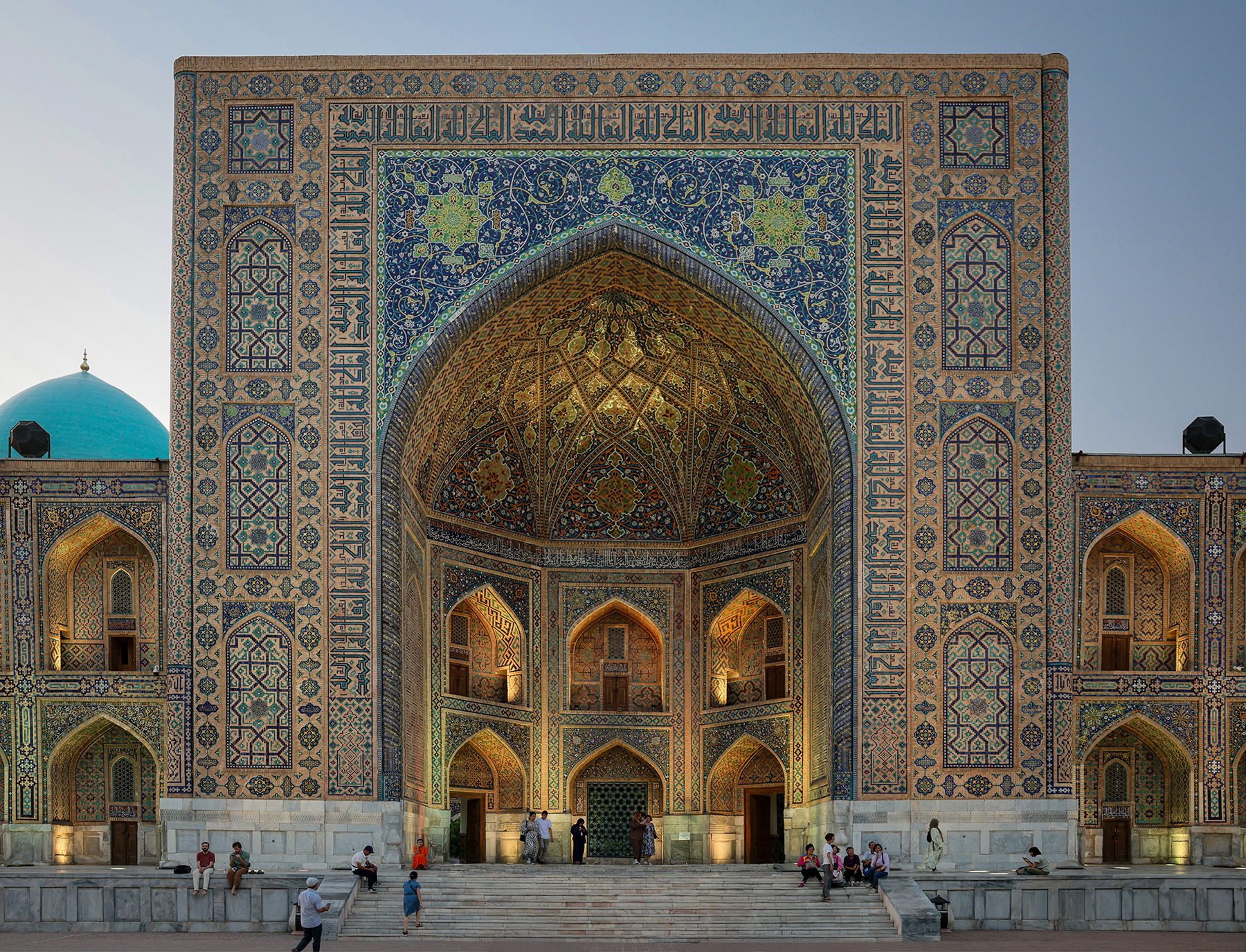
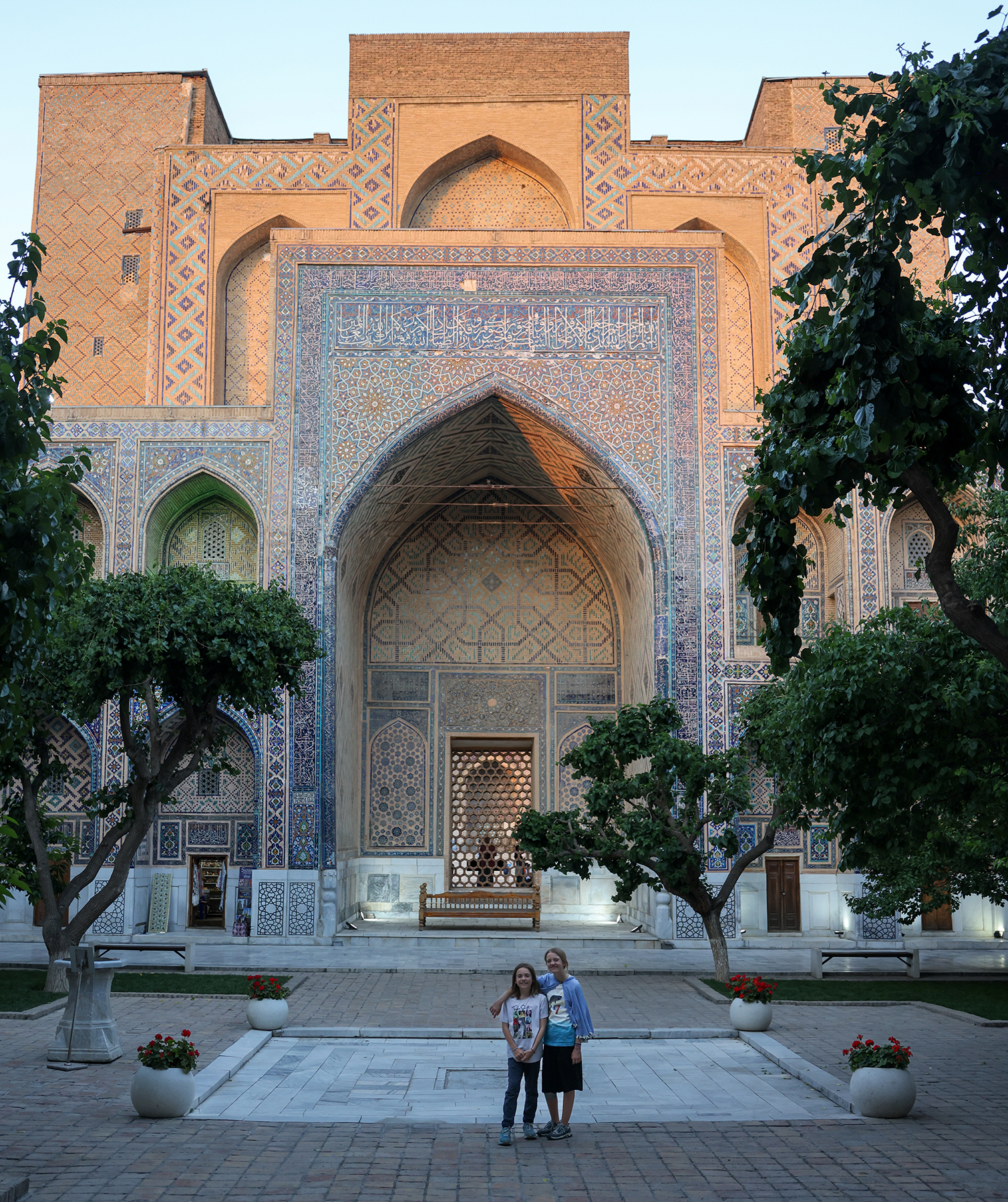
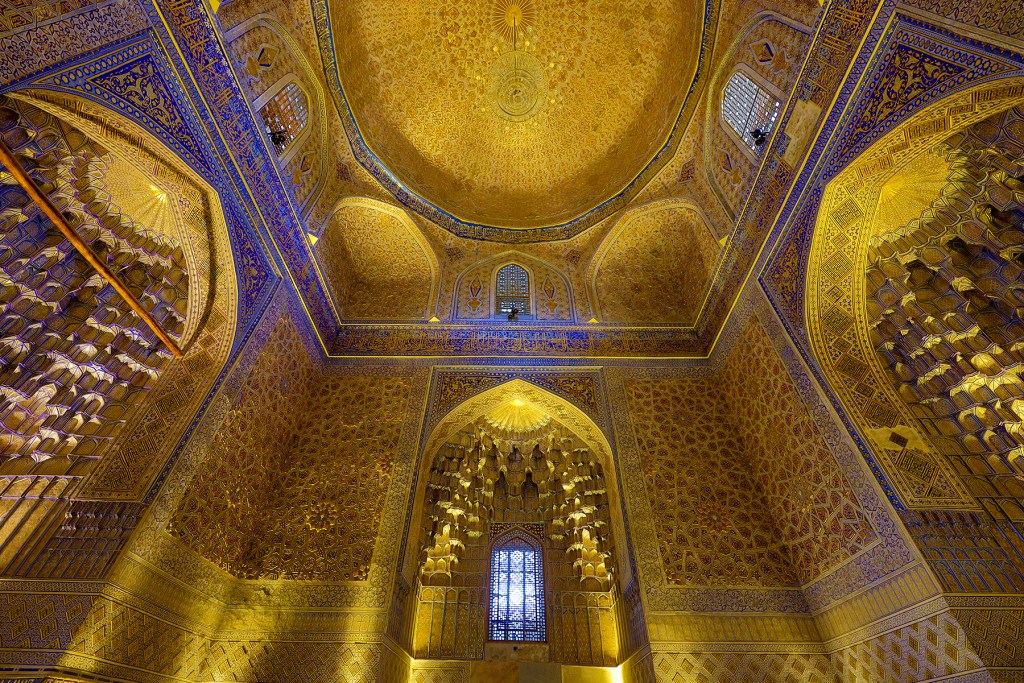
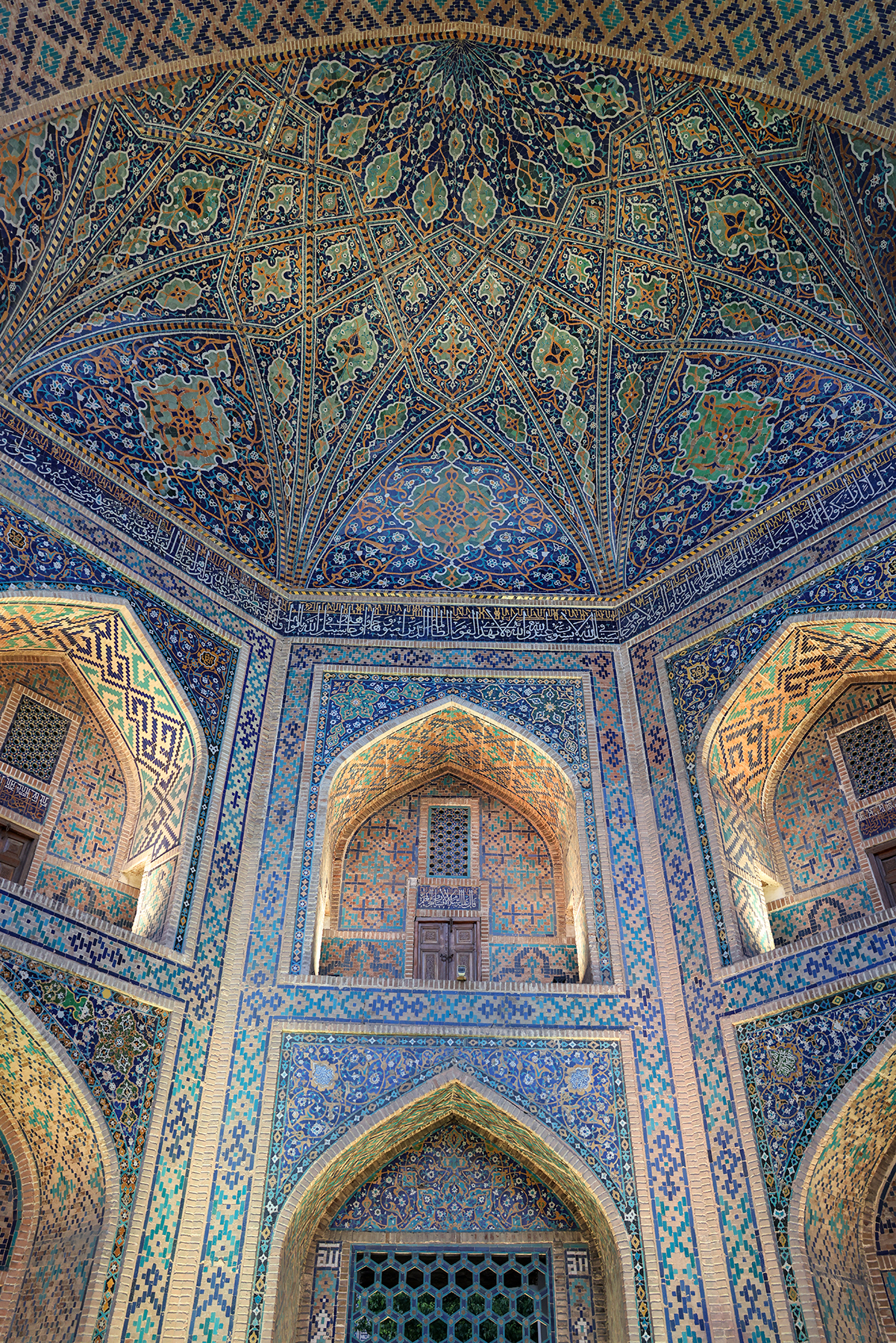
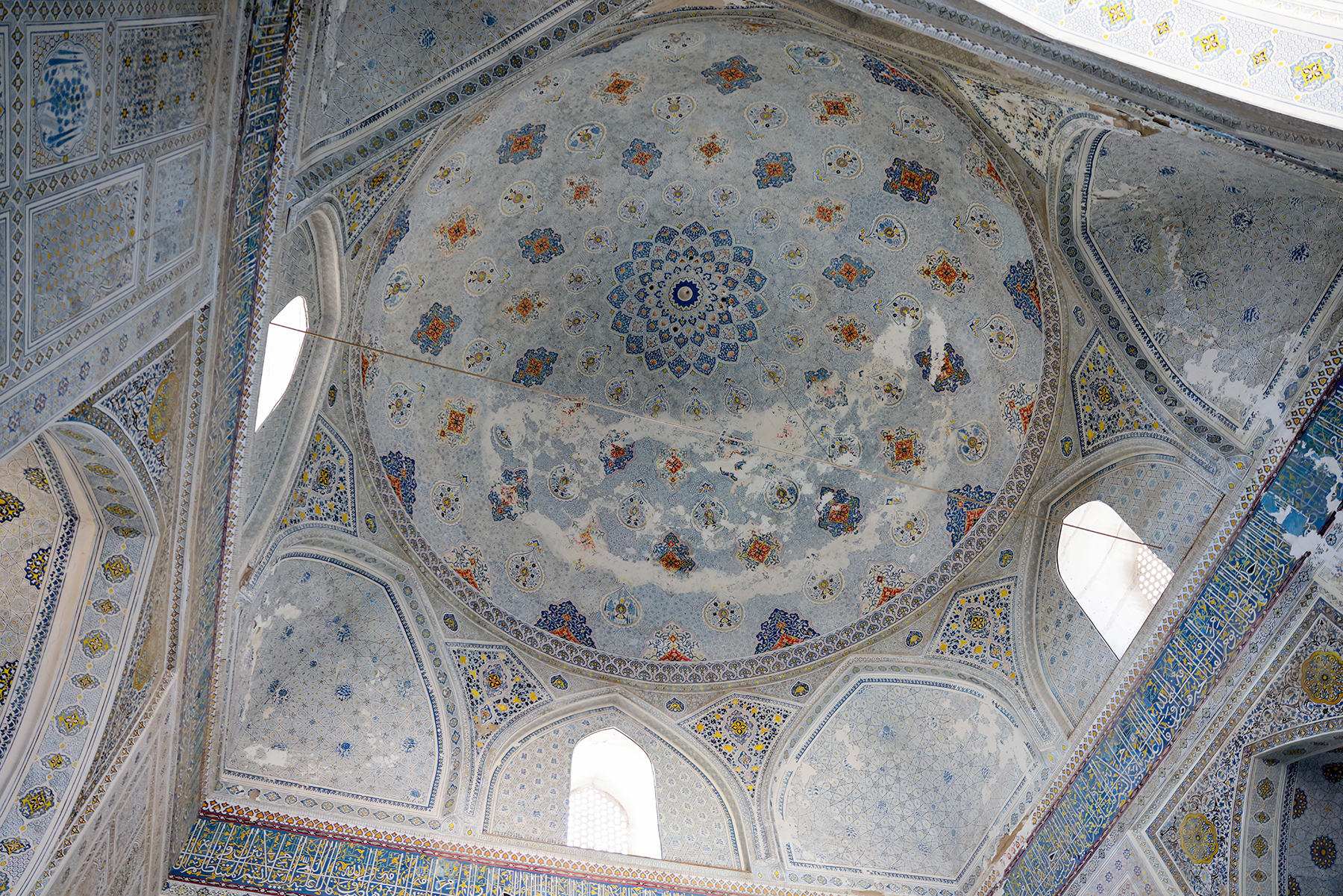
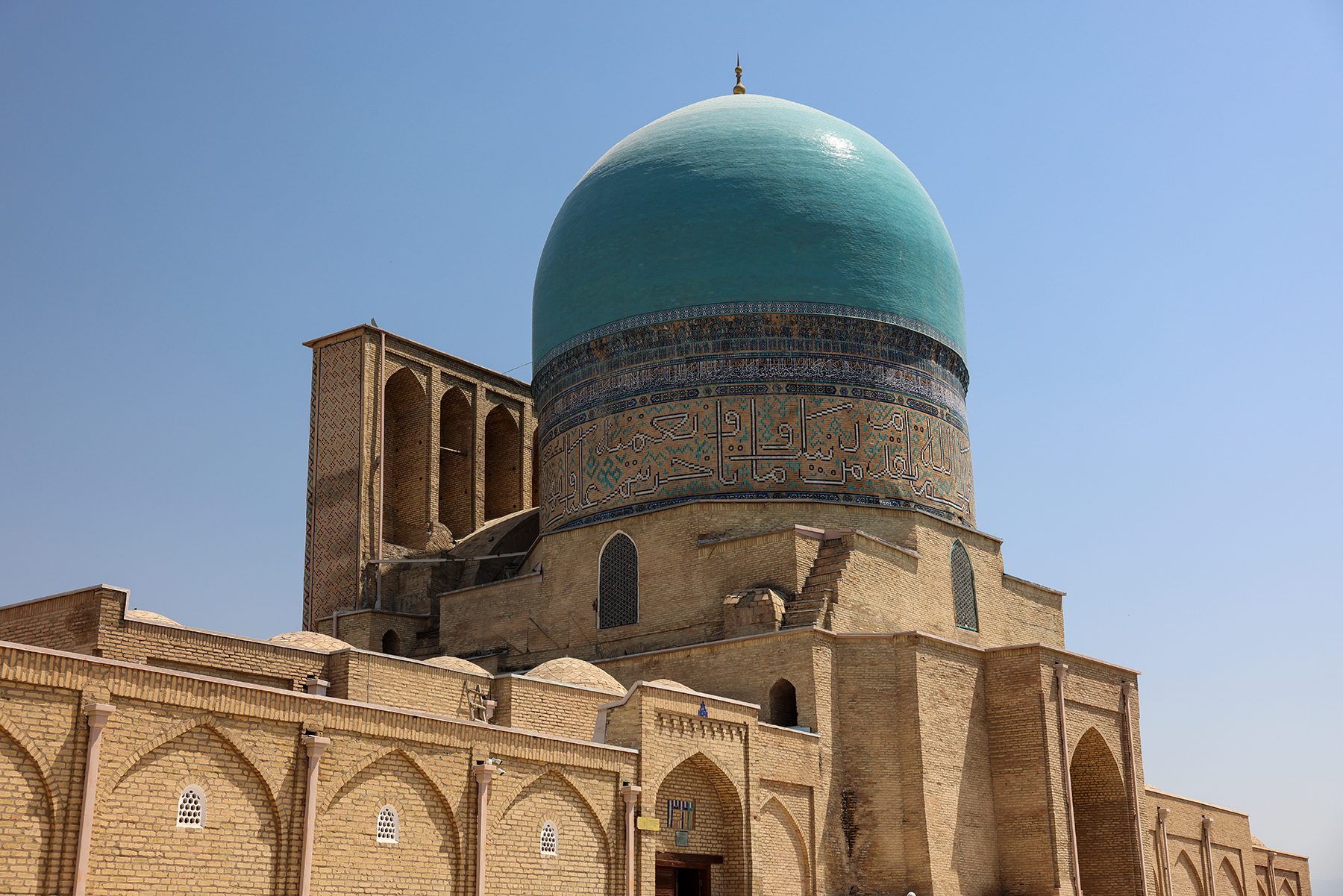
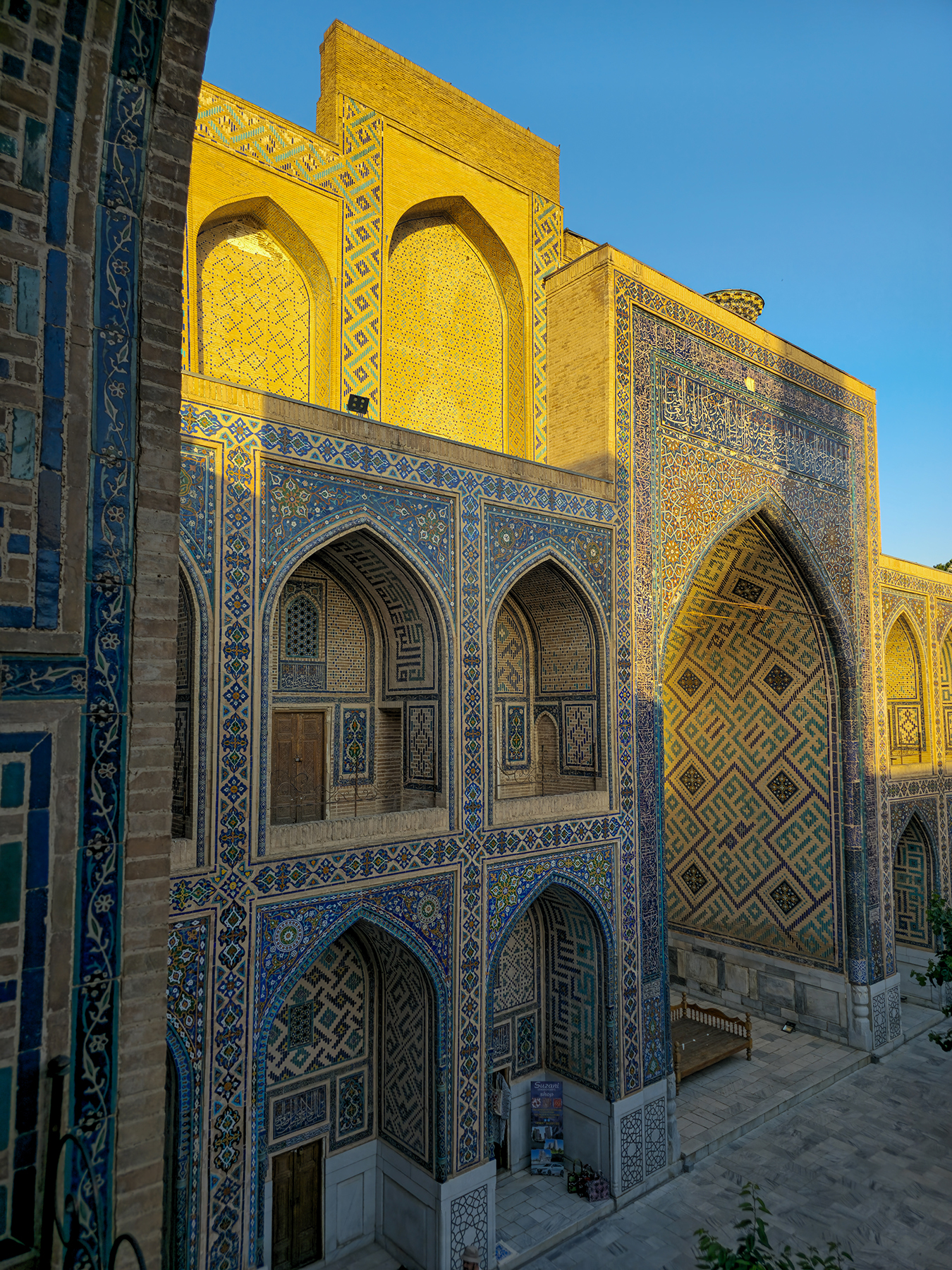
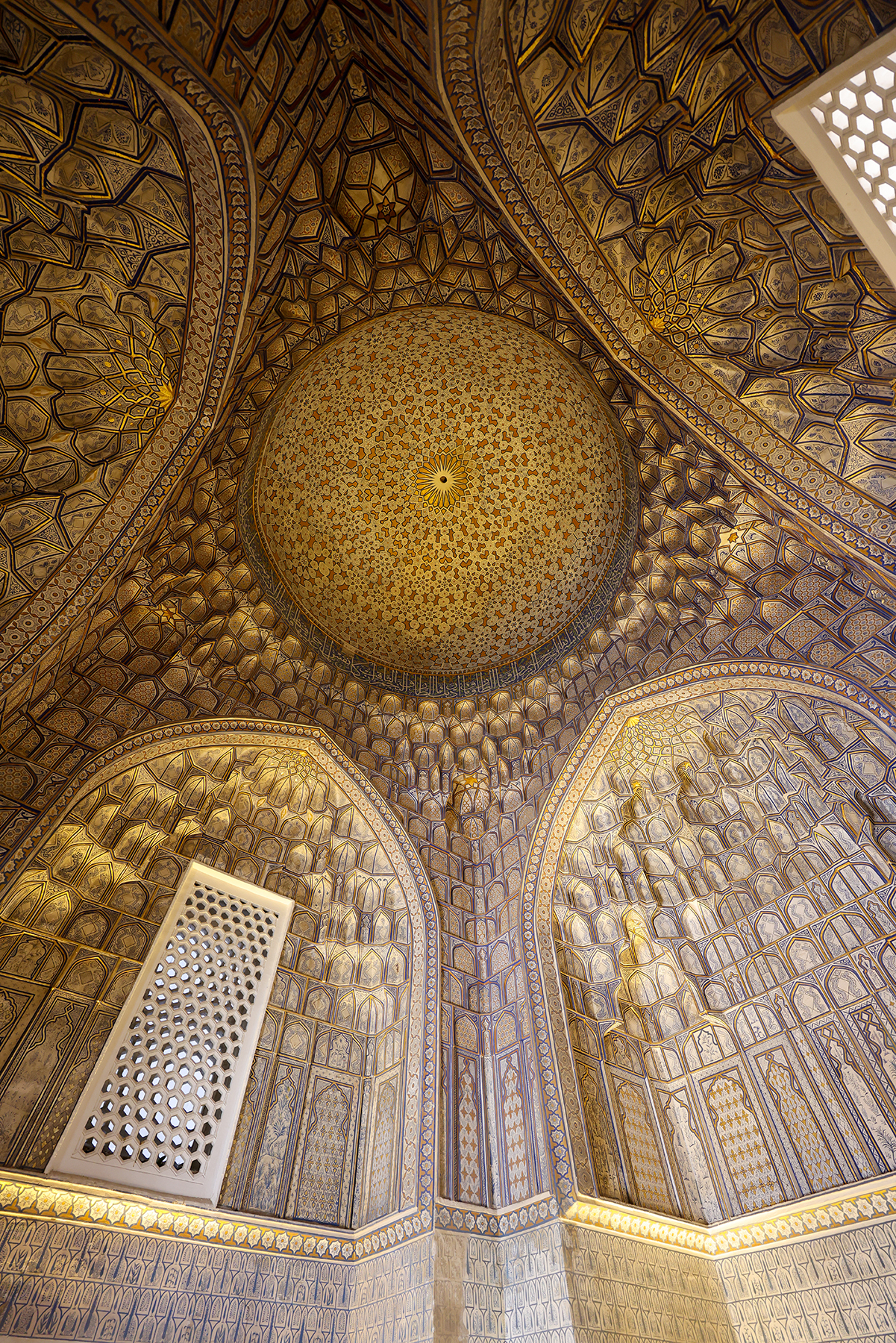
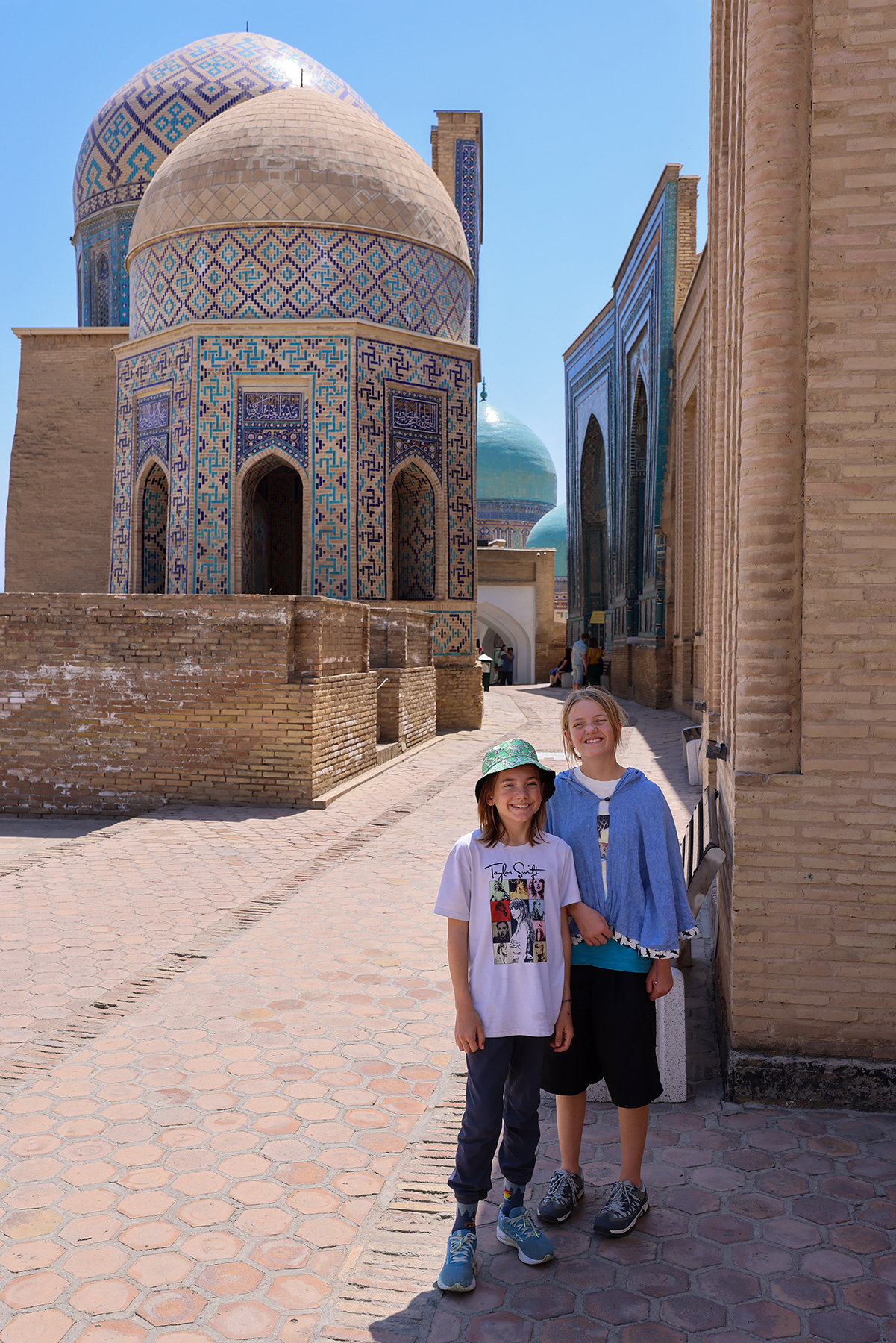
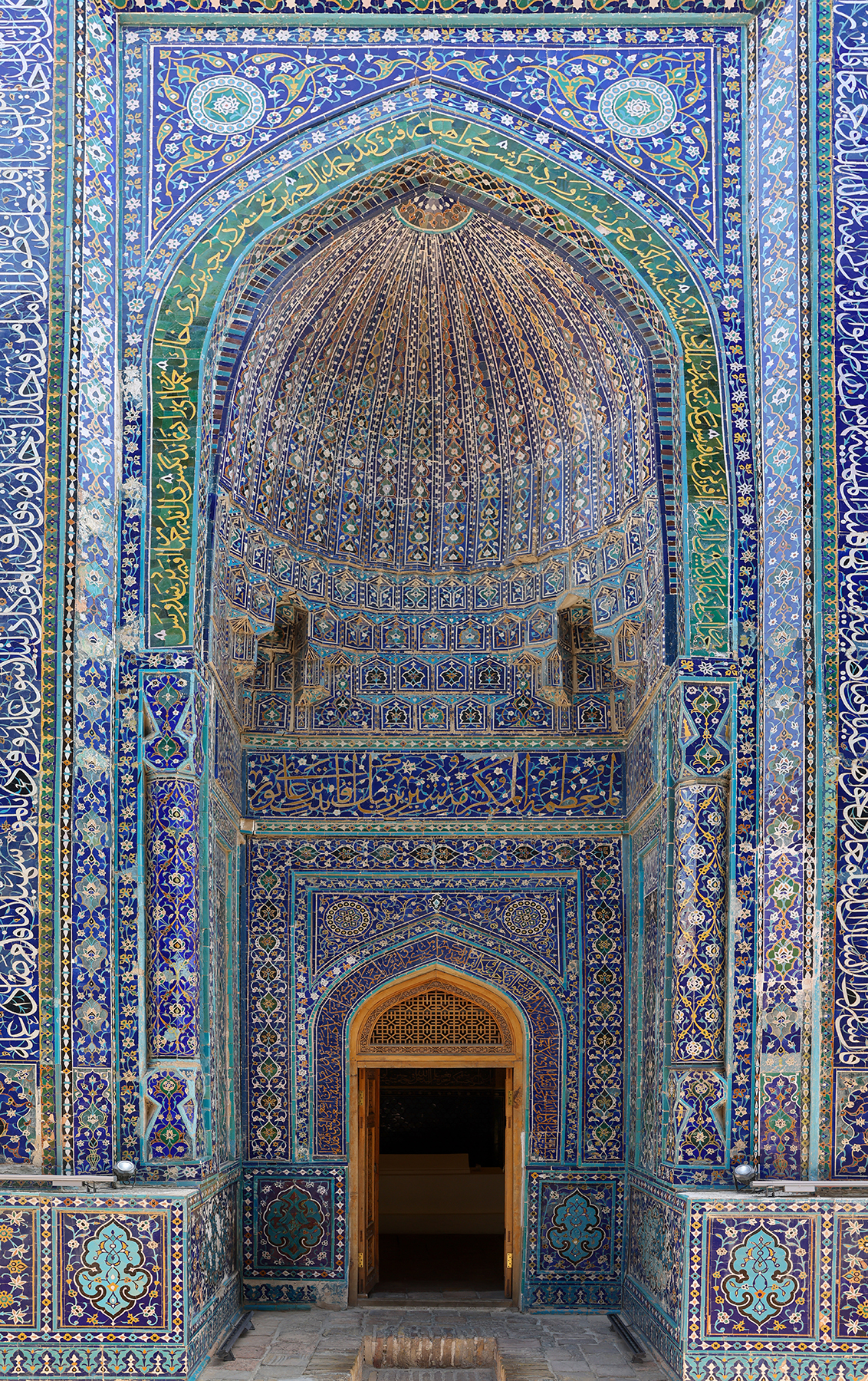
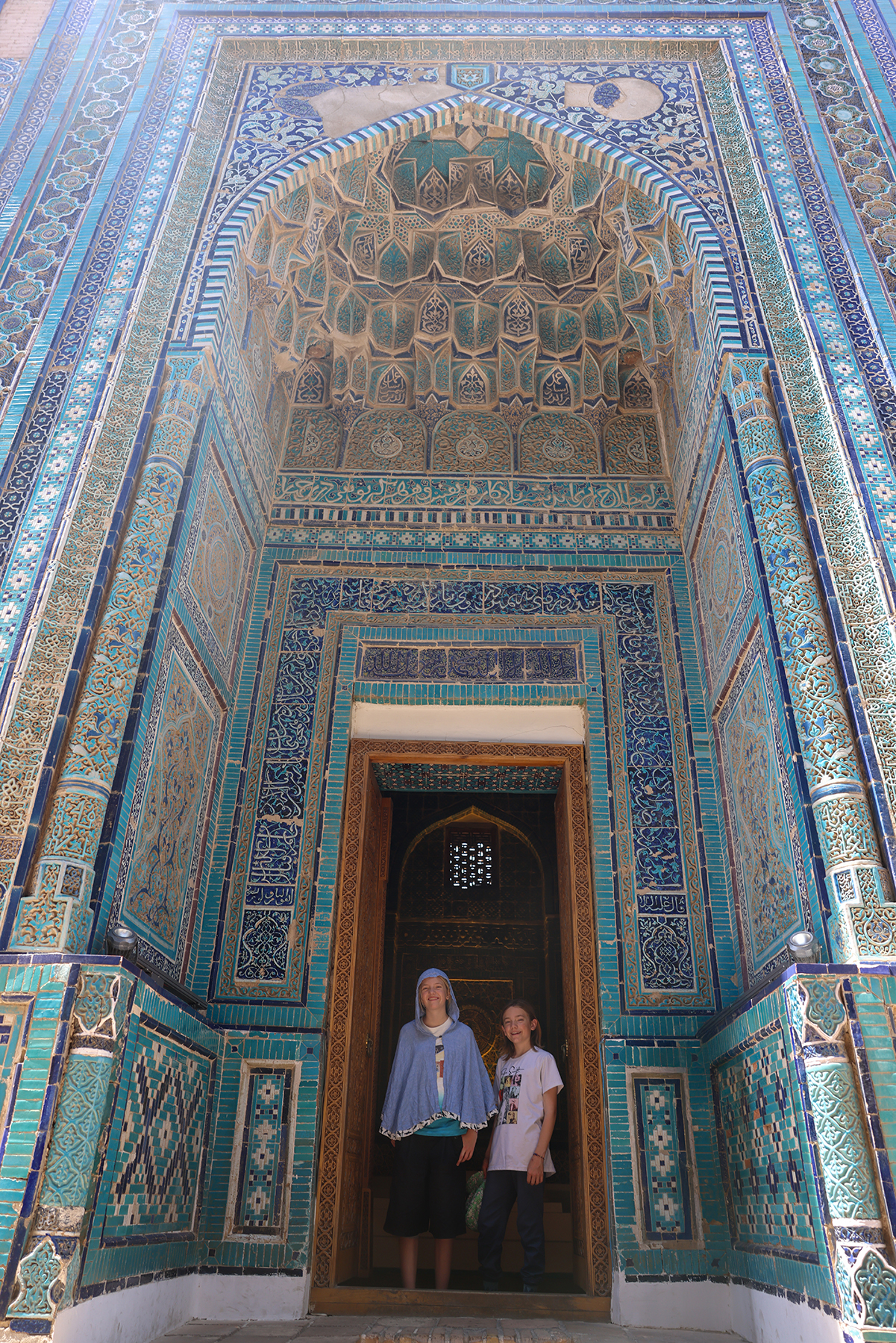
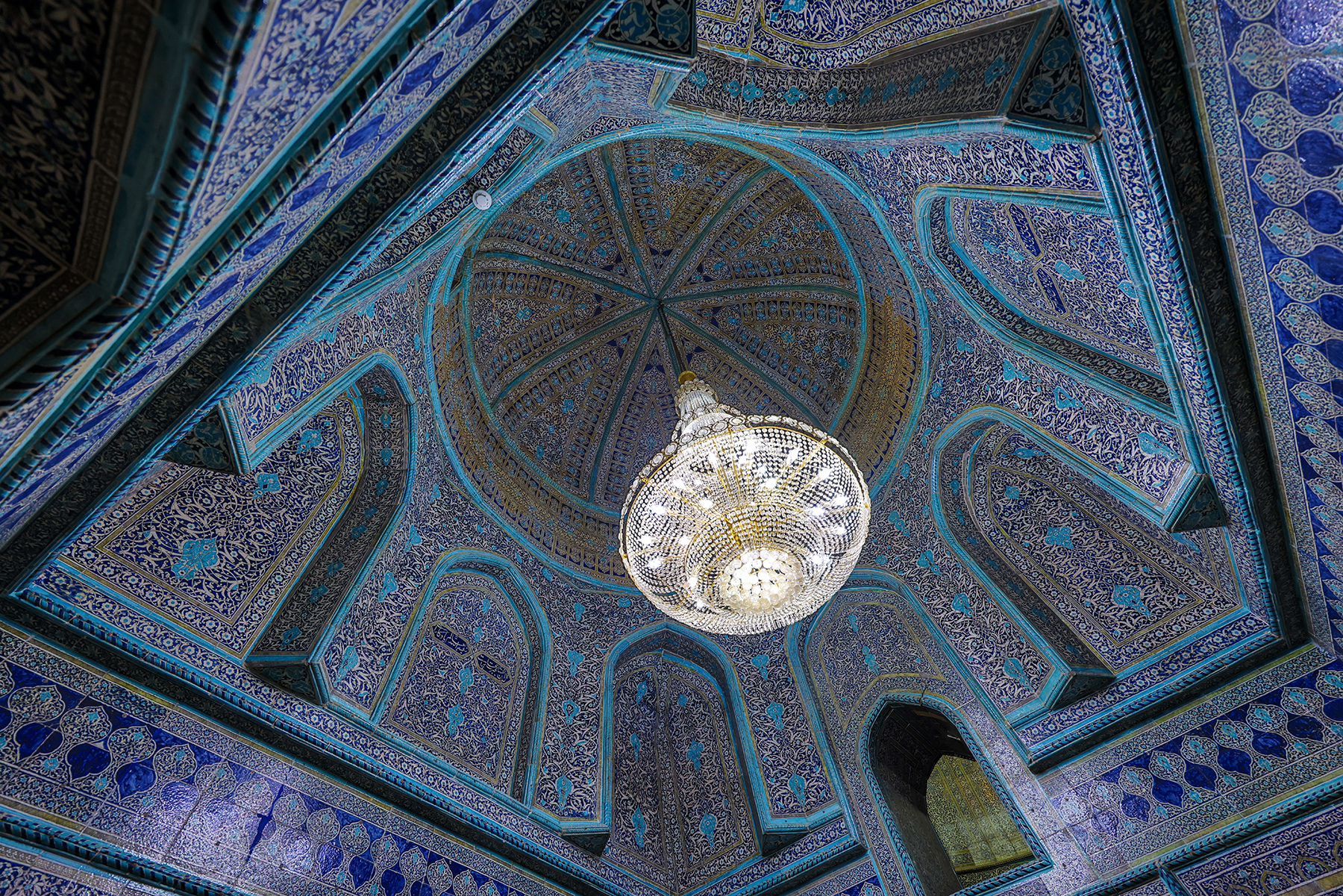
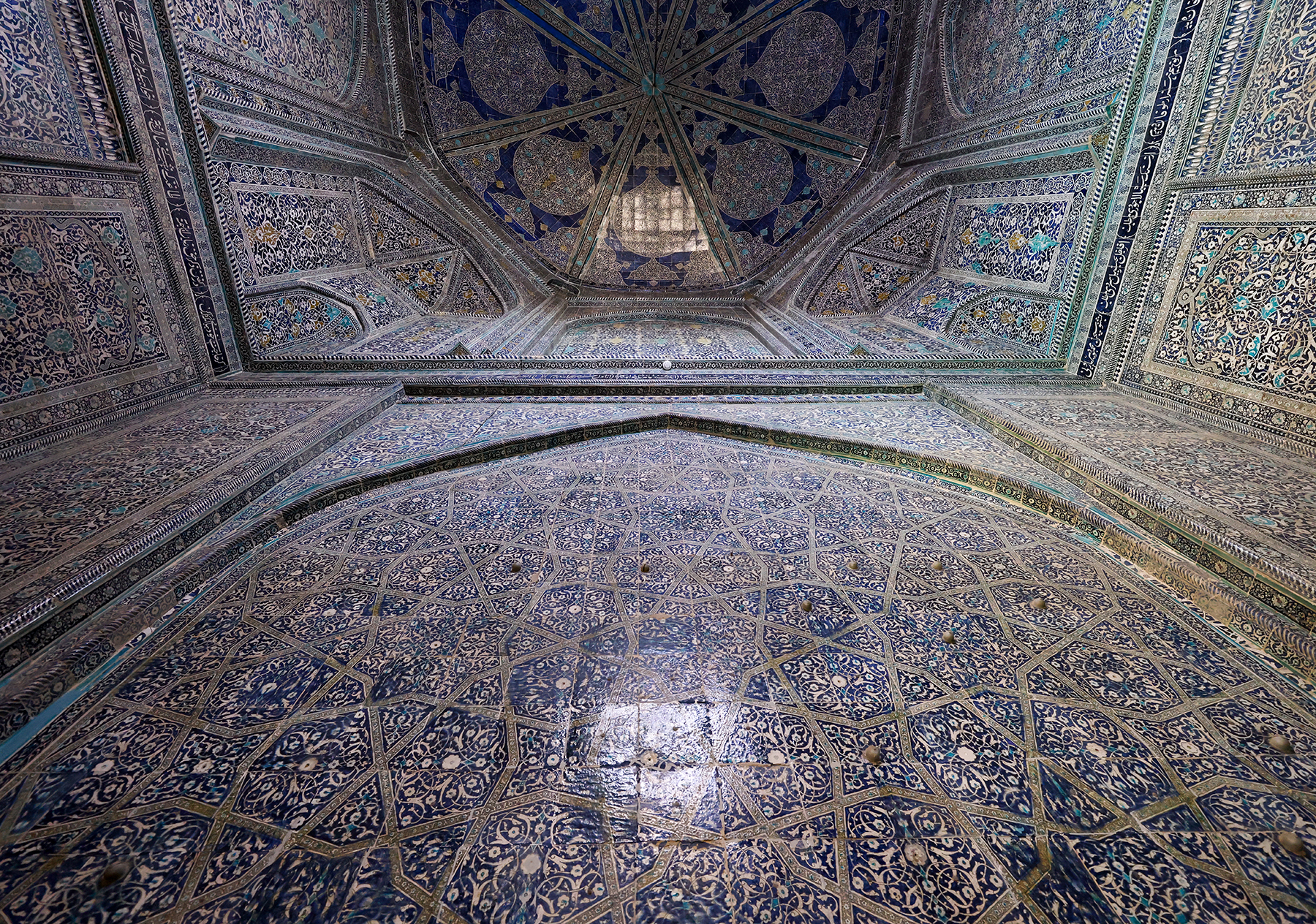
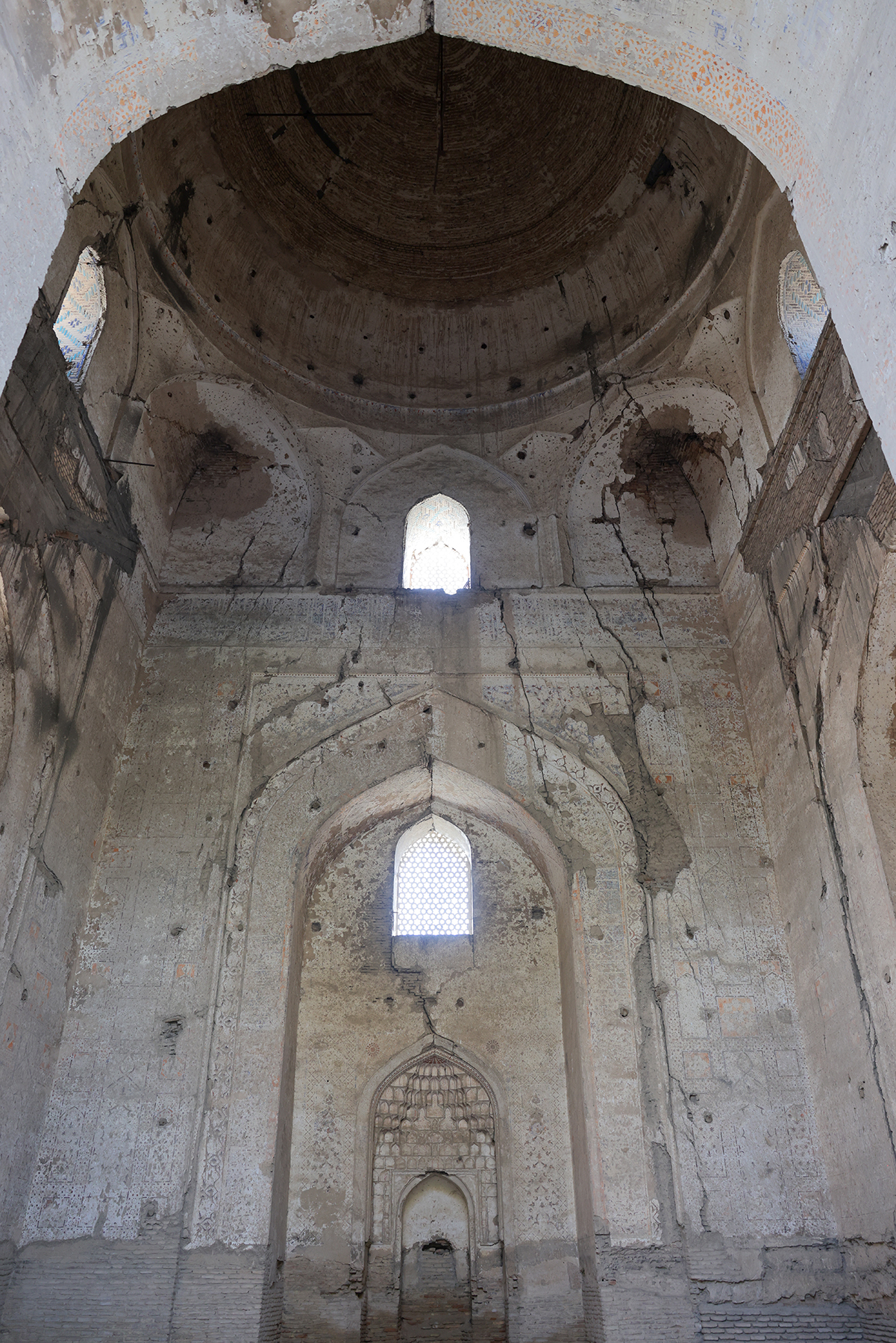
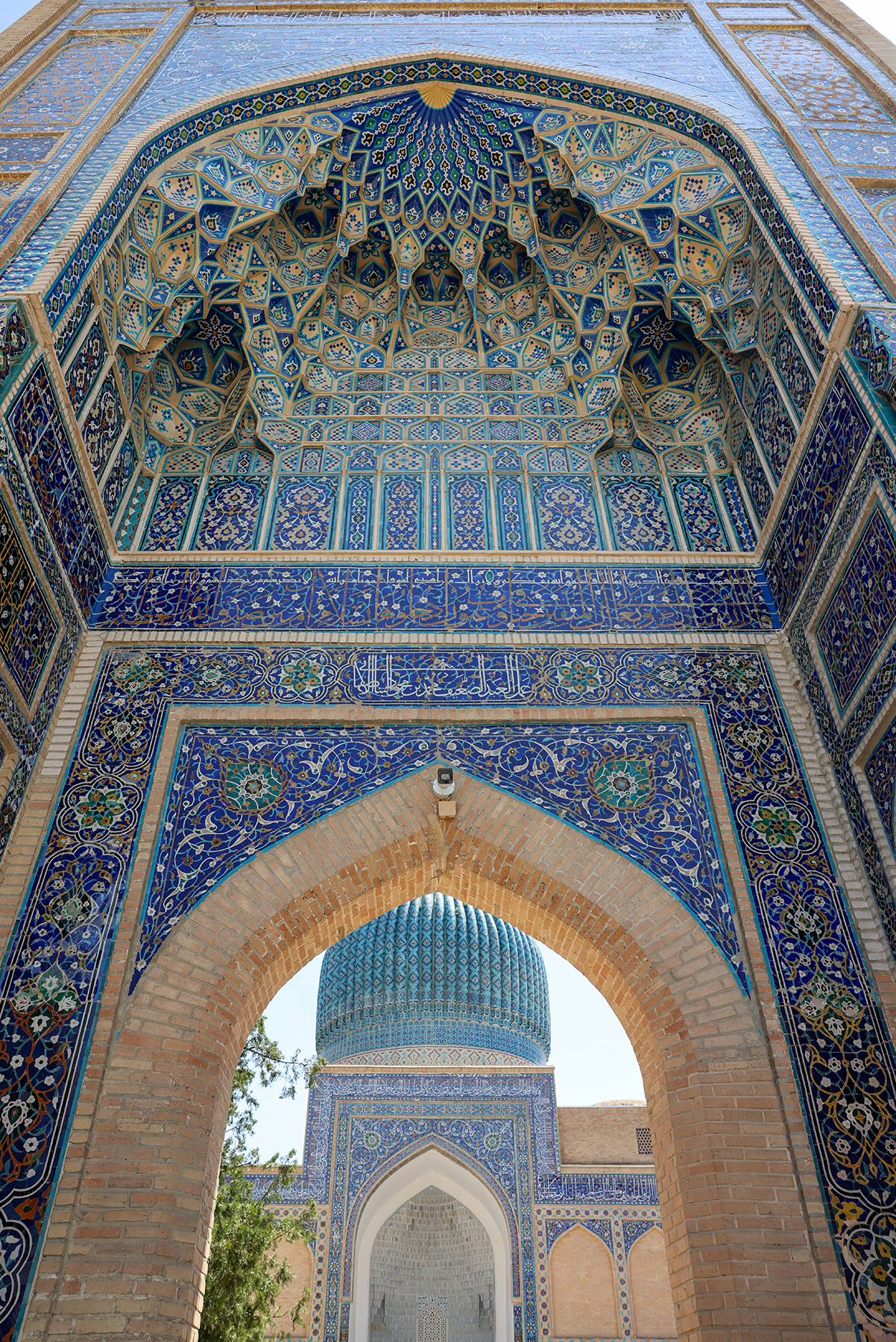
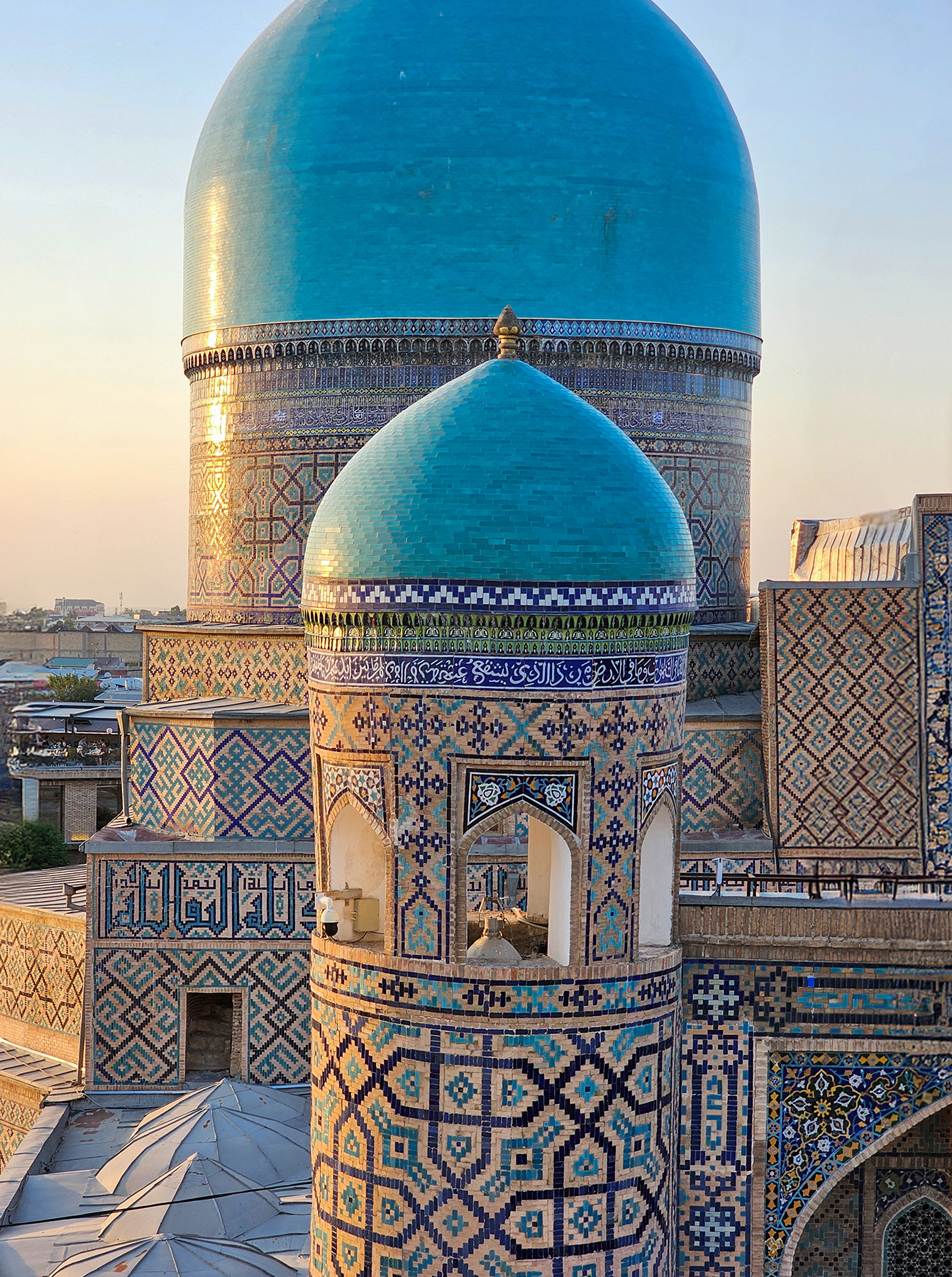
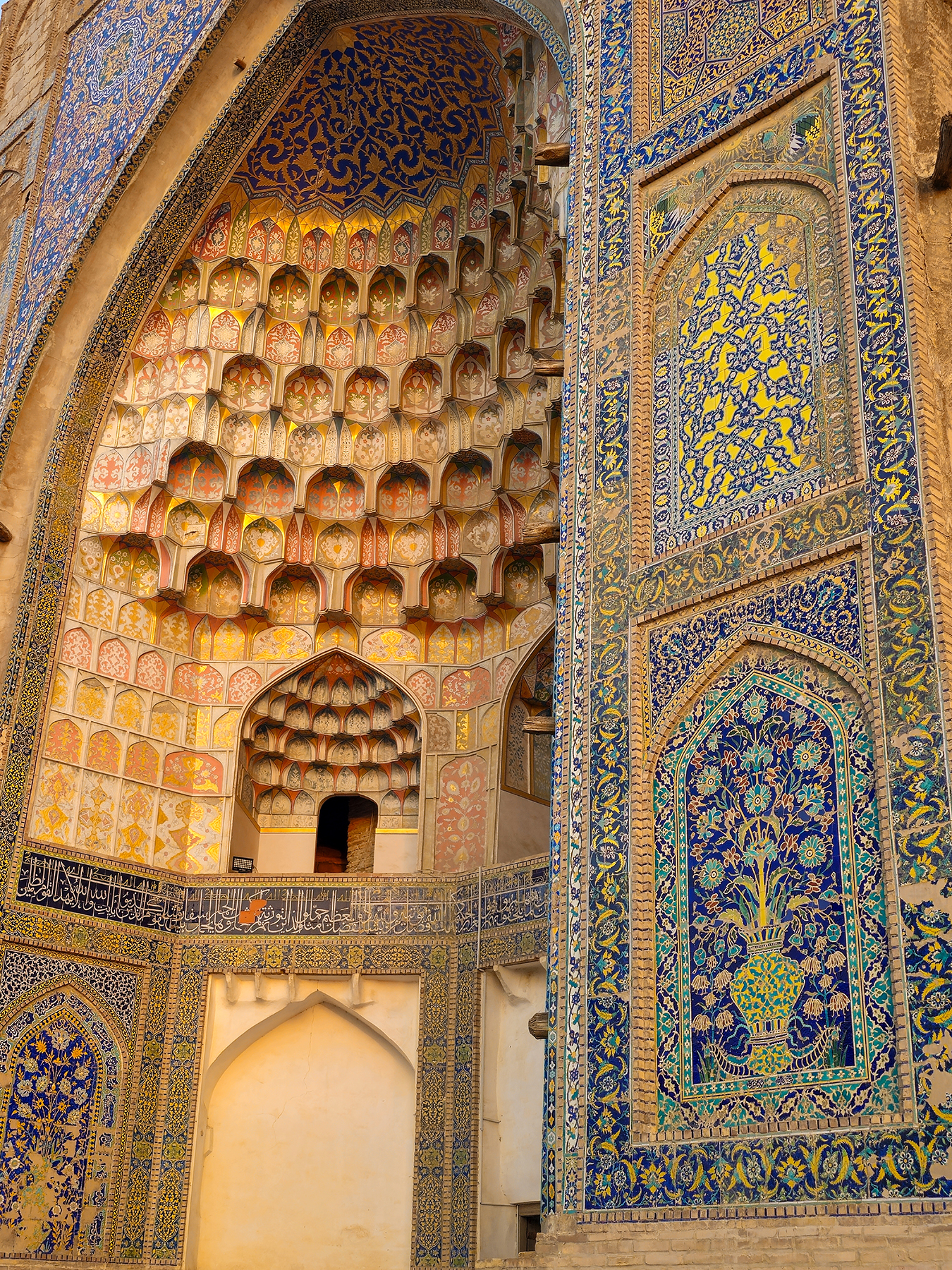
Exquisite blue and turquoise tilework covers the exterior and interior surface of every ancient mausoleum, minaret, mosque, and madrassa in the city. The grandiose size of each structure is difficult to comprehend.

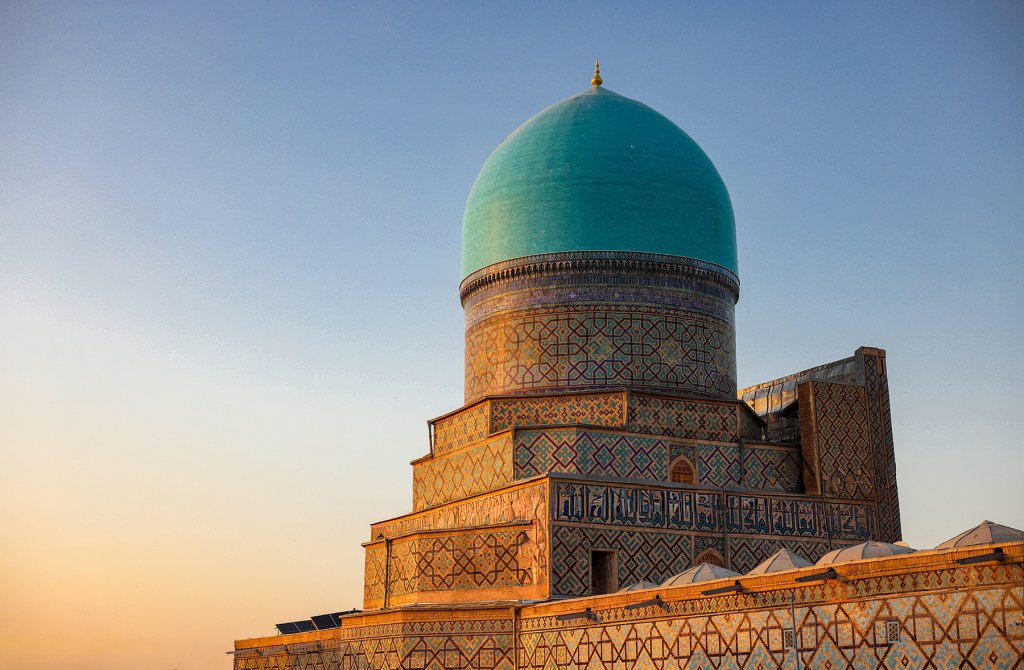
Samarkand’s history stretches back over 2,700 years, with smaller settlements dating as far back as 1500 BCE. It once stood at the center of the Silk Road, the legendary trade route that connected Xi’an, China to Istanbul. What a humbling experience, during our year of travel, to have explored both ends of the route and now find ourselves here, in its historic heart.
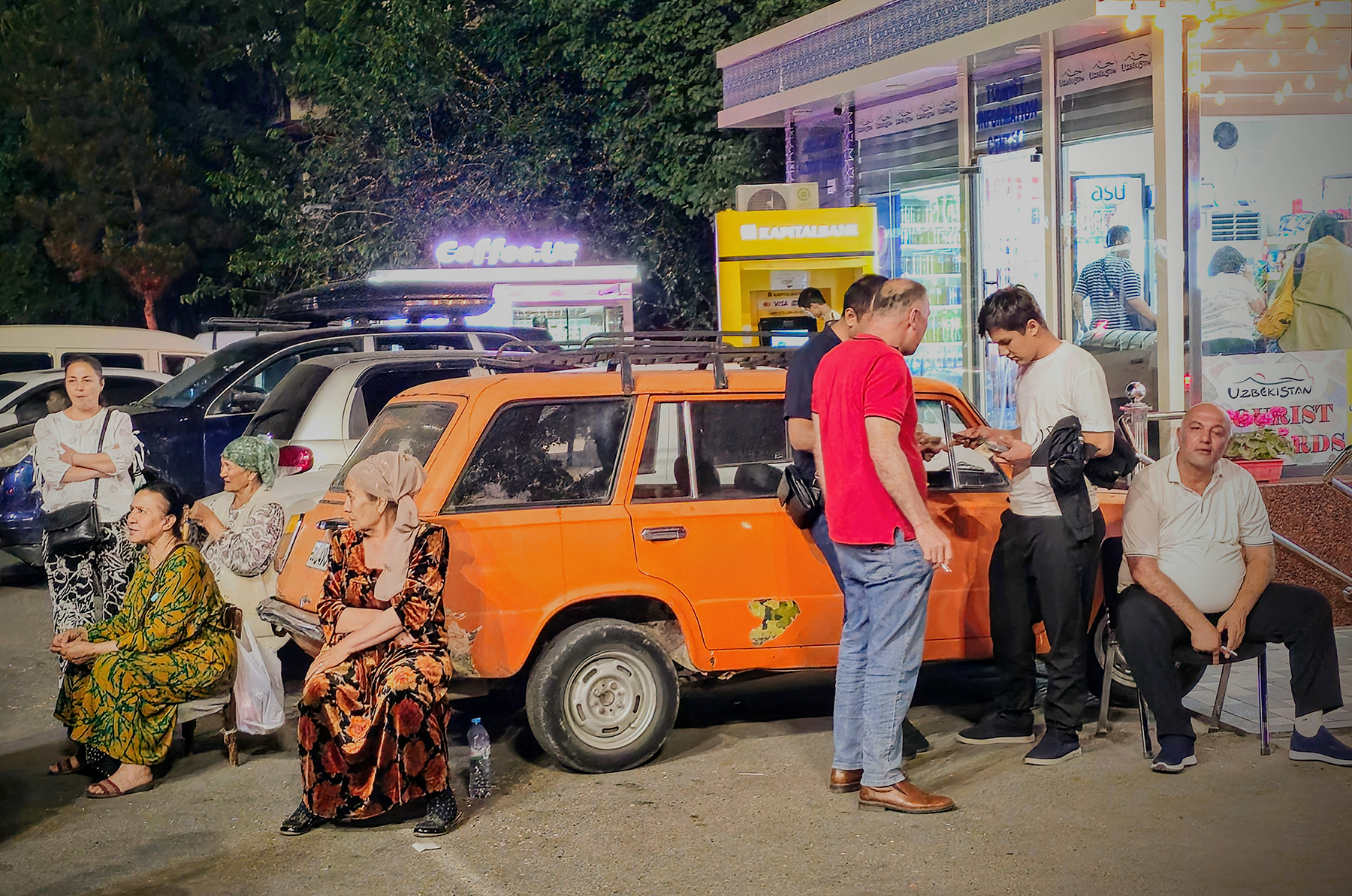
Much like our time in the Balkans, Morocco, Indonesia, and Nepal, we quickly discovered Uzbekistan is a cash-based society. This of course isn’t really an issue if one has access to functional ATMs – the amusing challenge is when ATMs are sparse and the ones that exist are non-functional. Stationed alongside several non-functional ATMs we noticed men sitting with large wads of Uzbek cash, happy to give you a horrible exchange rate for your new, crisp US Dollars. After nearly an hour of wandering the streets and alleyways of Samarkand we were finally successful – with several million Uzbek Som (equivalent to a couple hundred USD) in hand we headed off to explore.

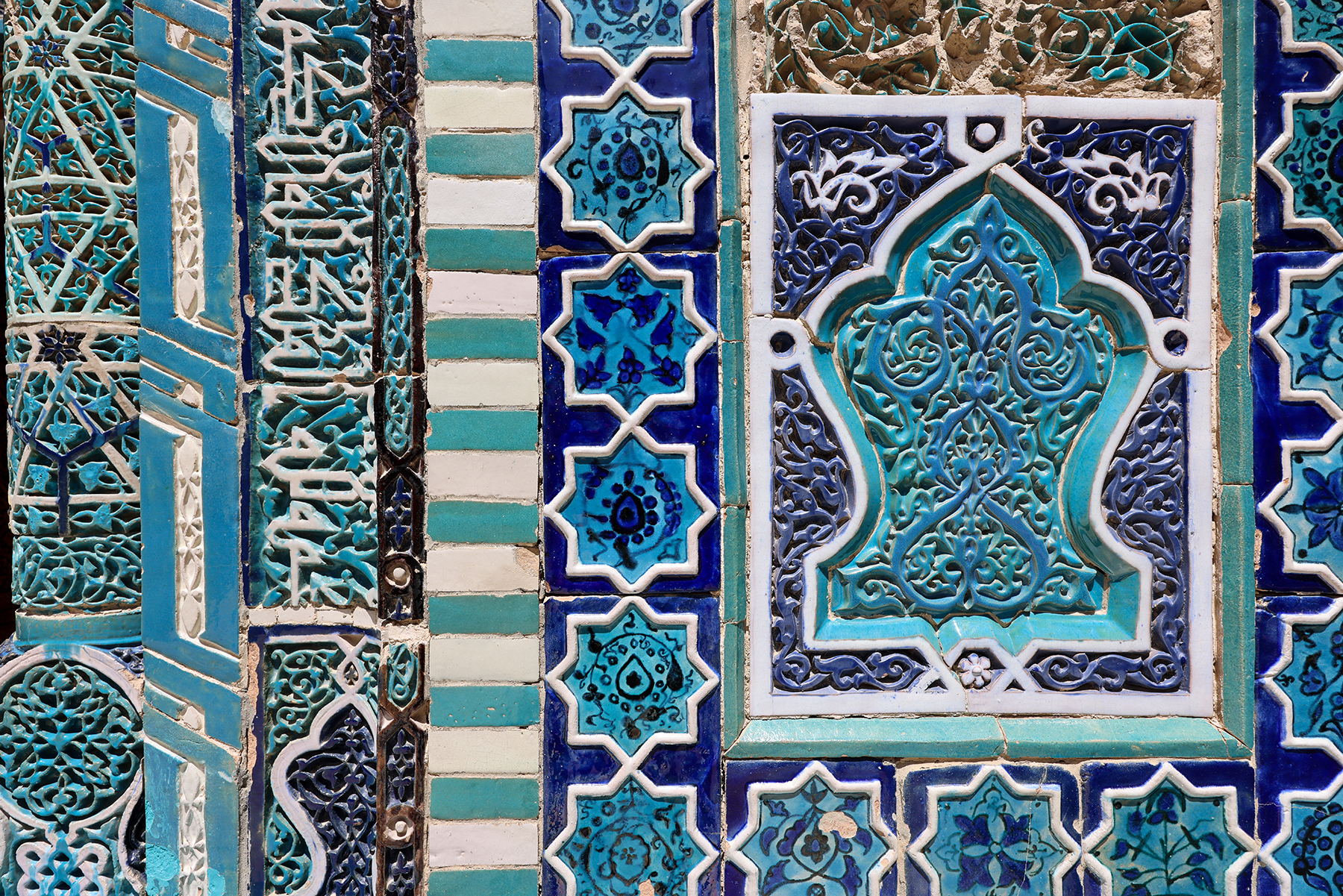
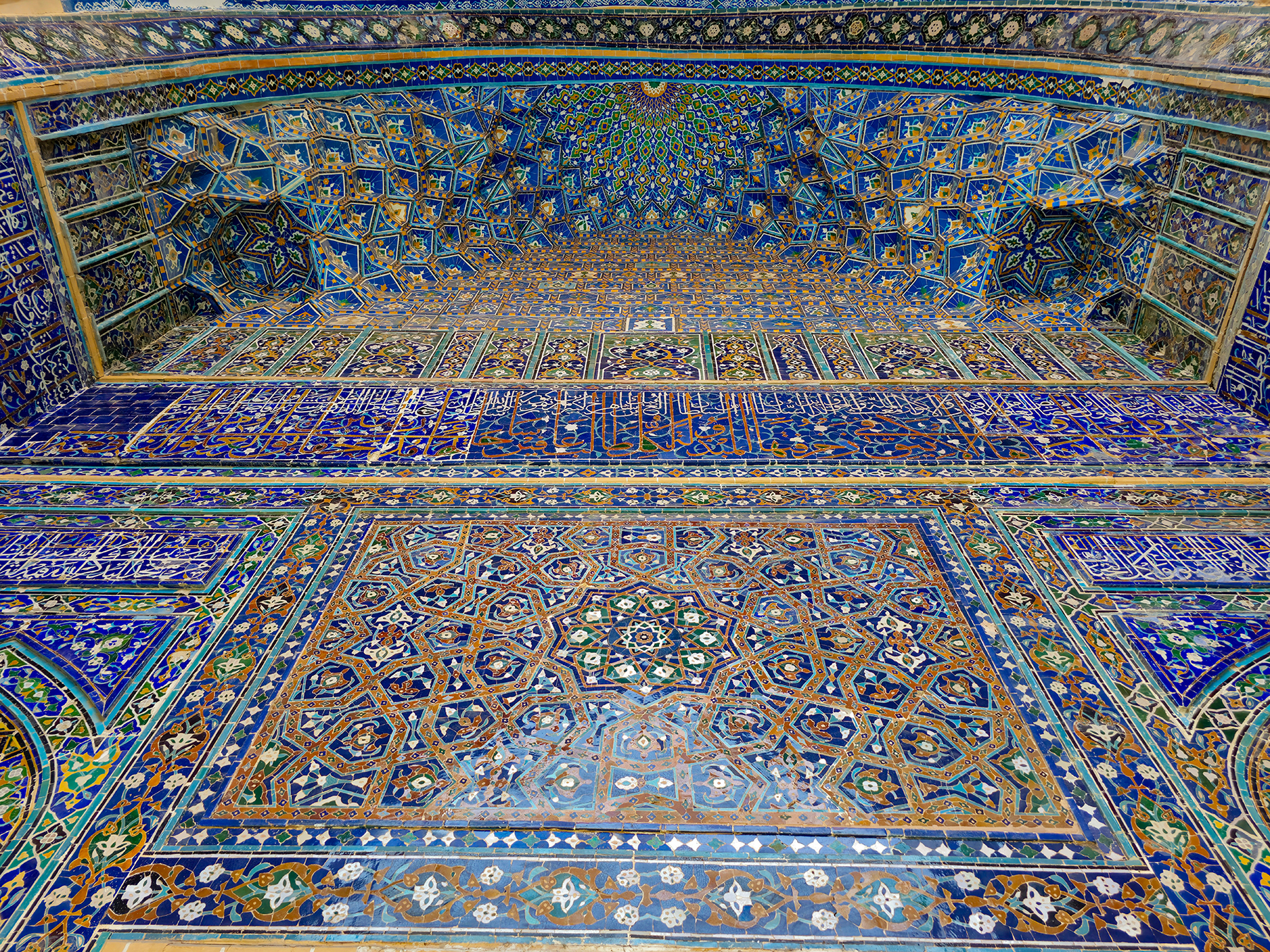
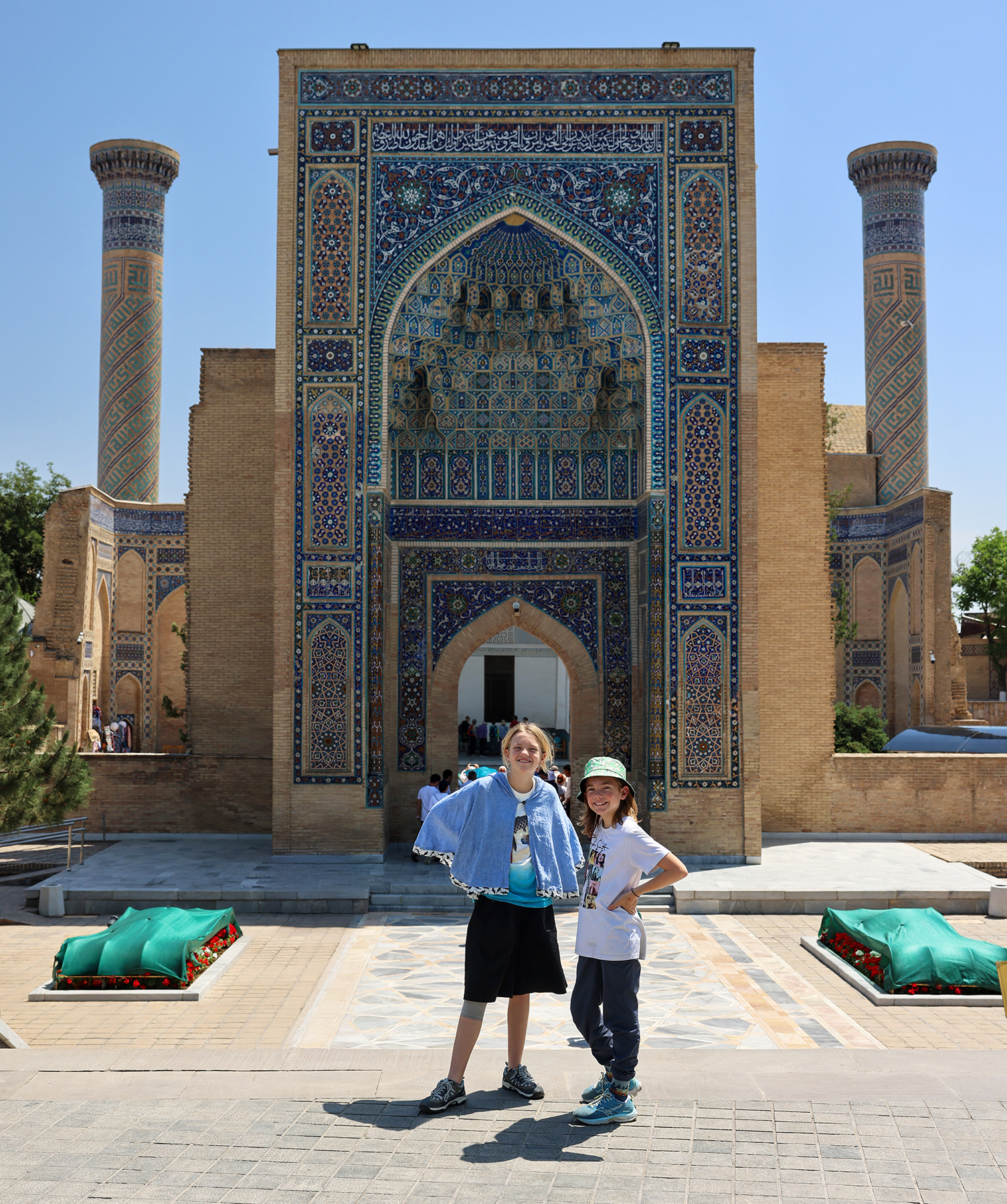
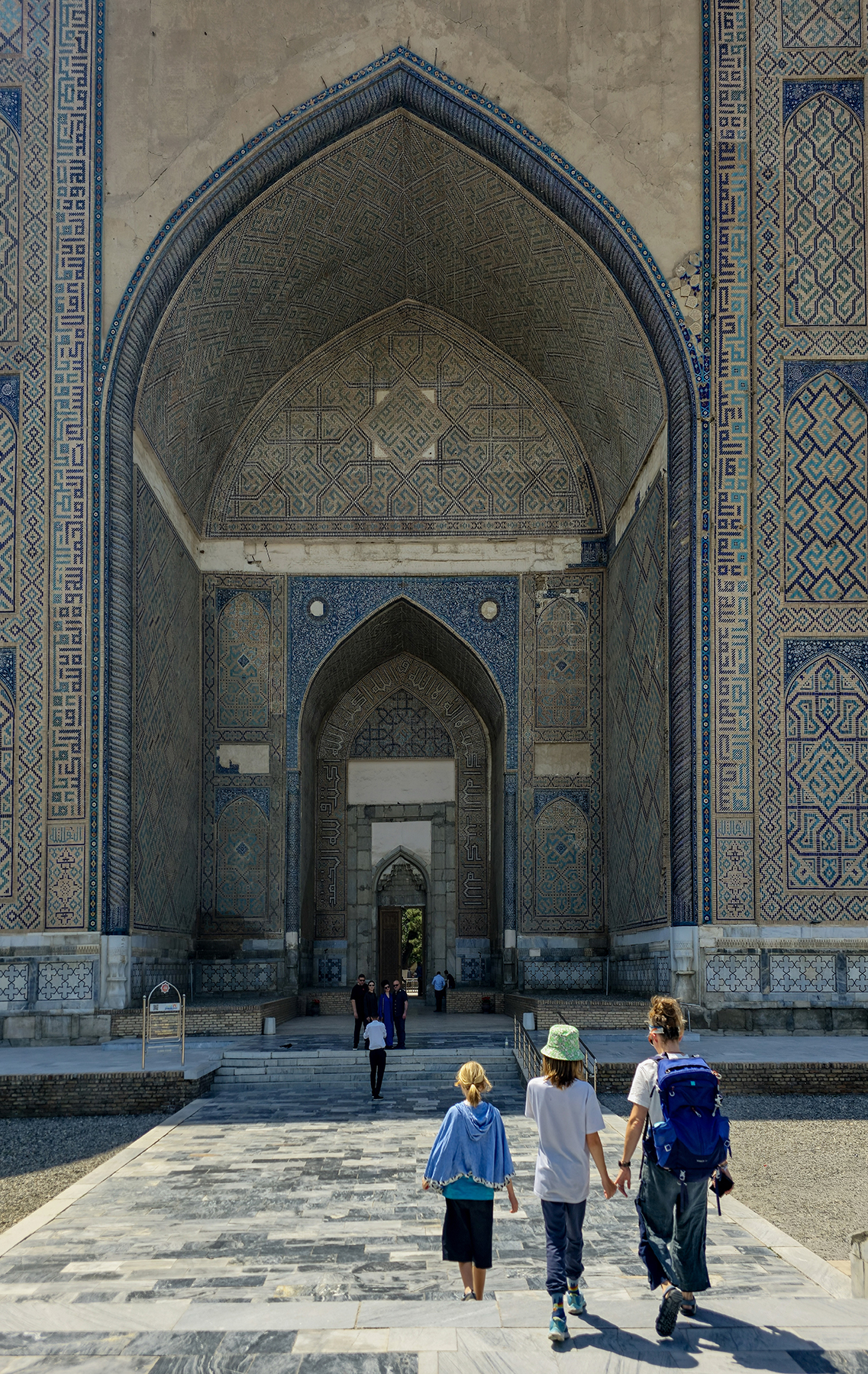
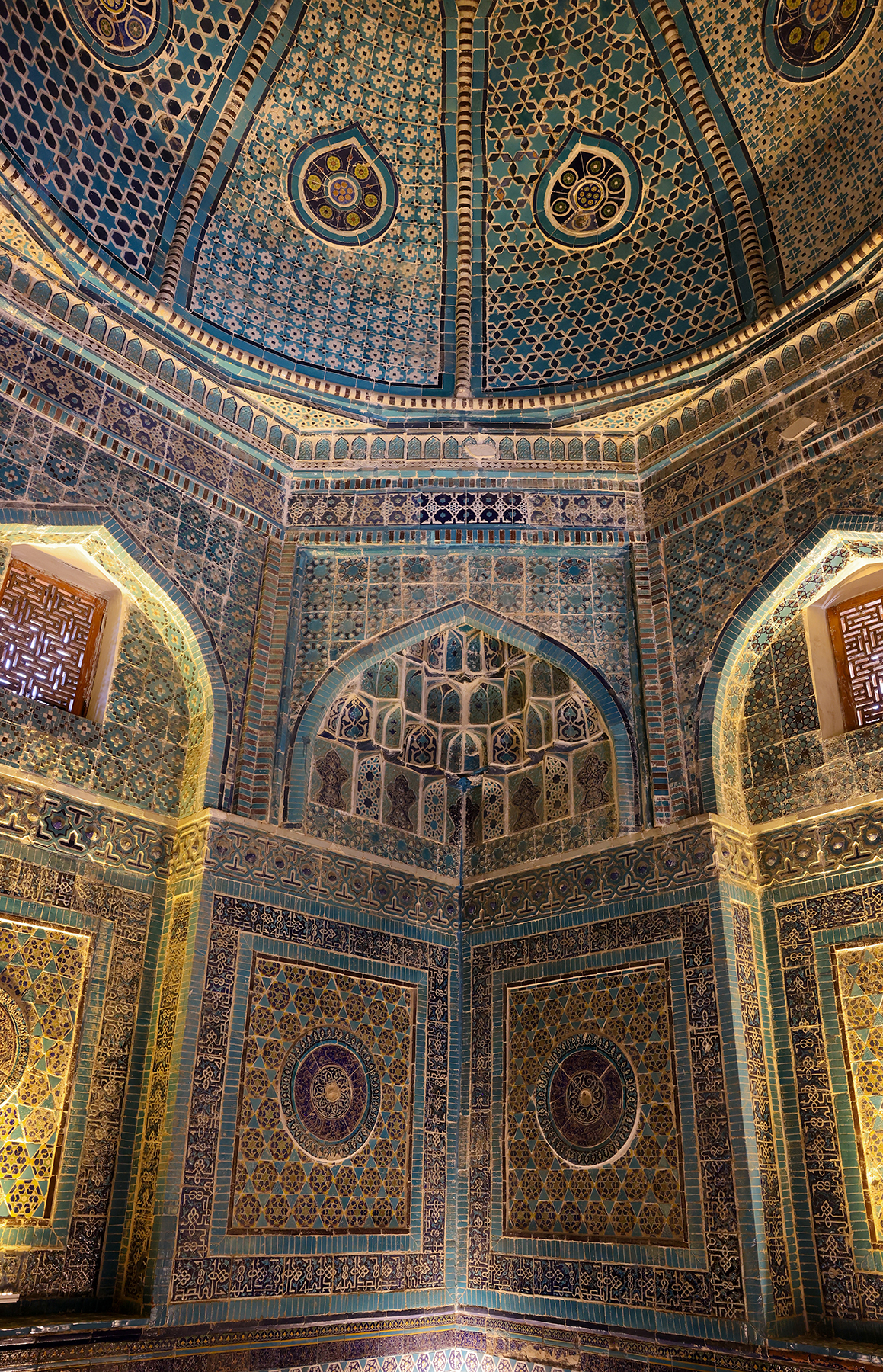

We quickly learned that much of Uzbekistan’s national identity is tied closely to the brutal military commander Amir Temur (also known as Tamerlane), a cruel conqueror who idolized Genghis Khan and established the Timurid Empire to cover much of the Asian landmass, including Central Asia, portions of Iran, Iraq, parts of southern Russia, and even parts of the Indian subcontinent. The Timurid Empire flourished during the years 1370-1507 and was notable for launching the “Timurid Renaissance” which included amazing advancements in math, astronomy, and sciences. These innovative advances in thought then spread west along the Silk Road, towards Rome – inspiring the more commonly recognized European Renaissance.
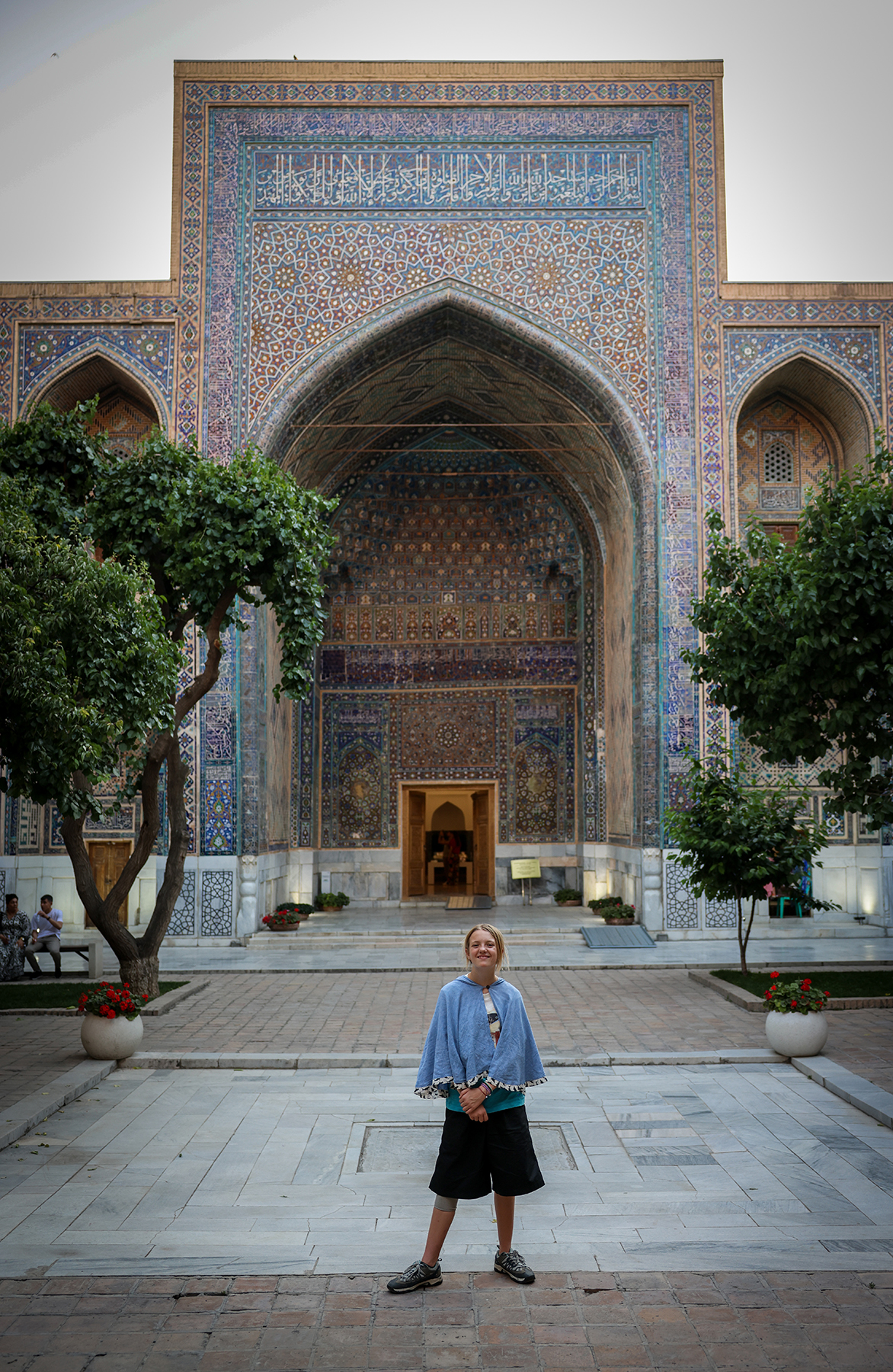
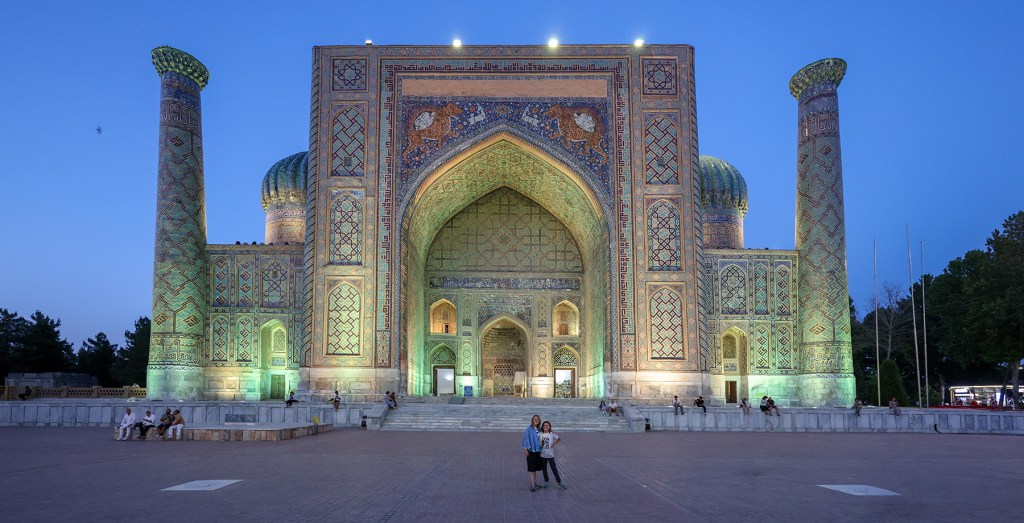
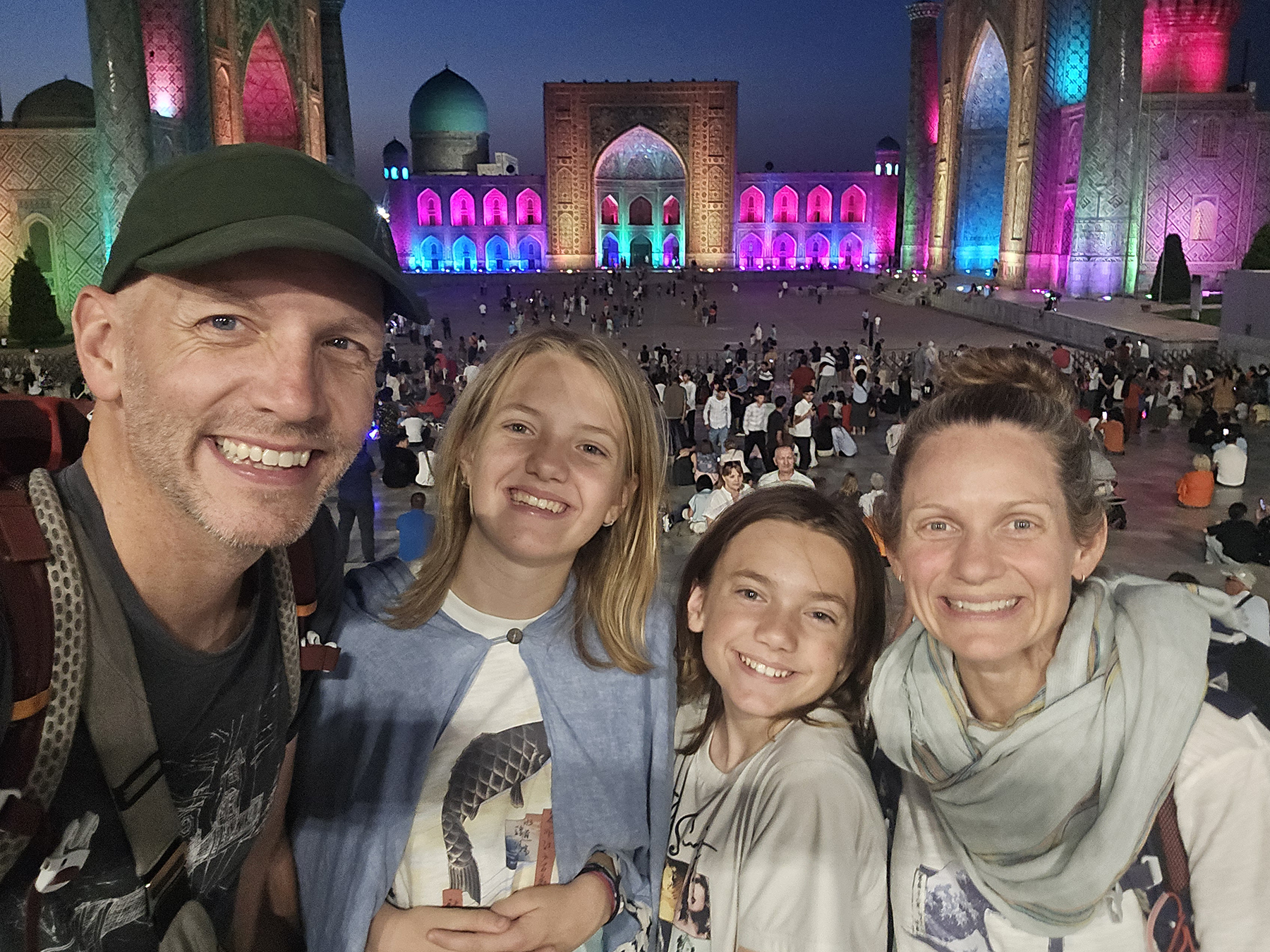
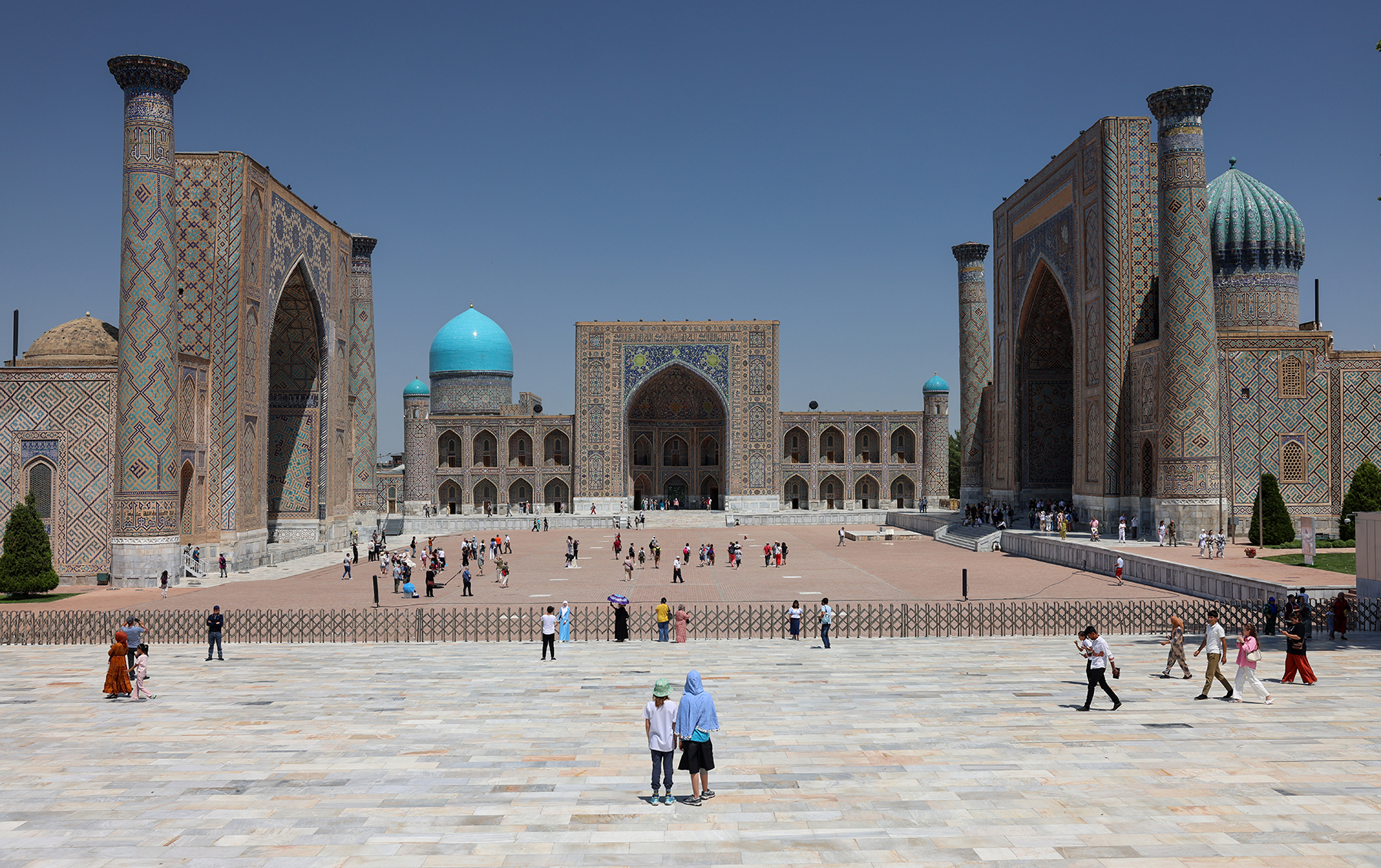
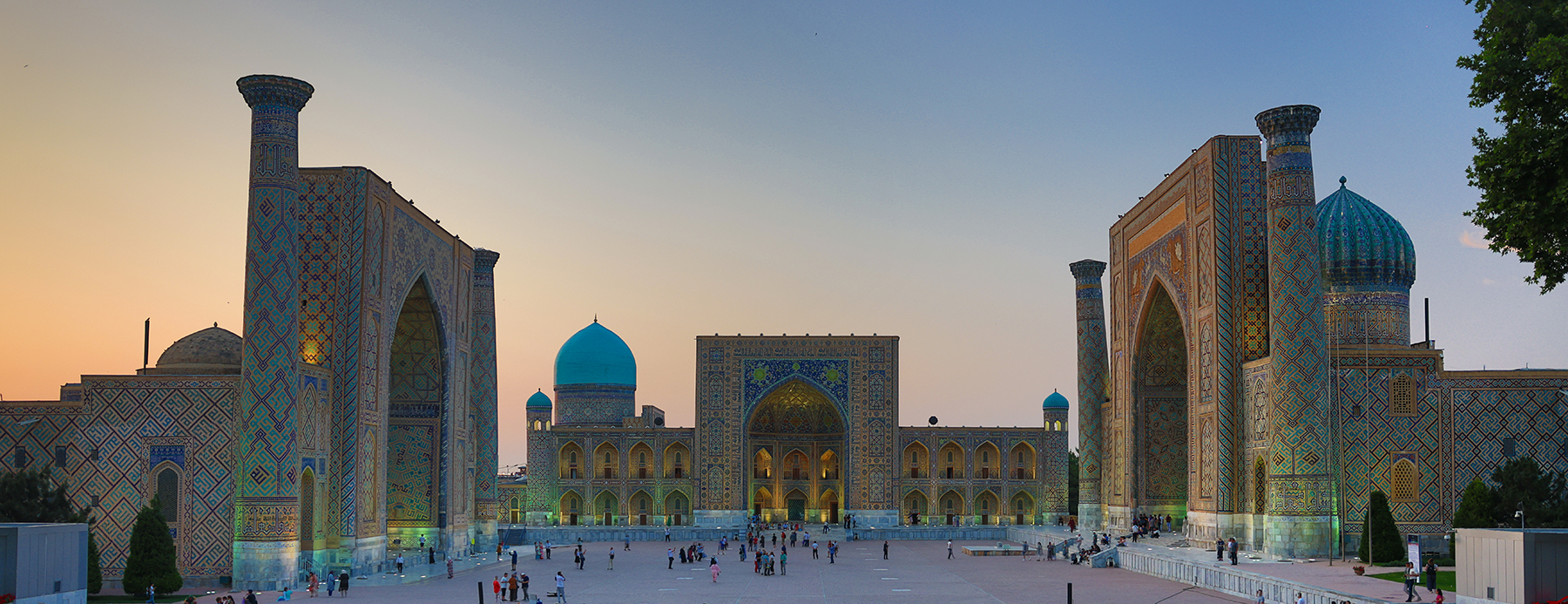
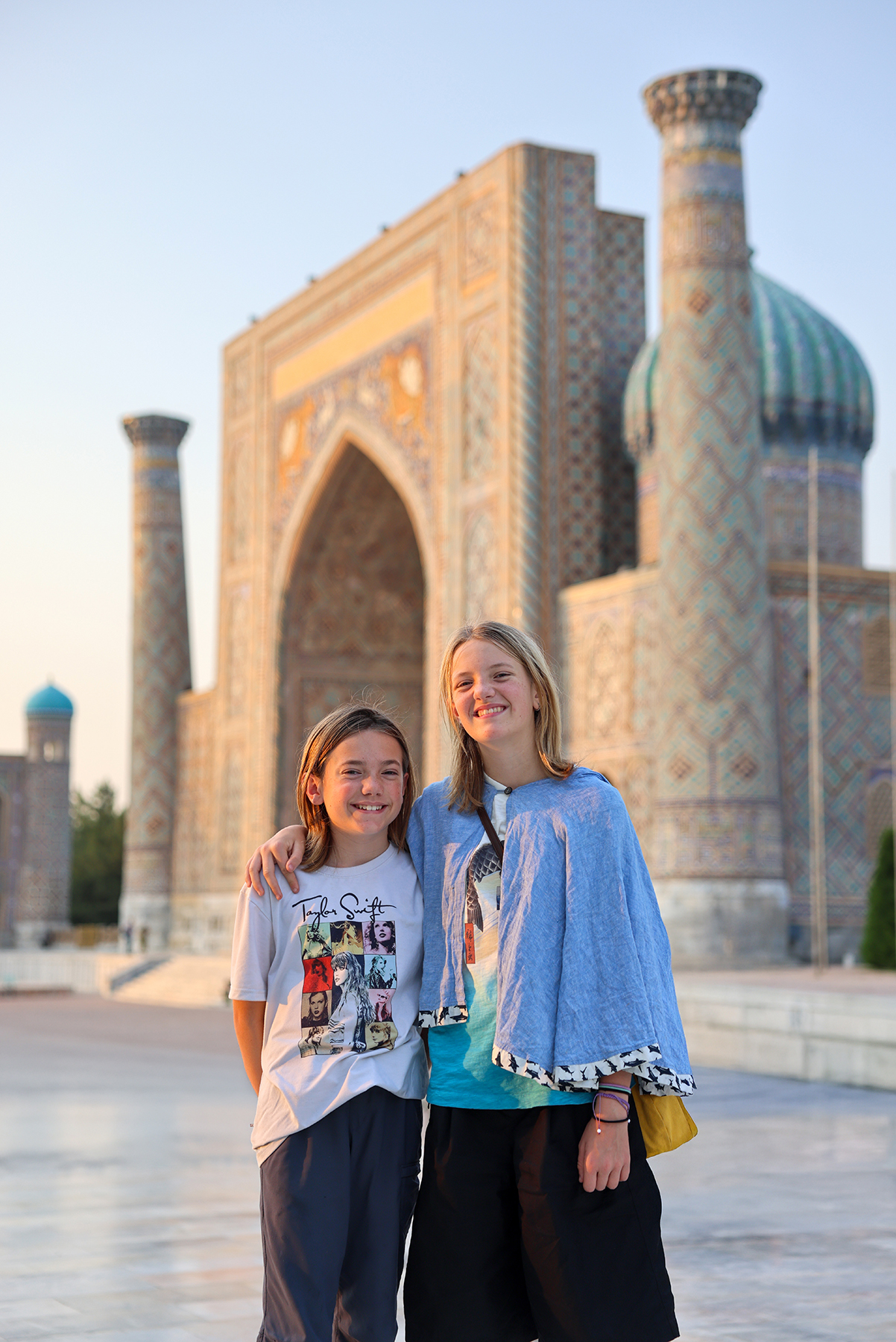
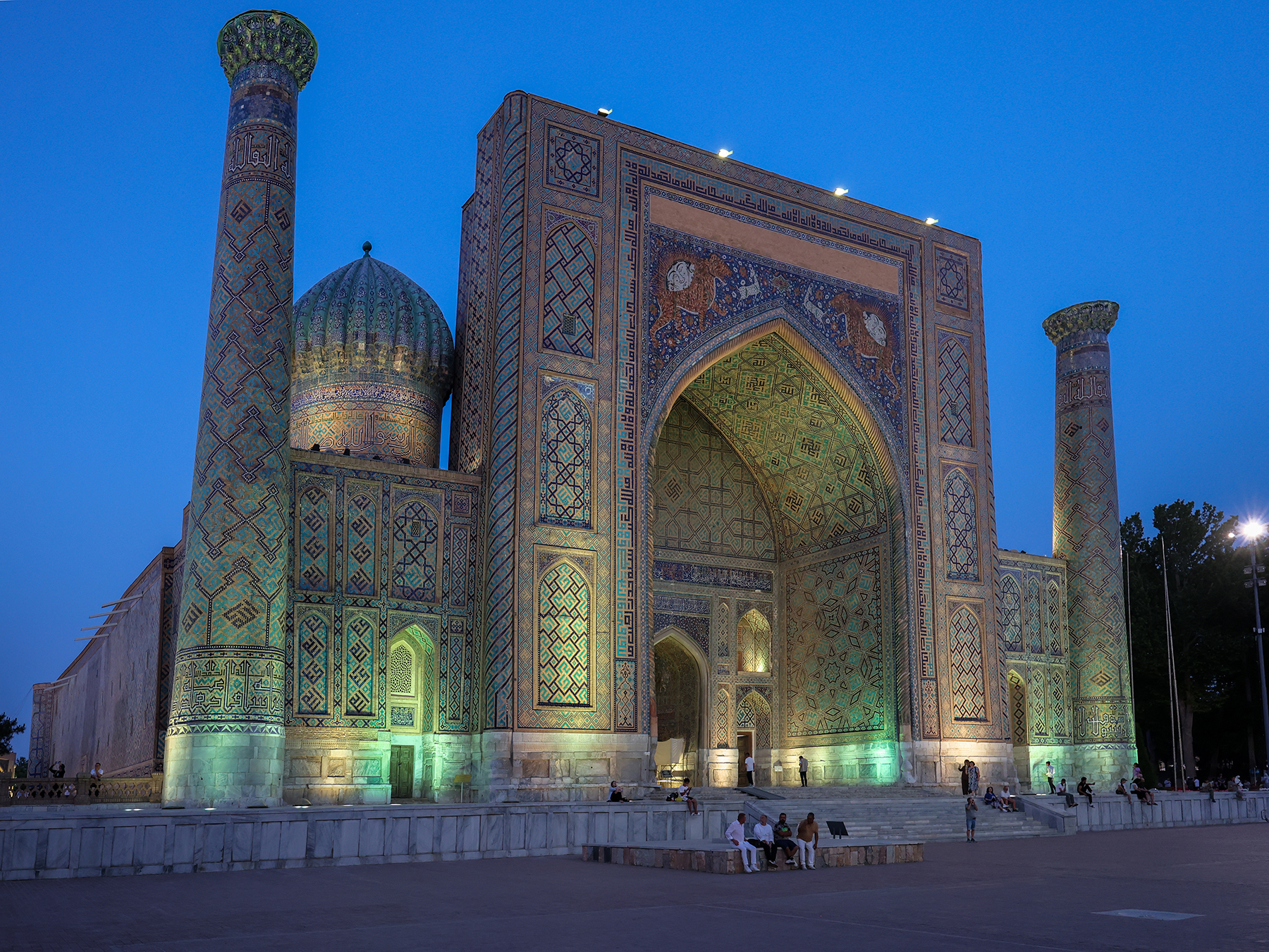
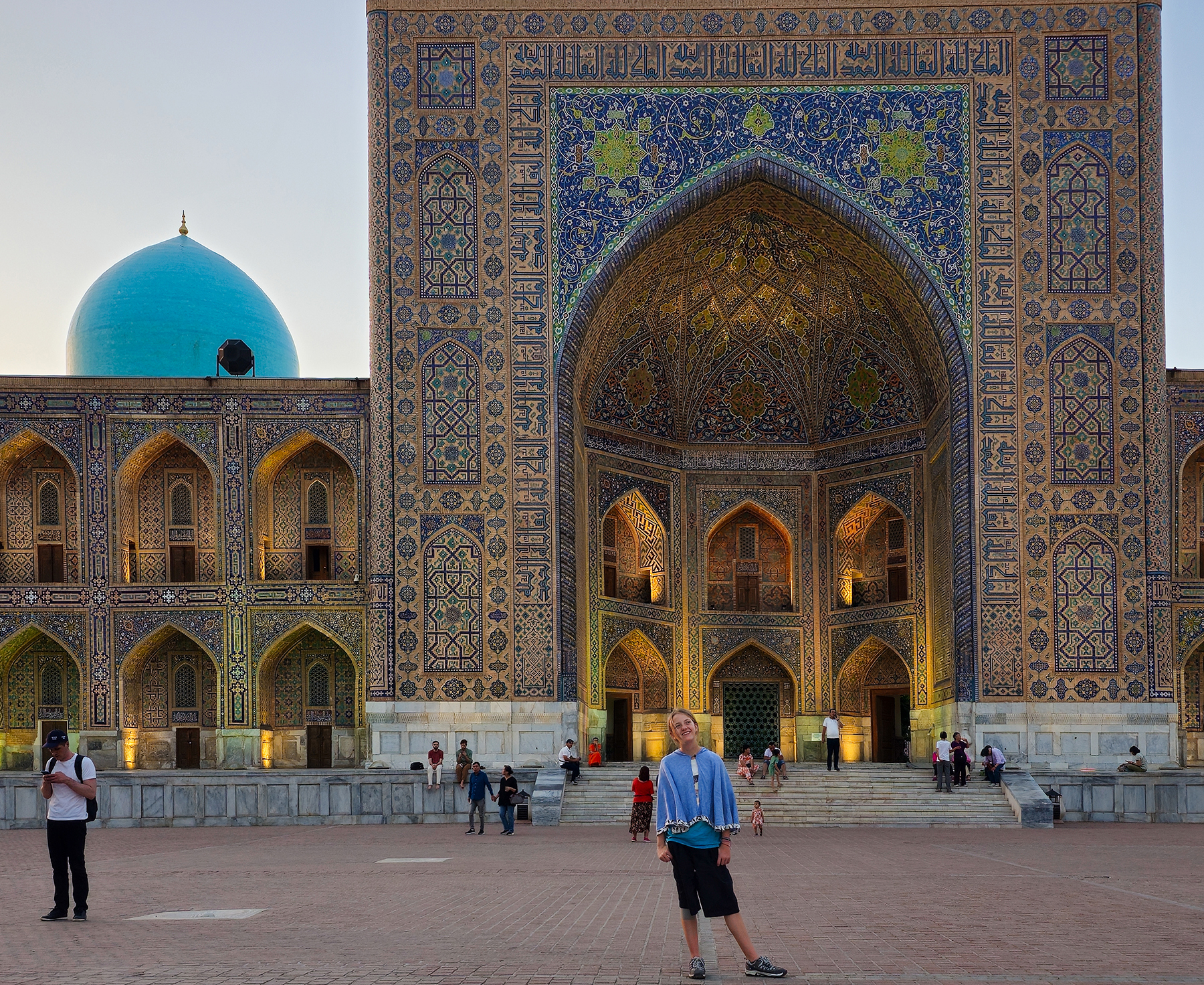
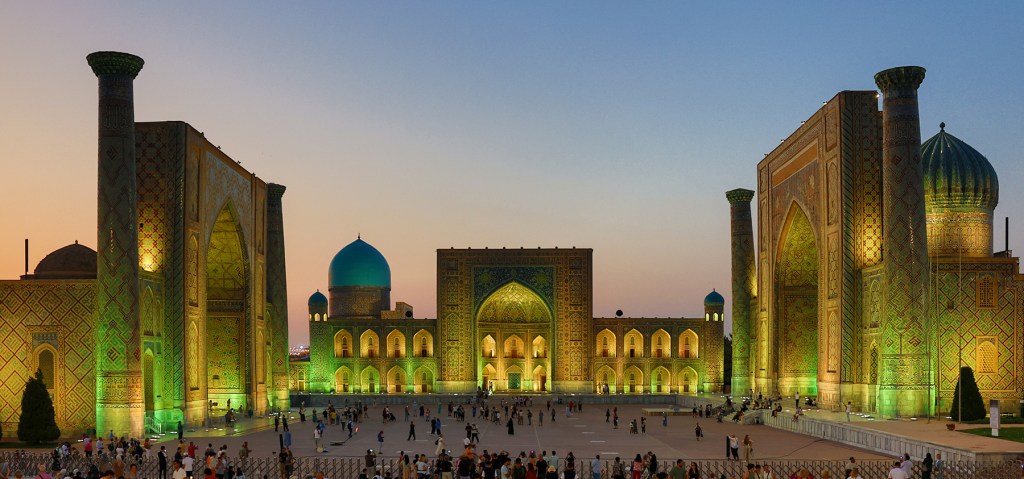
At the heart of Samarkand lies the architectural crown jewel of Central Asia: the breathtaking Registan Square. Three immense and ancient madrasas – centers of learning in science, mathematics, literature, and religion – flank its sides. In the evenings, the square comes alive with tourists and locals eating dinner, meeting friends, and enjoying the cool night air after the oppressive midday heat. One of our favorite family memories from Uzbekistan will be the four beautiful sunsets we witnessed in this uniquely wonderful place.



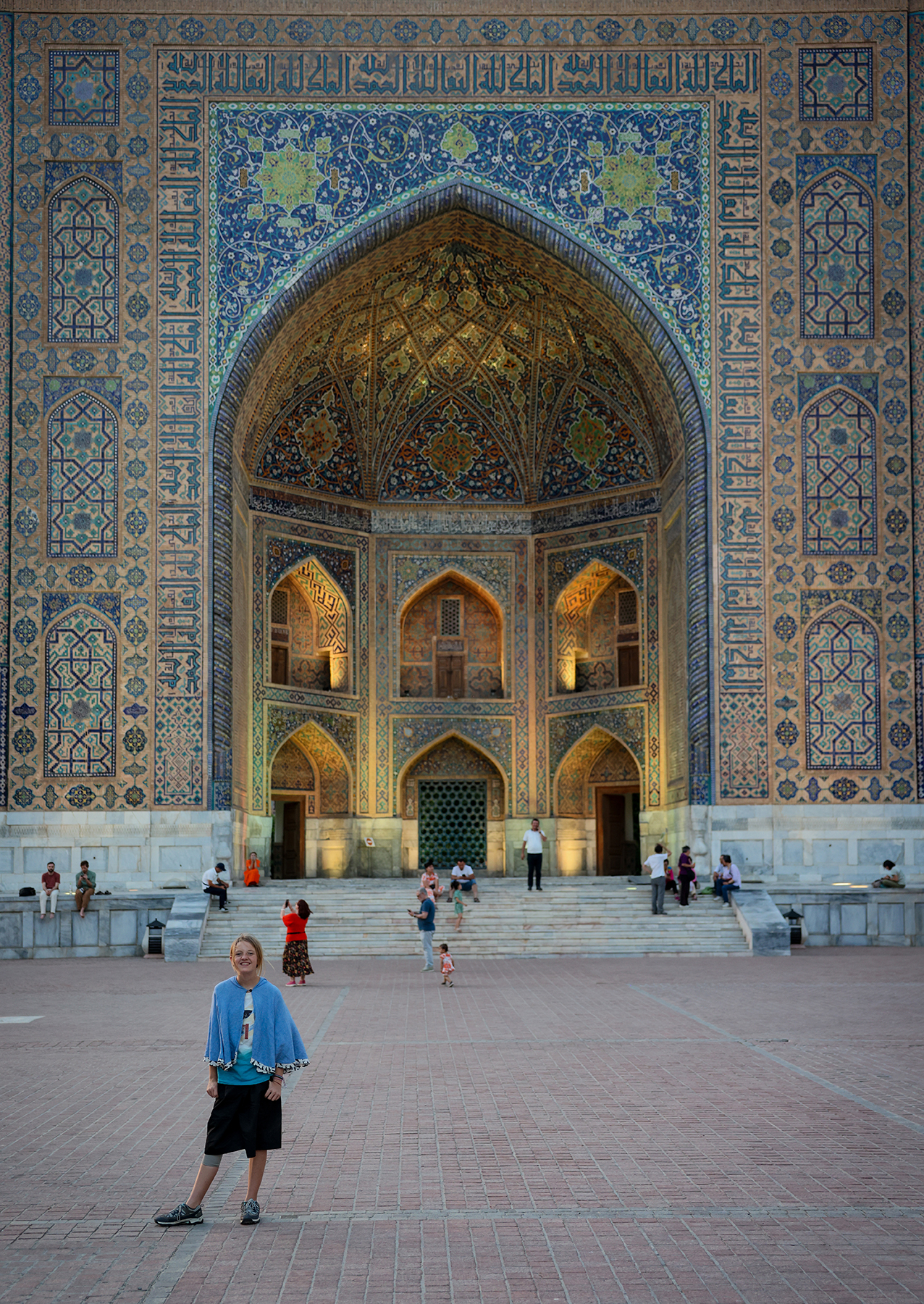
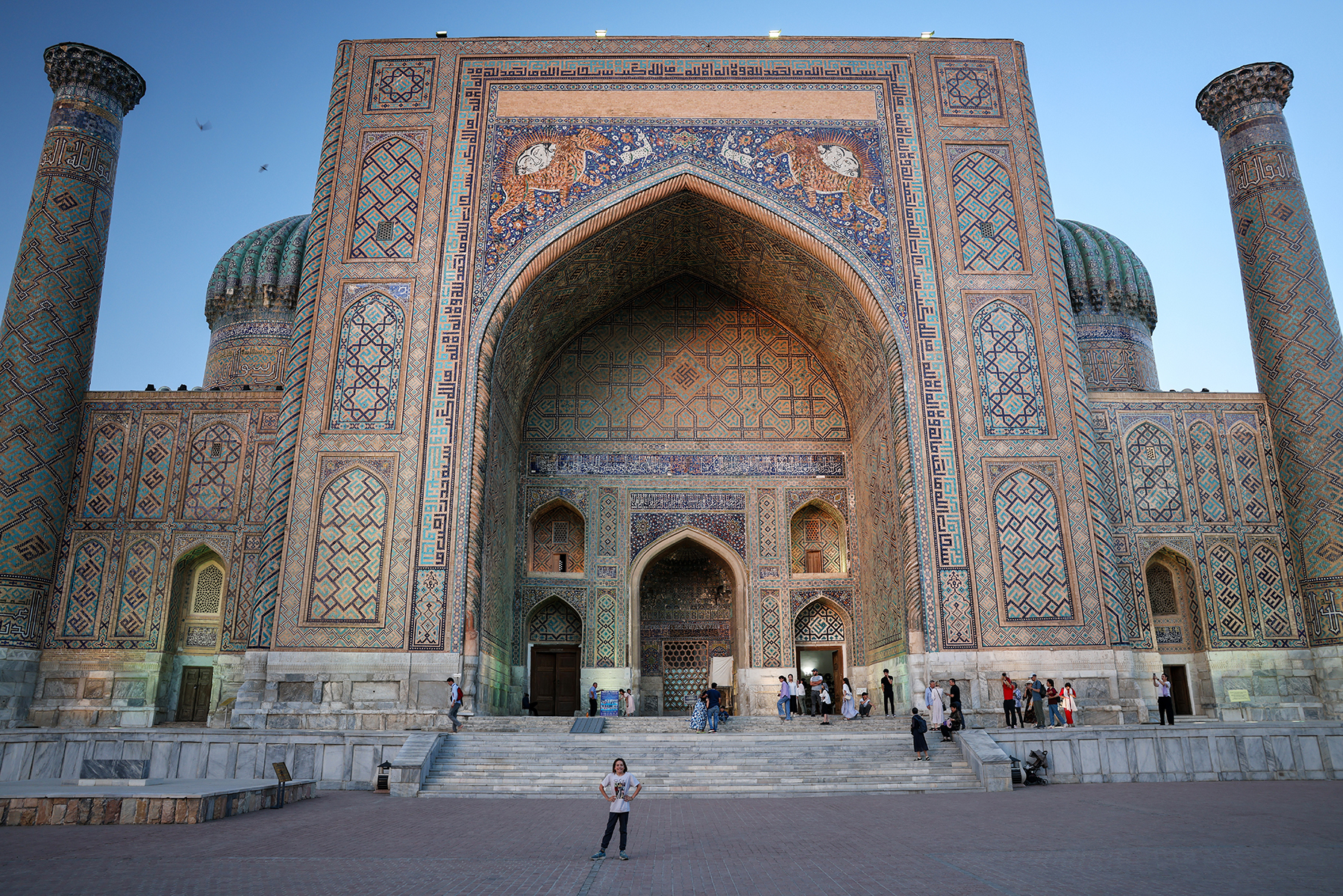


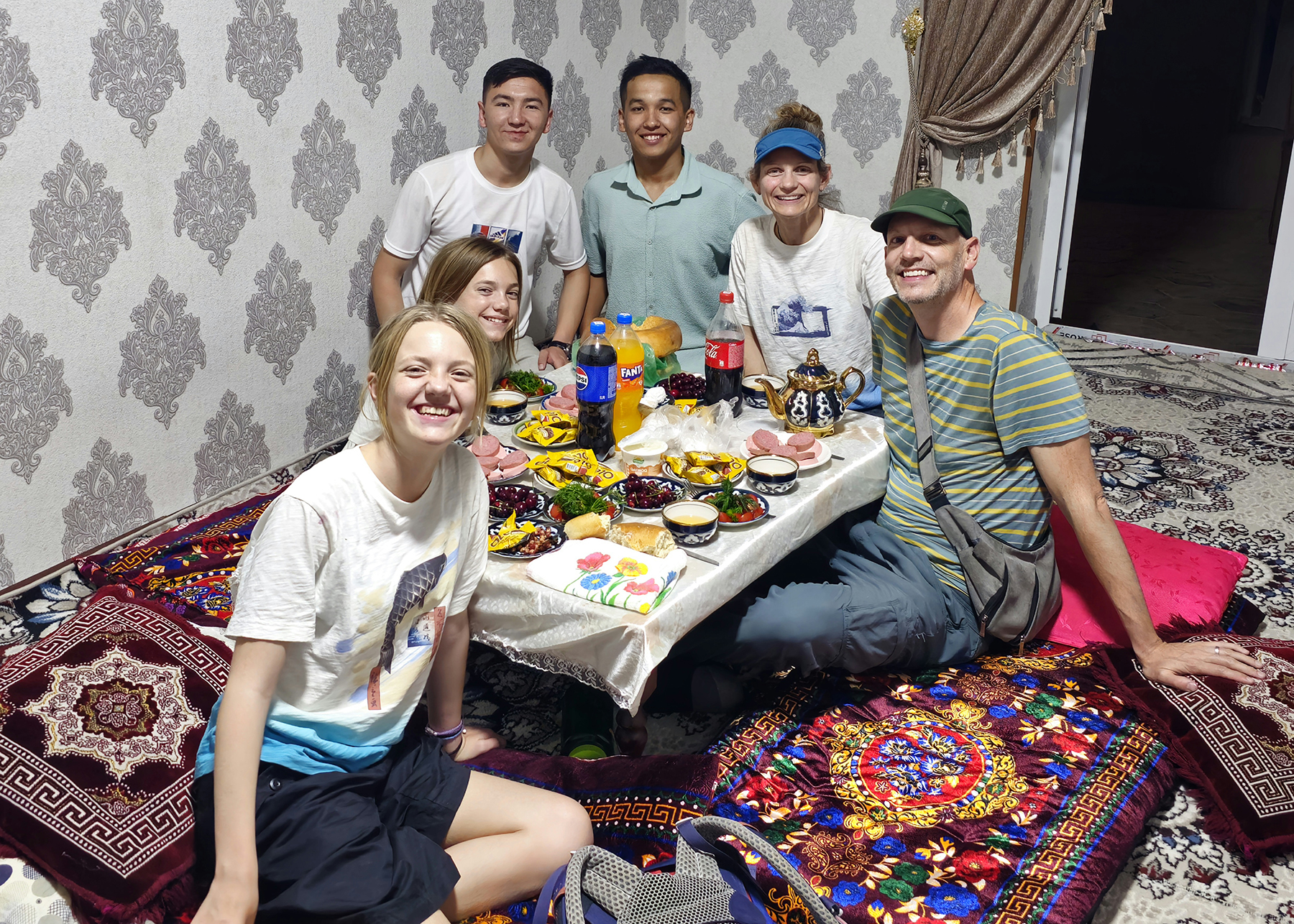
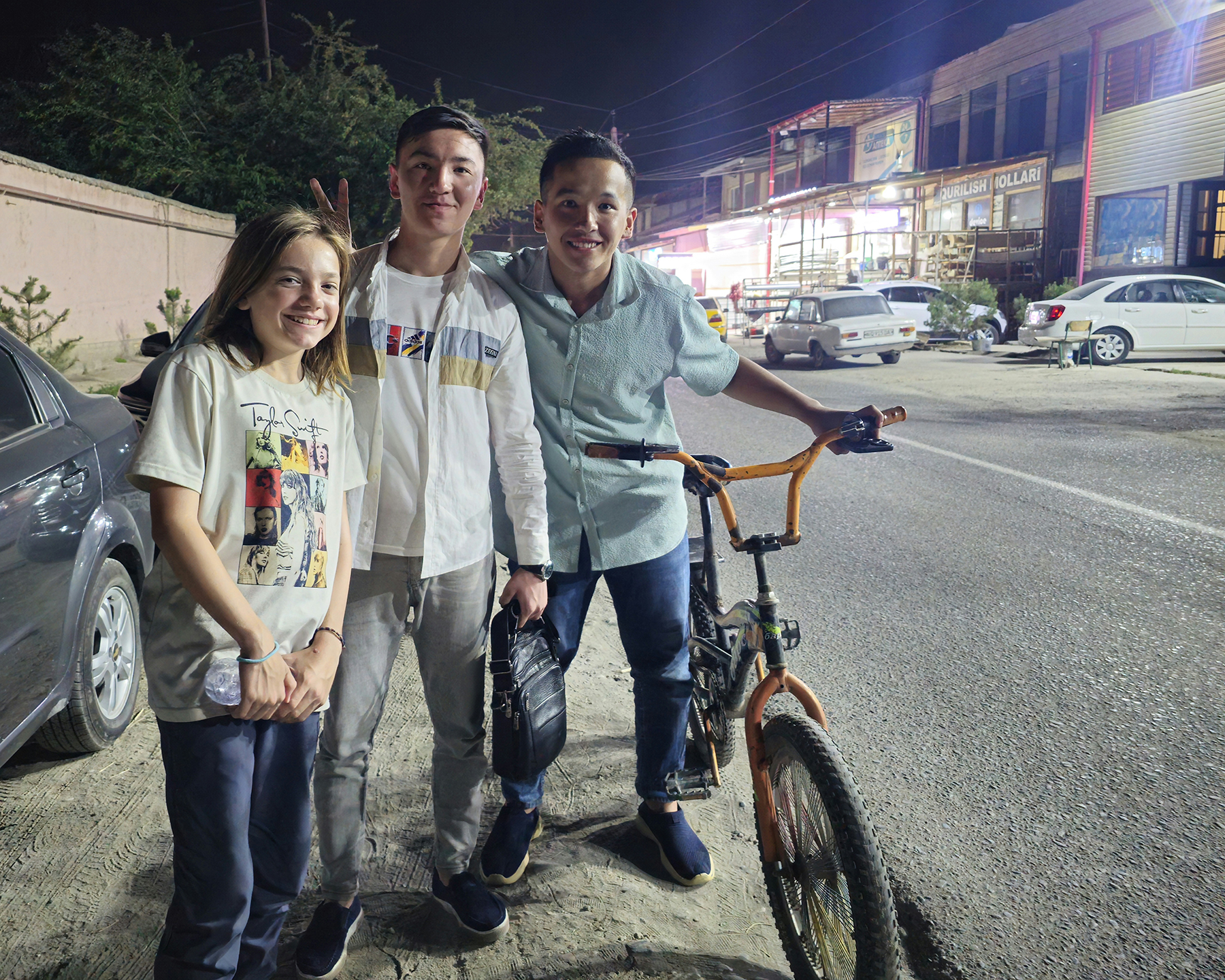
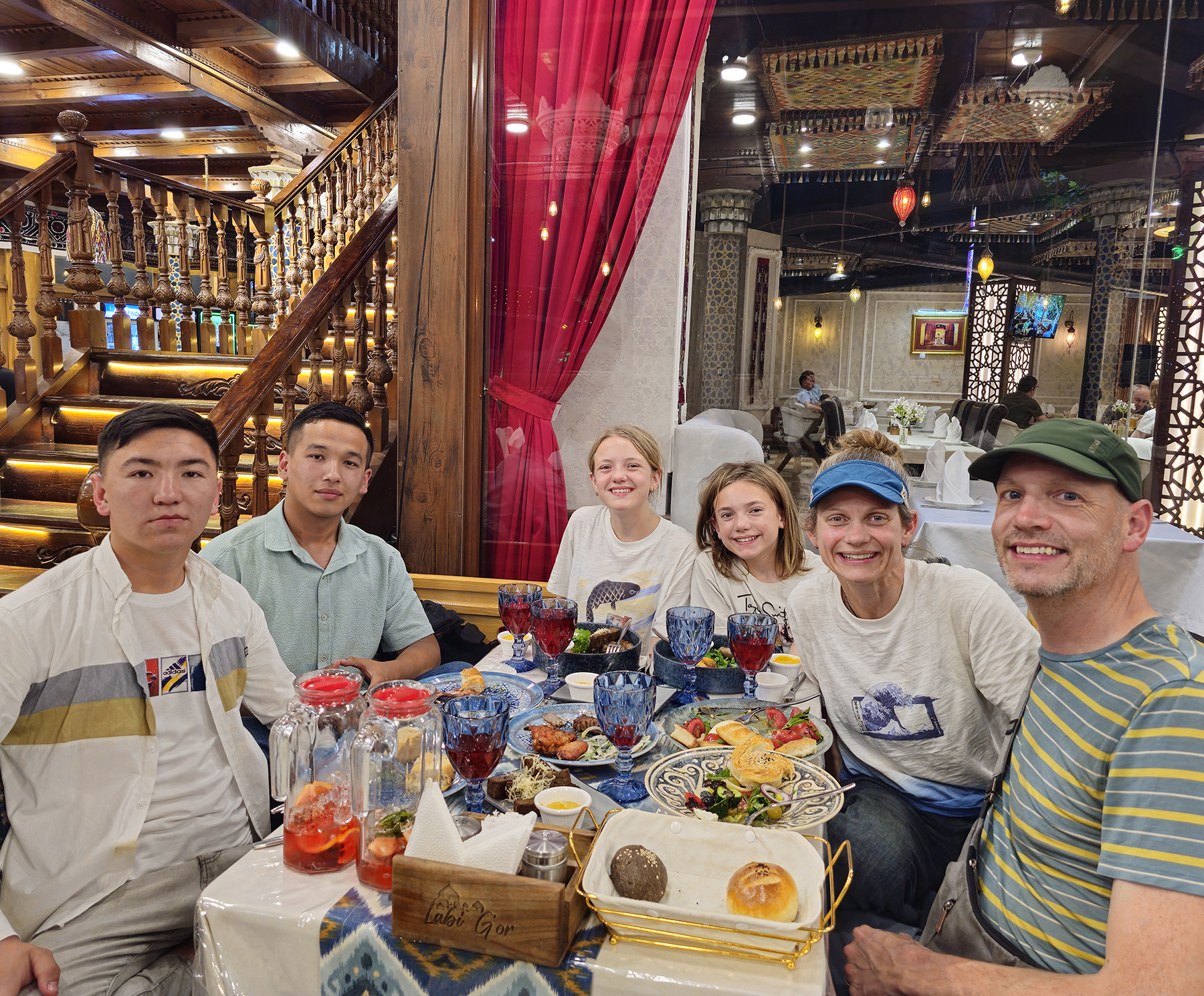
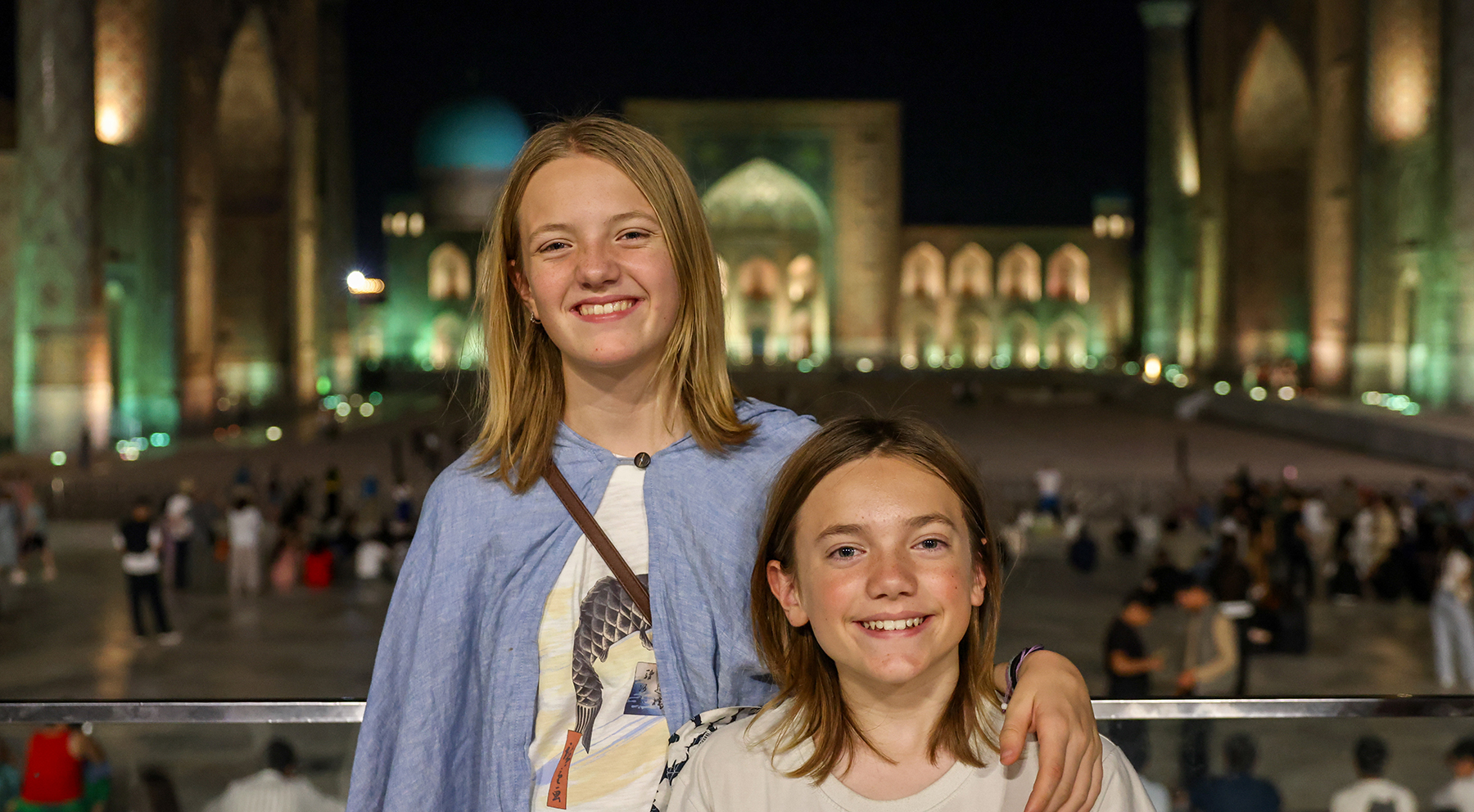
It was during these evenings in the Registan Square that we befriended two local high school boys eager to practice their English skills. Our new Uzbek friends, Hasan and Mirjalol, met us each night in Registan Square to chat, ask questions about American culture, and share stories of their own. These conversations were both fascinating and meaningful – we all gained a deeper understanding of the people, history, and culture of Uzbekistan. In fact, by our final night in Samarkand, we found ourselves walking the dusty roads of a remote village, invited into Hasan’s home to meet his extended family! What a rare and special honor. Hasan was convinced we were the only Americans ever to have visited that particular spot in Uzbekistan.

While in Samarkand, we also visited the Observatory of Ulugh Beg. Built by the grandson of Amir Temur during the Timurid Renaissance, it brought together some of the greatest mathematicians, architects, and astronomers of Central Asia. At its heart was the largest astronomical instrument of its time: a highly-accurate meridian arc with a radius of 40m, which allowed Ulugh Beg to compile a star catalog charting 1,018 celestial bodies.
Tragically, much of the observatory was destroyed shortly after Ulugh Beg’s death – an especially sad story, as he was murdered by his own son, who then ordered the destruction of the observatory. Fortunately, his son wasn’t particularly clever; he failed to realize that a significant portion of the meridian arc was located underground. Hidden for centuries, this underground section survived and was rediscovered by an archaeologist in 1908.
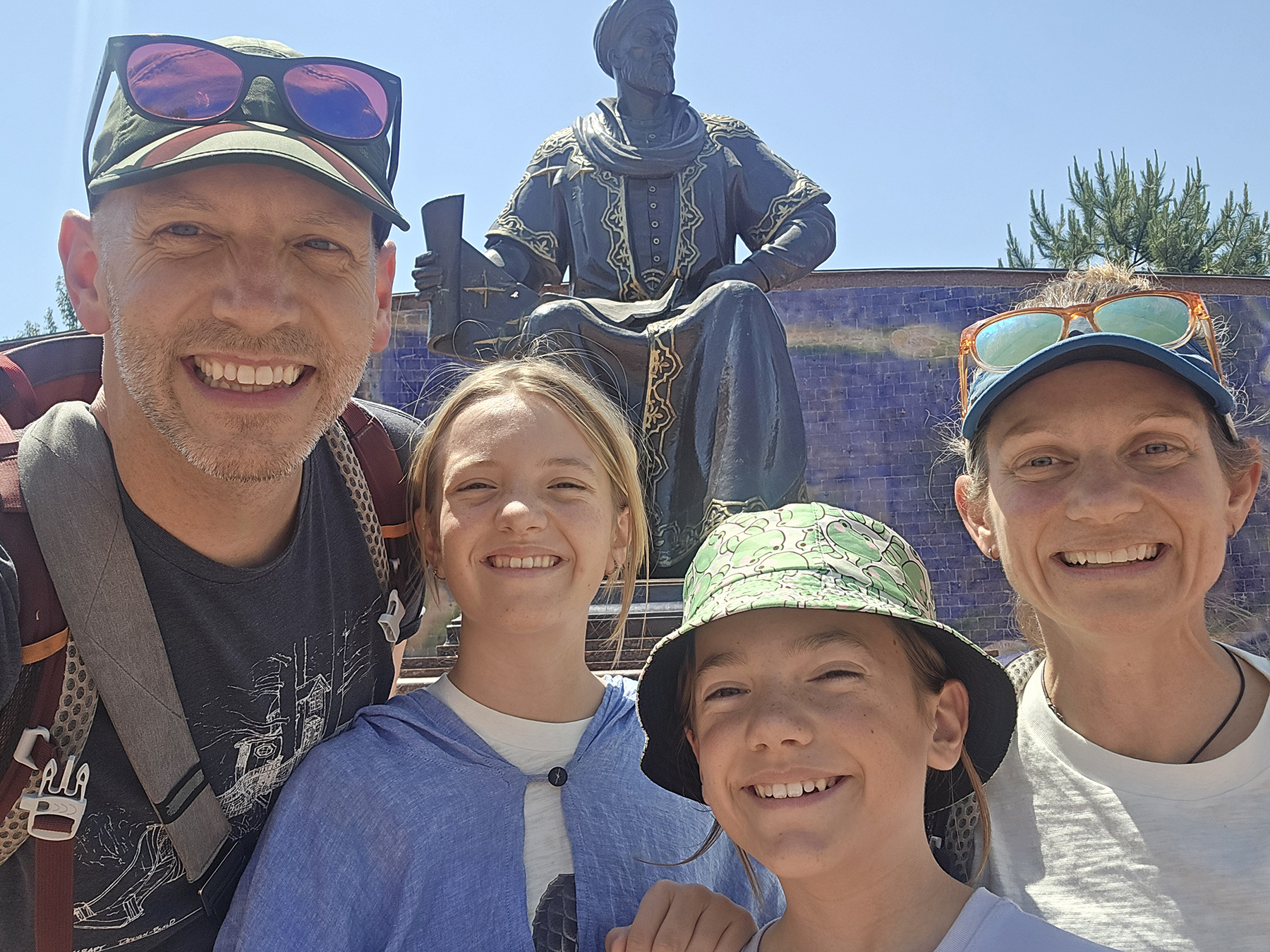
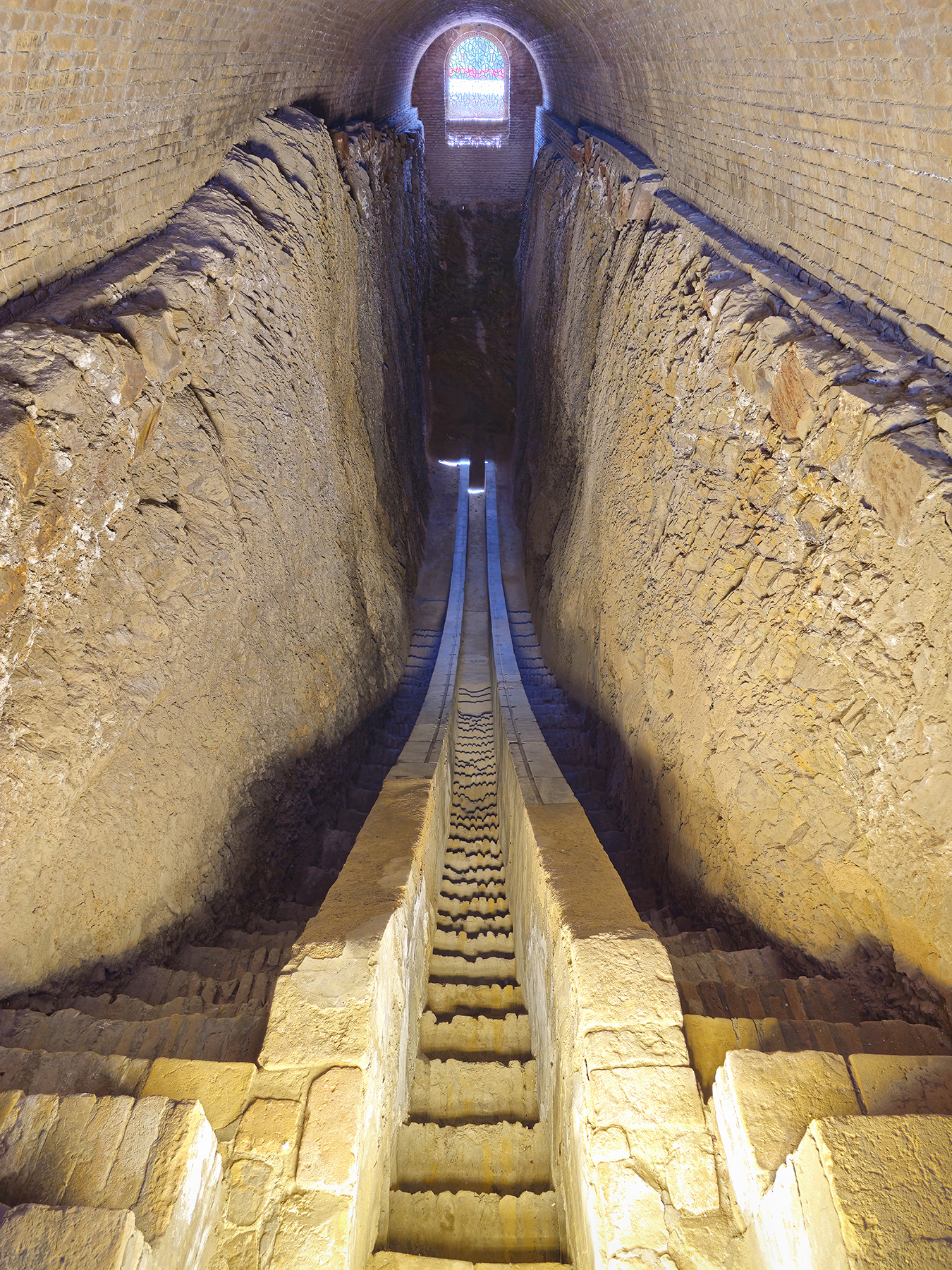
We were able to enter through a portal and view the original astrolabe, now part of a small modern museum. The museum also houses manuscripts, Ulugh Beg’s star charts, and a miniature model of the observatory itself. As you can imagine, Howie (who clearly loves all things astronomy) was absolutely thrilled to explore this historic site.
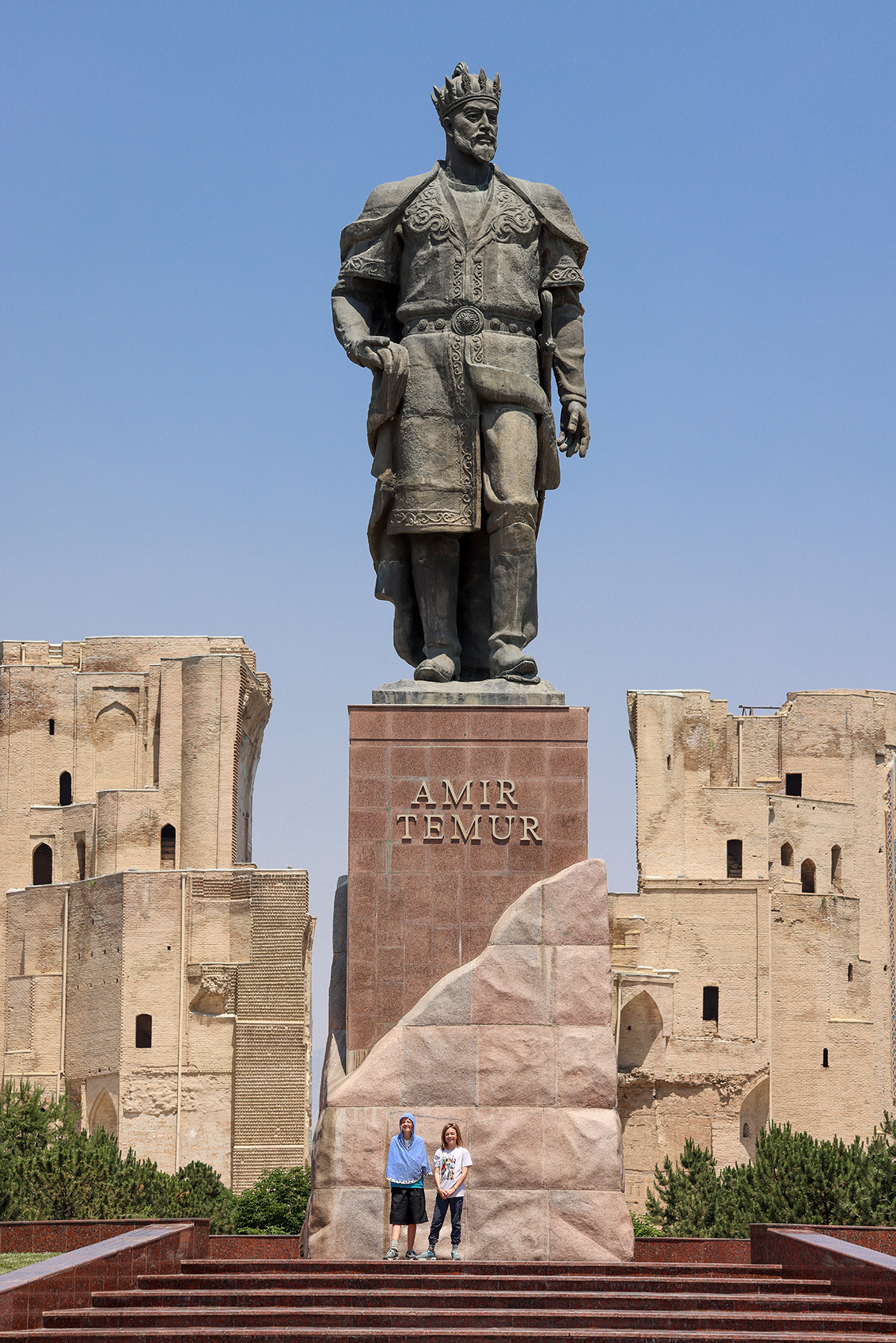
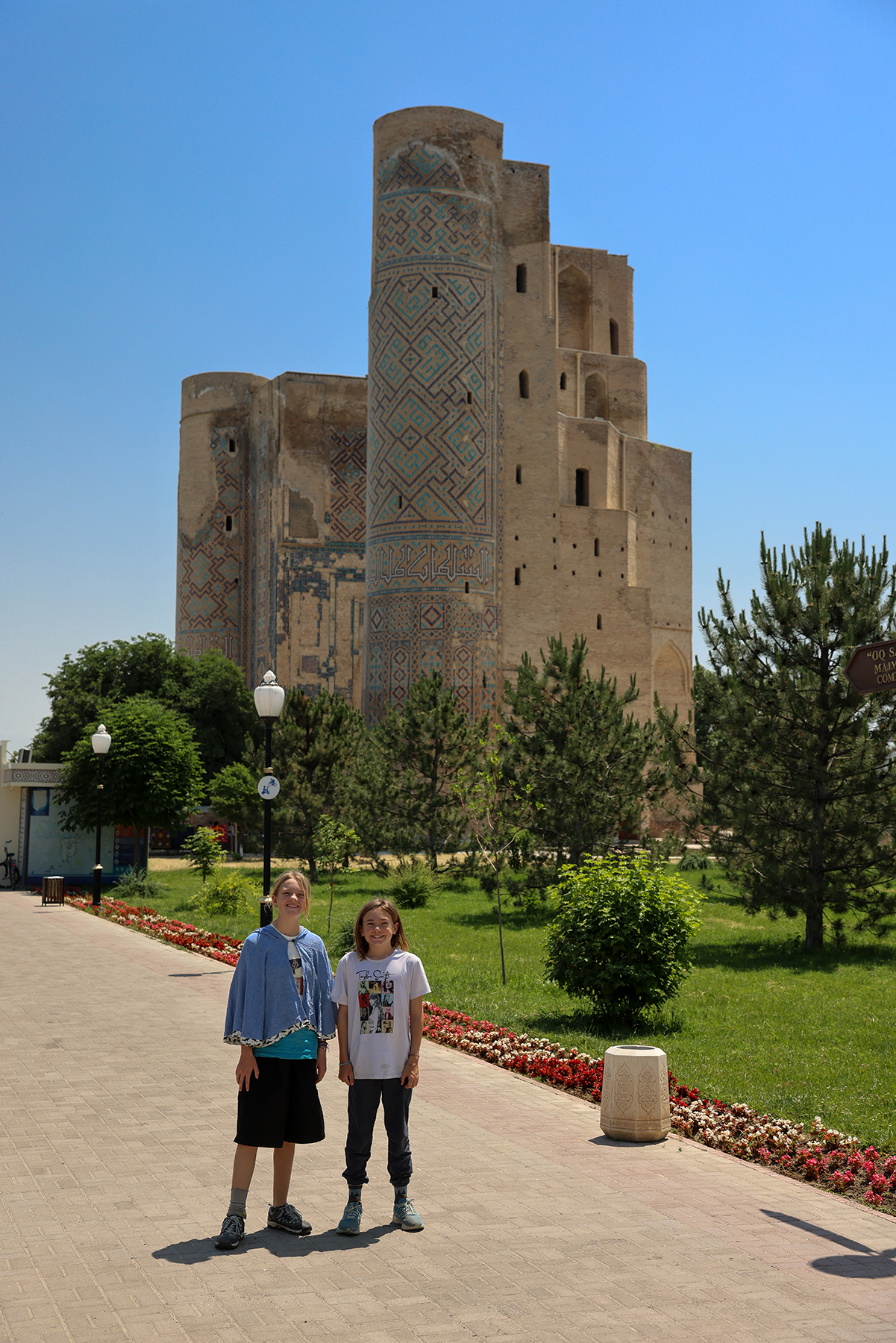
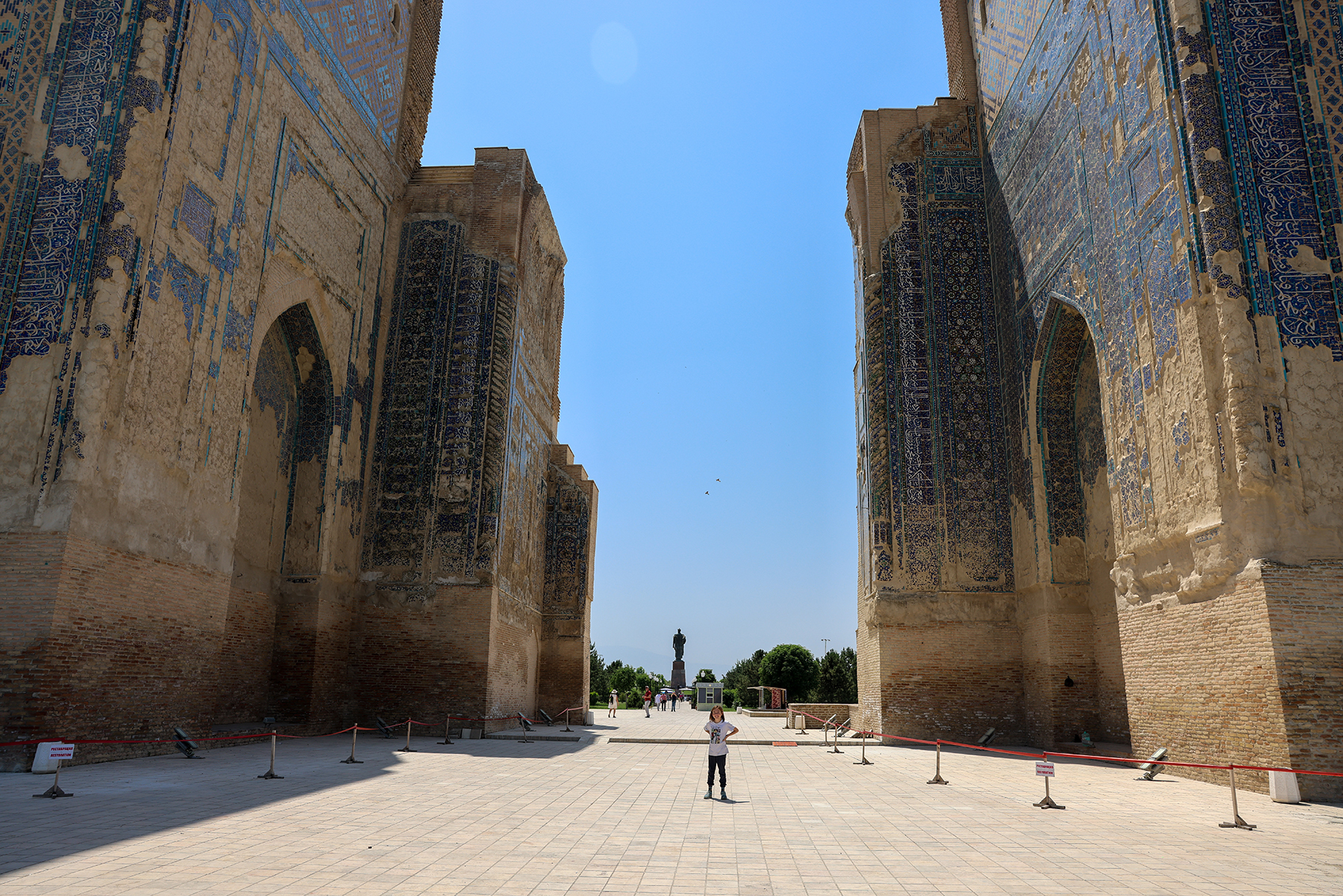
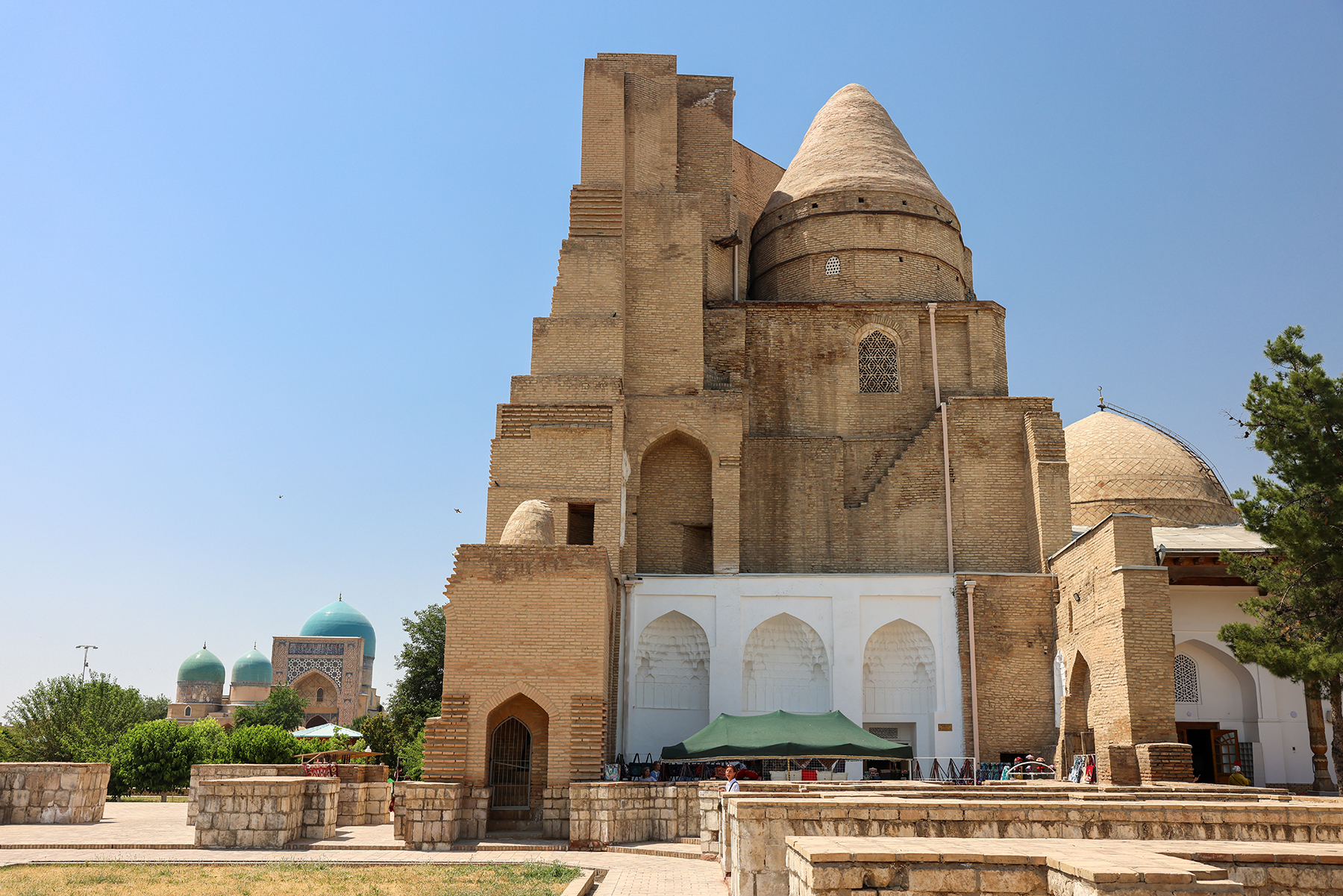
During our time in Samarkand, we also took a day trip to visit Amir Temur’s birthplace in the town of Shahrisabz (just north of the border with Afghanistan). Temur’s palace was built on this site during his reign, and while the palace has not been fully restored, portions of the massive entry gate still remain, and an absolutely colossal statue of Amir Temur has been erected on the grounds where his mighty palace once stood. The scale of it all is… a lot to take in.

Another highlight of our time Samarkand included a probably “less-than-legal” (but perhaps not entirely illegal) climb up the very tight stairwell in a leaning minaret at the Madrassa of Ulugh Beg. From the top we had an incredible aerial view of the beautiful Registan Square, and the entire city of Samarkand.







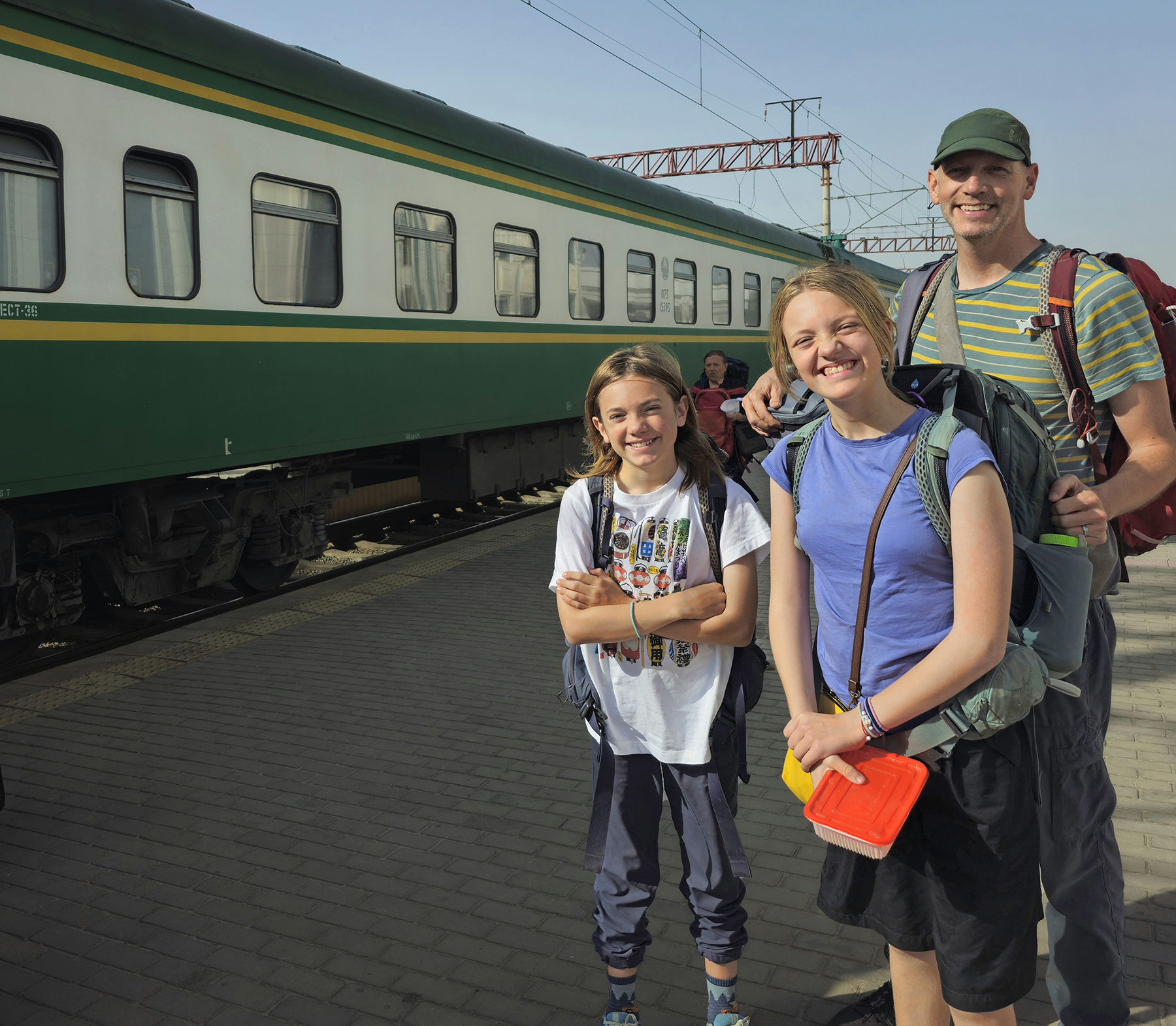
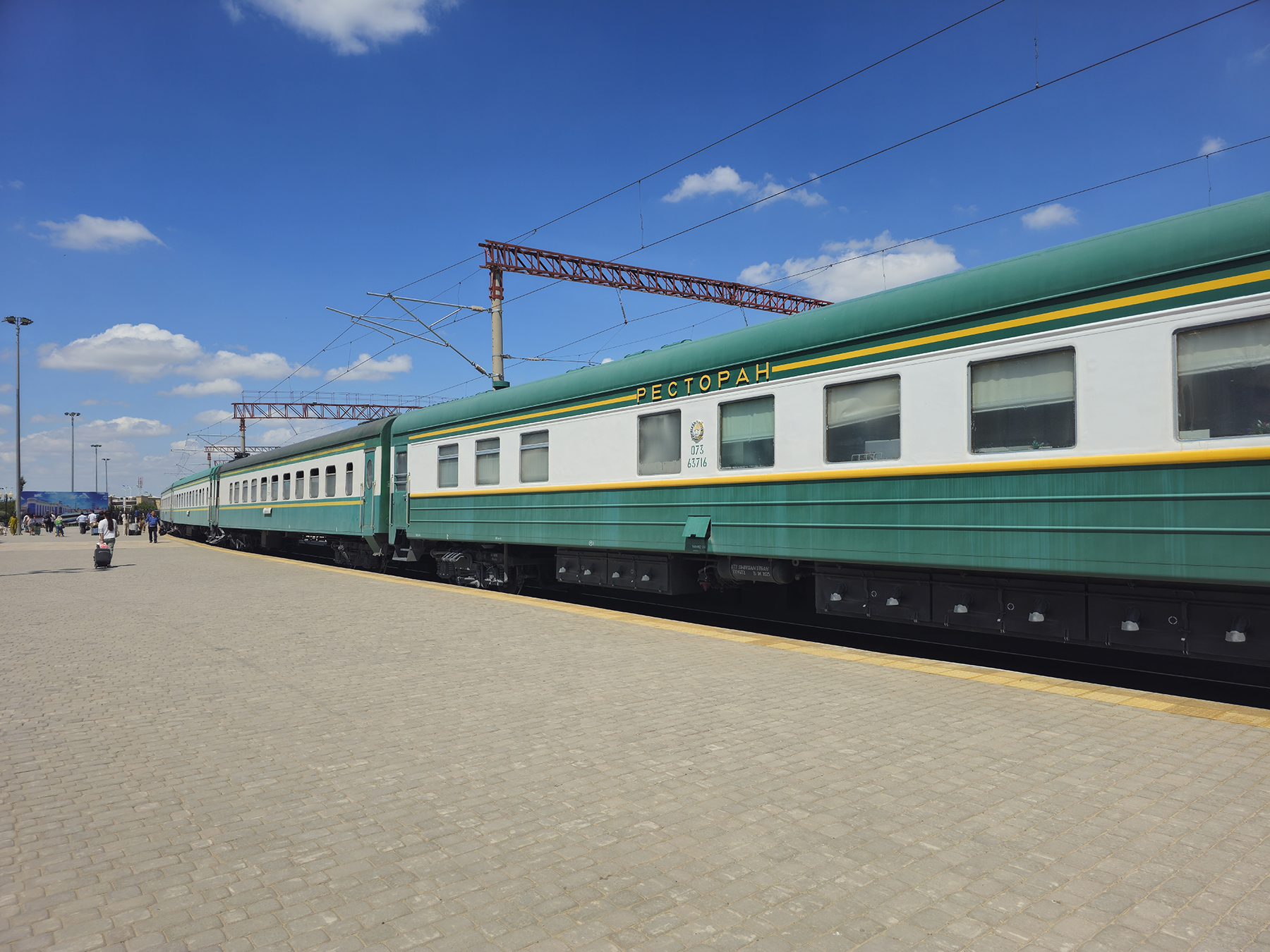
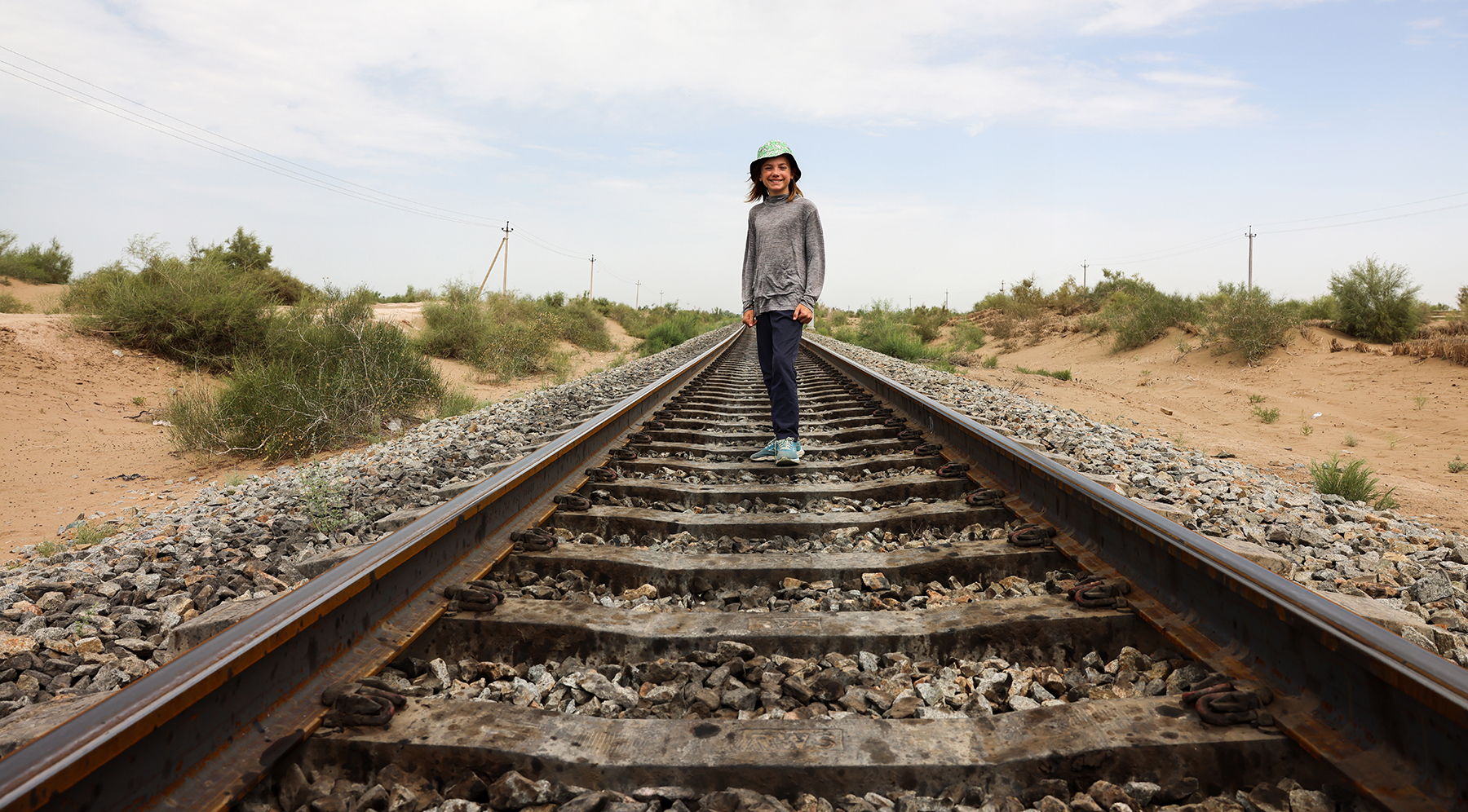
We traveled between cities in Uzbekistan on Soviet-era trains that ran on a rather unpredictable schedule. You’re probably picturing chaotic train stations with minimal communication, followed by hours of travel across the vast, desolate desert landscape of Central Asia in aging train cars. Whatever image just popped into your mind is probably spot on. Now add lots of heat – our travel days topped 100 degrees Fahrenheit. Any attempt at climate control was laughably ineffective.
A far cry from the high-speed Shinkansen bullet trains we’d ridden in Japan, these Uzbek passenger cars were definitely a memorable part of the “sabbatical year experience.” Our wild train journeys took us from Samarkand to the historic cities of Bukhara and Khiva, with the final leg (a 15hr overnight ride) bringing us to the Uzbek capital of Tashkent.

Highlights from our 3 days in the city of Bukhara included:
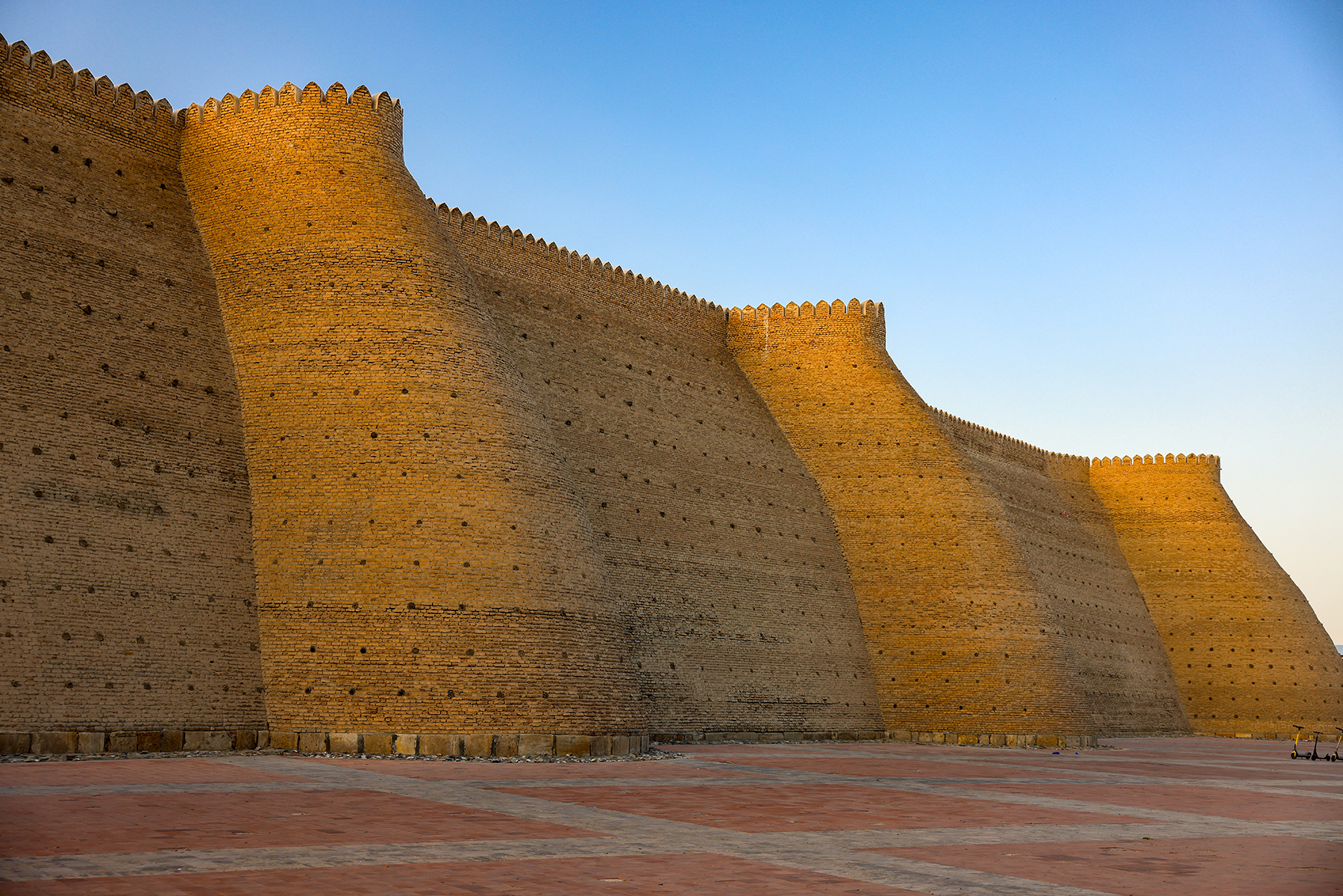
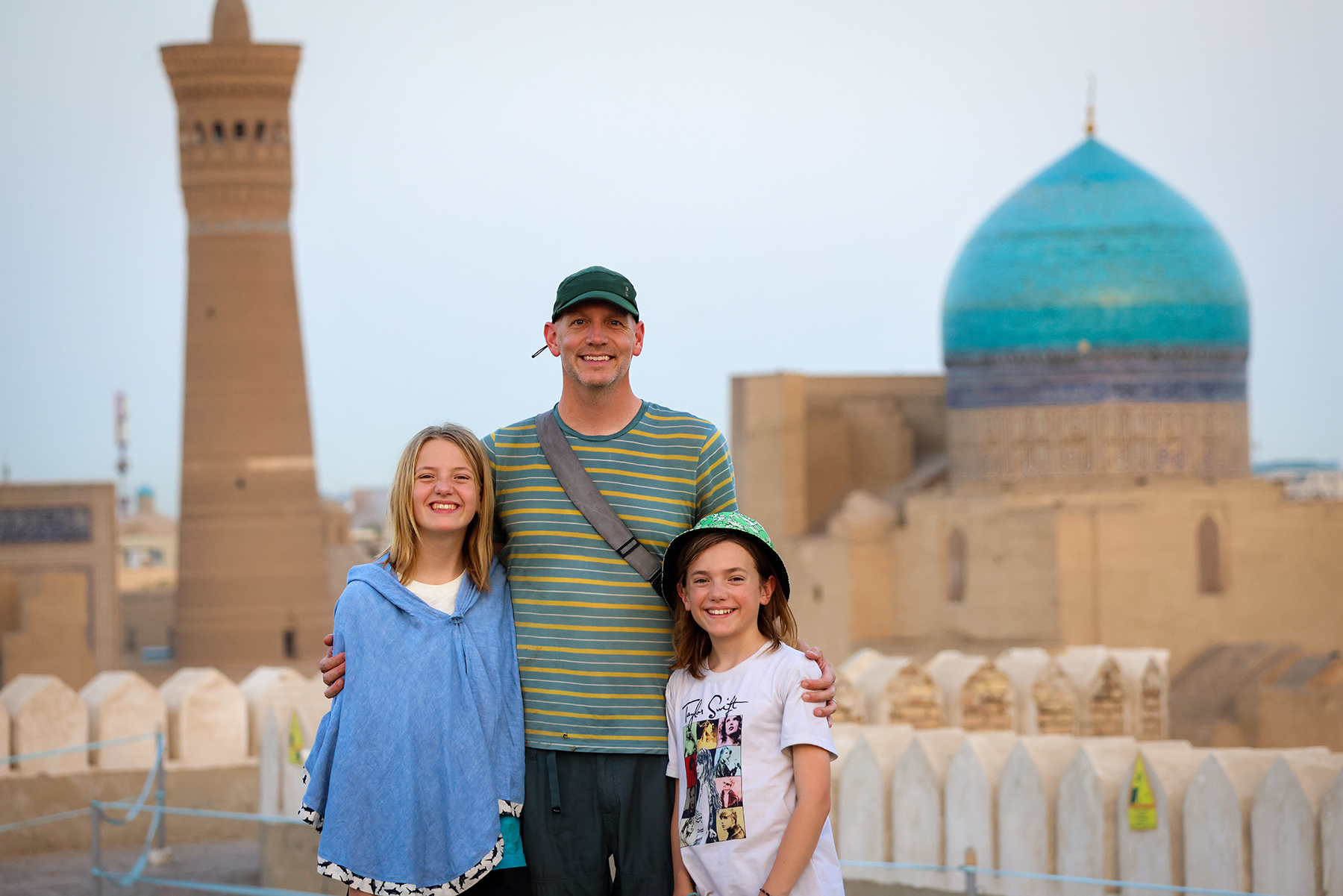
Enjoying the sunset from the high fortress walls on the Ark of Bukhara. Over 1,500 years old, this massive fortress once housed royal families until the early 20th century. Today, it stands as the most well-preserved ancient stronghold in Central Asia. An evening family walk along its upper walls offered breathtaking views over the historic city below.
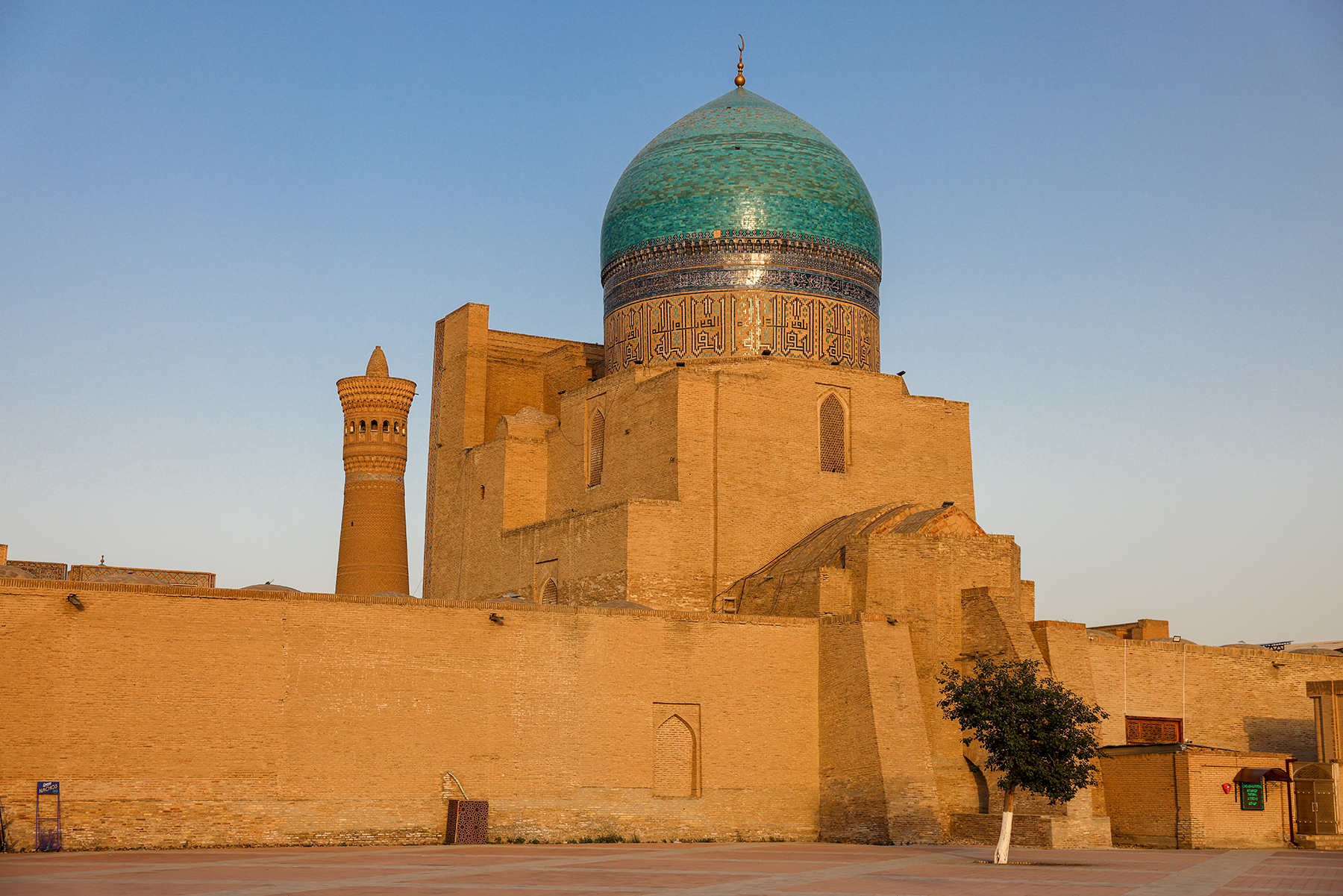

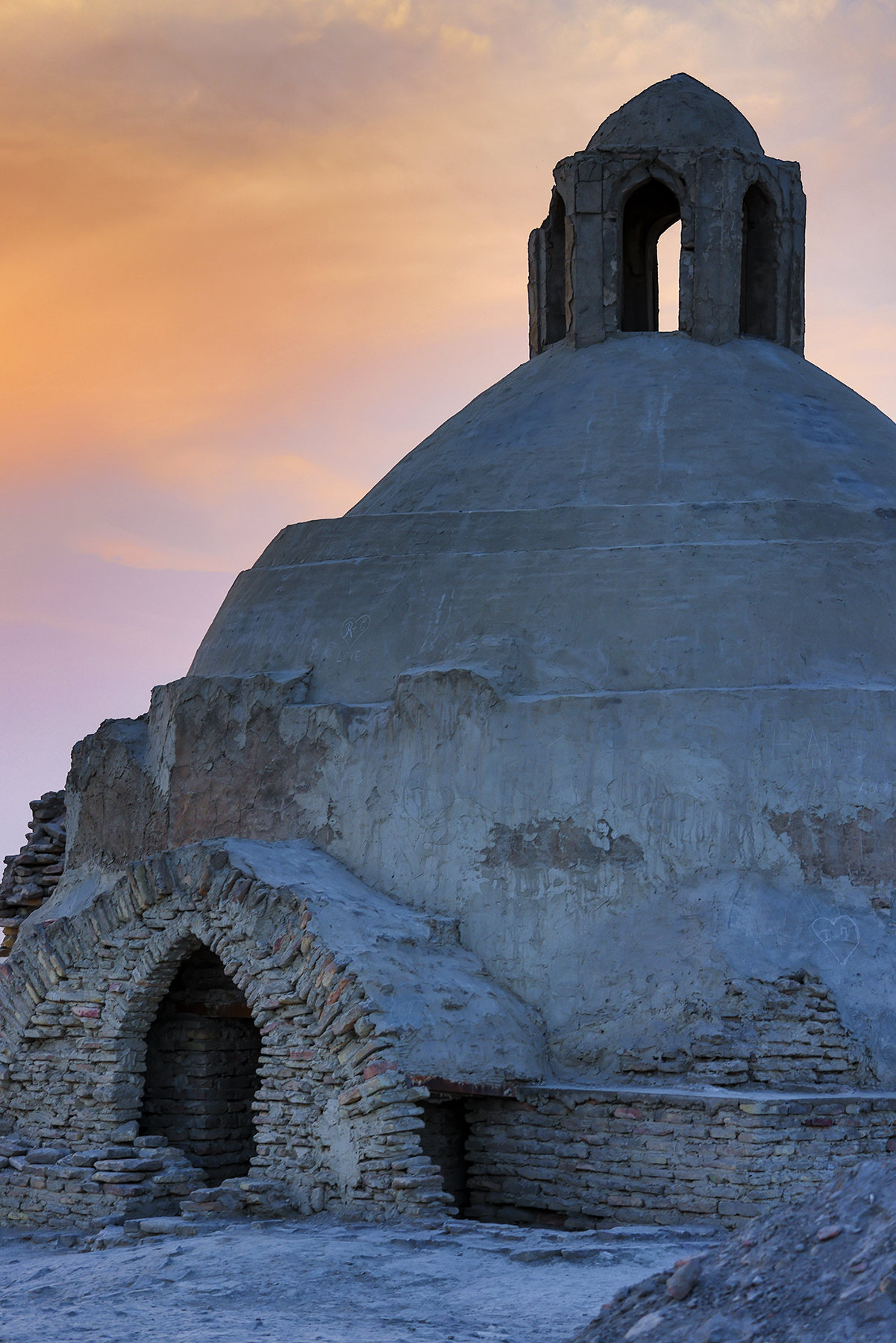
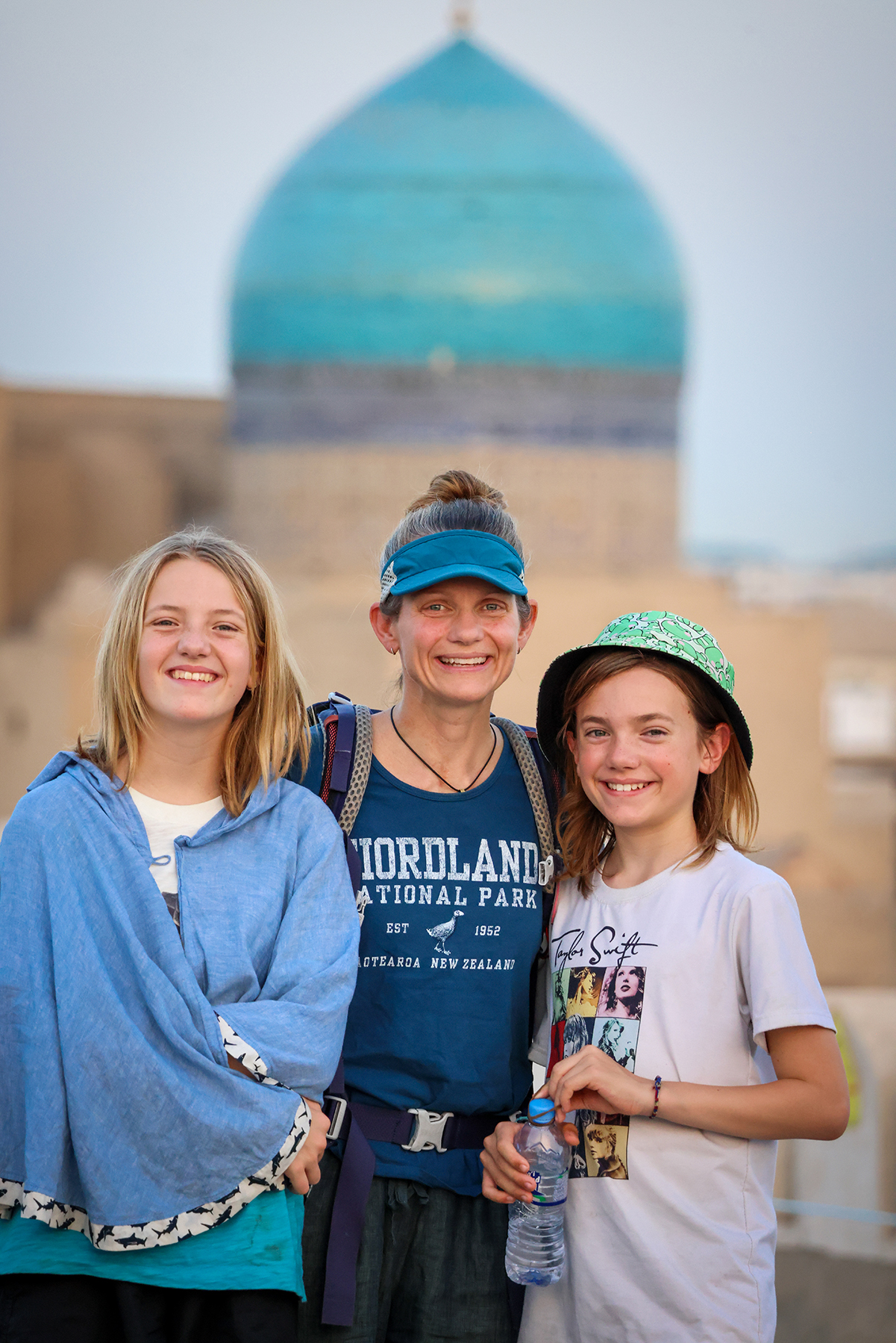
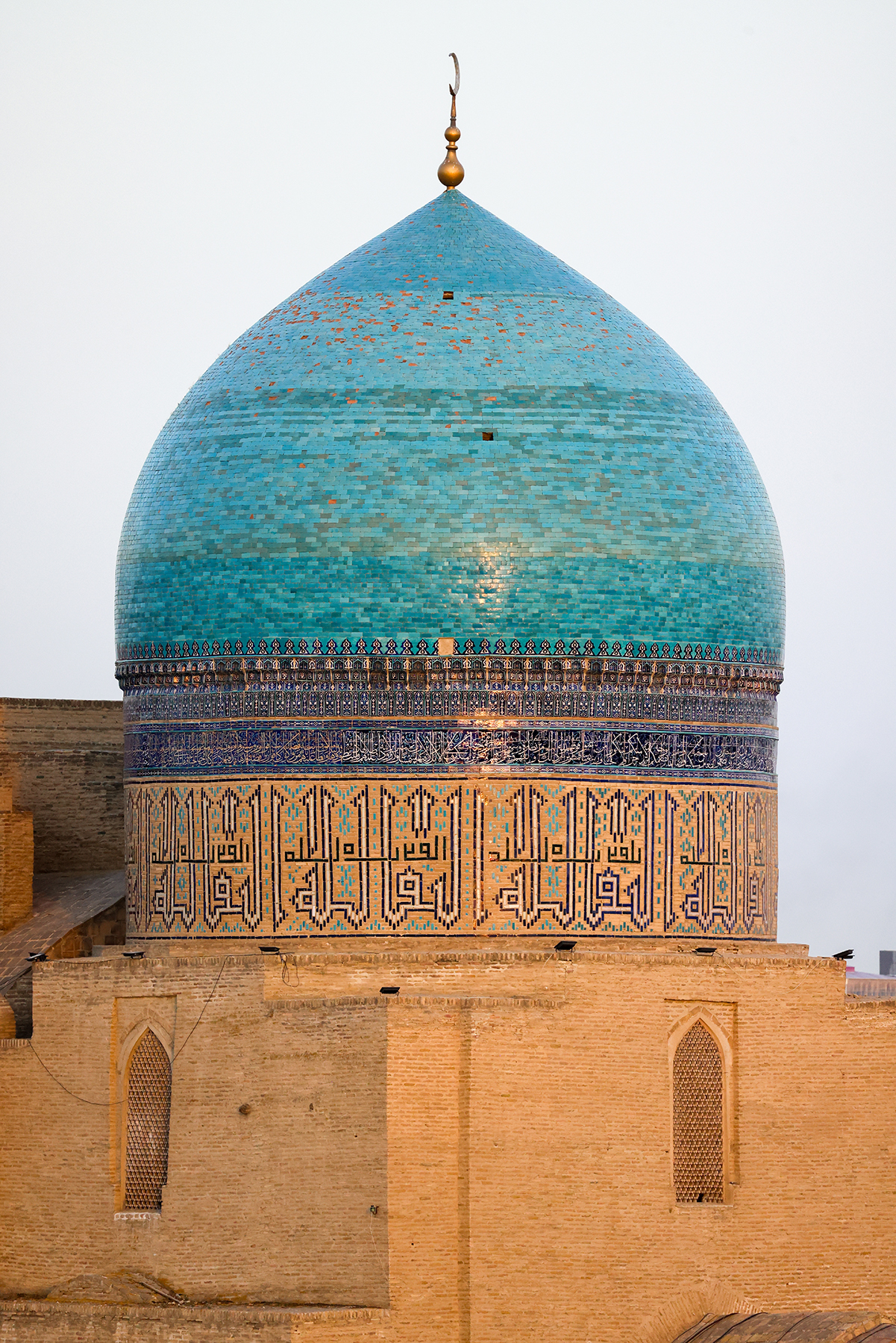
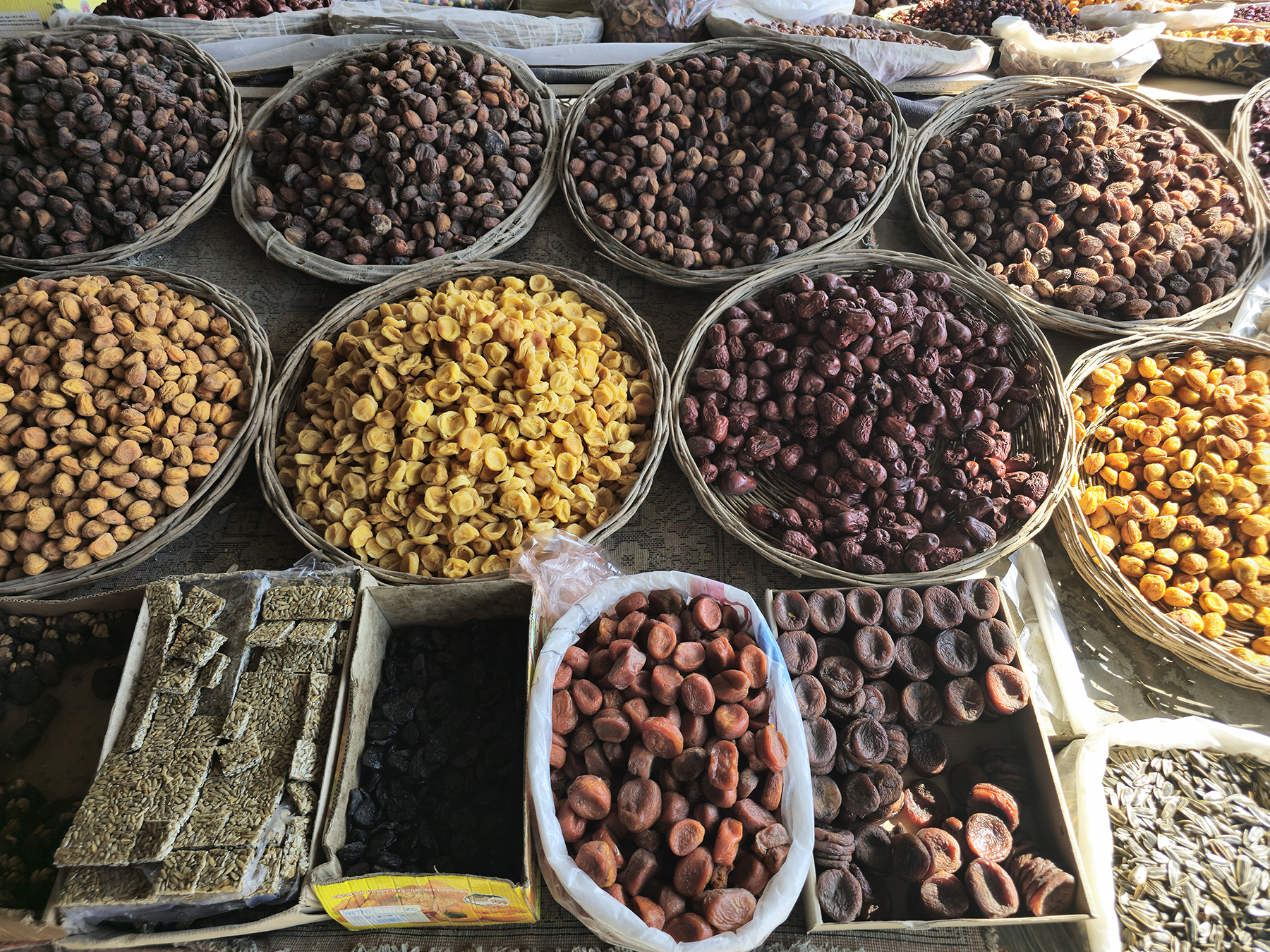
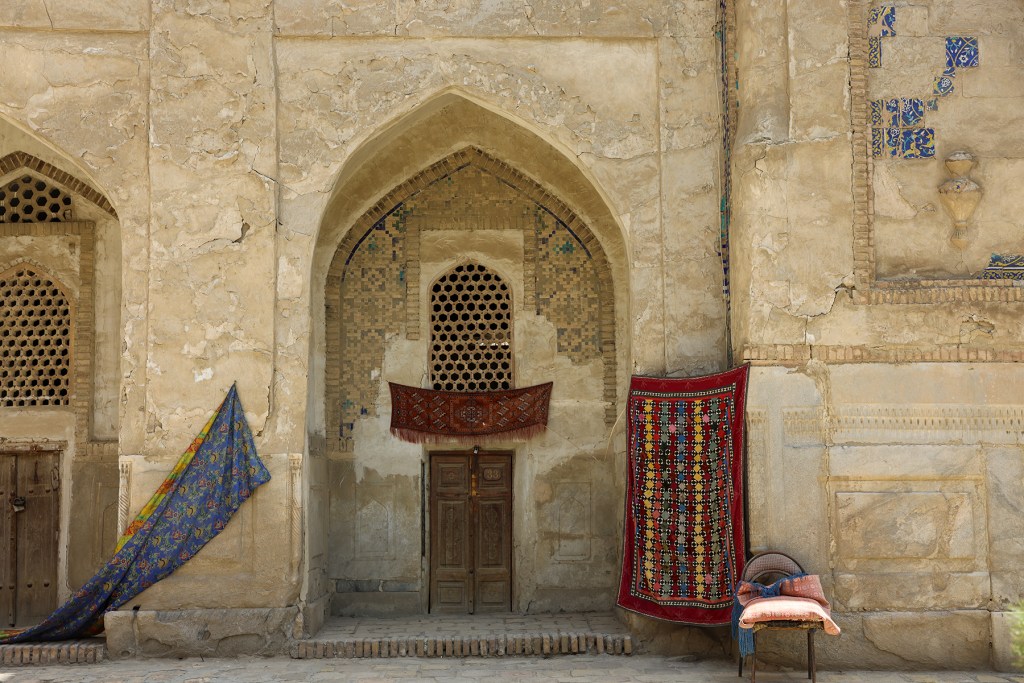
Shopping in the local markets. The pedestrian streets and public squares of Bukhara bustle with local women selling their textiles, including intricately hand-embroidered Suzani blankets – a centuries-old tradition passed down through generations of women. I showed great restraint and only purchased two of these amazingly unique treasures. I also took a 1-on-1 class where a very sweet Uzbek woman attempted to teach me her skills. Safe to say, this is not a craftiness I was naturally skilled at executing.


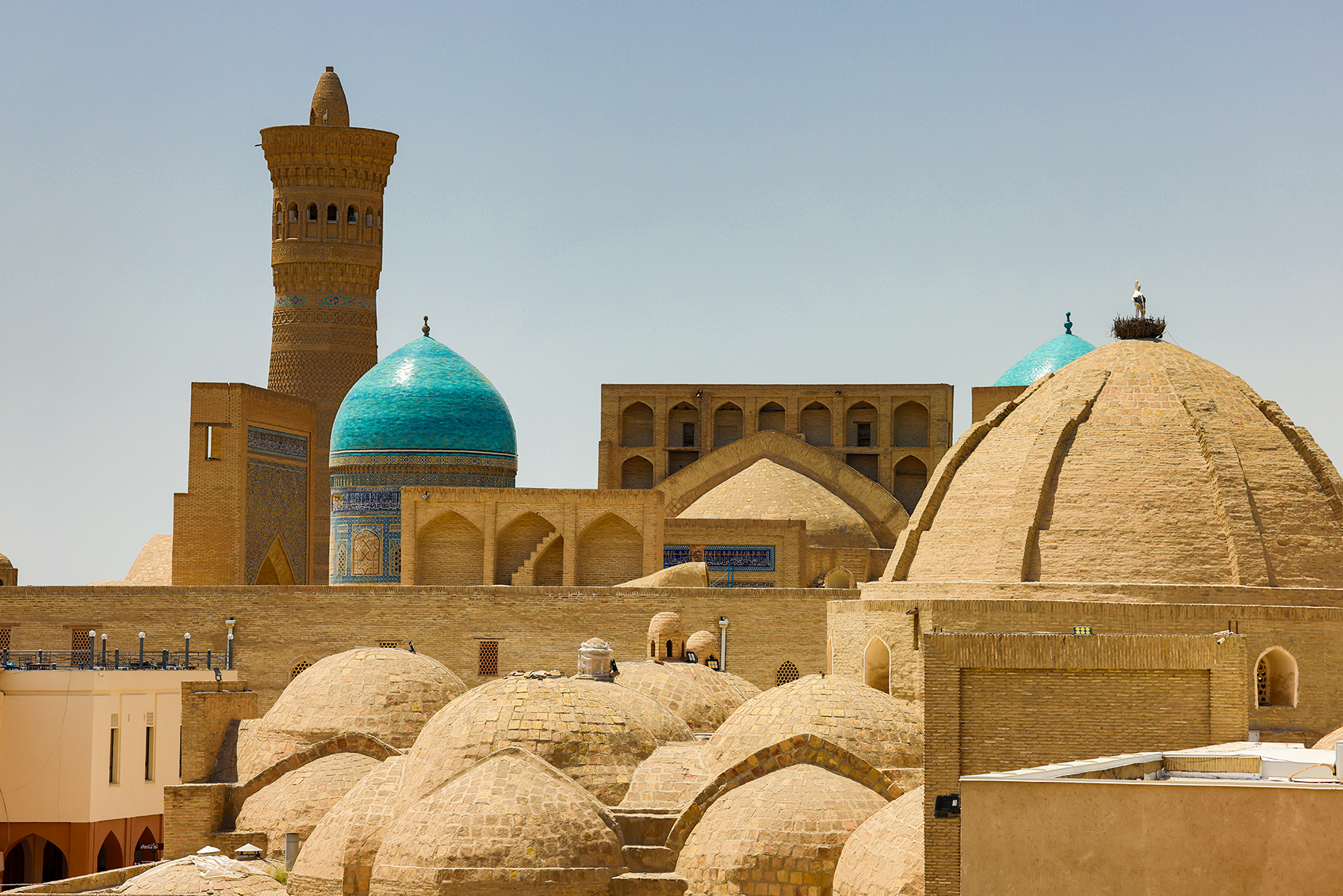


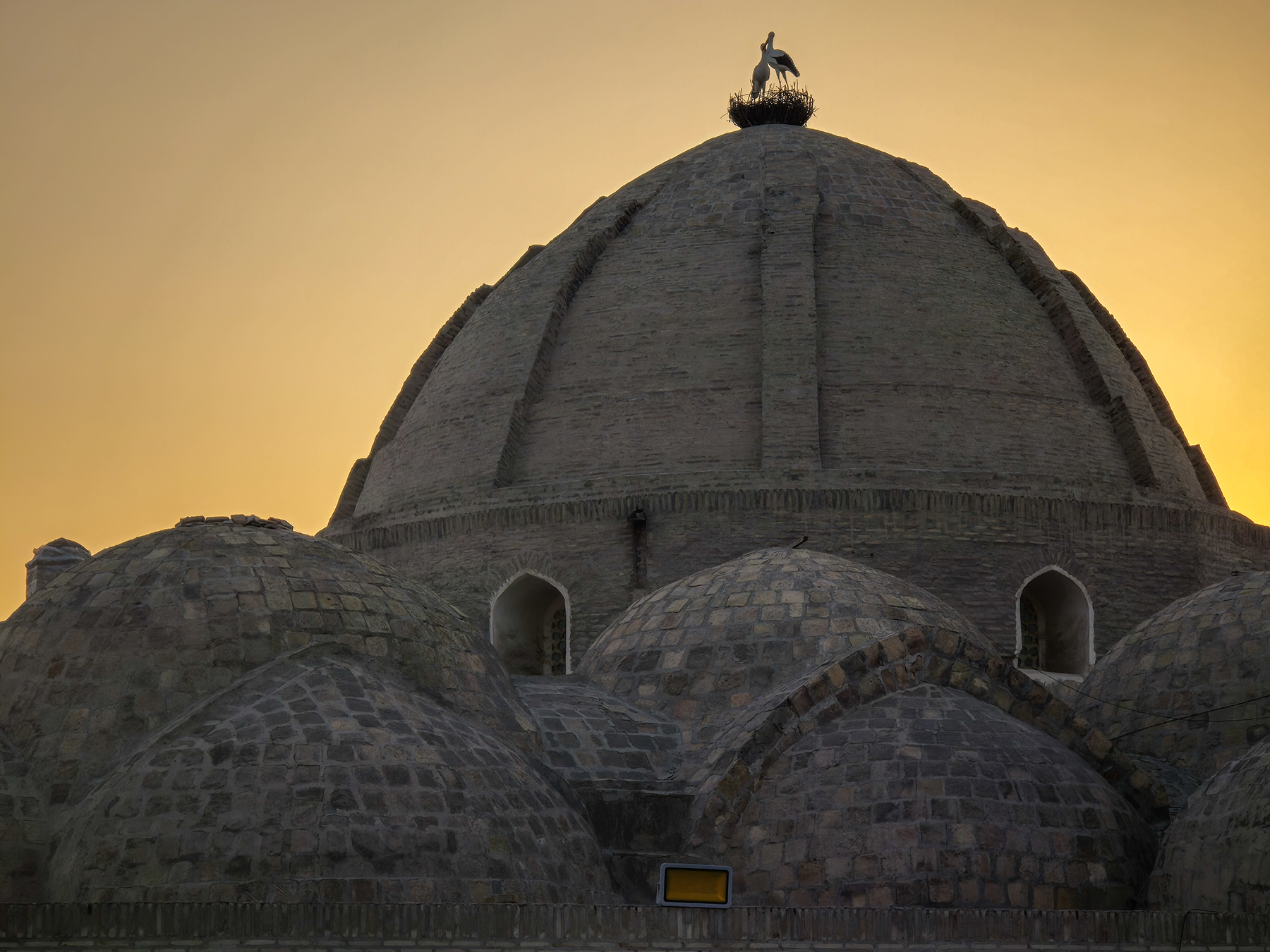
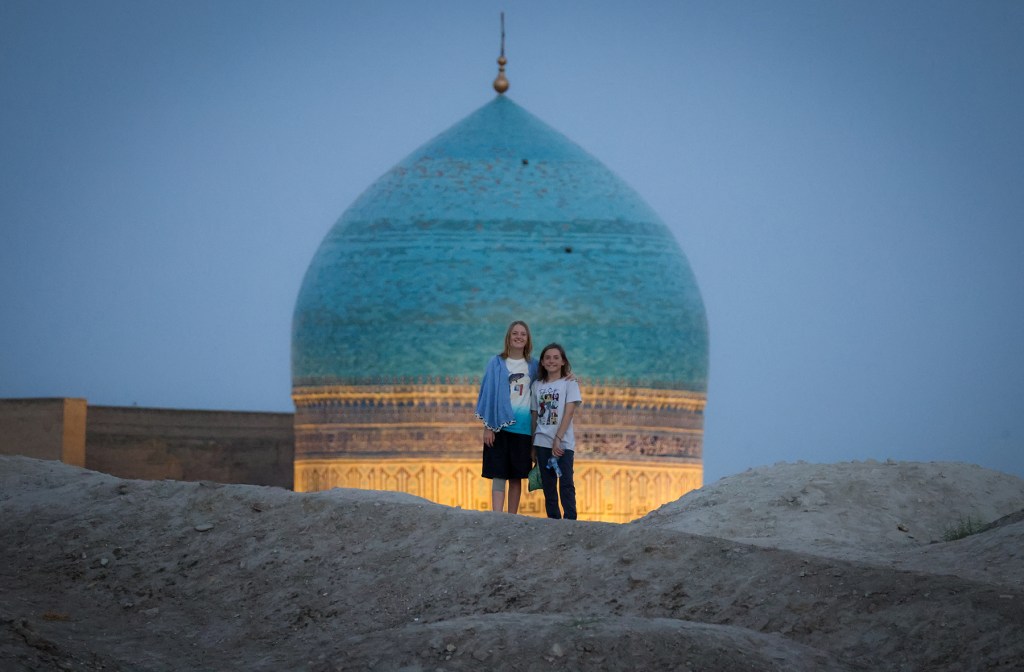
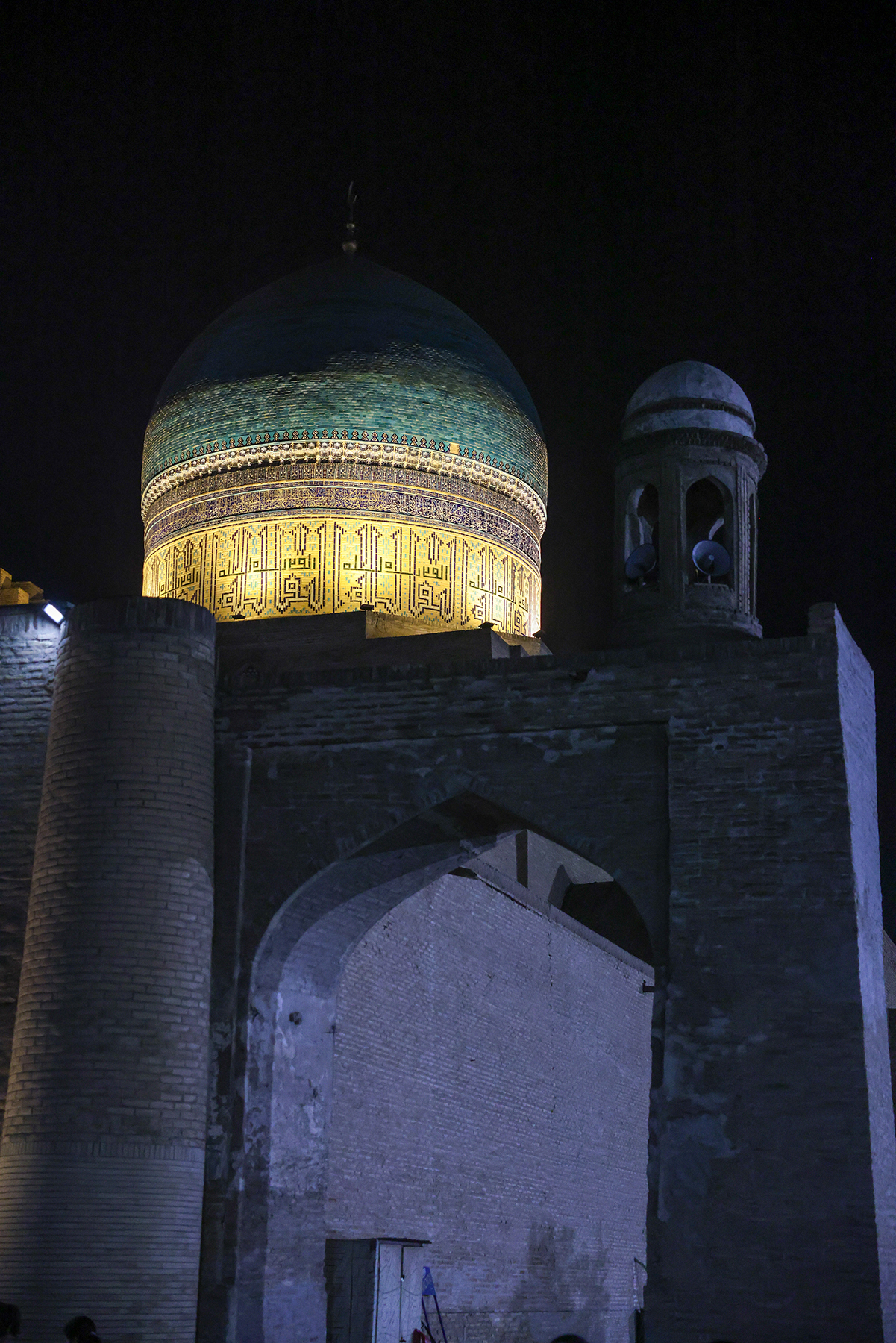
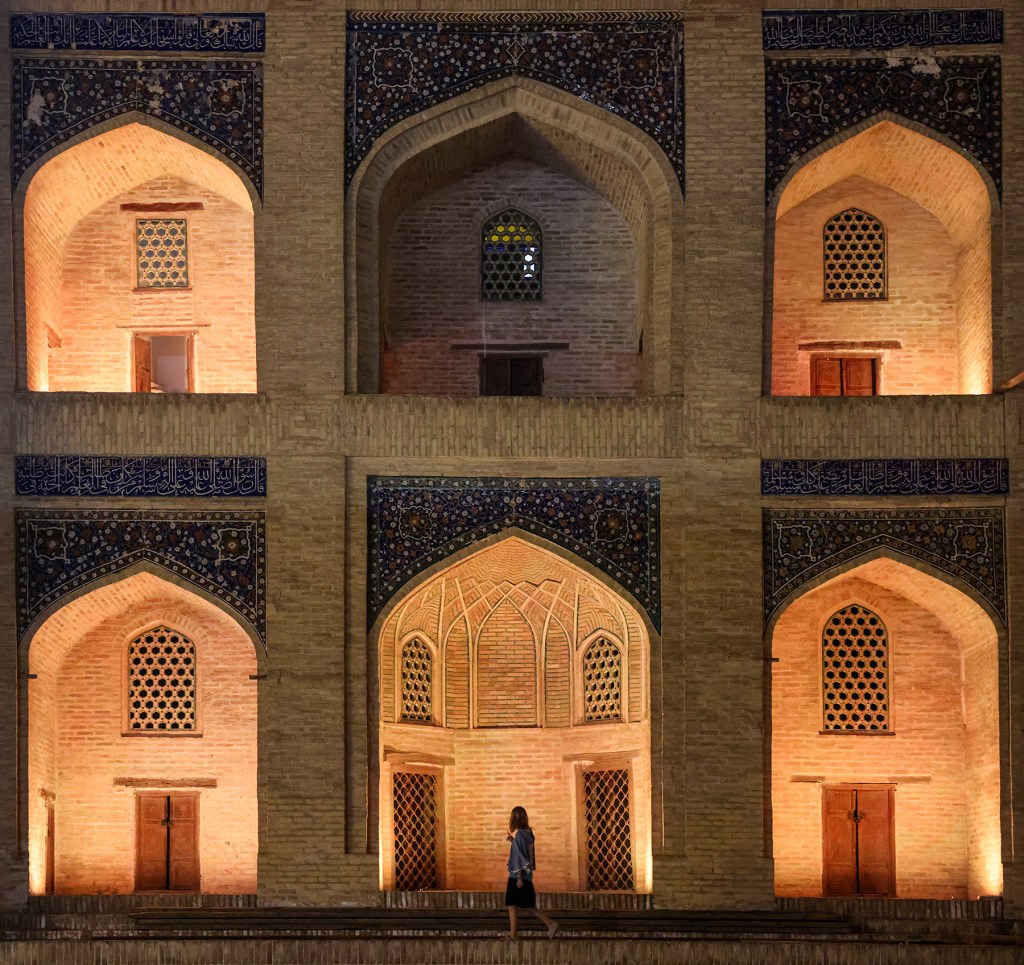
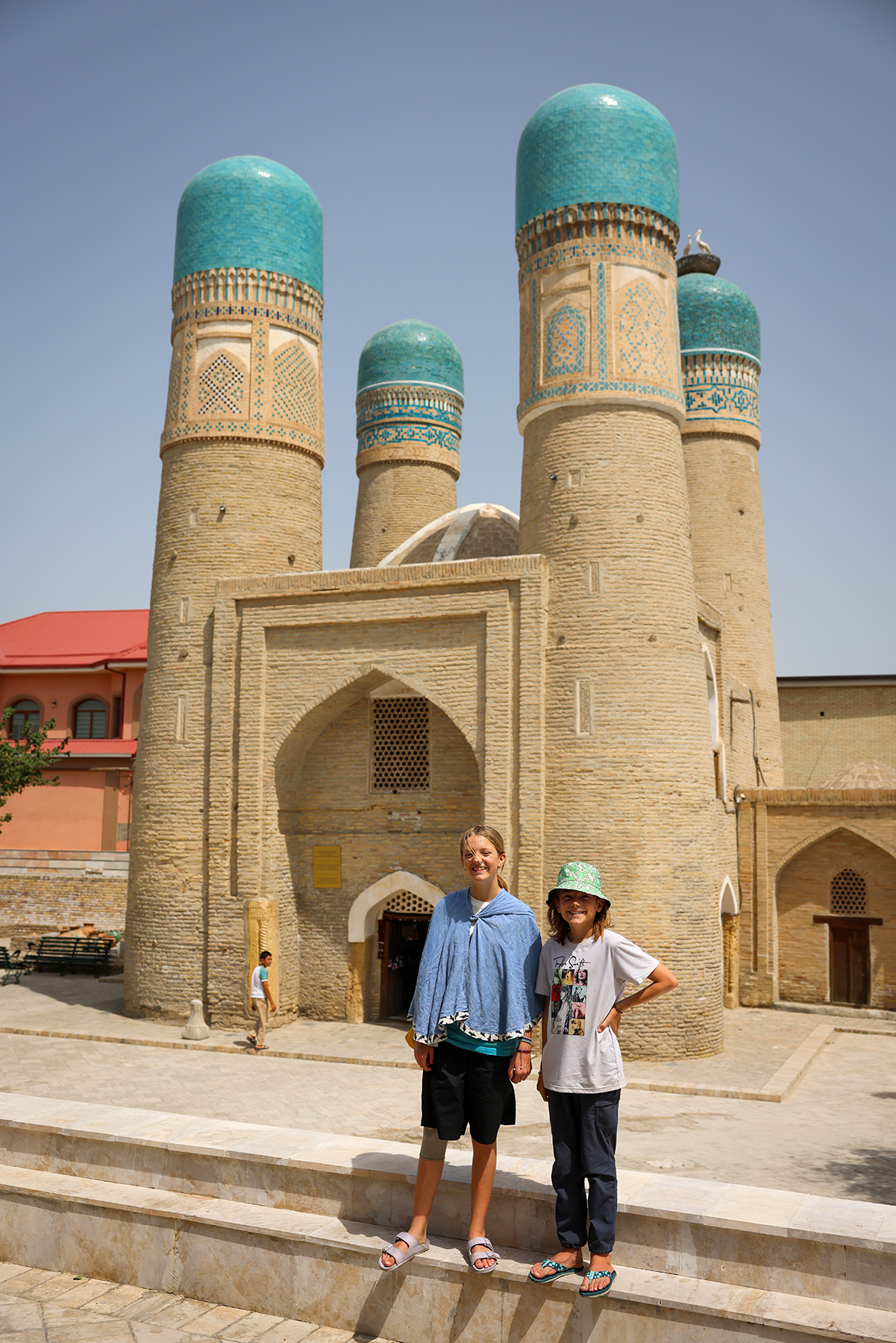
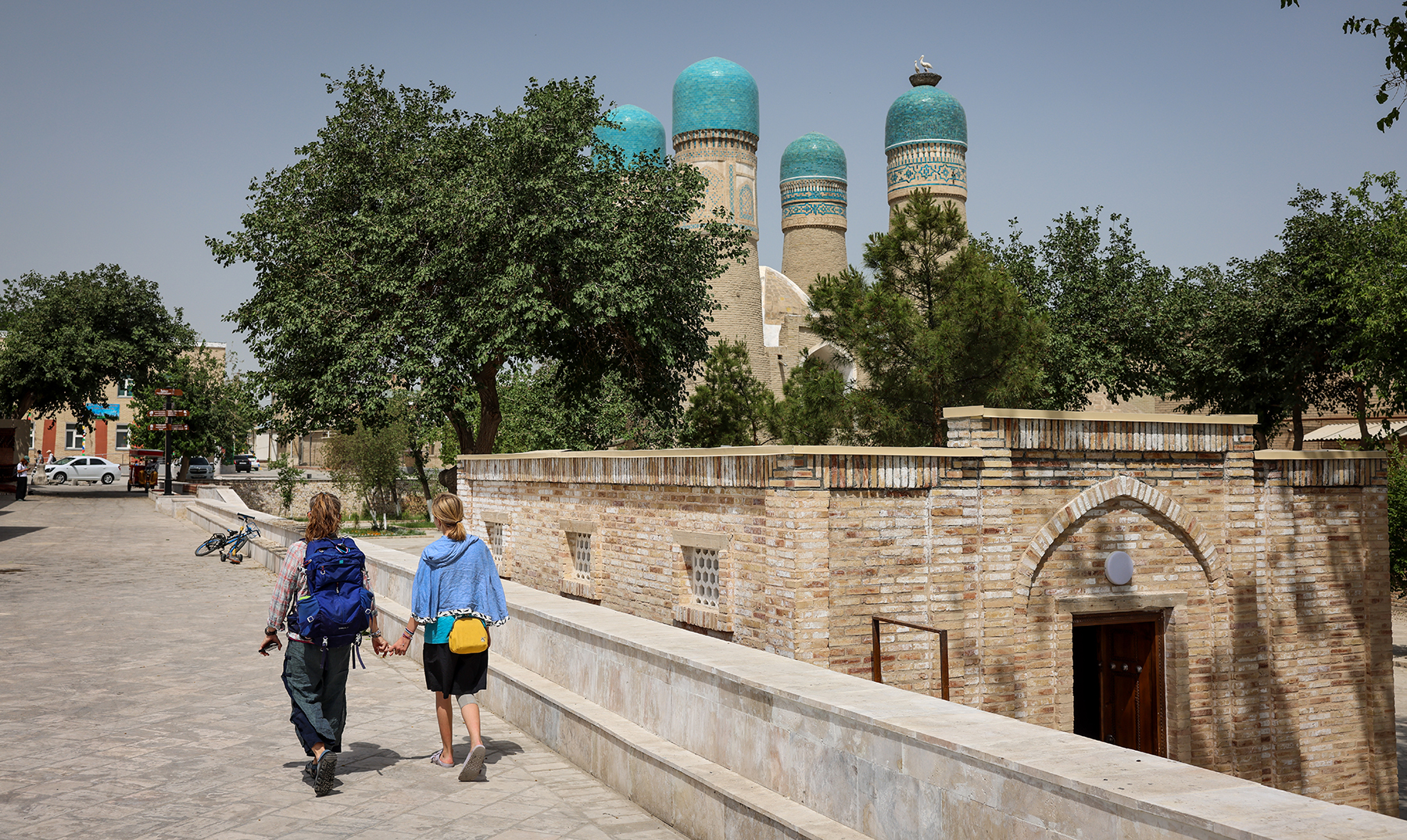
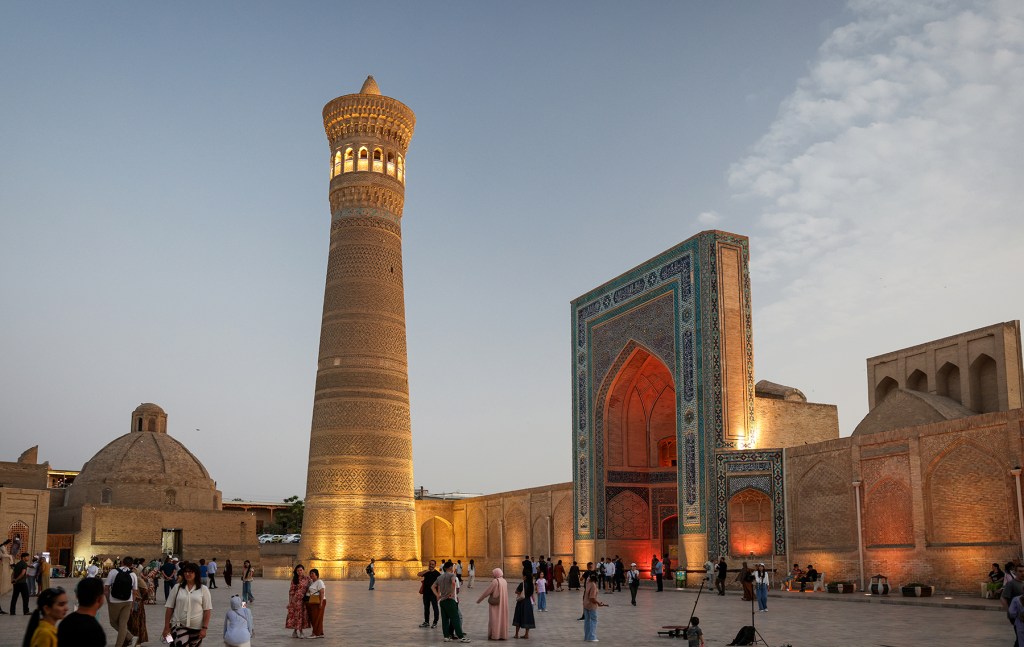
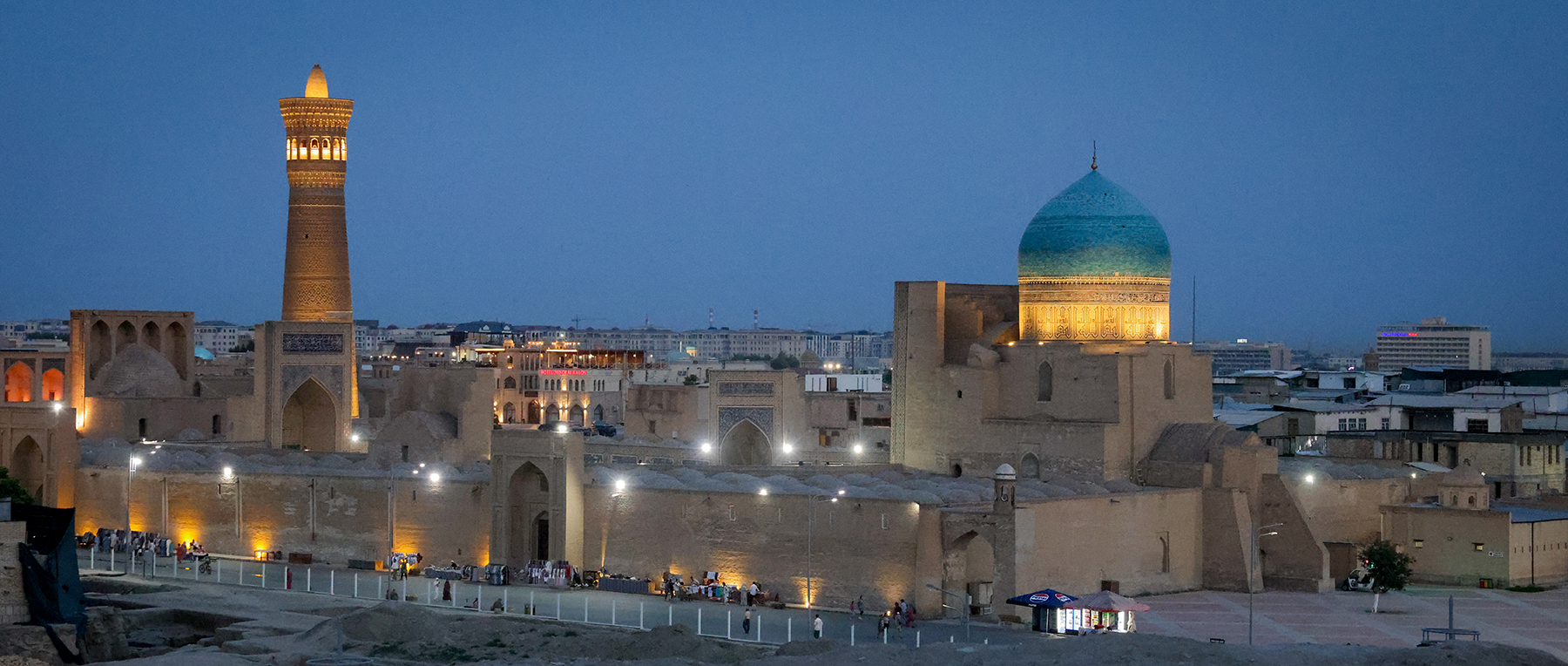
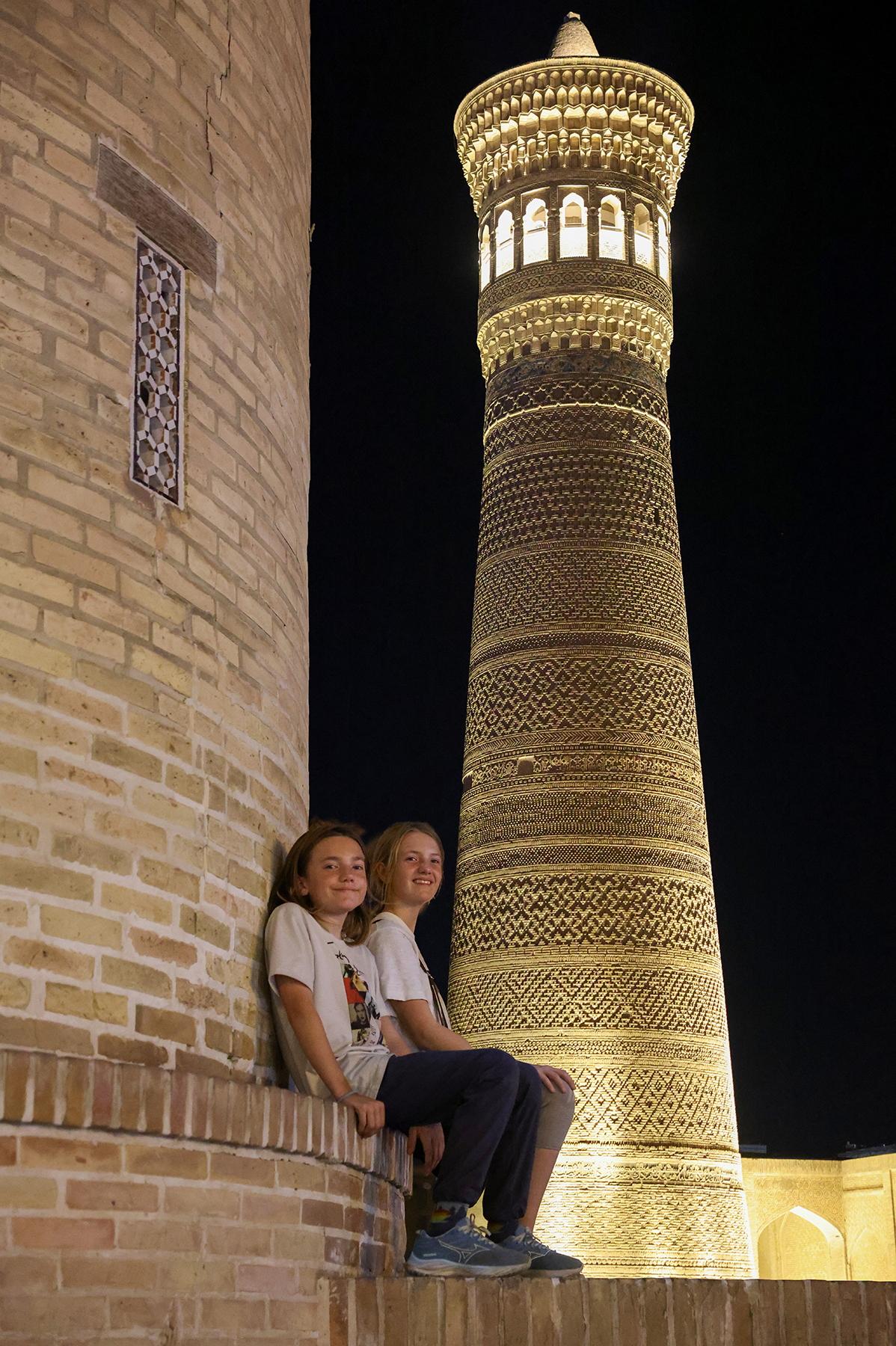
Meandering about the city while we explored yet more spectacular architecture. Highlights included the Chor Minar madrasah and the Po-i-Kalyan Complex.


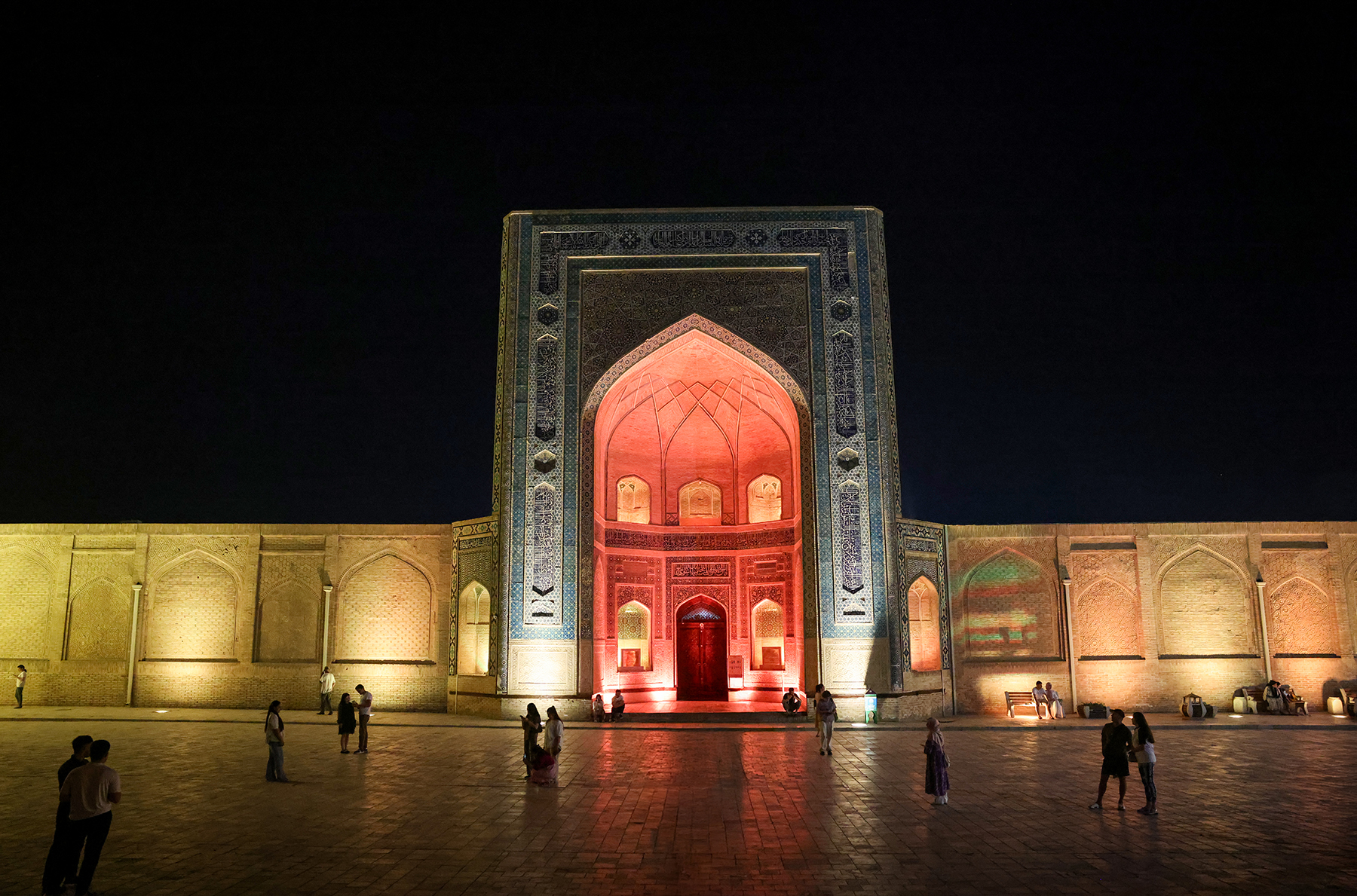
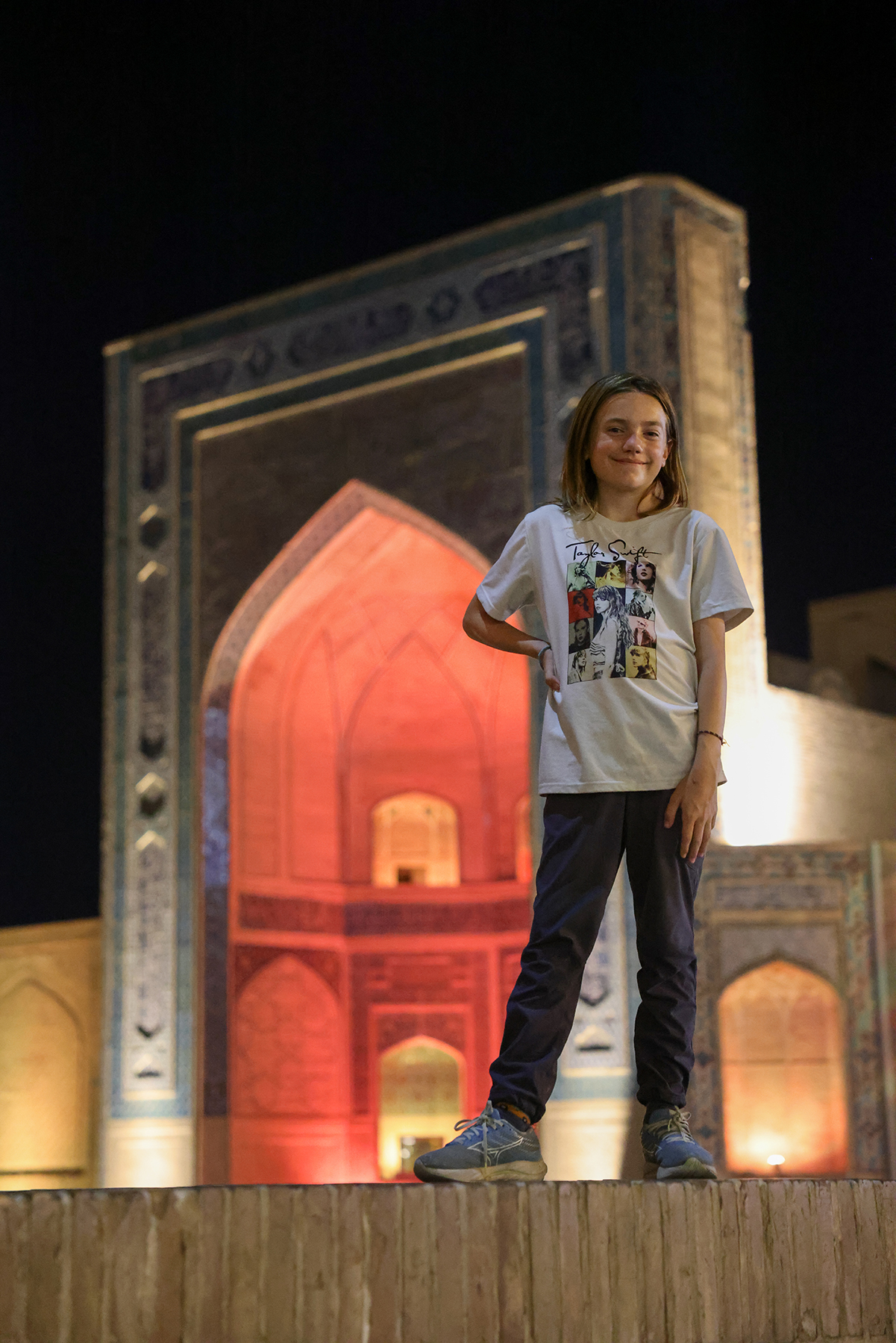
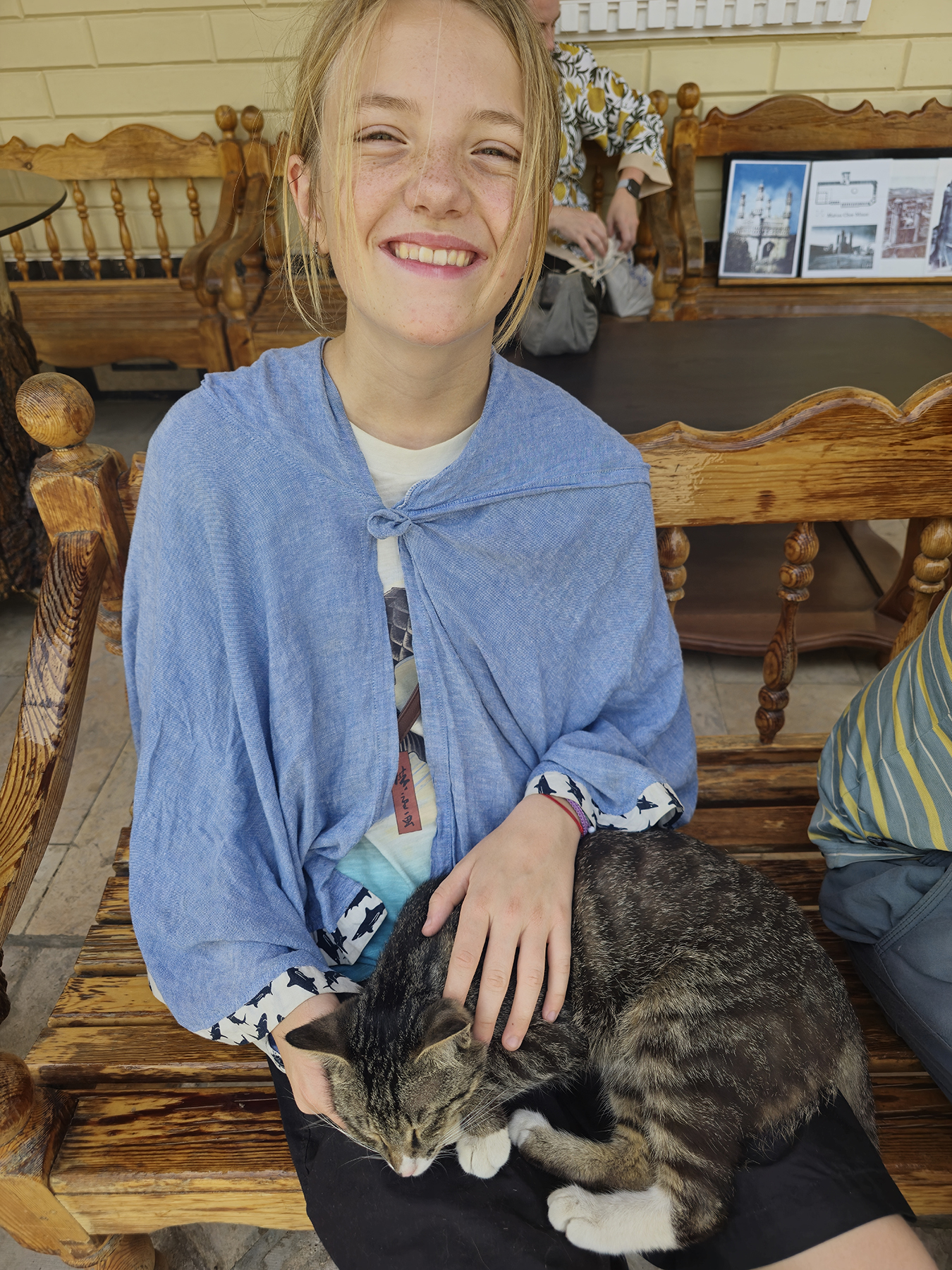
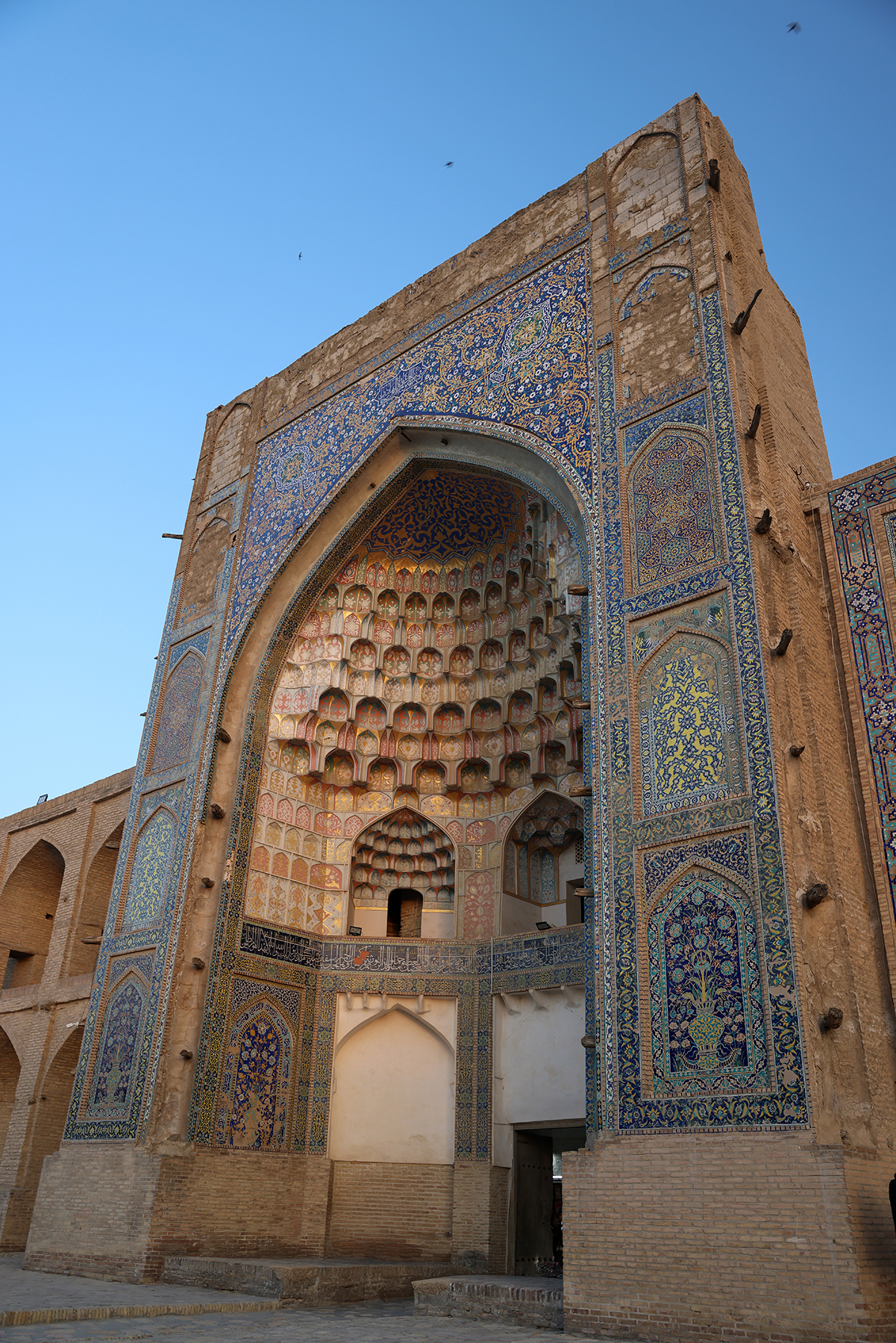

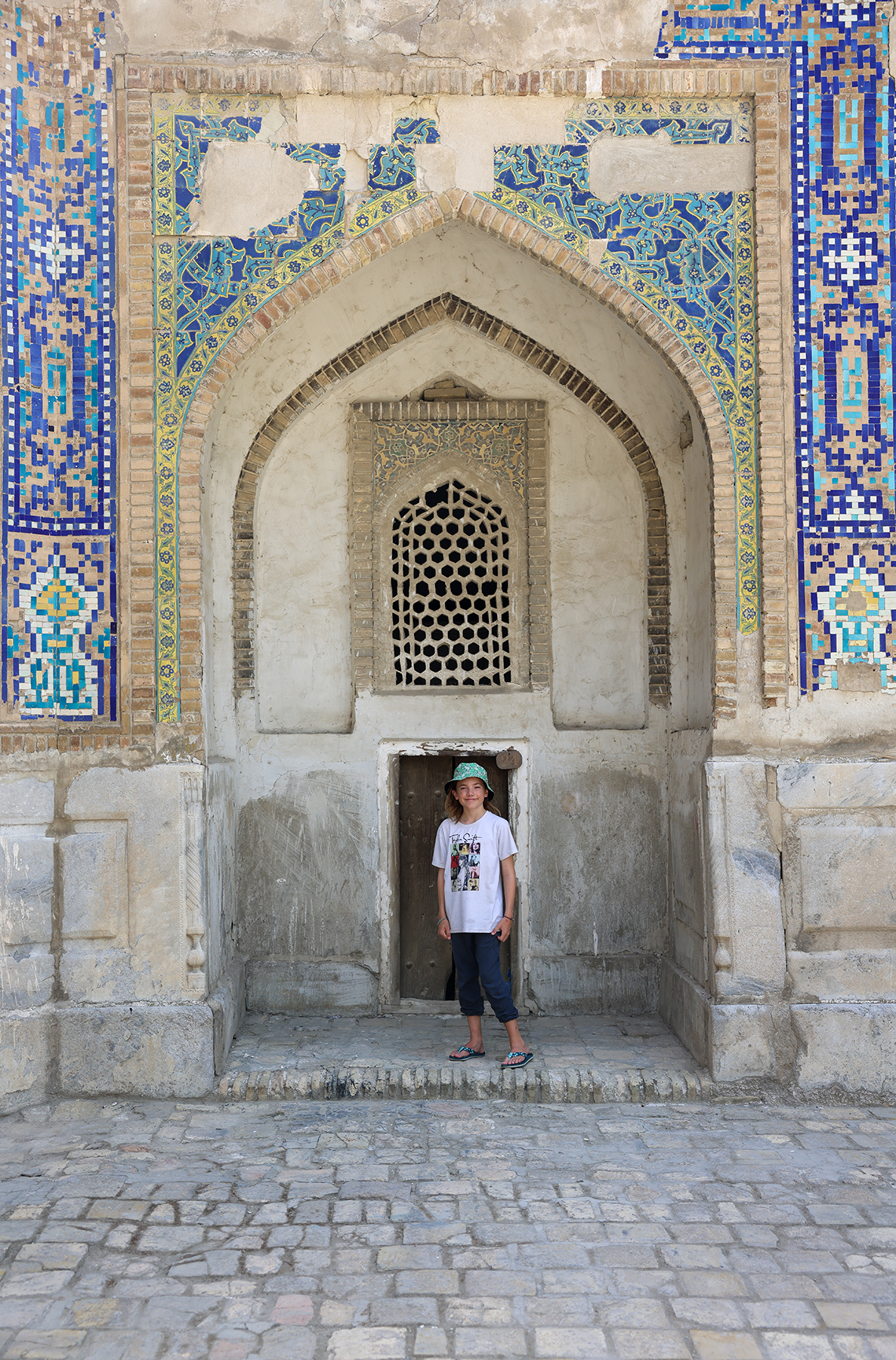

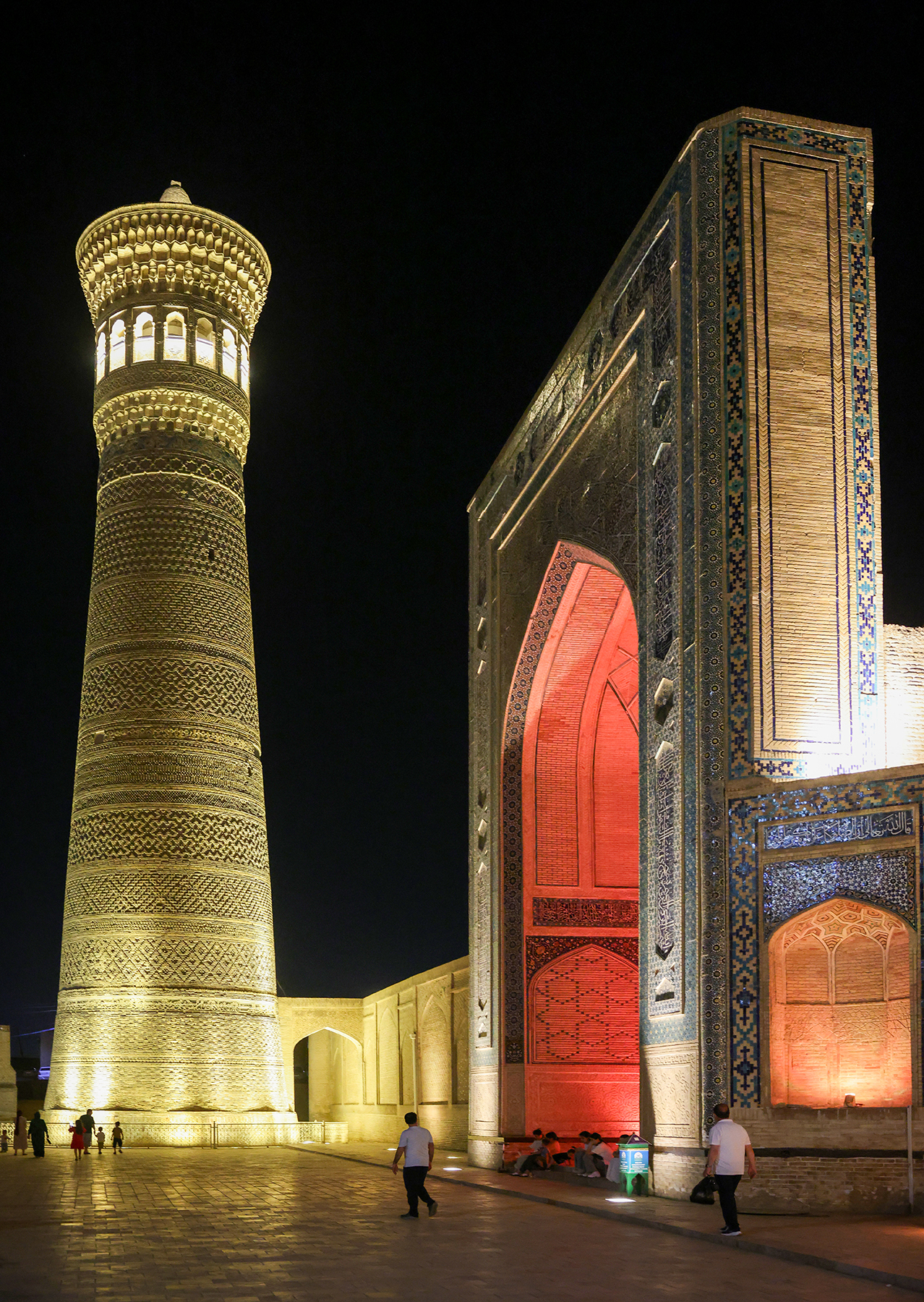
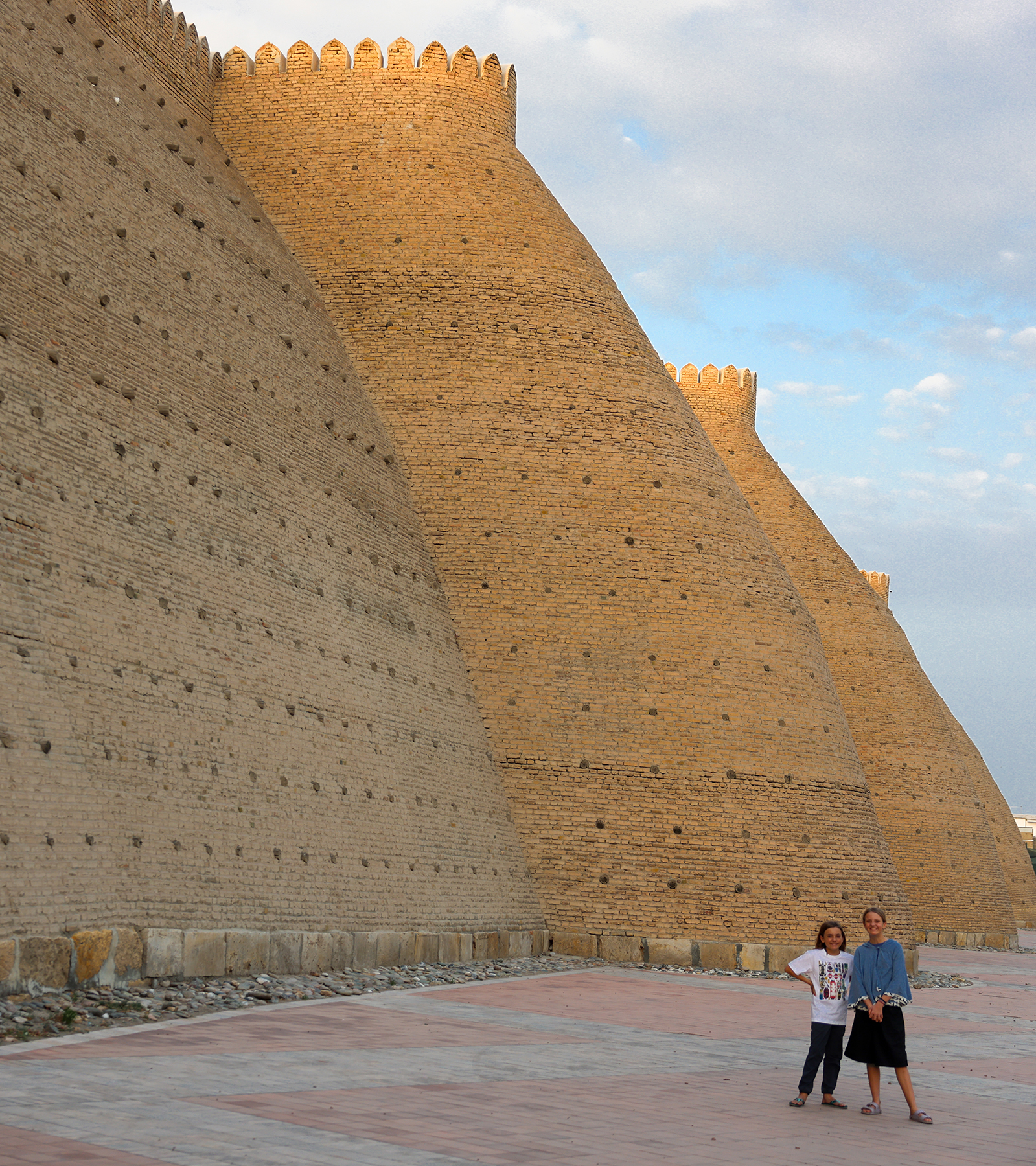
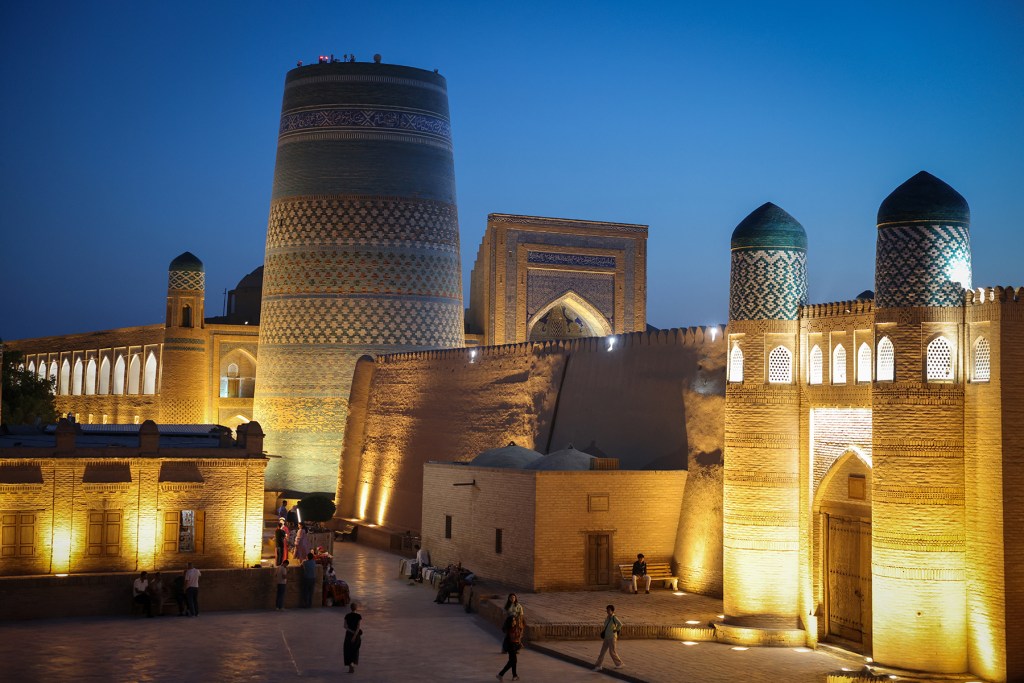
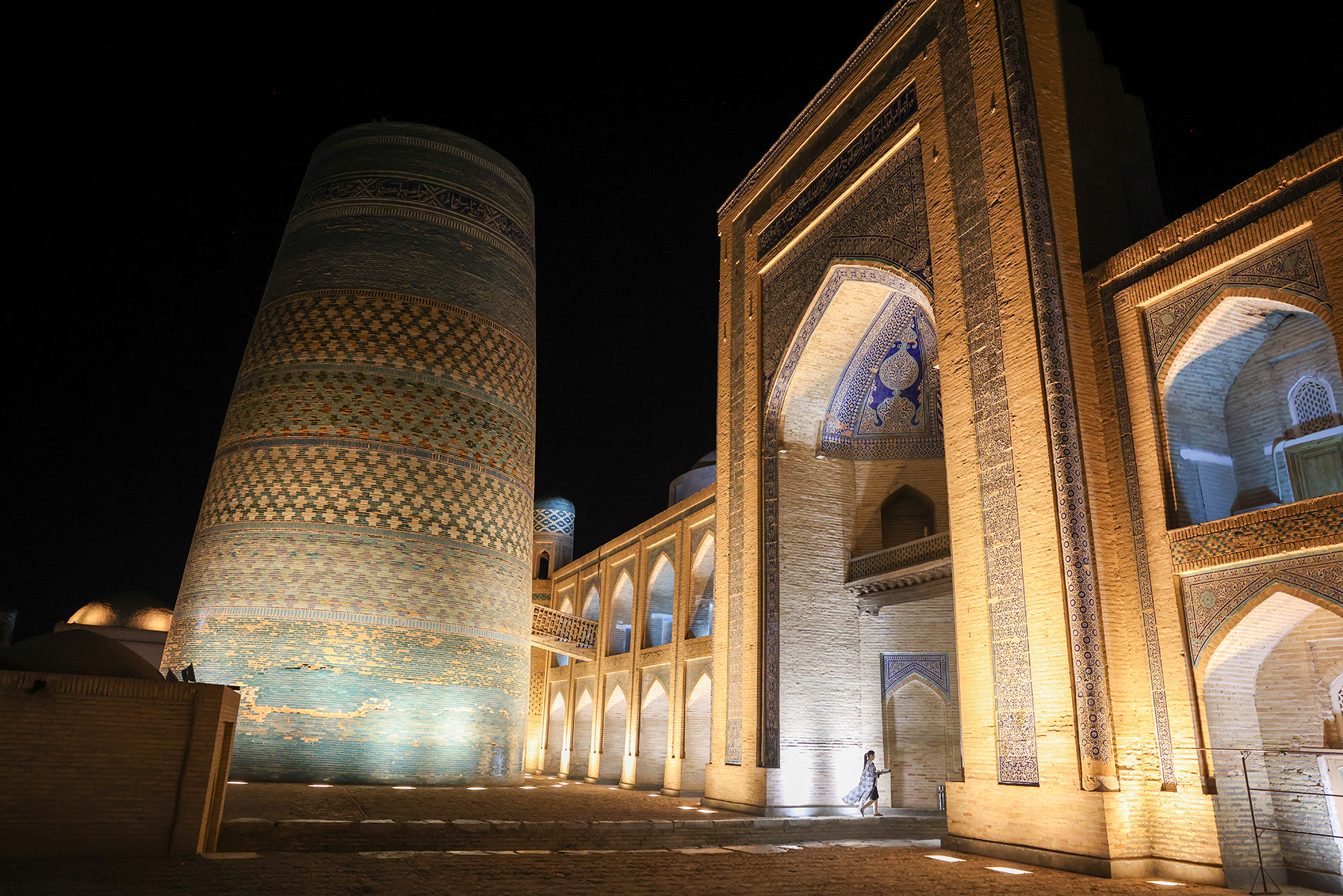
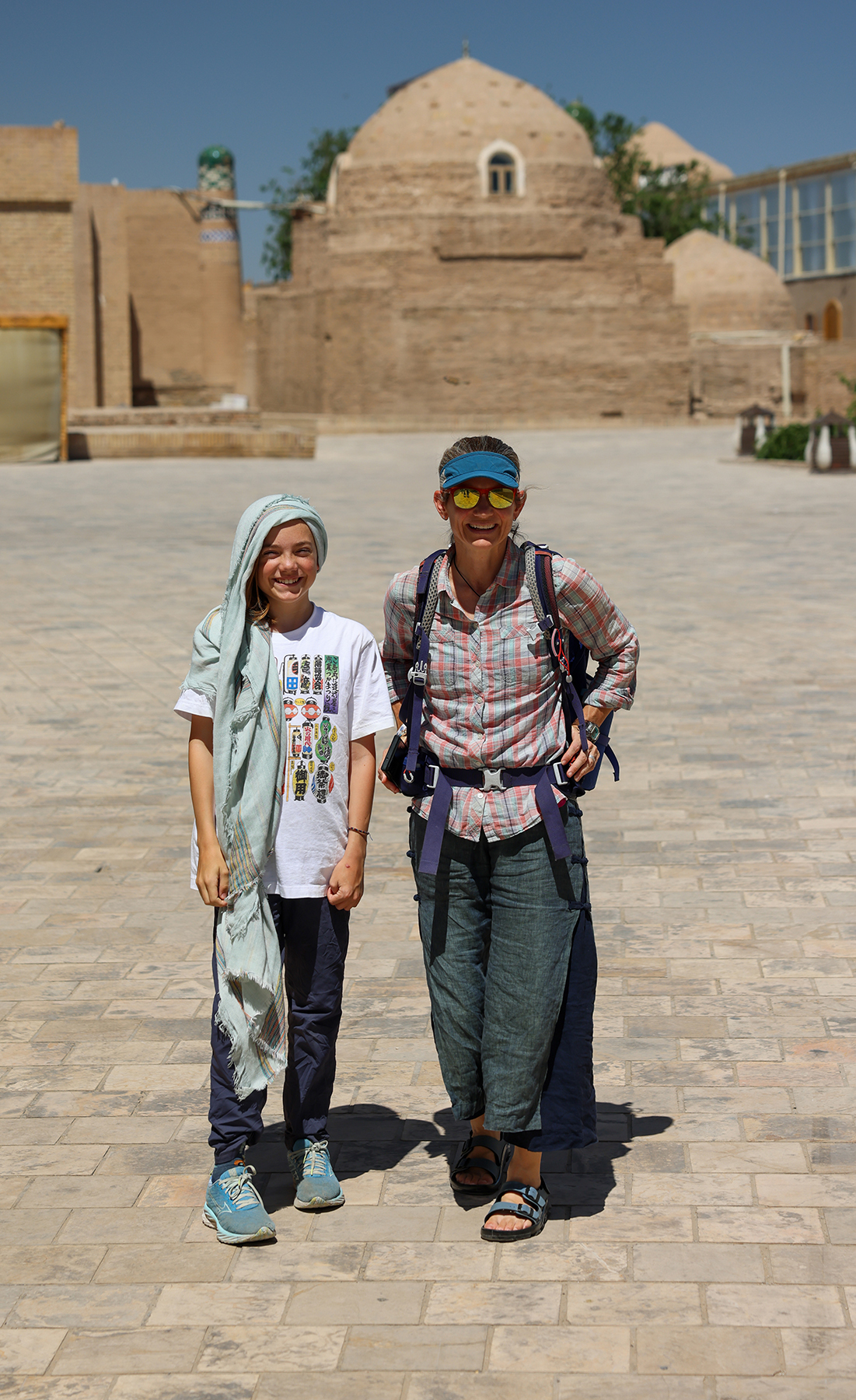
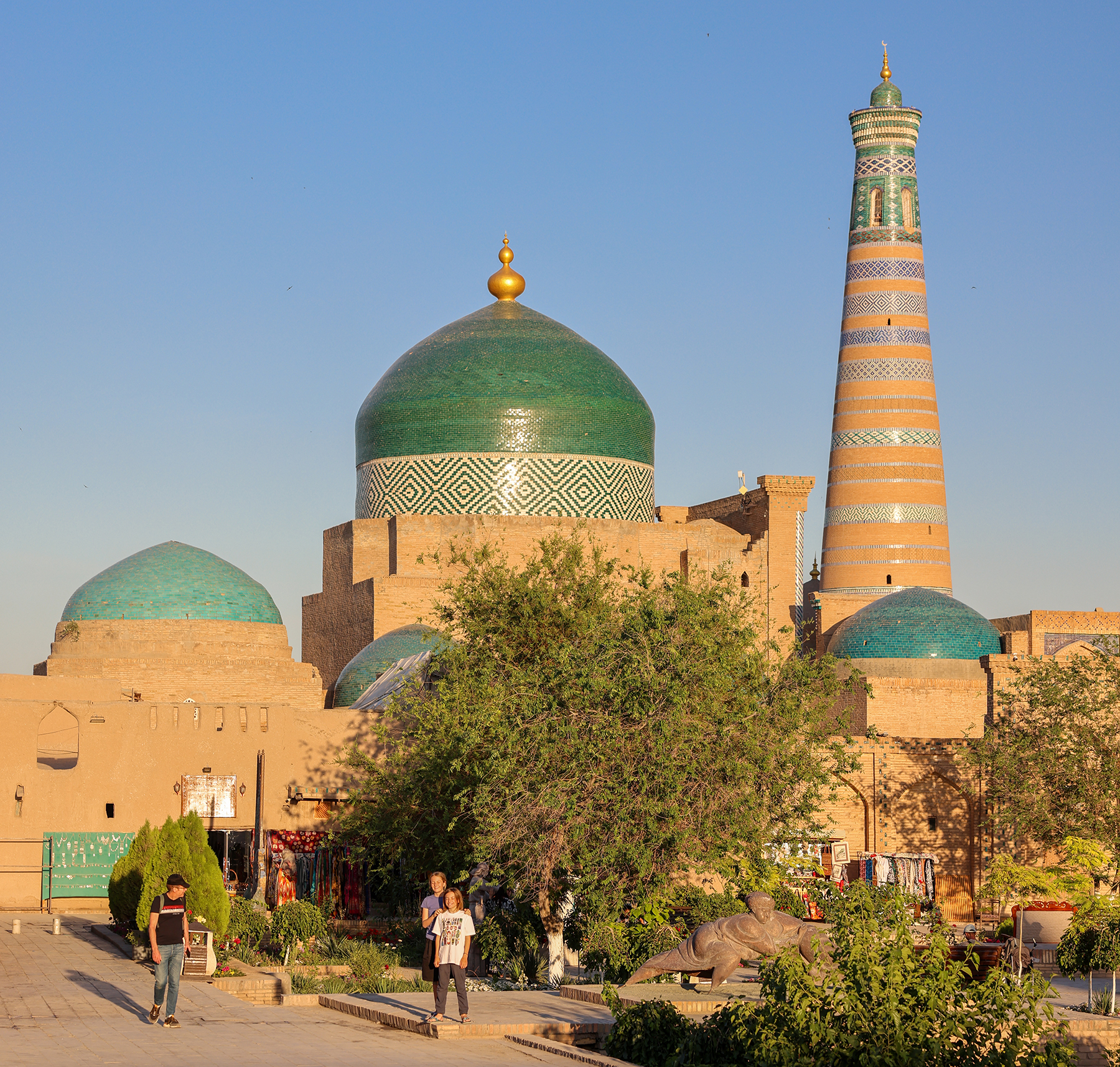
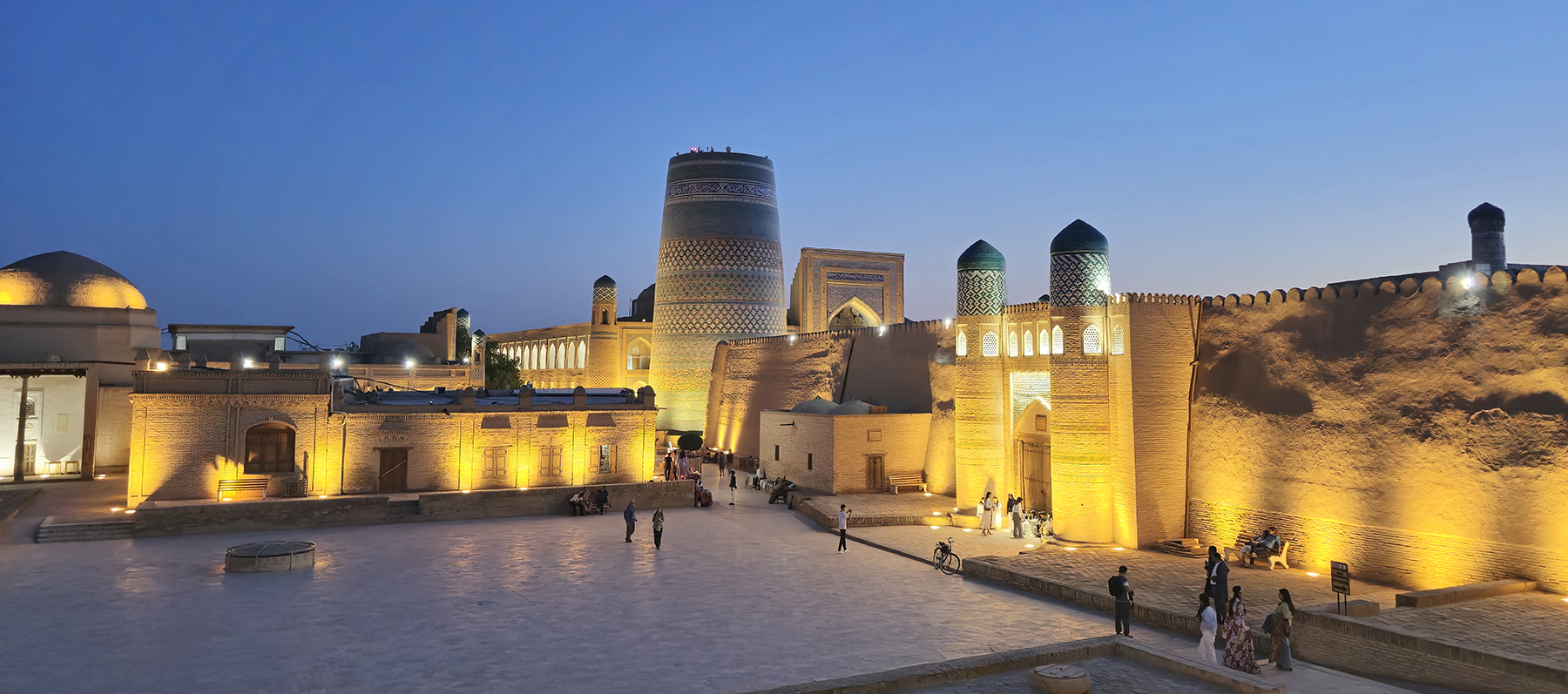
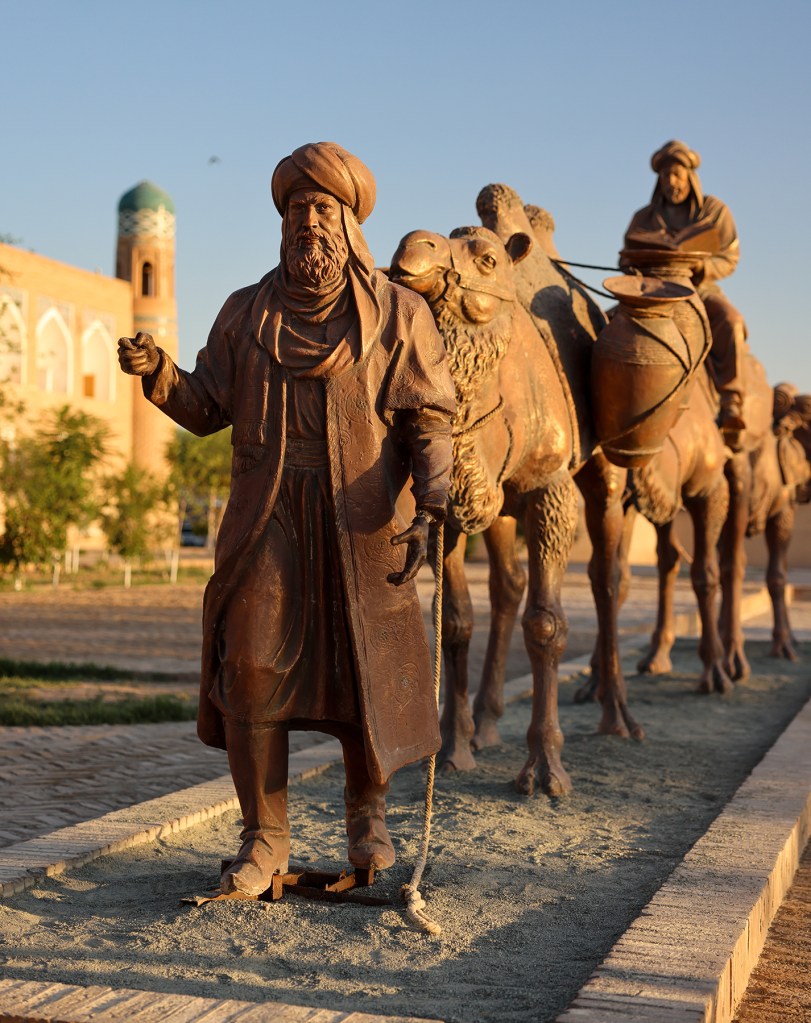
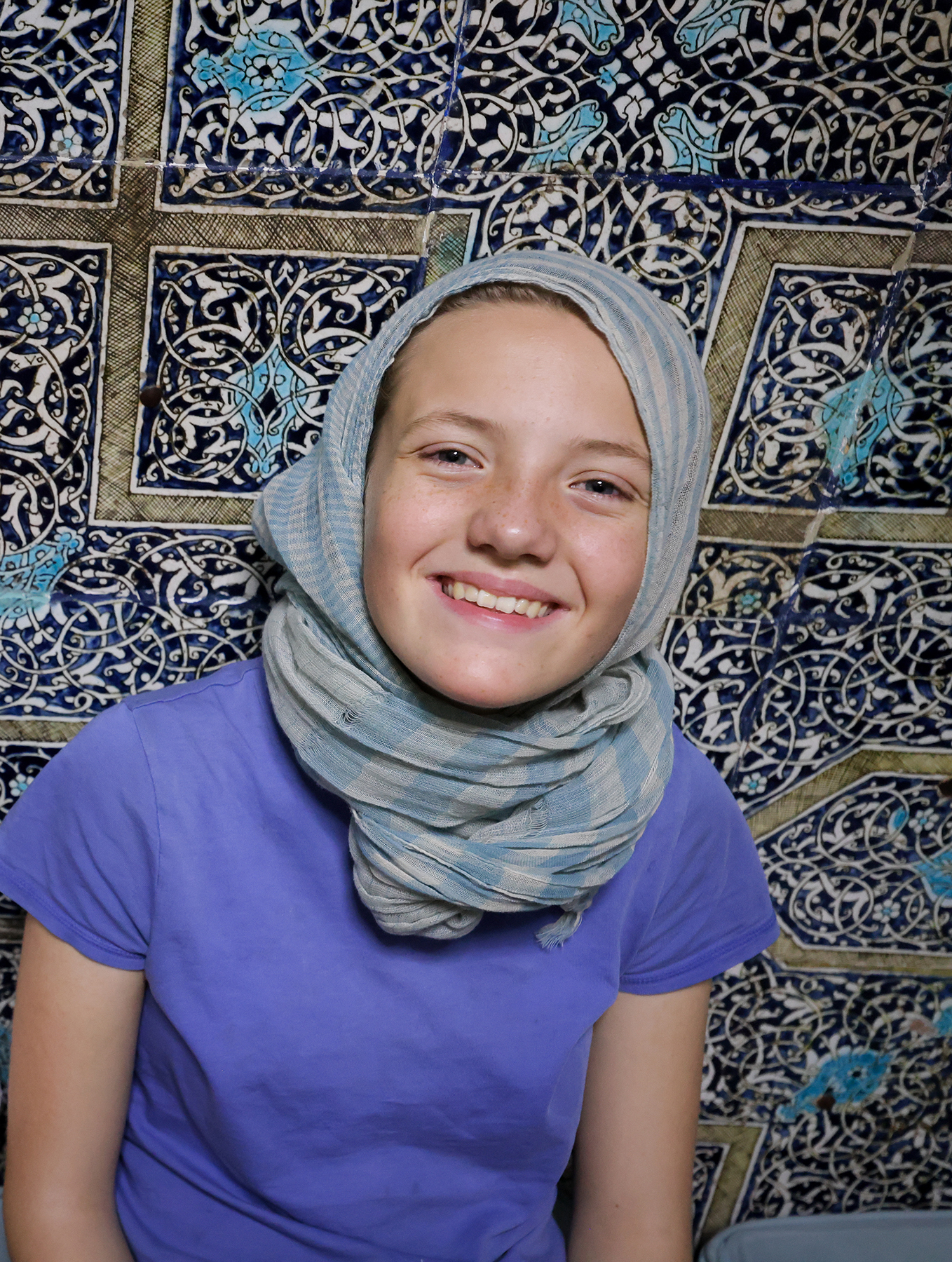
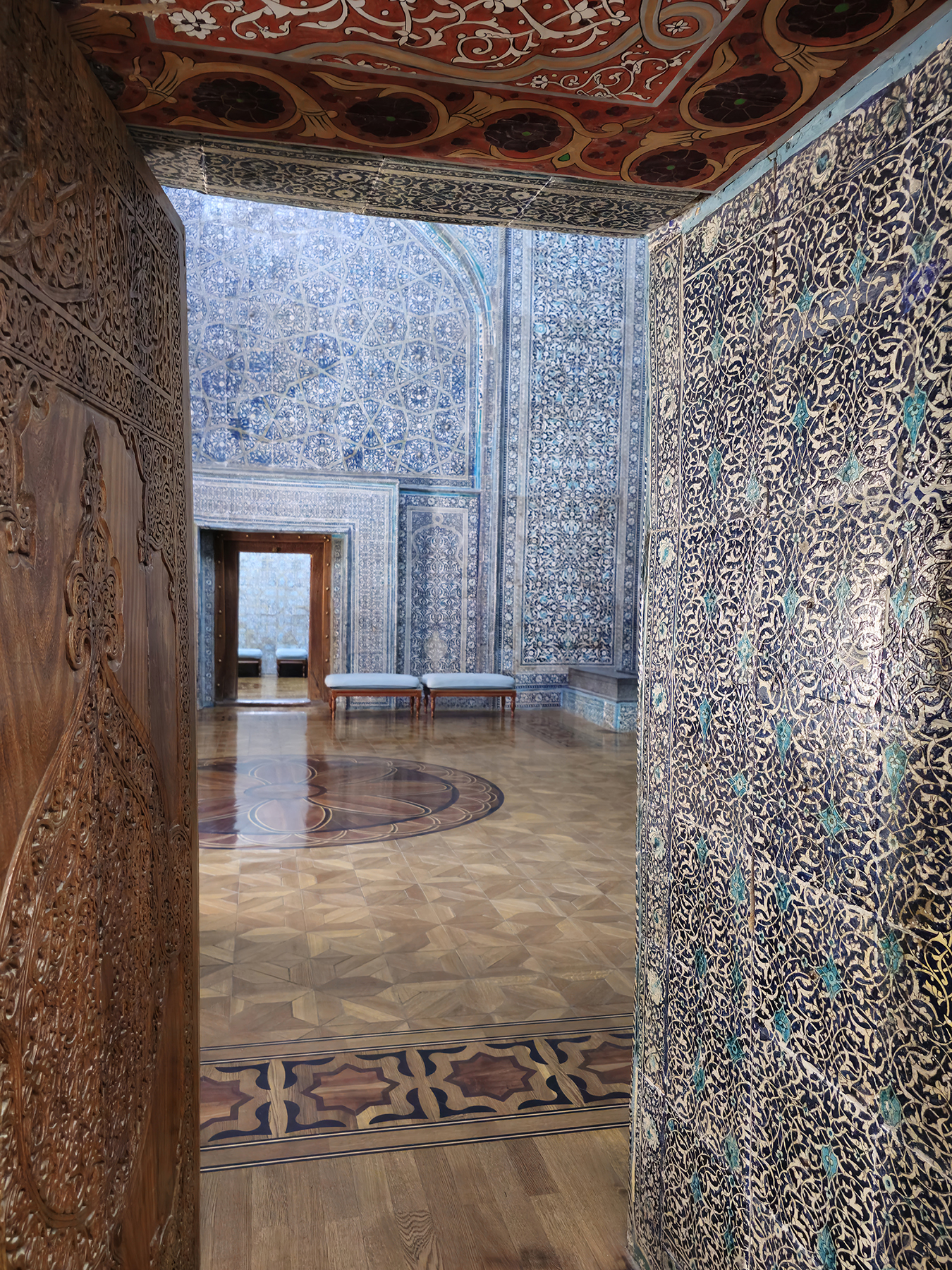
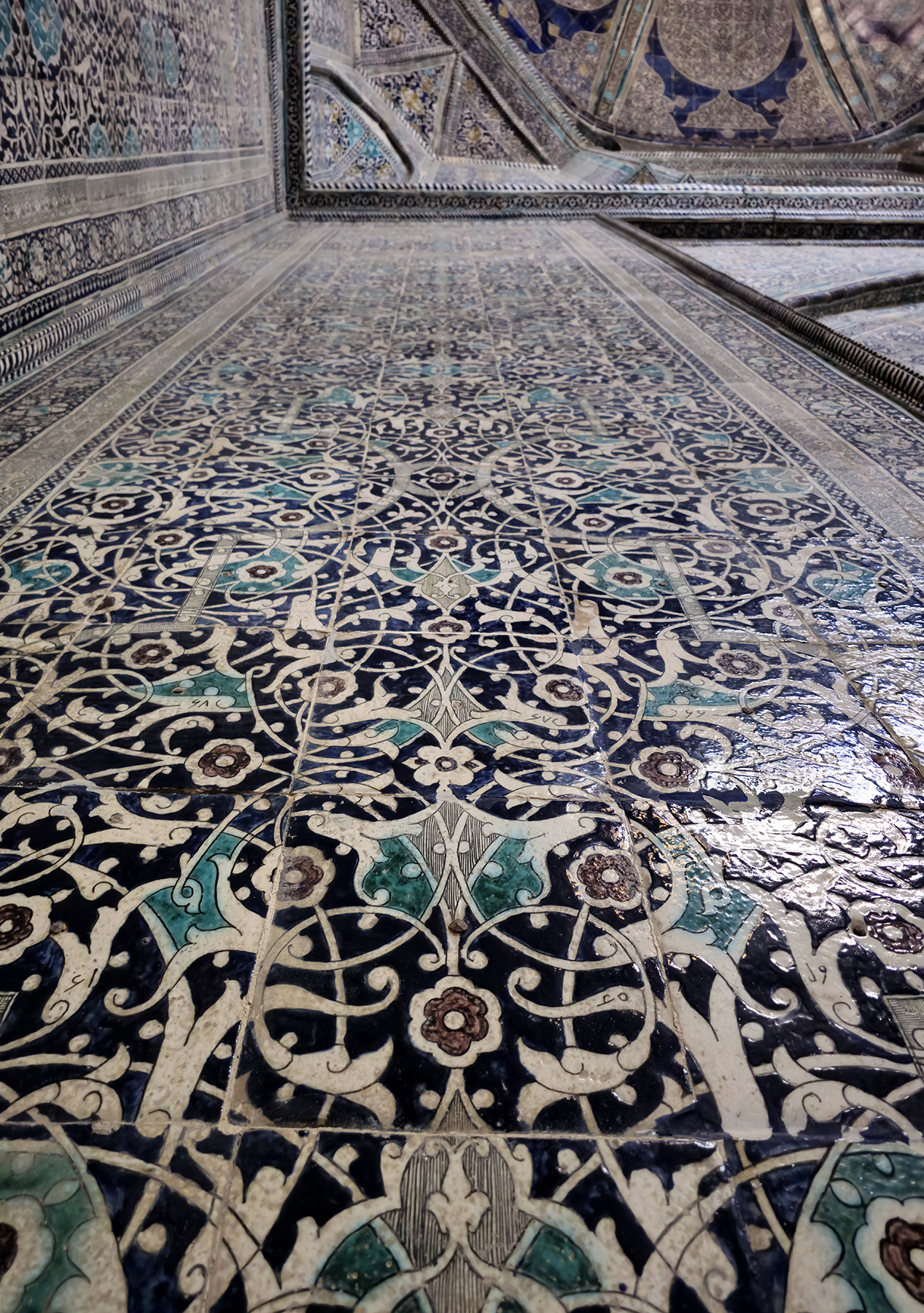
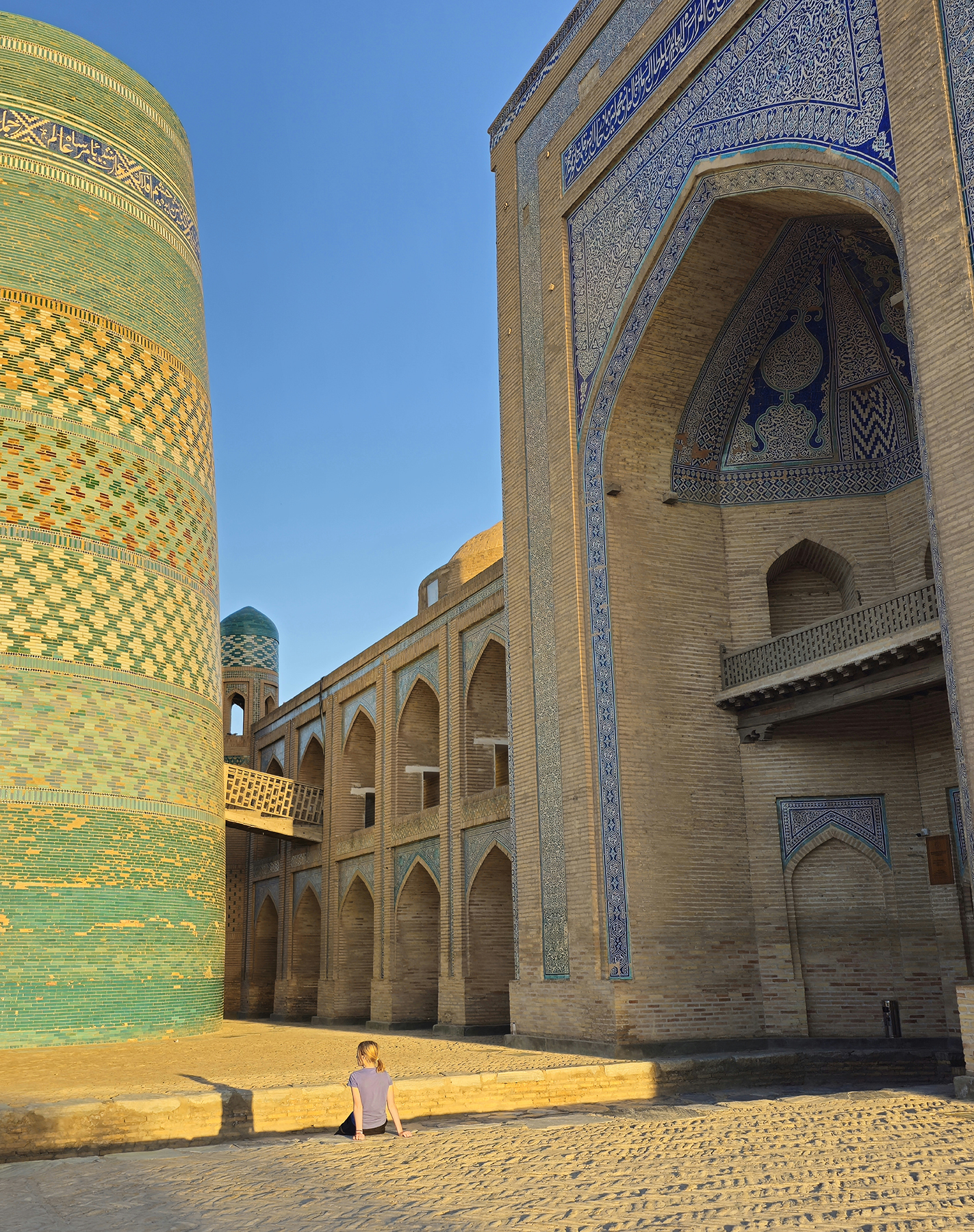
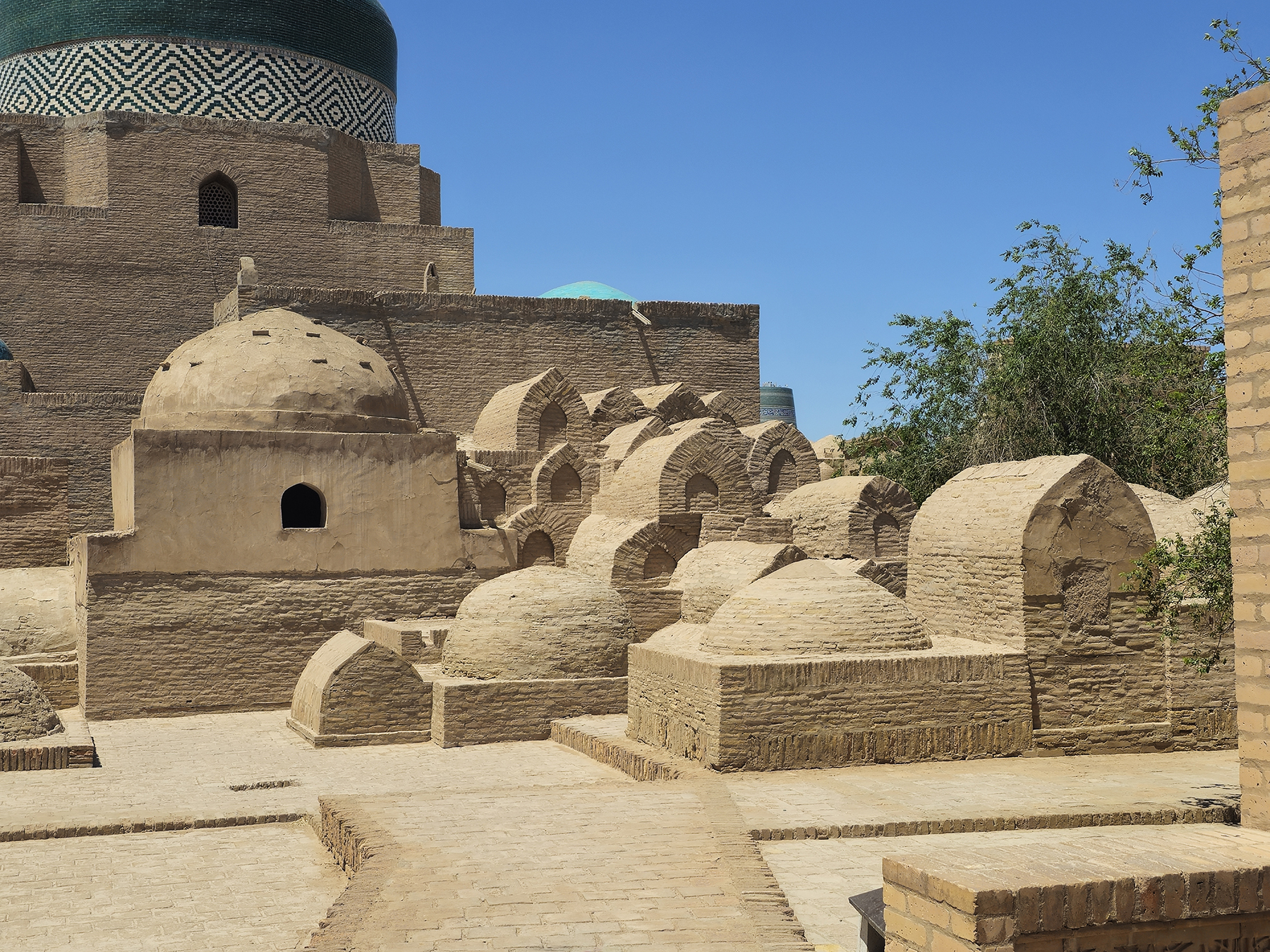
From Bukhara, we traveled another 7 hours (again by “Soviet chic” train transport) through the desert to reach the isolated outpost of Khiva. Once a main hub along the Silk Road, this incredibly remote village is less than 10 miles from the border of Turkmenistan. Like the cities of Samarkand and Bukhara, Khiva is also a UNESCO world heritage site – its ancient city walls filled with more architectural marvels. As in Samarkand and Bukhara, incredibly detailed blue and turquoise tilework covered every minaret, madrassa, and mausoleum – a true open air museum.





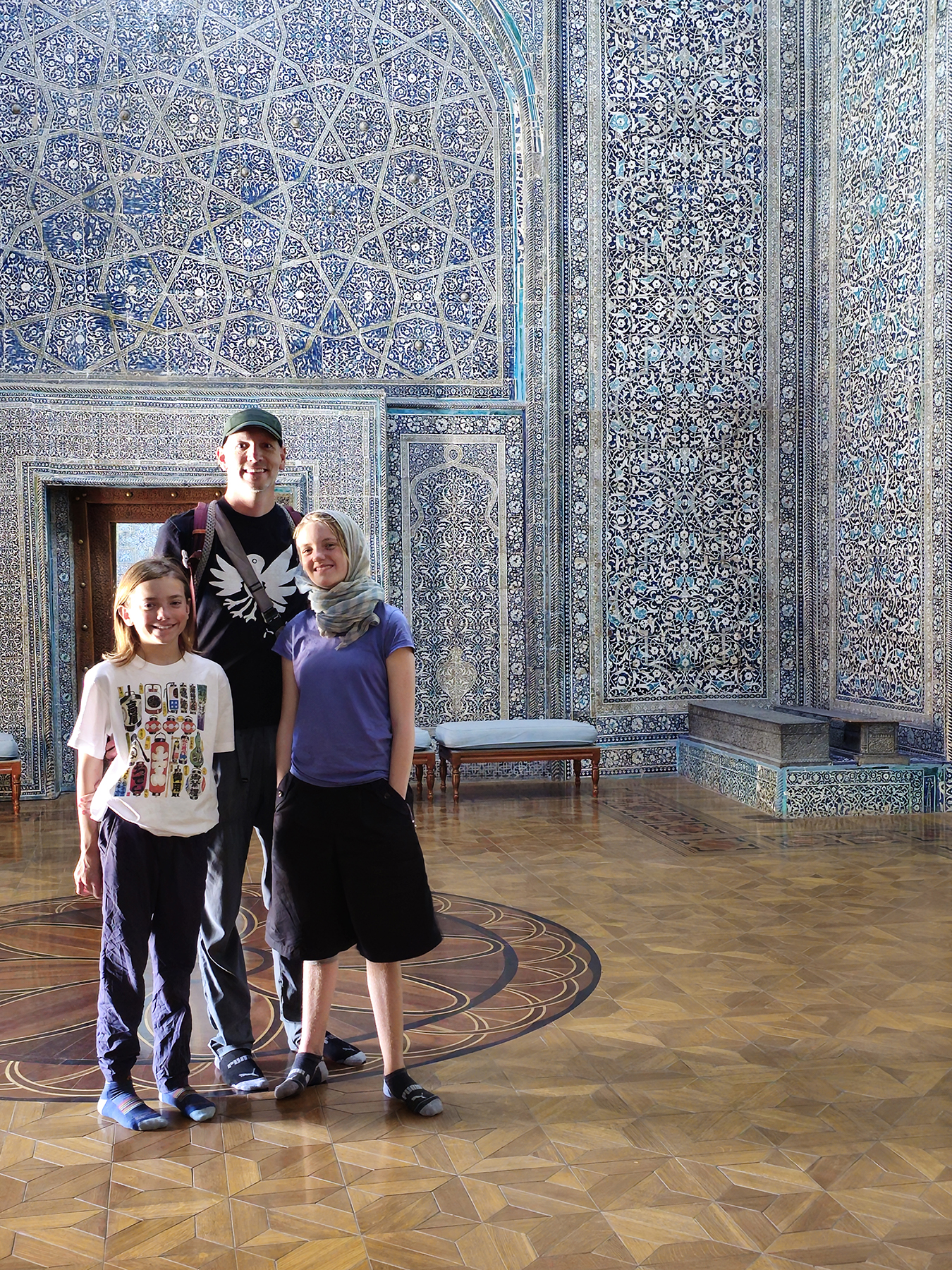
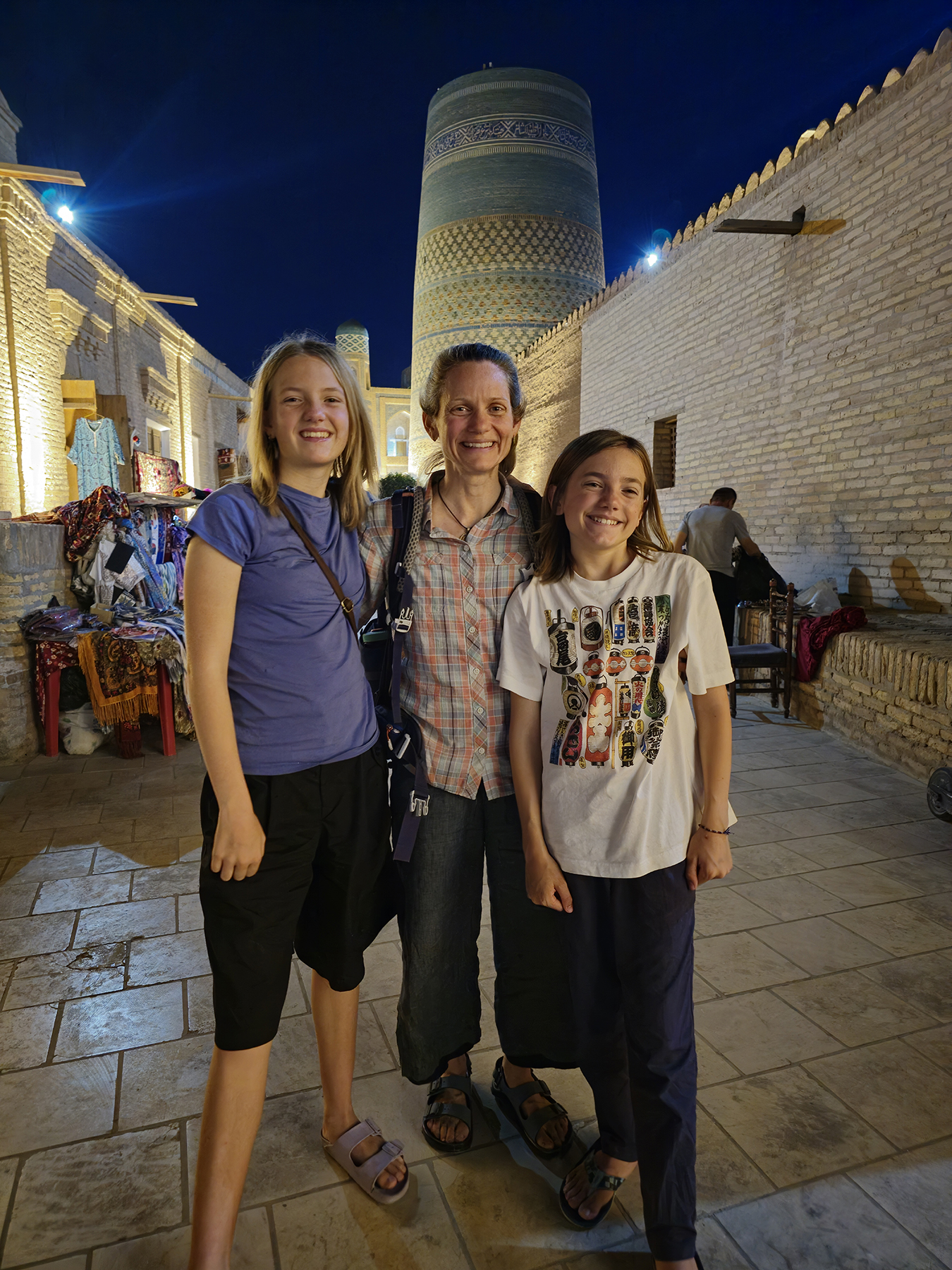

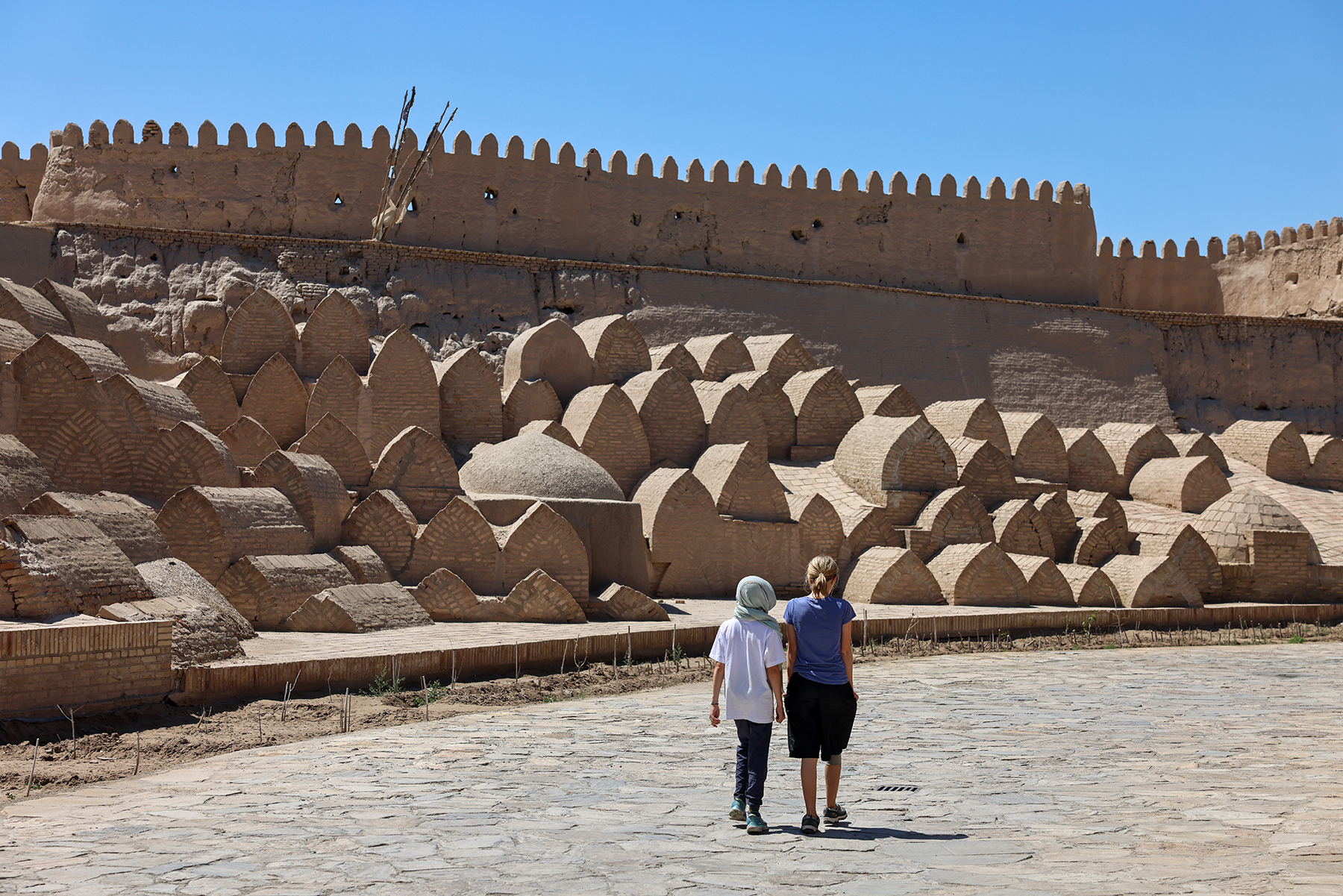

It was here in Khiva we decided to venture out into the desert to visit a number of ancient fortress outposts. To accomplish this plan, we hired a driver for a day to explore the widely dispersed ruins in a white Chevy Cobalt sedan. This was unsurprising, as 90 percent of cars in Uzbekistan are Chevrolets, and 80% of them are white, with the white Chevy Cobalt being the most popular model by far! We found it both amusing and terrifying to be surrounded by a sea of white Chevy Cobalts as our driver aggressively careened and swerved through the city streets as we exited town.


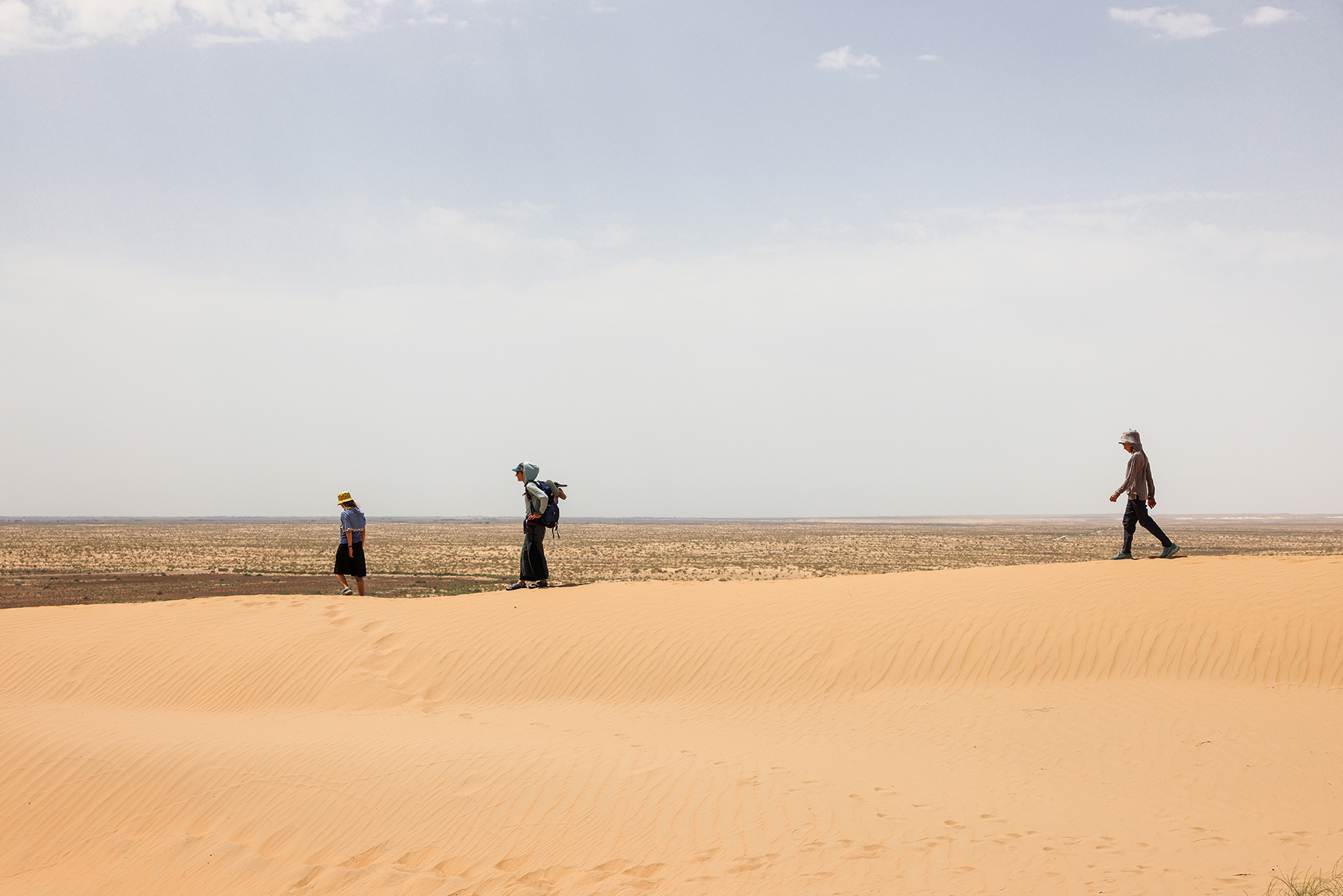
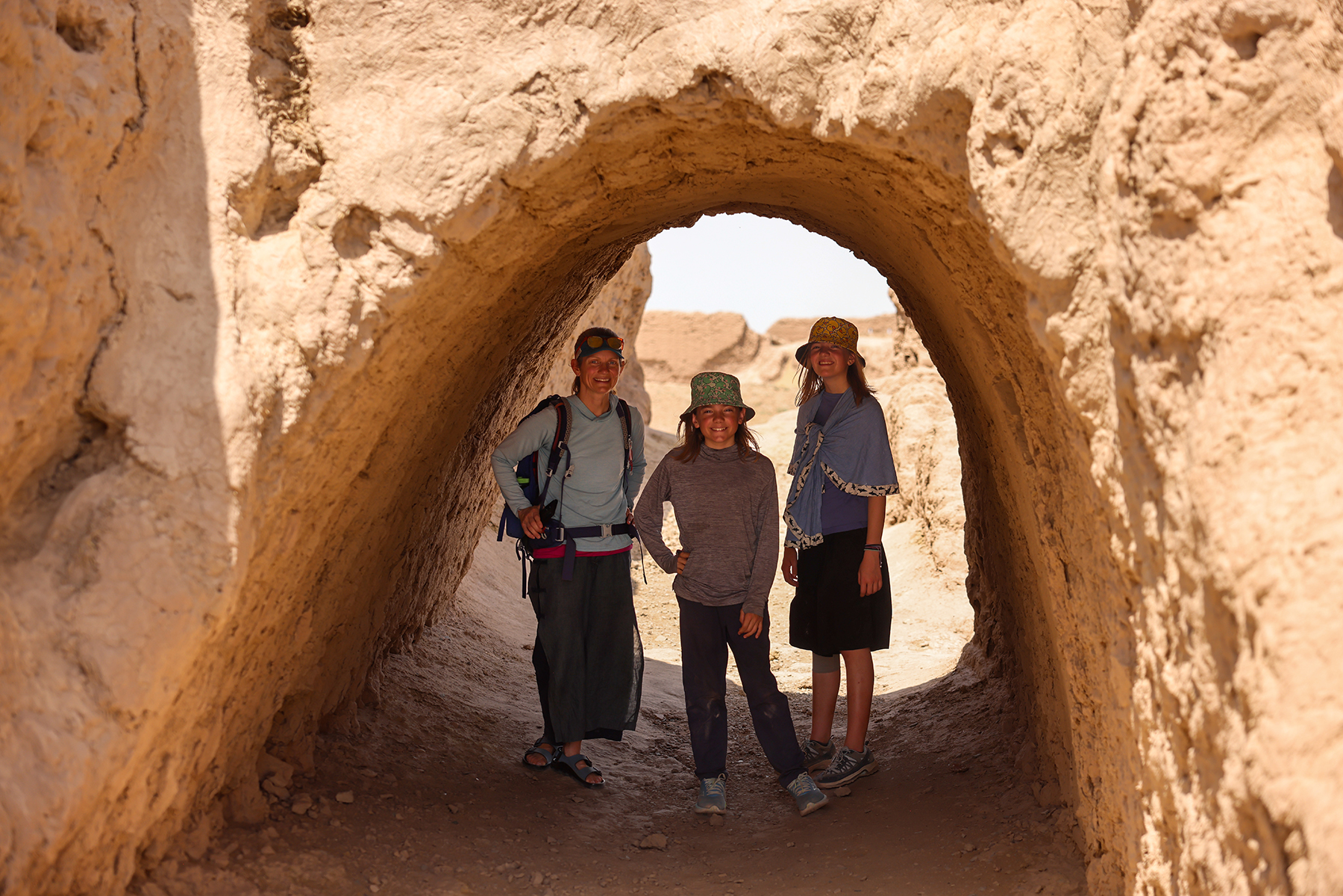
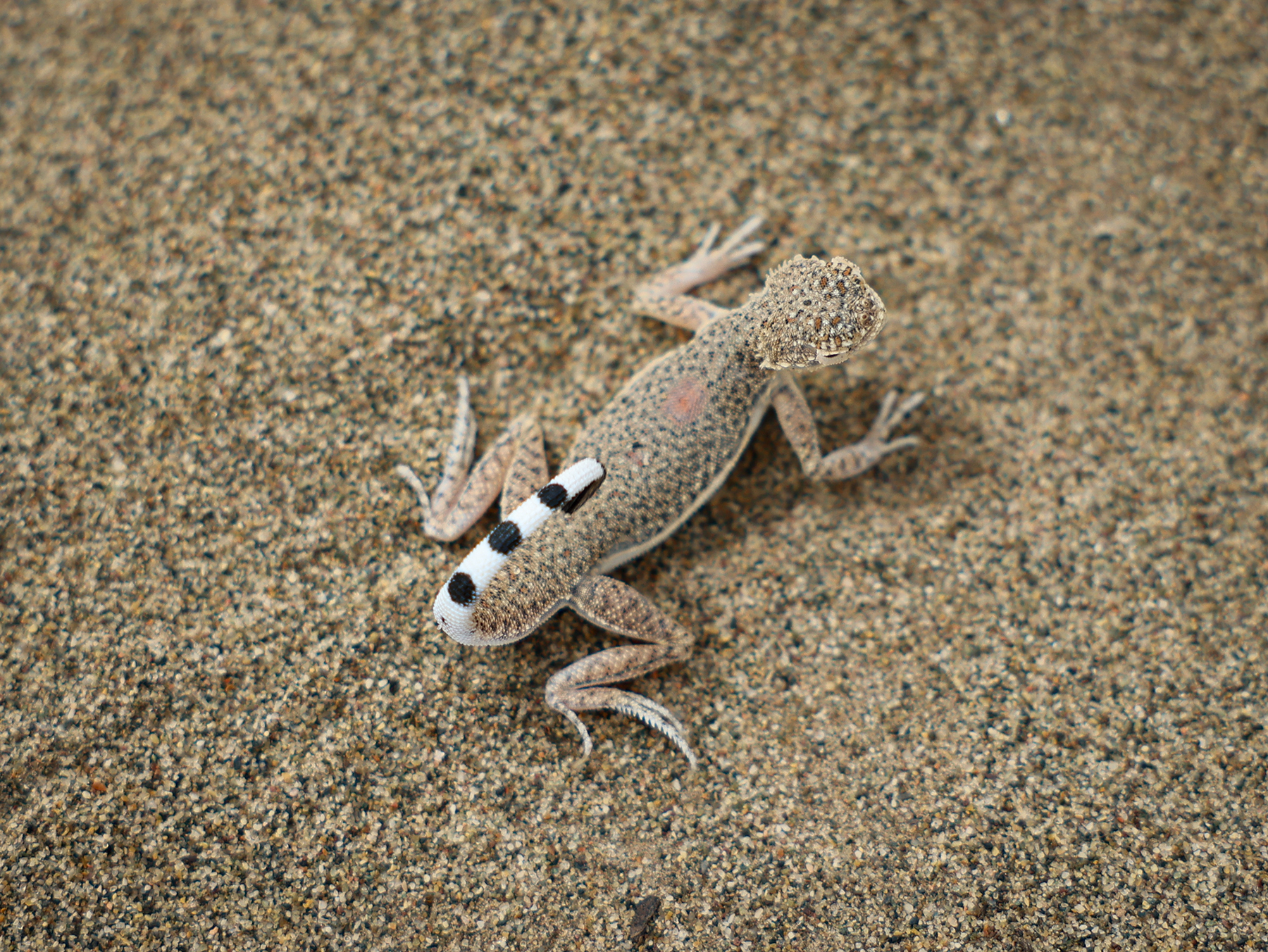
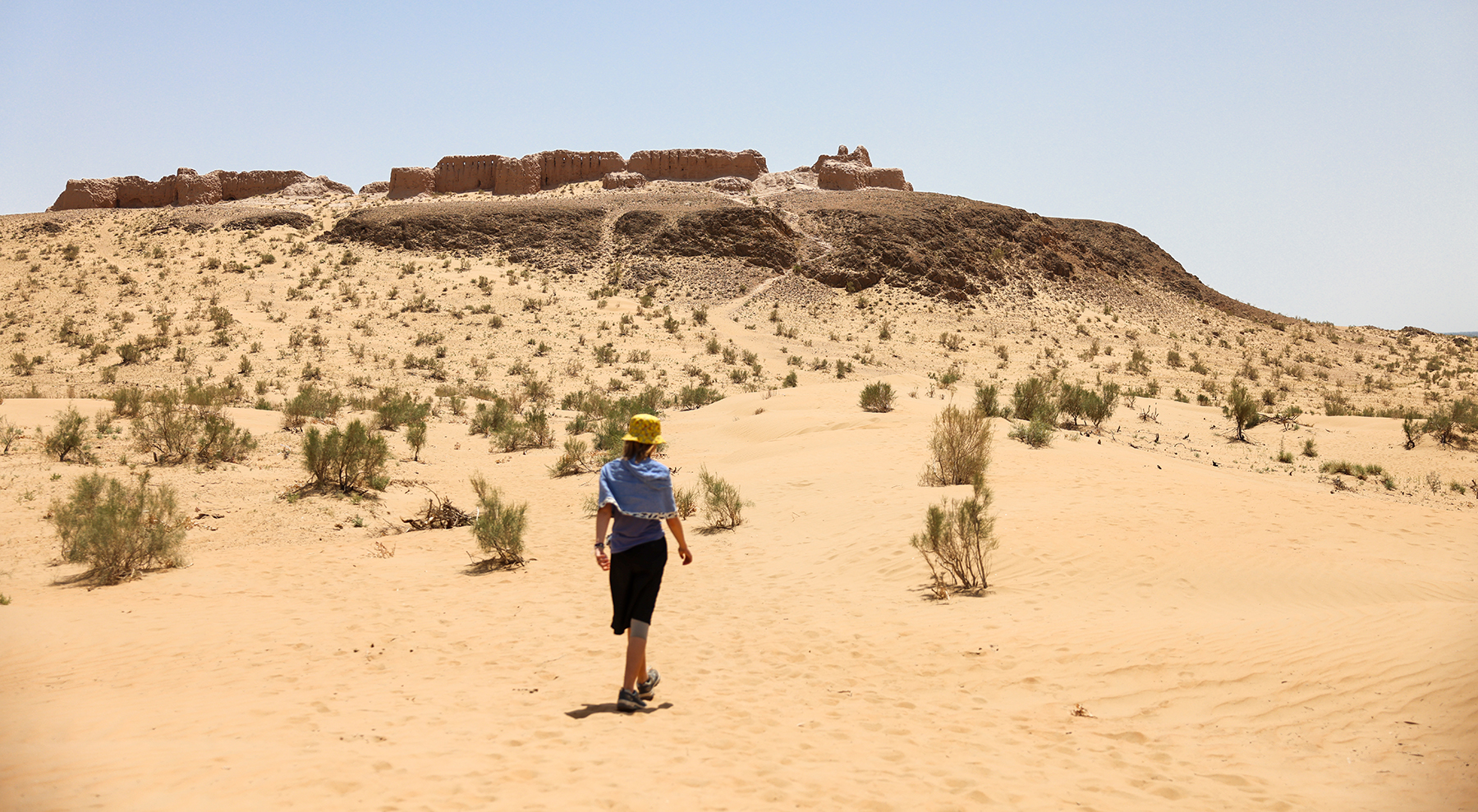
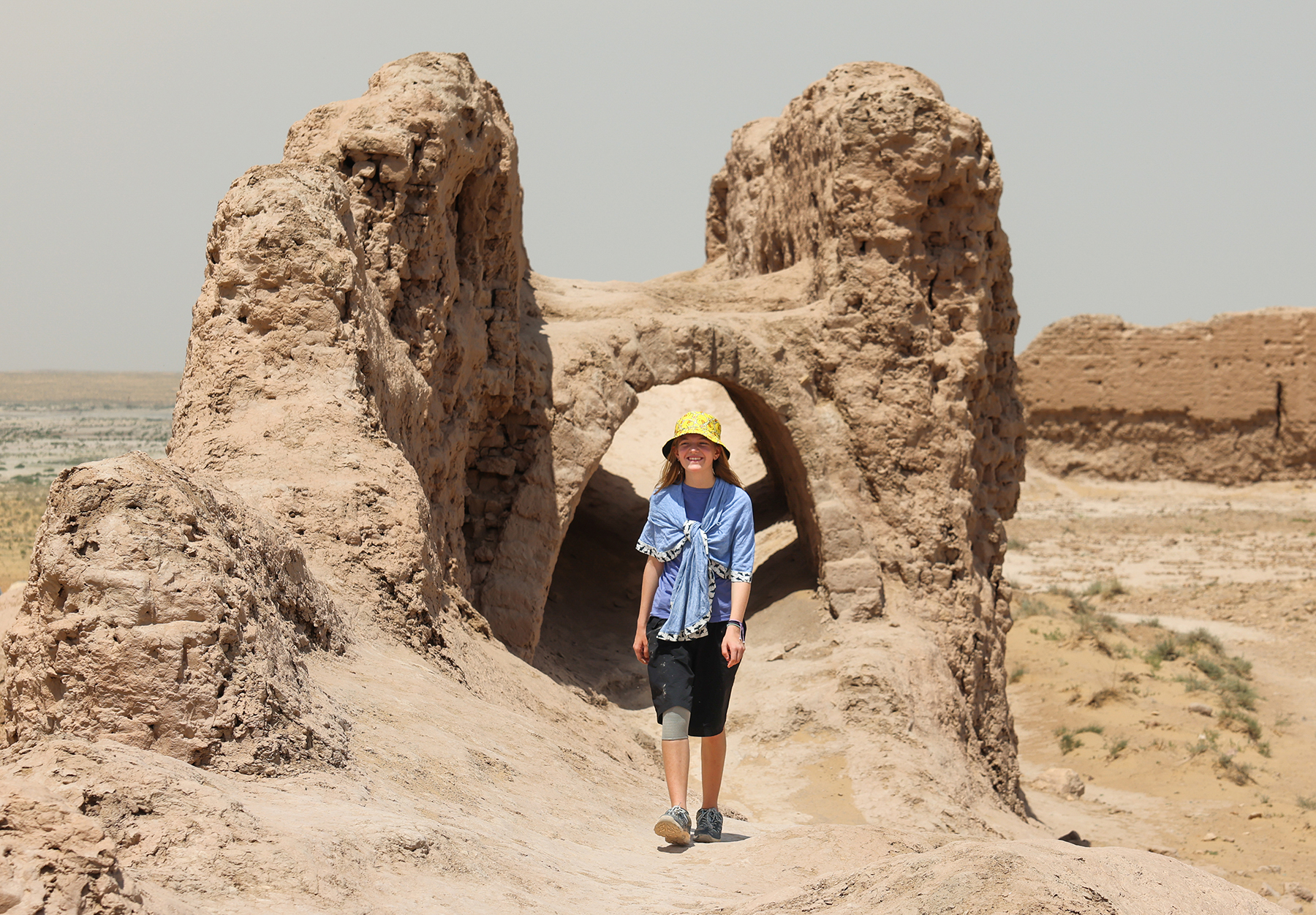
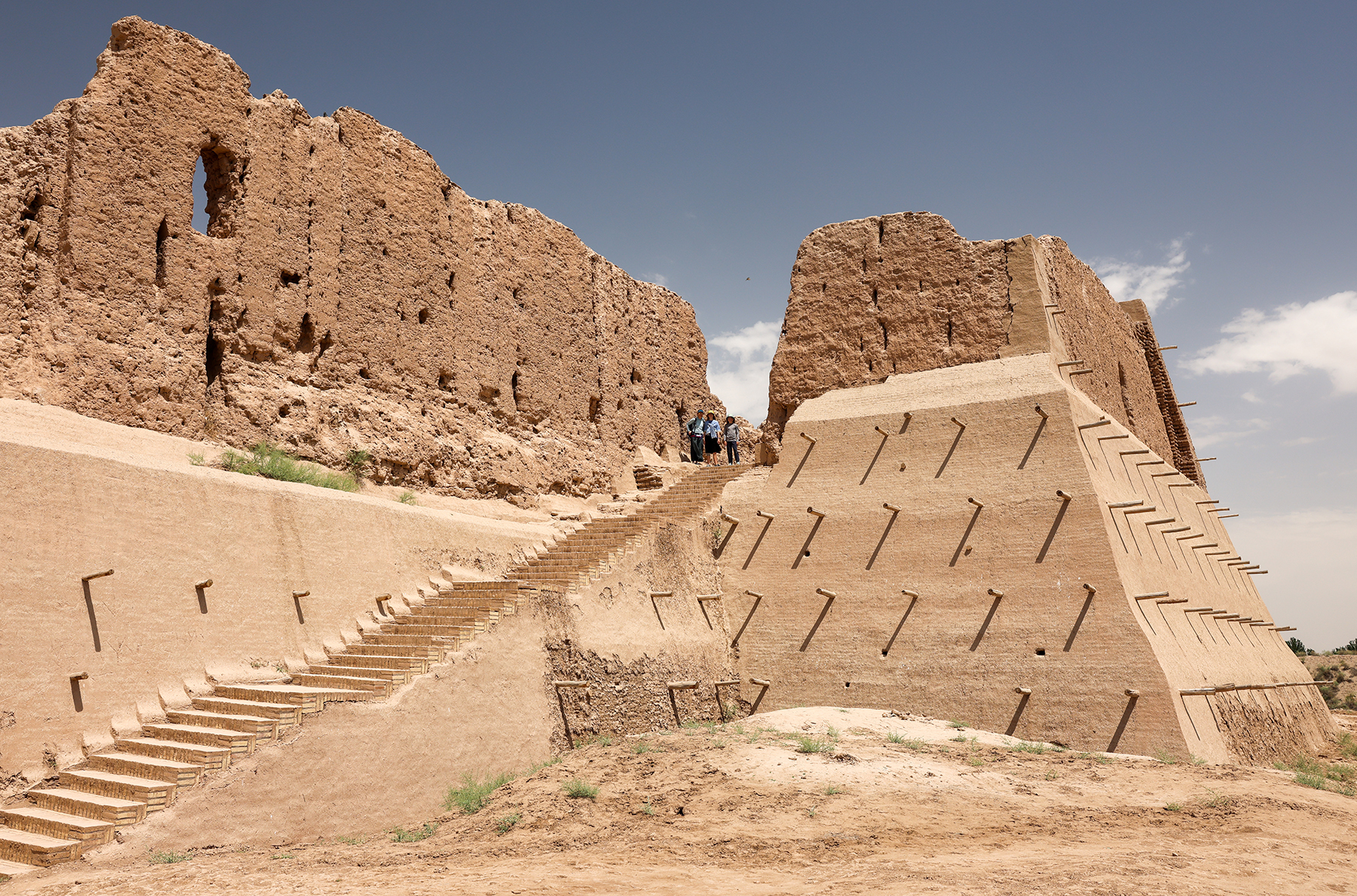
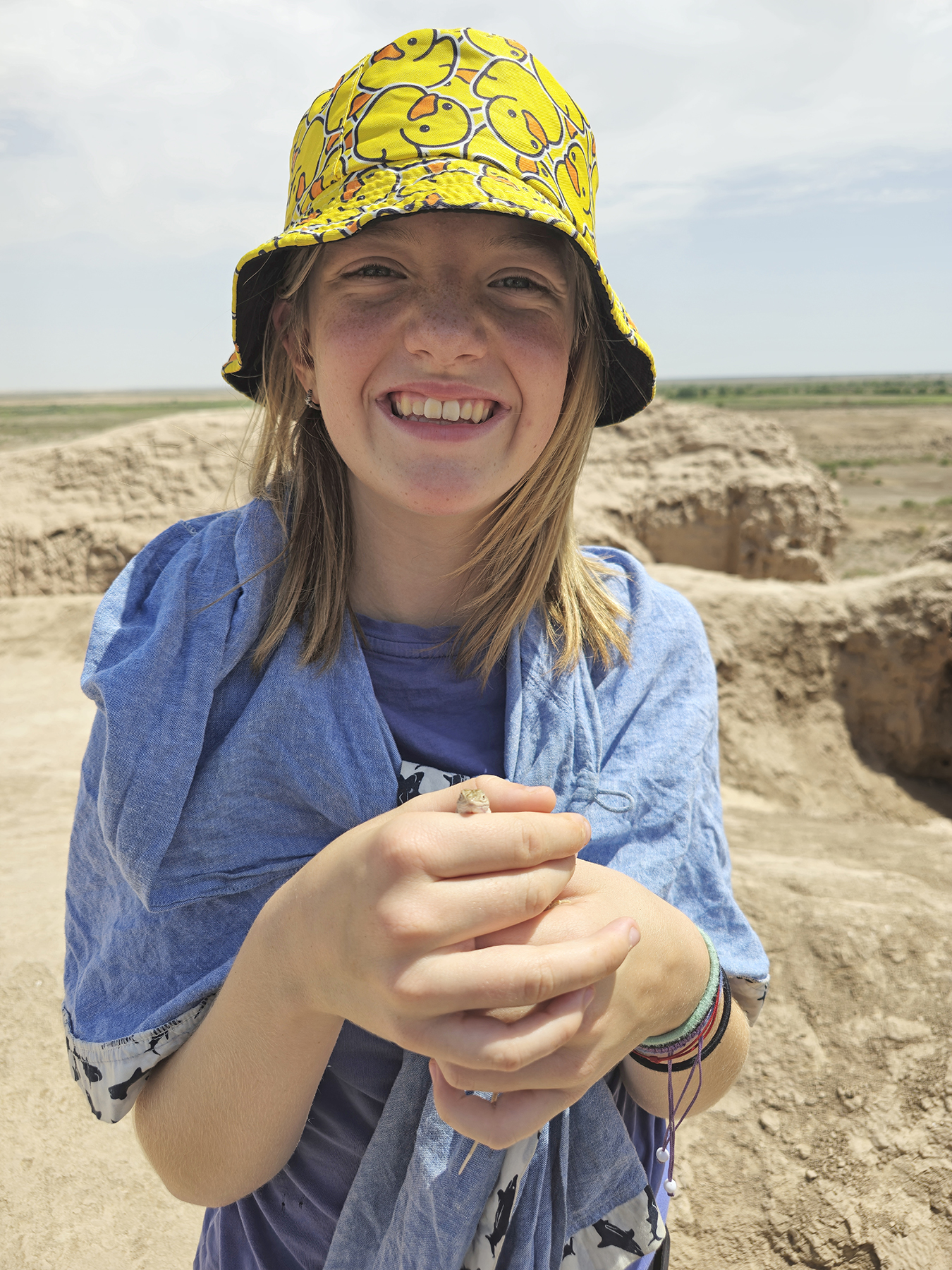
Exploring the ruins of the ancient Khorezm fortresses of Karkalpakstan was an intense experience due to the oppressive heat. We were thankful none of us passed out as we trudged through the desert, hot sand scalding our feet, as we made our way along faint trails to the archaeological sites. We saw very few other people throughout the entire day, with desert lizards far outnumbering other visitors to the ruins. It was a big change from our time in Japan to find ourselves as the only people exploring several of these ancient structures, some of which date back more than 2500 years. Looking out across the vast, empty desert landscape, it was easy to visualize the history and experiences of the inhabitants of these ancient outposts.


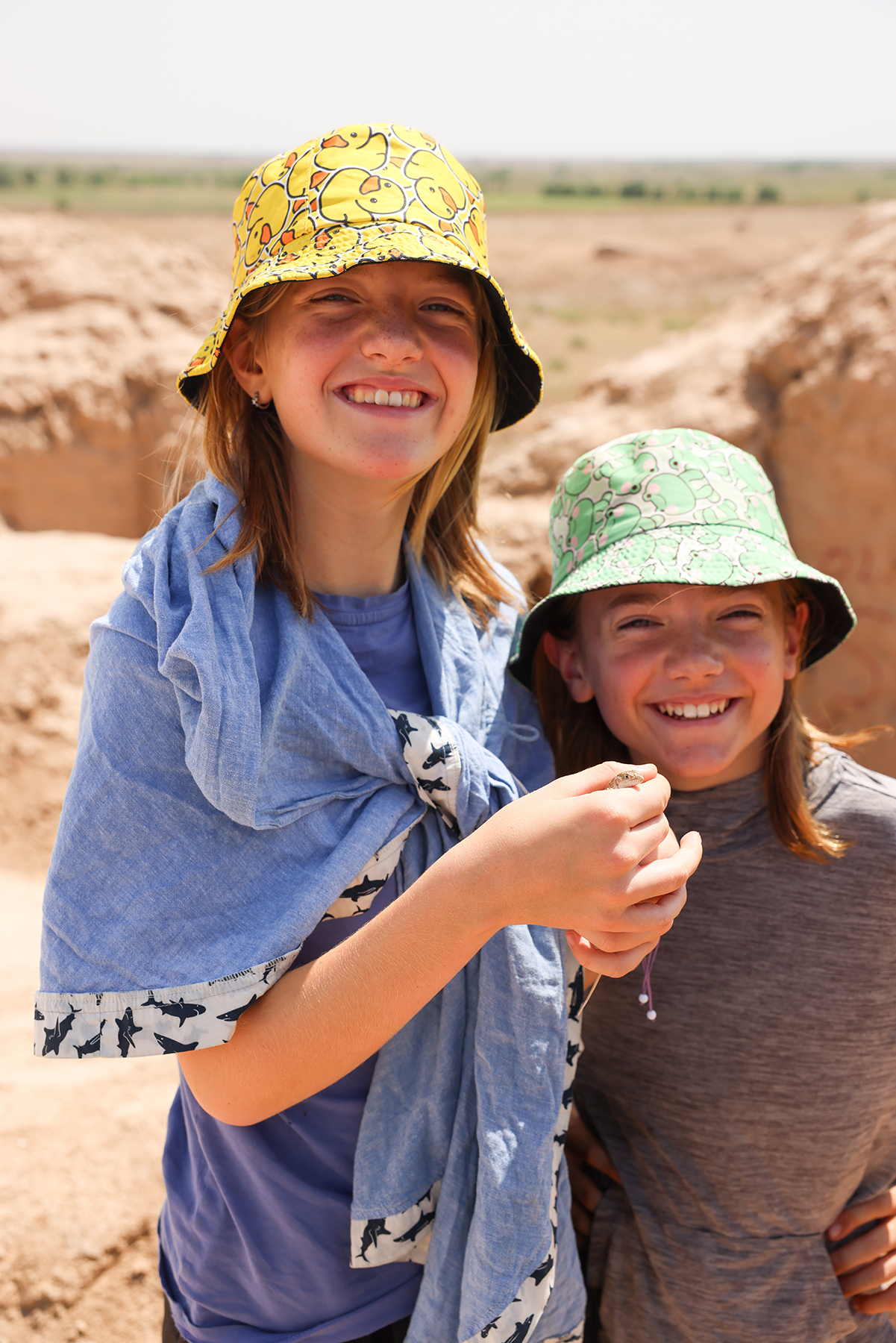


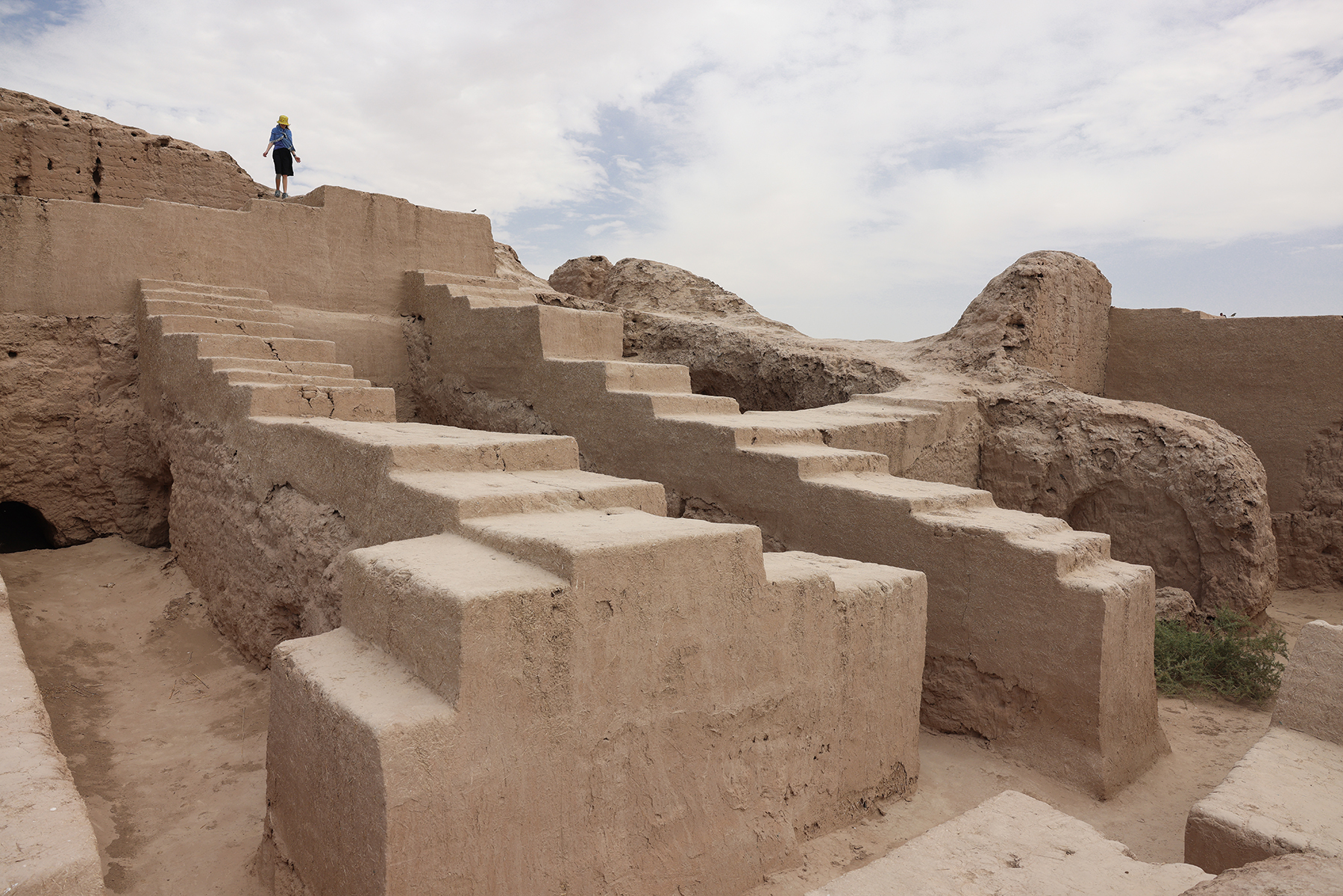


We returned to Khiva to enjoy the remainder of our stay exploring the minarets and madrasahs of the old walled city. Each day was a joy to our senses, taking in the stunning architecture and fantastic meals, while doing our best to avoid the unrelenting heat. As our time in Khiva came to a close, we boarded our final train to depart for the capital of Tashkent, a far more busy and modern place than the other ancient cities on our Uzbekistan itinerary. Our unexpected journey into central Asia thus came to a close, and we boarded our flight for a return journey back to Tokyo, thankful that we still have a few more adventures in store before our year’s sabbatical concludes.
Uzbekistan – Howie’s Addendum
Having returned to our regularly scheduled lives, we have enjoyed much less time to reflect upon our adventures and to look through the thousands of pictures we haven’t yet had a chance to sort. It is thus with a bit more separation, both in time and in space, that I look back upon our first foray into central Asia.
One thing I am proud of from our year of travel abroad has been our family’s unwavering commitment to saying “yes!” to adventure at every opportunity. It is in that spirit that we headed back across Asia towards Uzbekistan, a place that was firmly off of my radar as we started our trip. As it came highly recommended by several fellow travelers, and also represented a “blank spot” on our collective mental map of the planet, we were excited to experience a place that was entirely new to us.
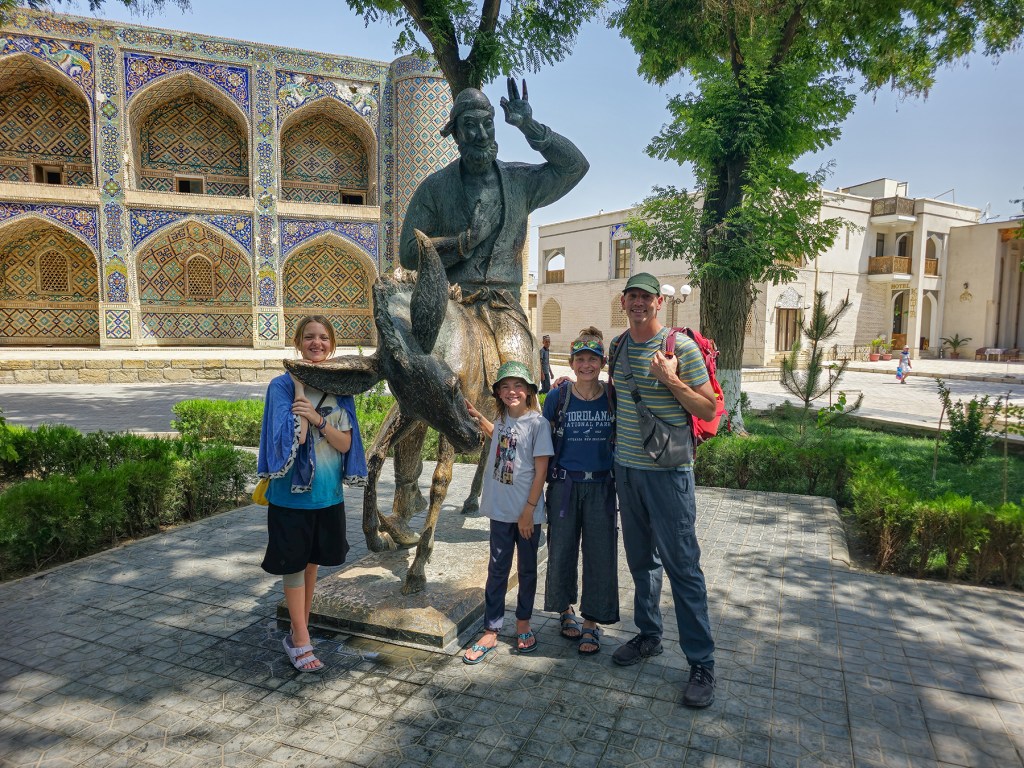
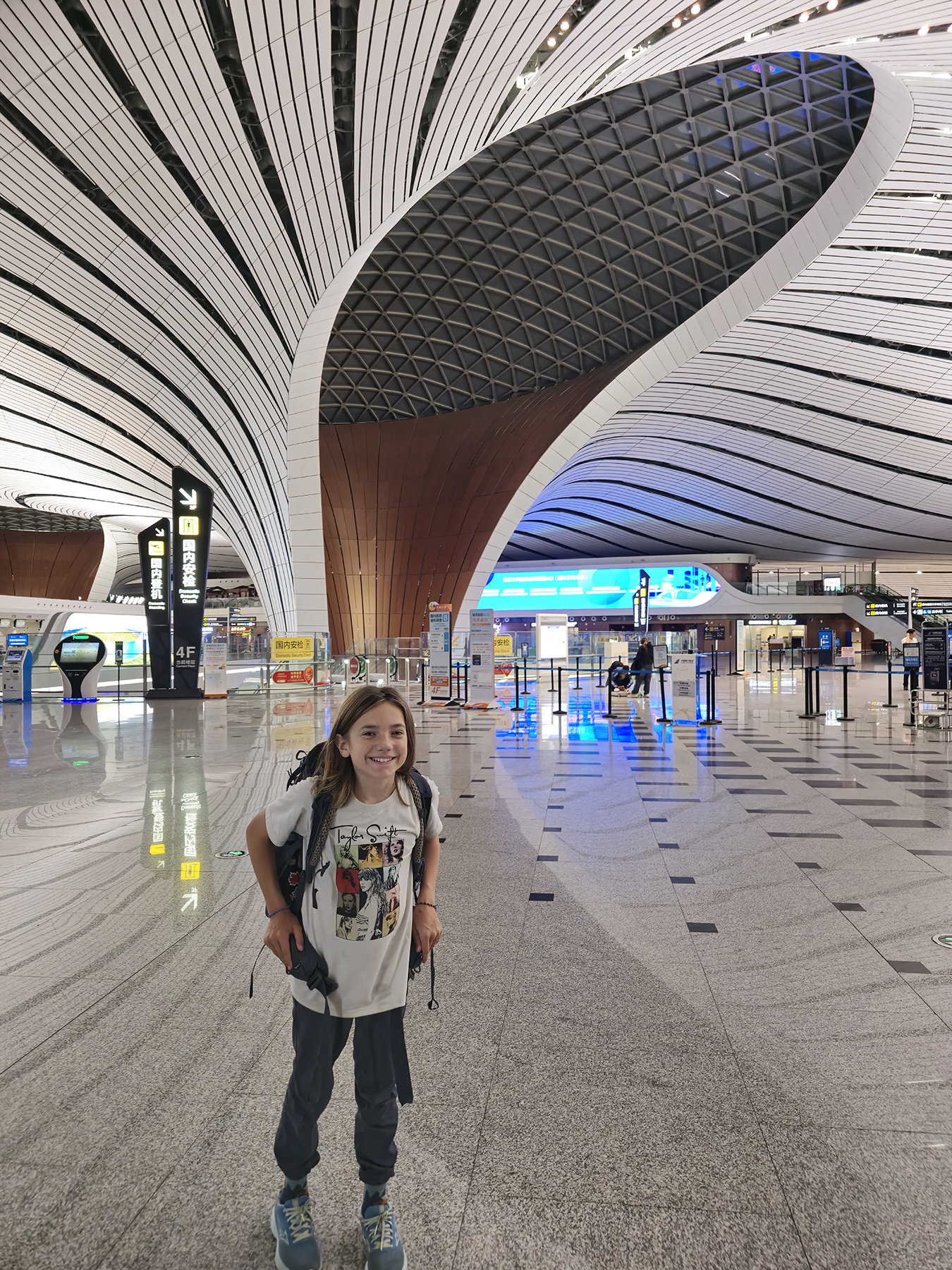
Just getting to Uzbekistan from Japan was a wild experience! We purchased the cheapest tickets we could find out of Tokyo with the ancient city of Samarkand as our final destination. Our flight included an overnight layover in Beijing, plus a long stop in the city of Ürümqi in far western China. Happily, we discovered upon landing in Beijing that China Southern Airlines treats guests to a free hotel room for overnight layovers, which made the night much more pleasant than it might have otherwise been, as we have become experts at sleeping on airport floors during our travels. Unfortunately, we also realized that our old China-compatible SIM cards had expired. This made our plan to use AliPay to purchase our dinner impossible, as all the noodle shops near our hotel closed down for the night. So we did our best to make do, and used the last 10-yuan note ($1.40 USD) I found left over in my wallet to purchase four packets of ramen noodles from a convenience store. We proceeded to cook the ramen in our hotel room using a teapot, the only available kitchen appliance.

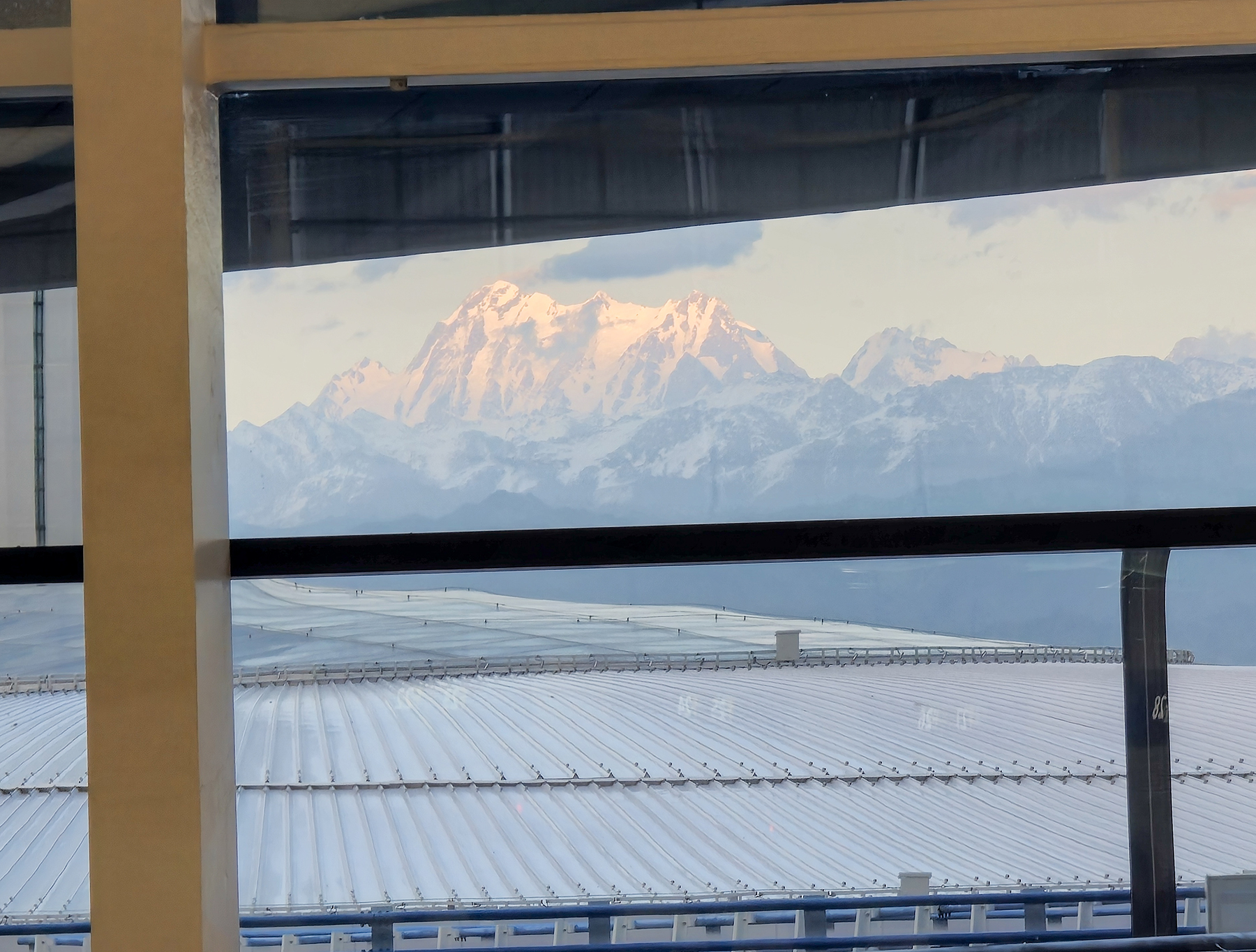
The following day we continued on to Ürümqi, the capital of the Xinjiang Autonomous Region. Our flight traversed a barren expanse of desert, only interrupted by the dramatic snowcapped peaks of the Tianshan Mountains. Looking out from the window of the plane triggered my memories from the beginning of our trip as we sat at the edge of the Sahara in Morocco. The view induced a similarly exhilarating feeling of being close to something vast and unknown. Upon landing in Ürümqi, we enjoyed a leisurely meal from a noodle shop in the airport, as we were subjected to even more inquisitive looks than normal from locals who were surprised to find our family traveling solo through this remote locale.
I found our arrival in Samarkand to be a bit disorienting, due both to the late hour and our more or less complete lack of knowledge about how anything works in Uzbekistan. We arrived at our small hotel quite exhausted, but everyone felt much better after a good night’s rest and our first amazing Uzbek breakfast. Feeling ready to do some exploring, we stepped out onto the streets of Samarkand, into what felt like an oven set to broil! Not a cloud could be seen in the sky, and the unseasonable heat felt inescapable.
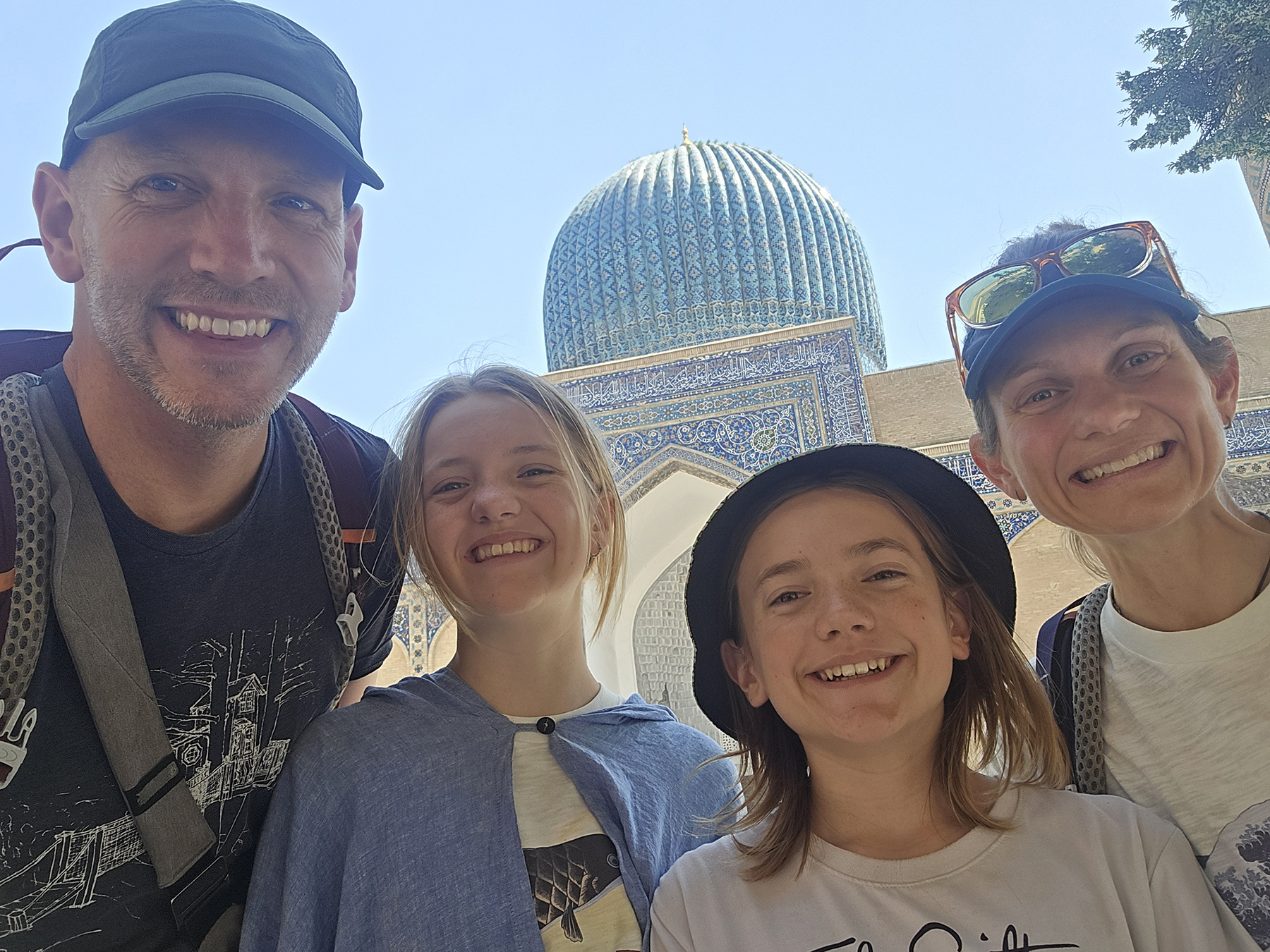

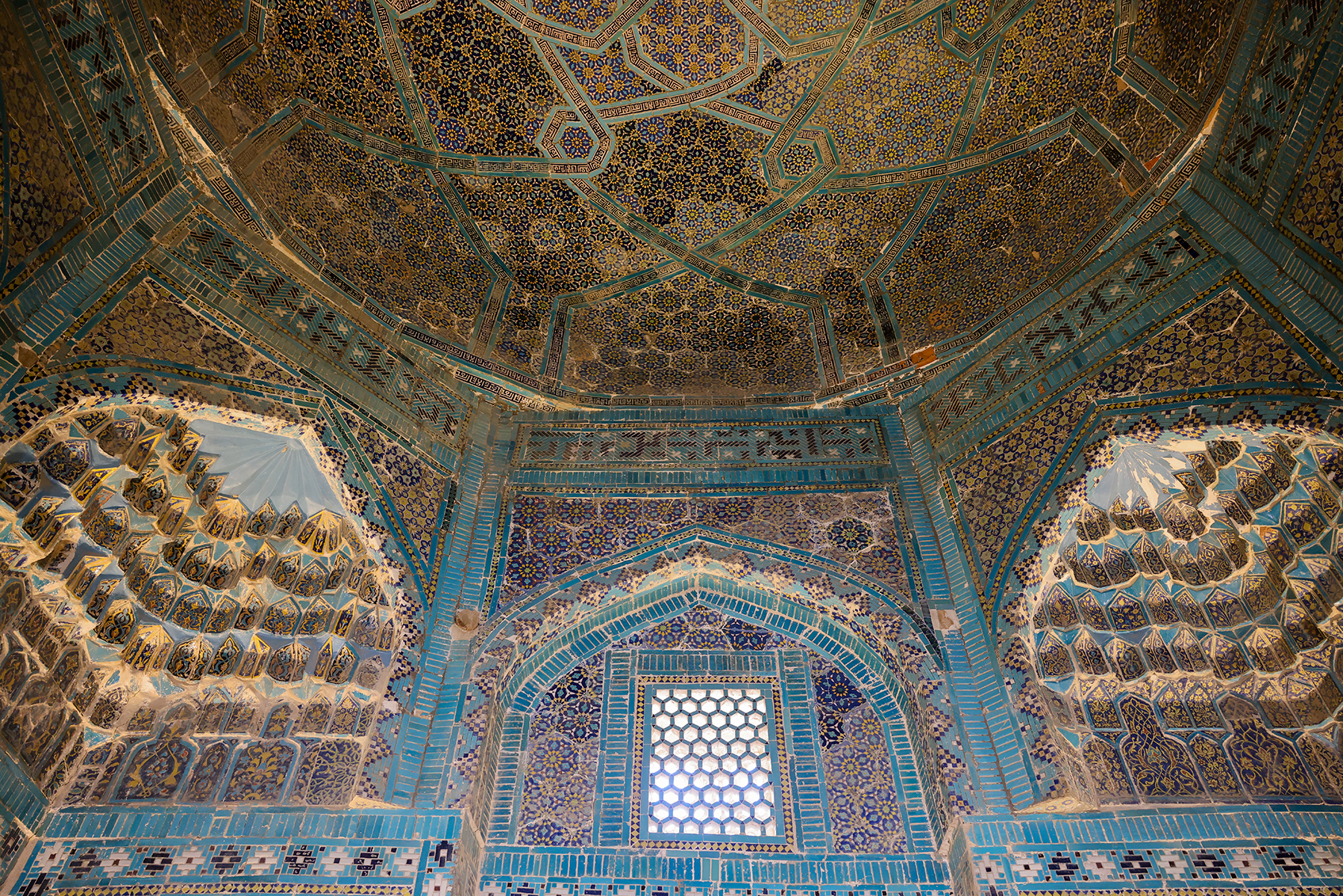

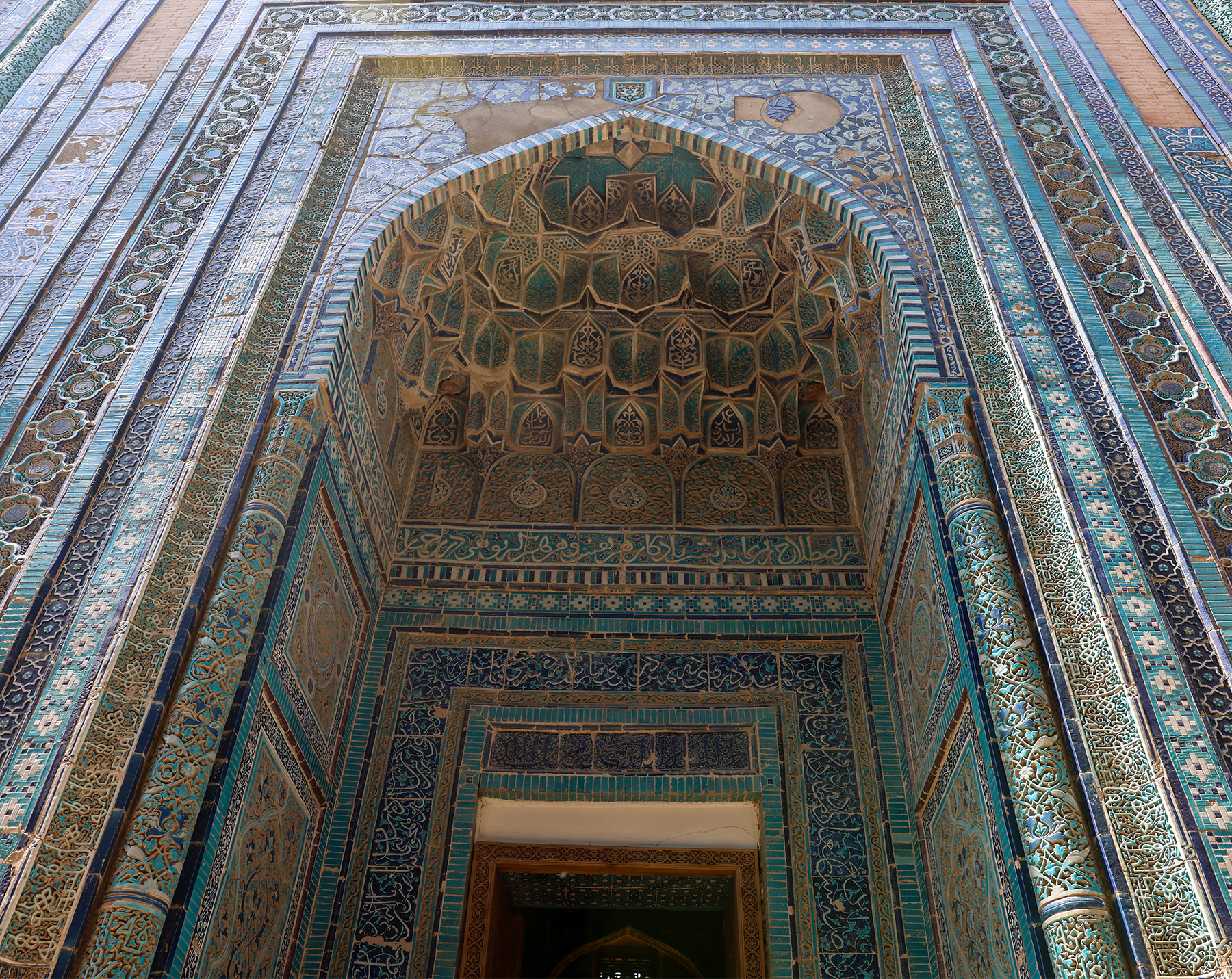
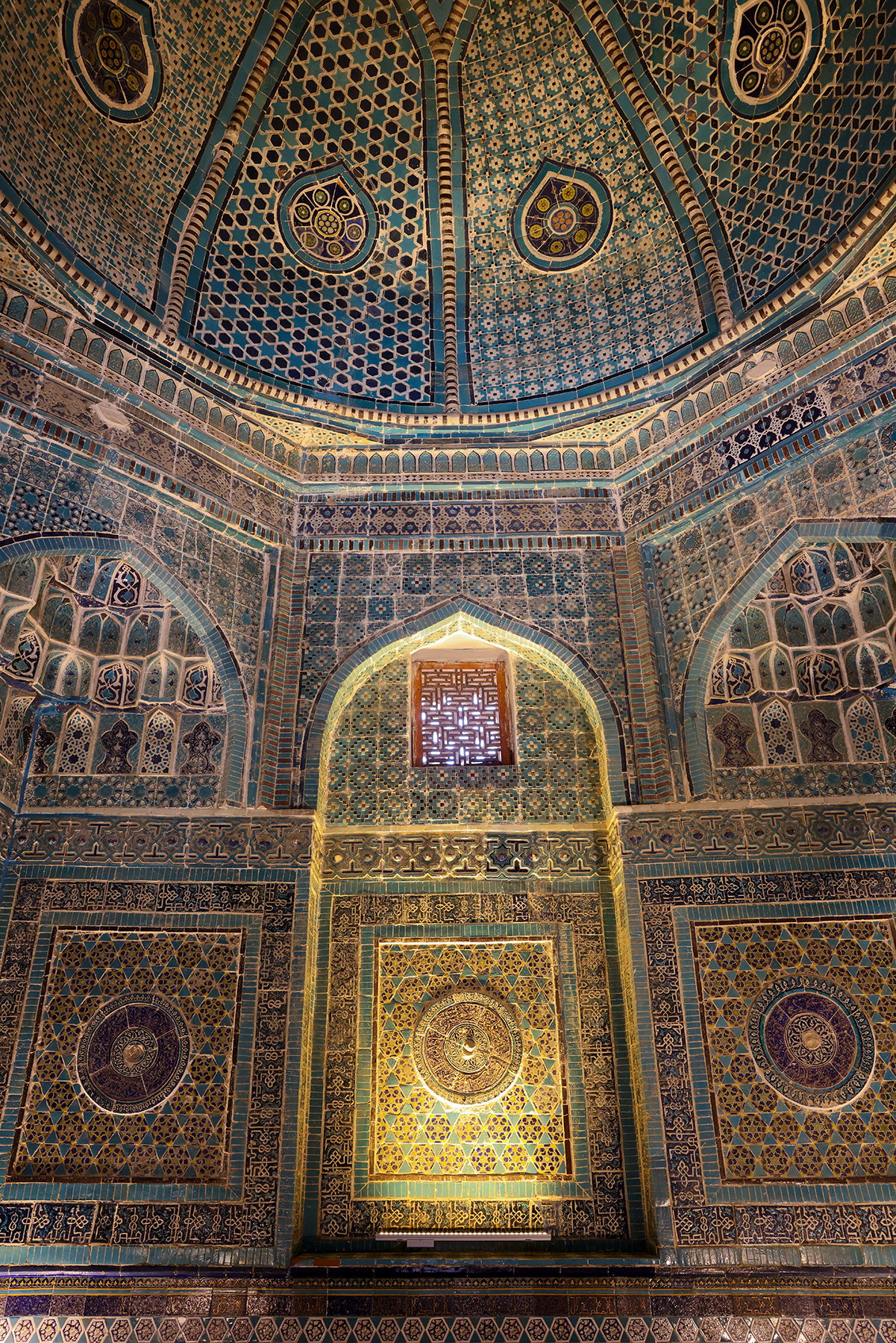
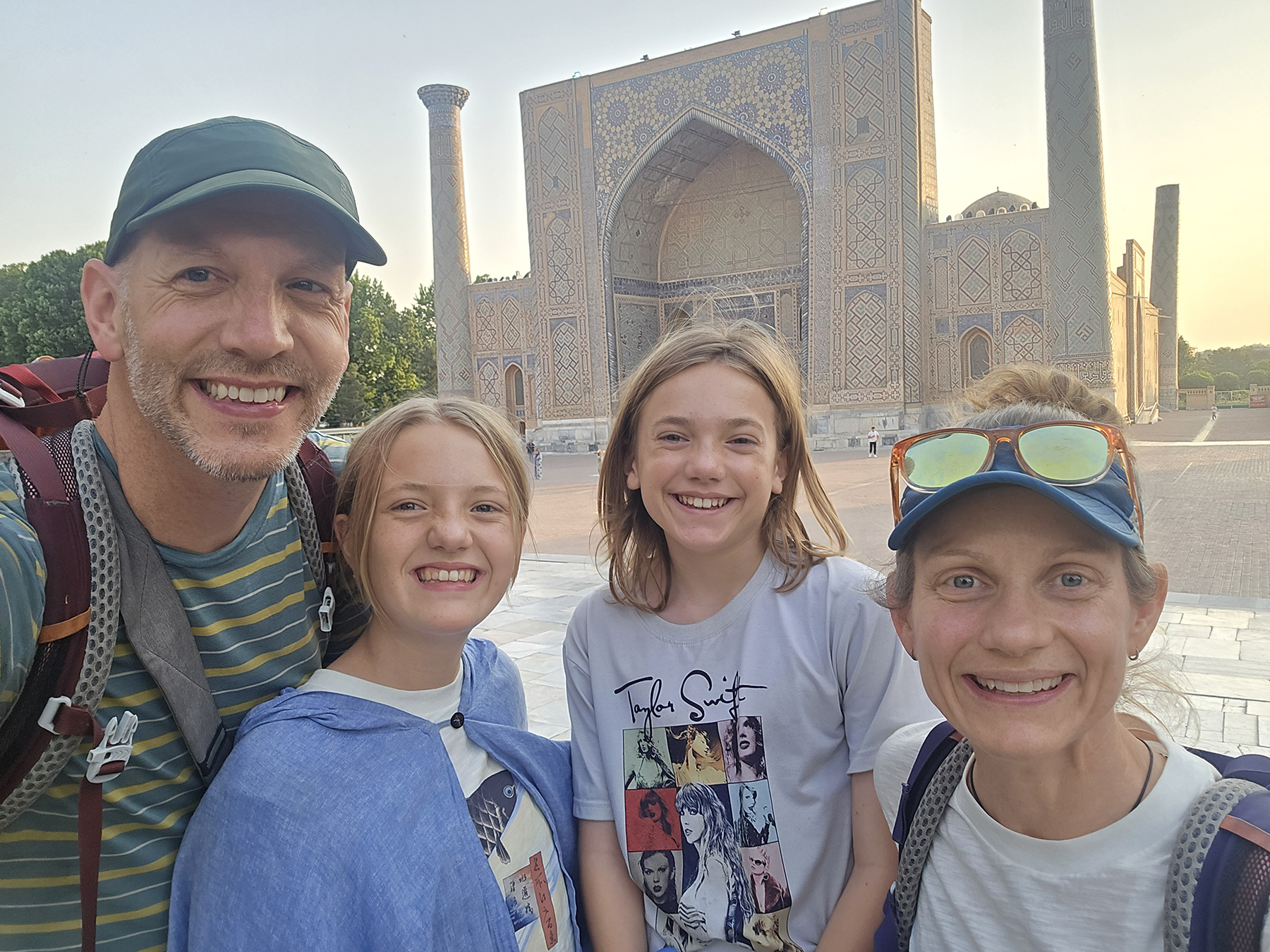

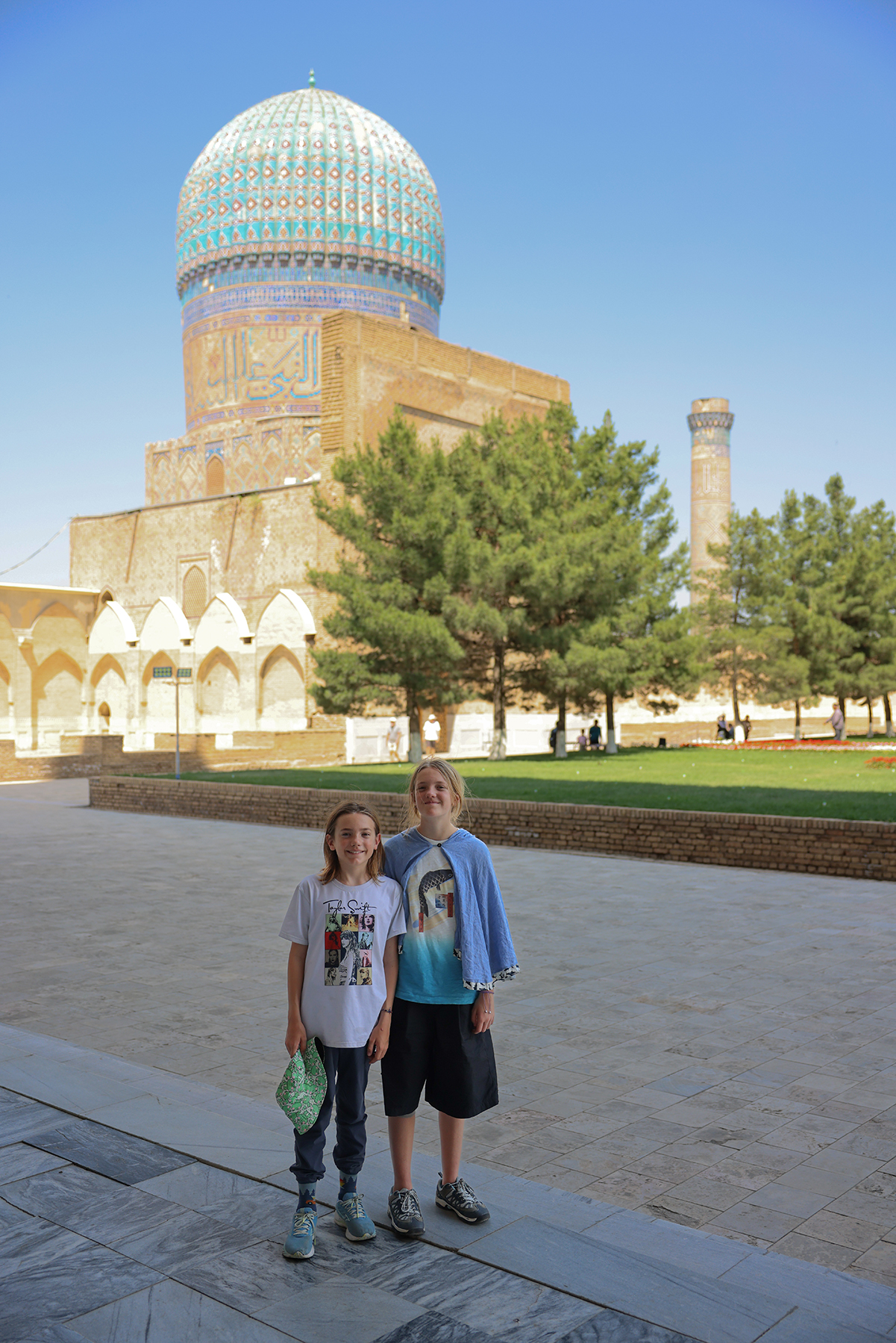
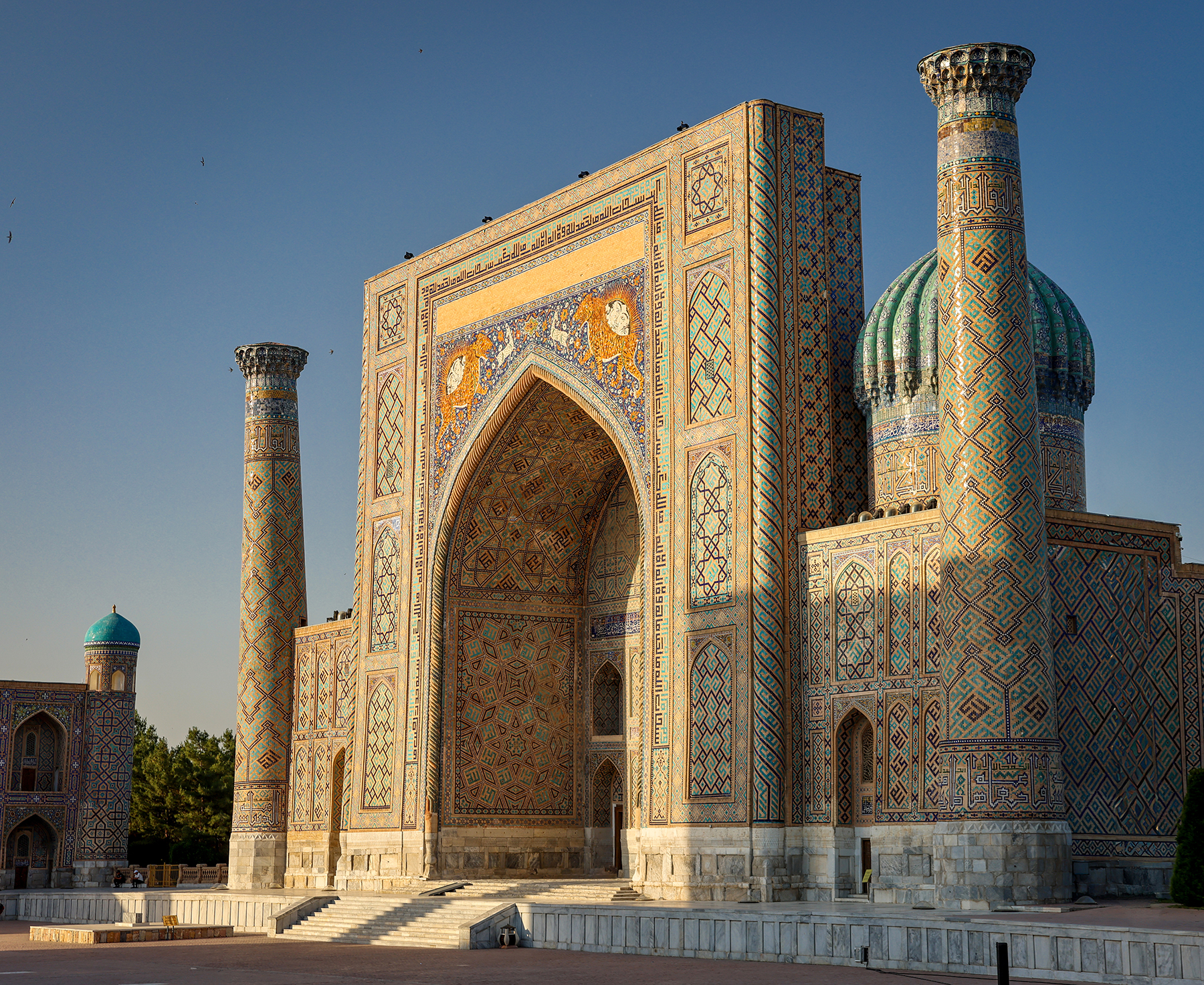

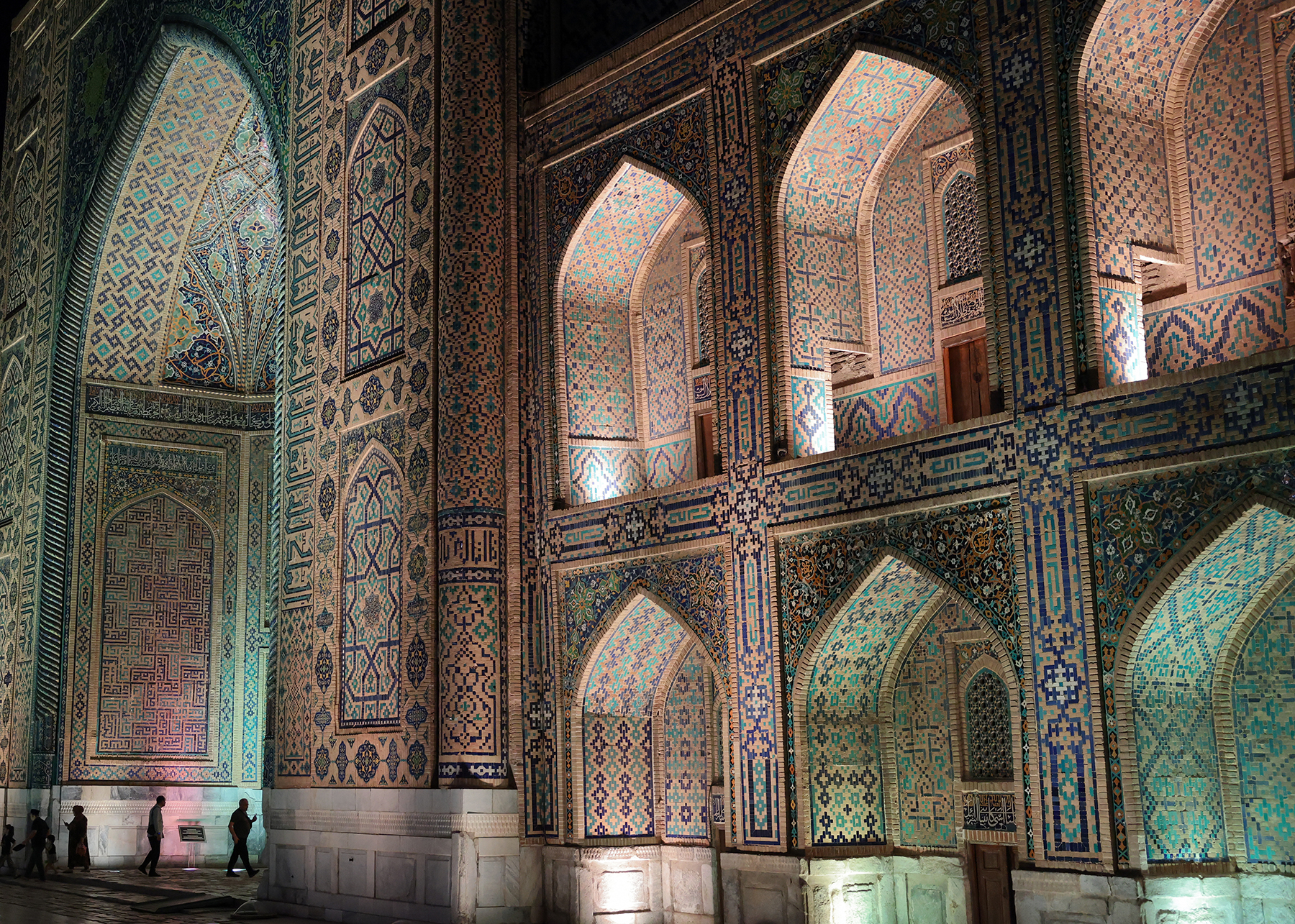

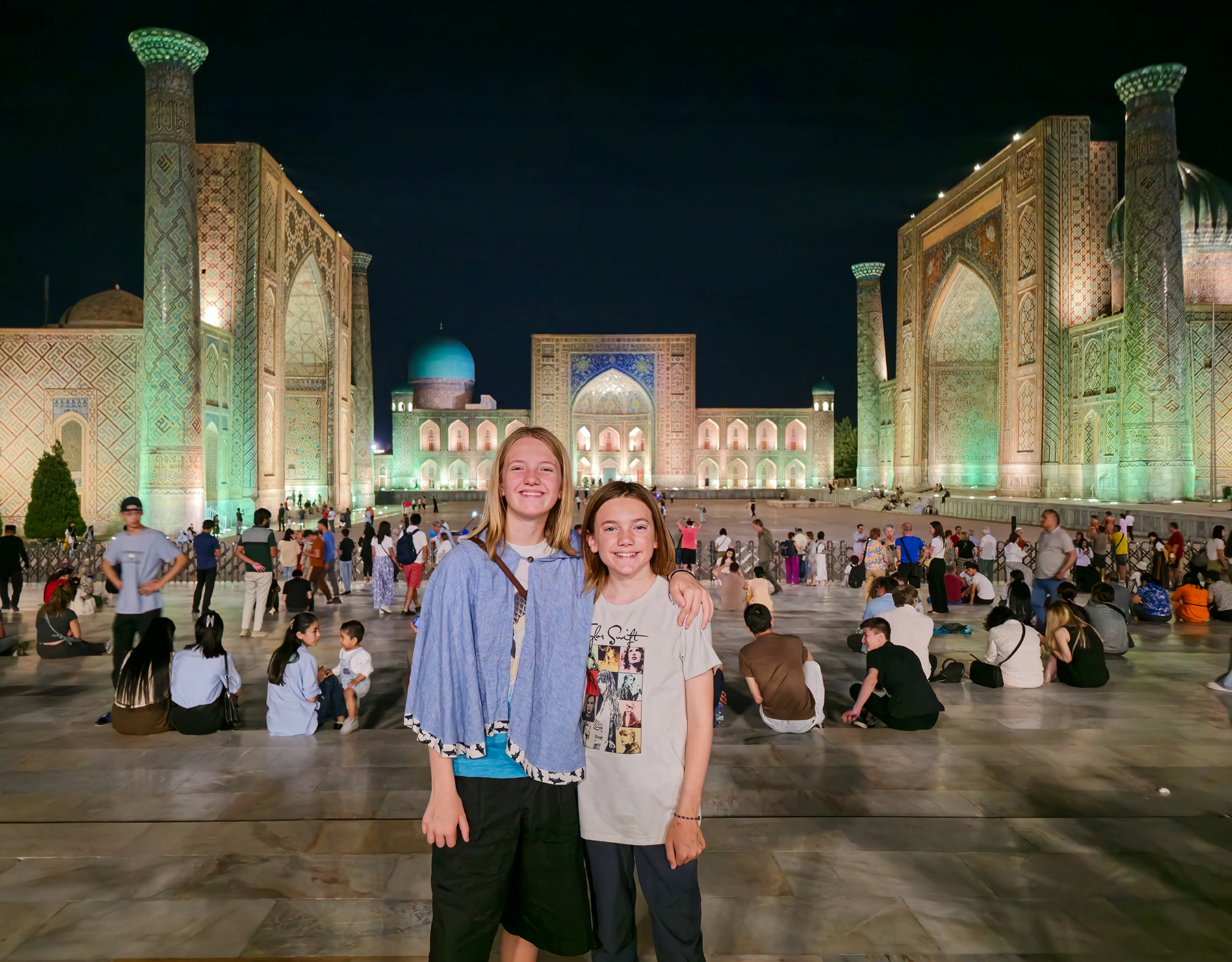
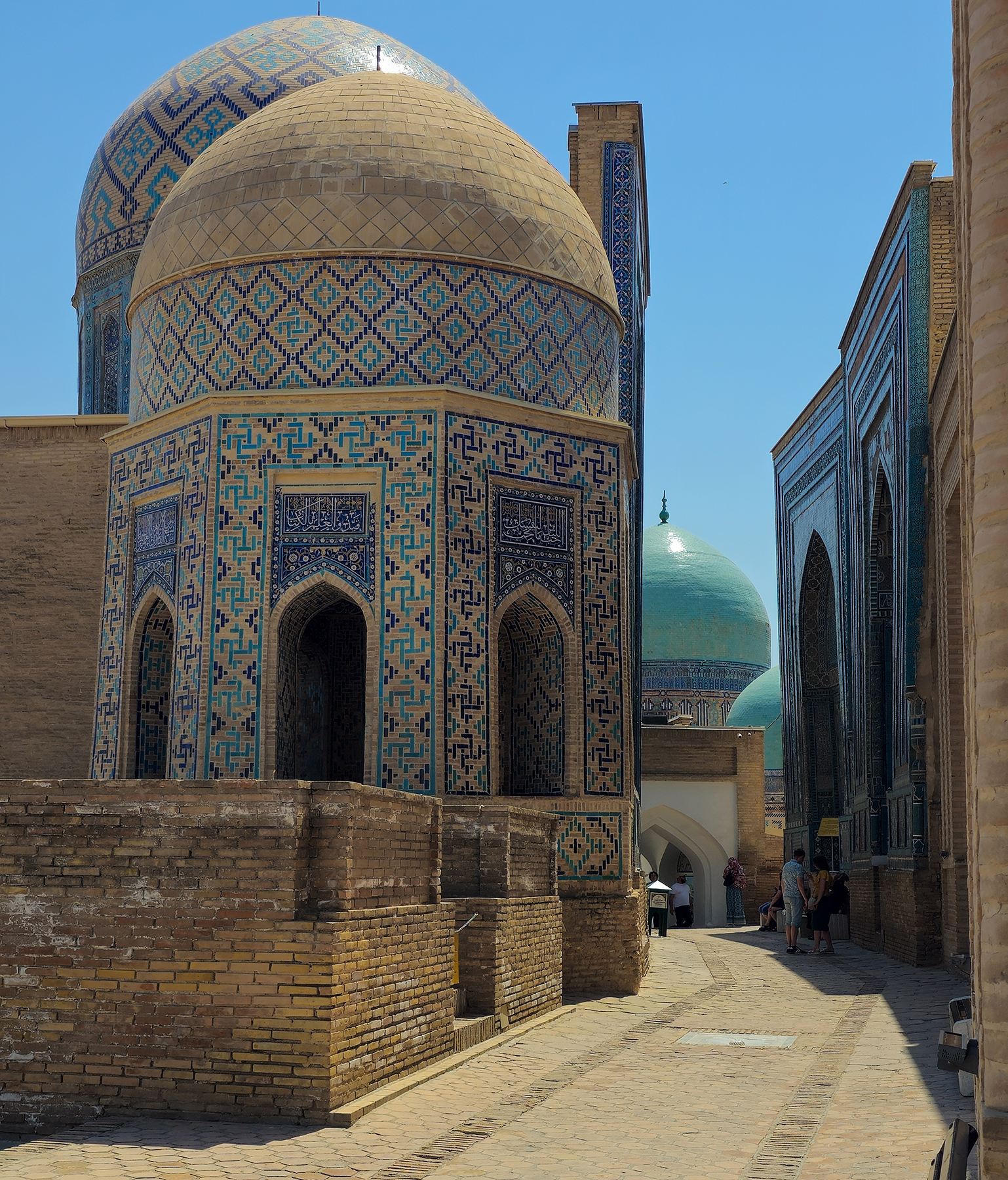
Although my prior knowledge of Uzbekistan was clearly lacking, I was enthusiastic to learn about the fascinating history and architecture of a place that felt both unfamiliar and surprising. Exploring the museums, ruins, mausoleums, and madrasahs around Samarkand highlighted the depth, complexity, and interconnectedness of the history of this region of the world. It was particularly special to see allusions to other places we have visited through our year’s journey, linking Xi’an to our east with Istanbul to the west, with Samarkand, the heart of the Silk Road, at the center of it all.
There are such names in the world, which unwillingly lead people to the world of dreams. The magic and fame of these names immediately impact your mind when you hear or read about them. There is such a name among them that attracts our imagination itself, it is Samarkand. It seems that this name emerged from the whirlpool of clear and diverse colors, the scent of perfume, fabulous palaces, bells of caravans, pure melodies and yet misunderstood feelings. – Federico Mayor, UNESCO director
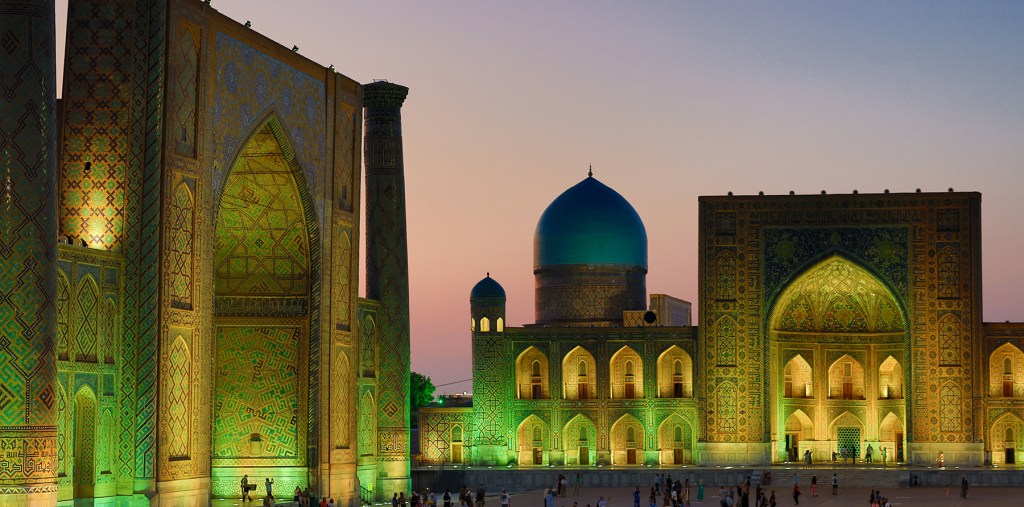
The architecture, preserved and reconstructed in various states around Samarkand, was extraordinary. In particular, I found Registan Square to be the equal of any other ancient site we have visited. Much like our previous visit to Chartres Cathedral outside of Paris, it was fascinating to see the results of modern restoration work on ancient monuments, and to reflect on the centuries-long existence of these structures that have been damaged by earthquakes, destroyed by fires, rebuilt, conquered, looted, and buried. Watching the evening light pass across the facades of the madrasahs was definitely a highlight. The magical atmosphere was unfortunately diminished by the intrusion of a light and music show each evening, featuring garish colors that clashed inelegantly with the serene timelessness of the ancient architecture.
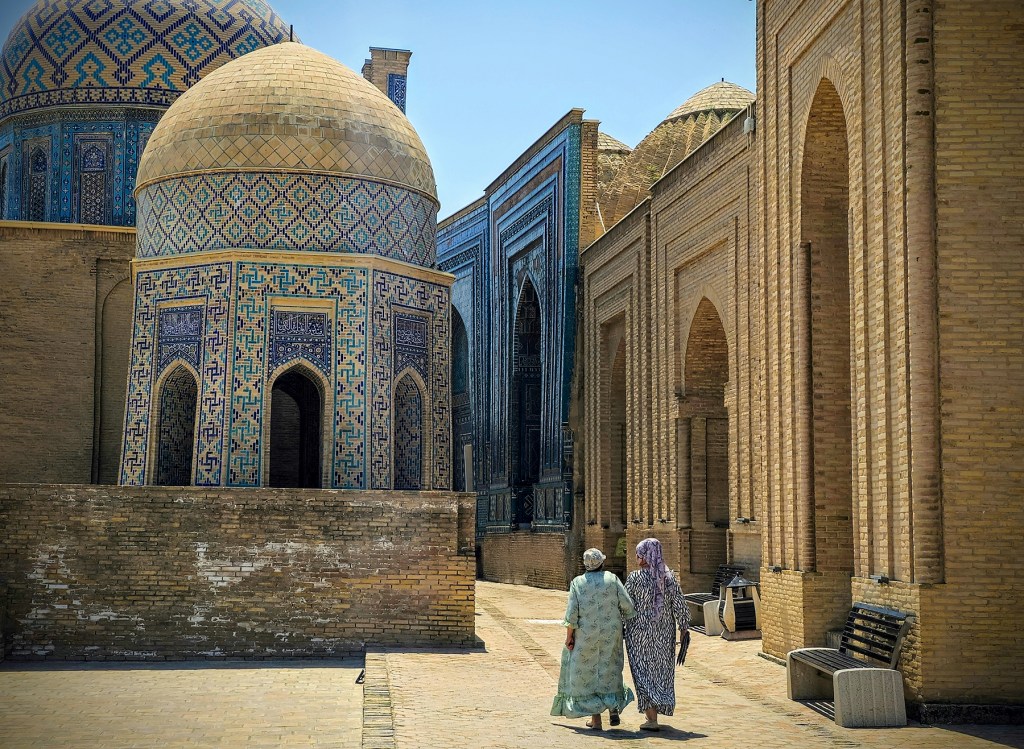

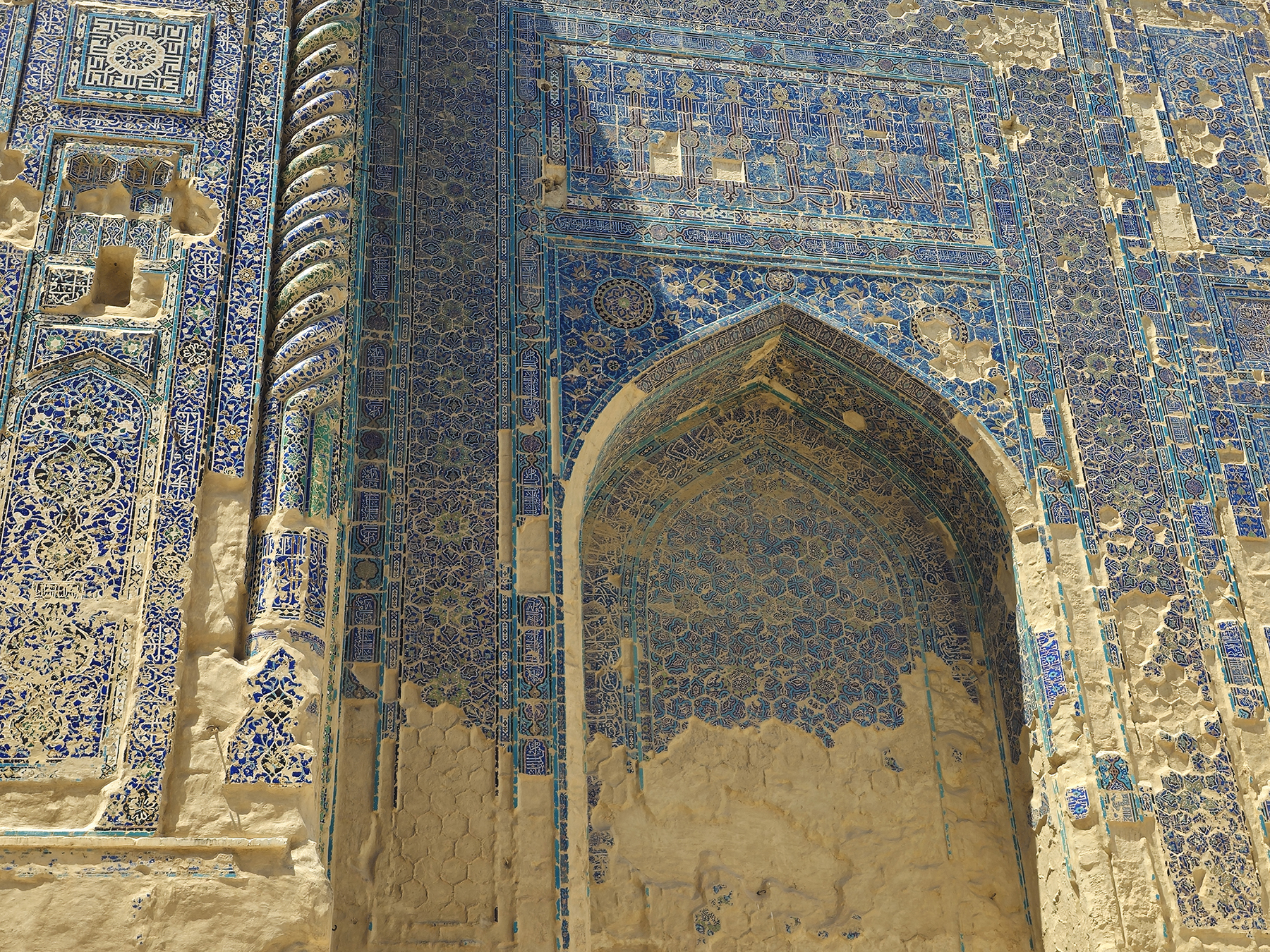






While the architecture of Samarkand was exceptional and vastly different from anything we had previously experienced, the natural environment outside of the cities felt strangely familiar. Our day trip from Samarkand to Shahrisabz crossed over a mountain pass that looked about as similar to the terrain around Golden, Colorado as you might come across in all of Asia. Apart from this nice reminder of home, much of the rest of the terrain we passed through during our travels across the country felt desolate and scorched, much like the desert and scrubland of parts of the American southwest.

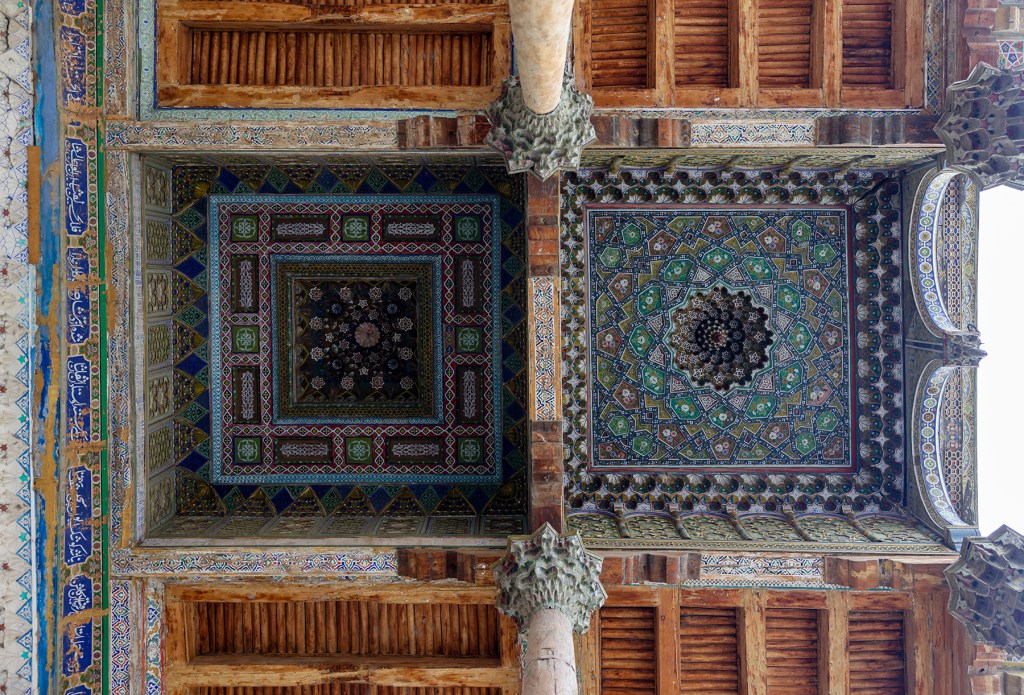
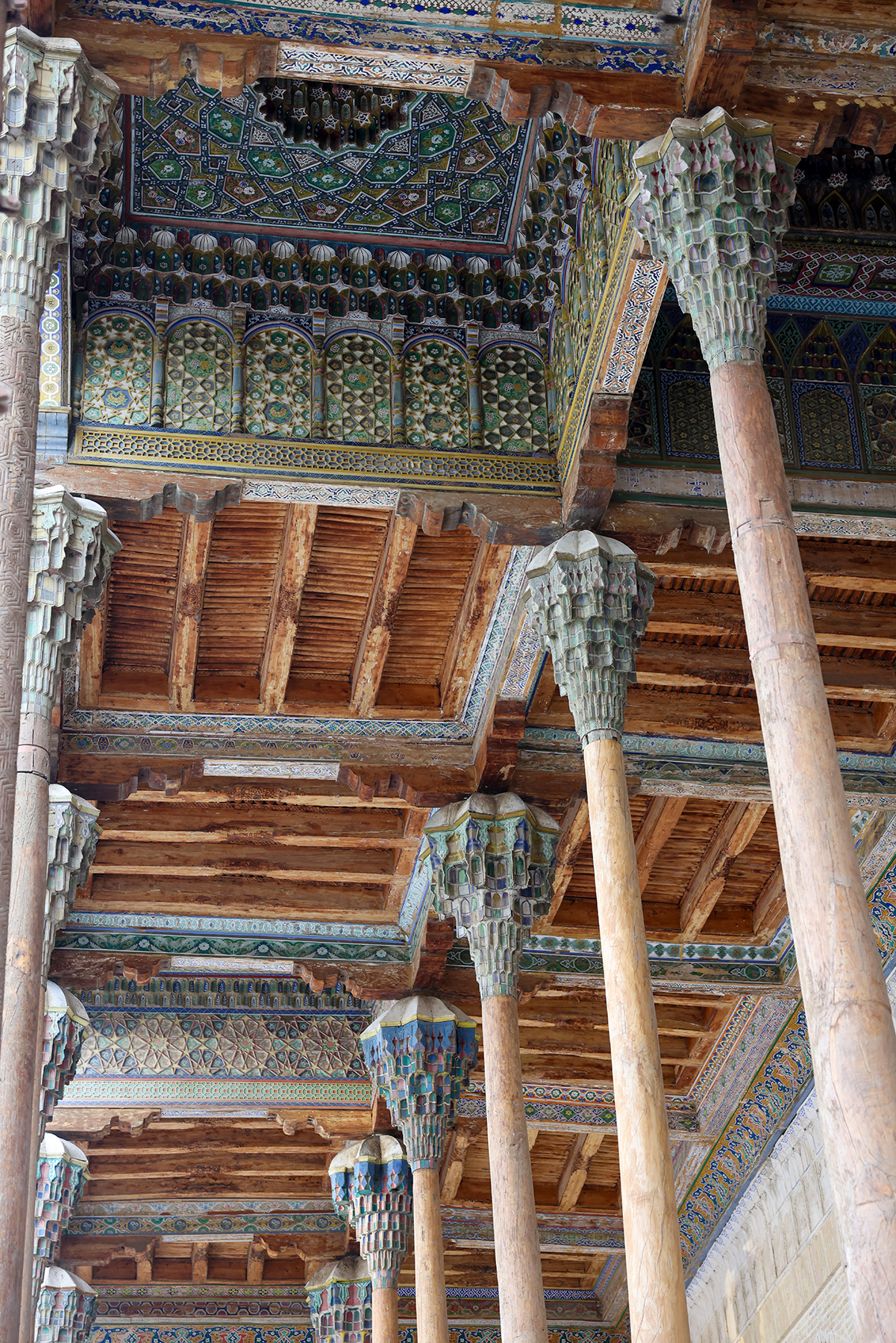
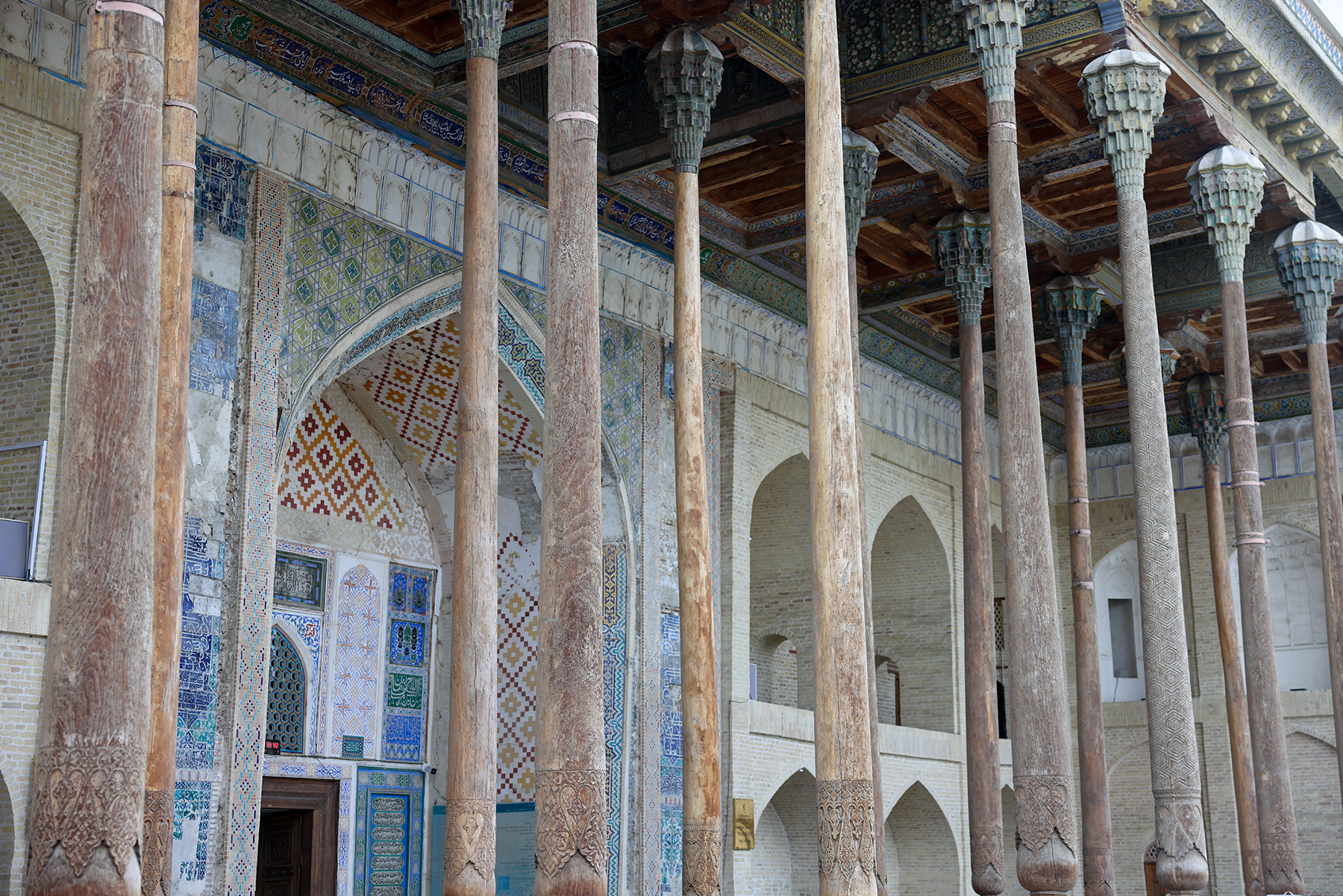
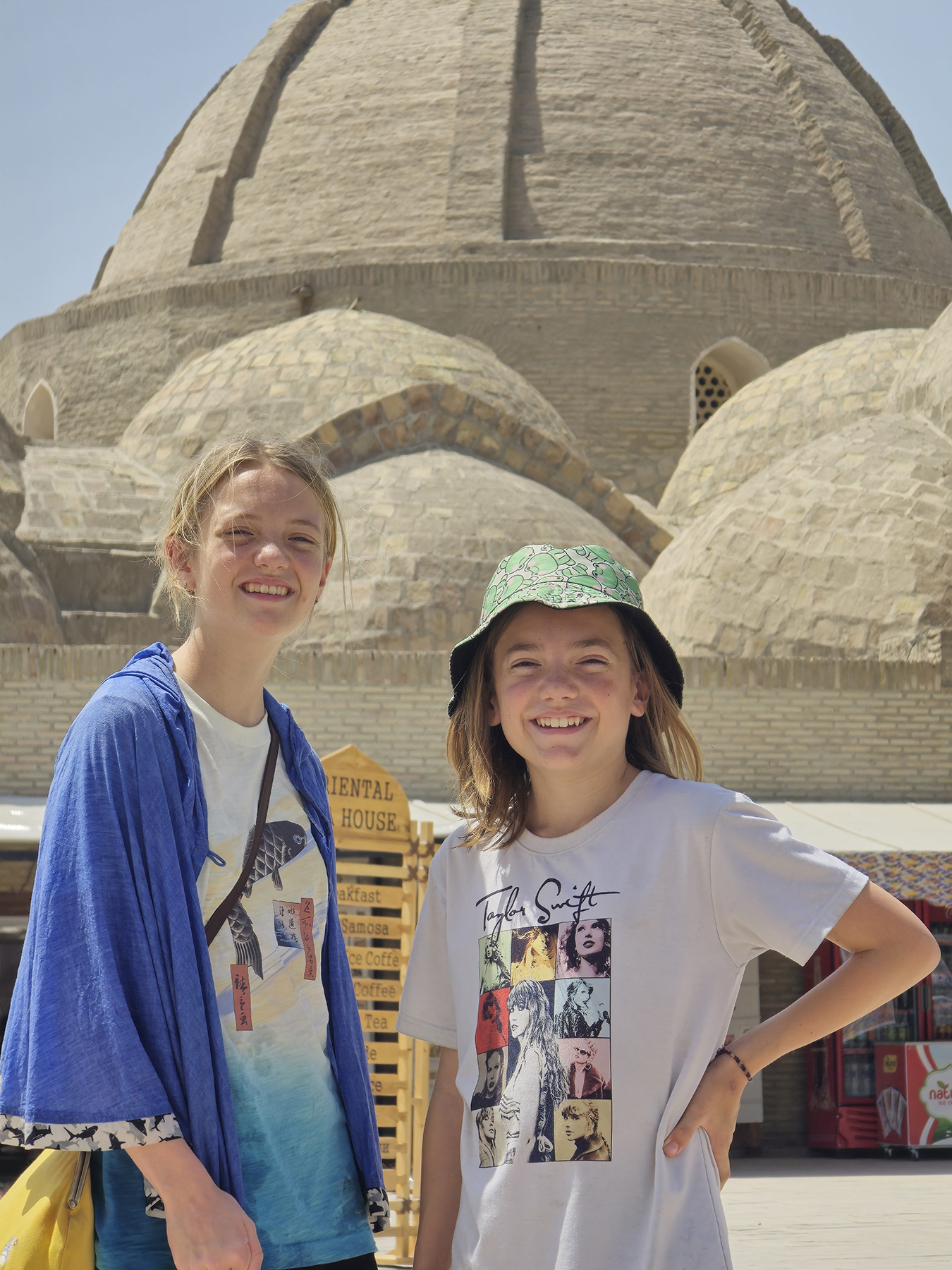
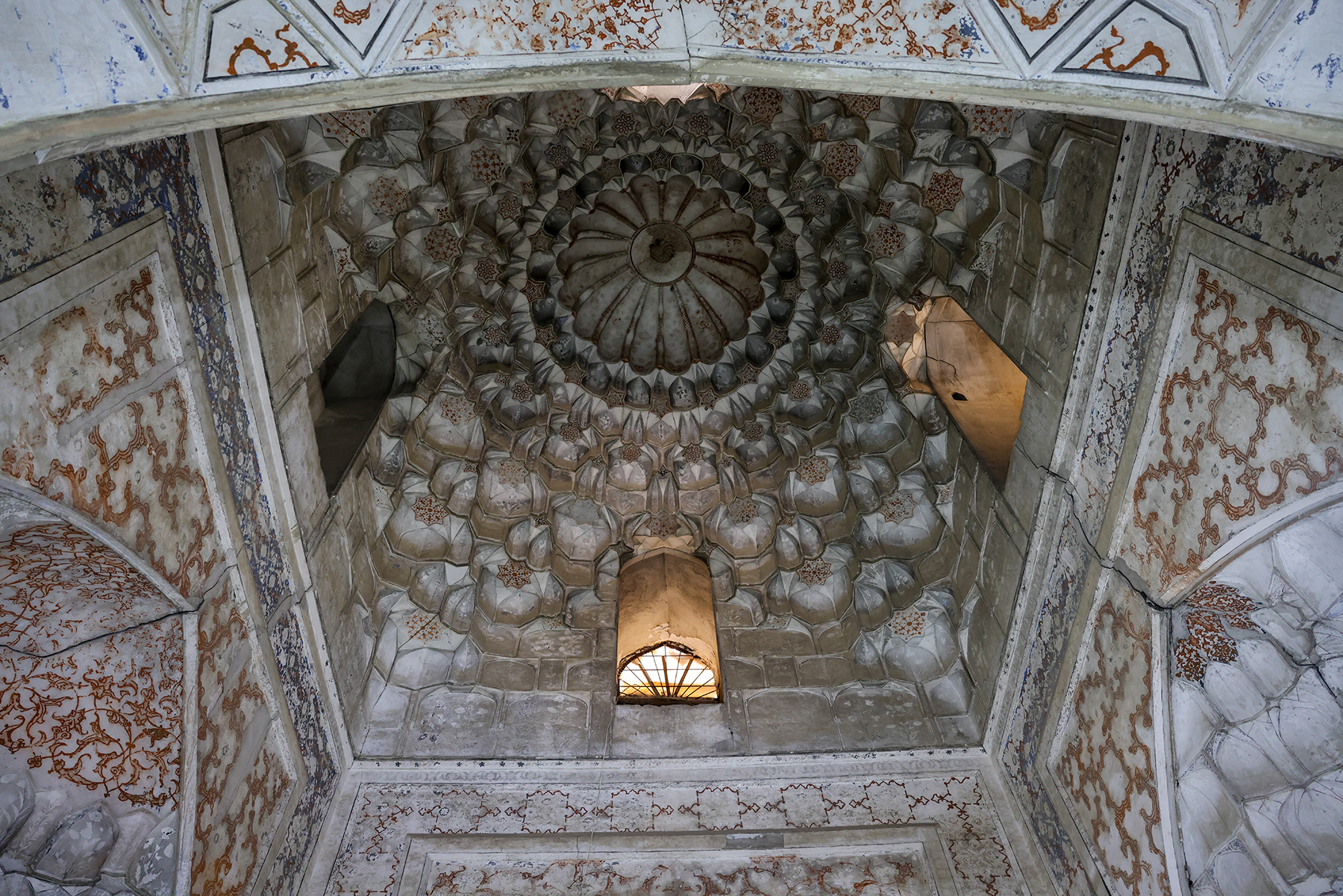
Our second major stop, the city of Bukhara, featured still more spectacular architectural history. The tiled blue domes, minarets, and Ark Citadel were a joy to explore despite the still sweltering heat. It was also fun to wander about the shops beneath the domes of the bazaar, with vendors selling textiles (much to Sonya’s delight), Soviet-era antiques, and beautiful instruments in a setting that looked like a double for a set from a Star Wars movie. I particularly enjoyed our evening walking around the Bolo Hovuz mosque, with its intricate tiled ceilings and carved wooden pillars, as well as the time spent atop the Ark Citadel overlooking the city.



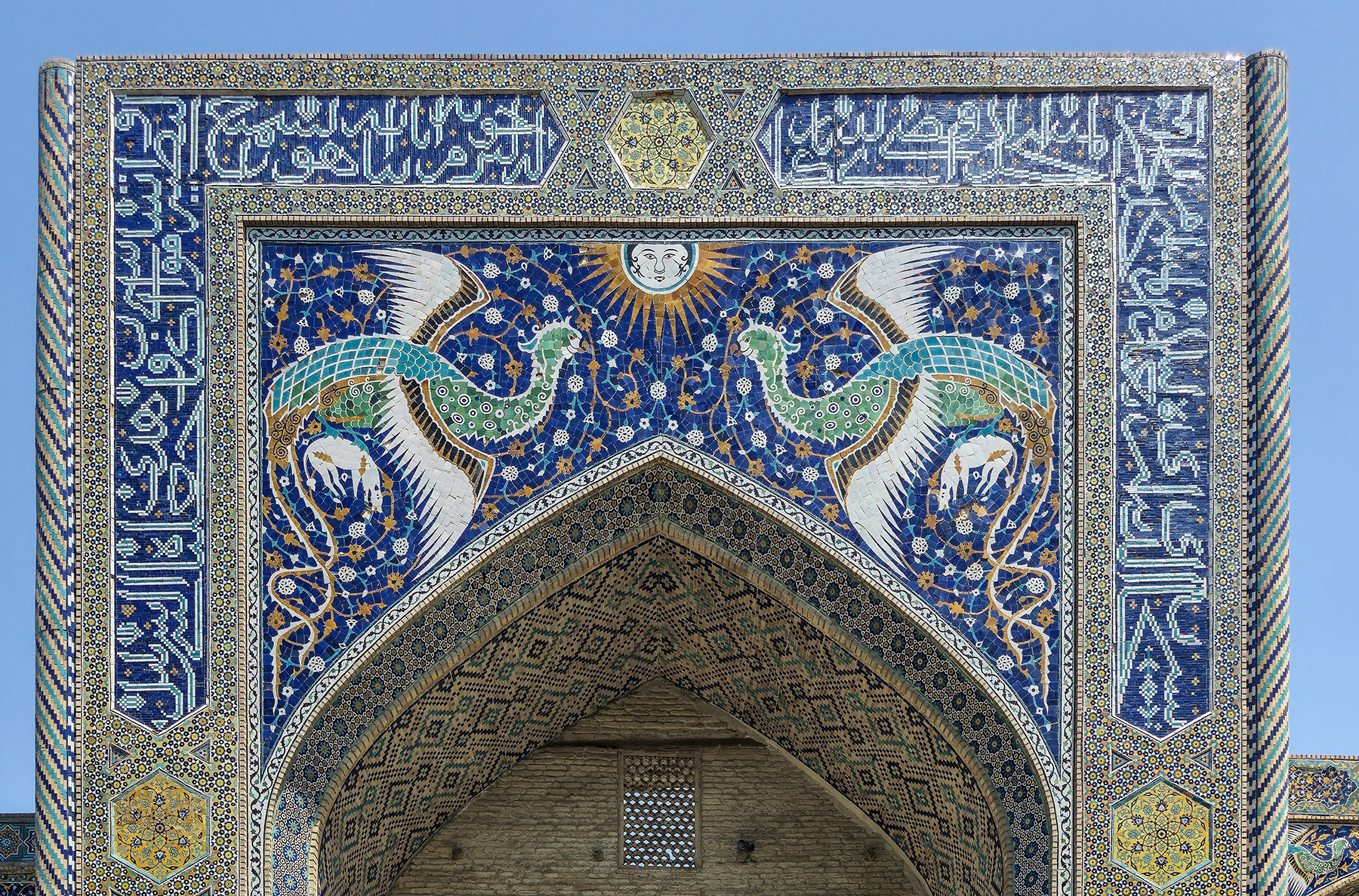
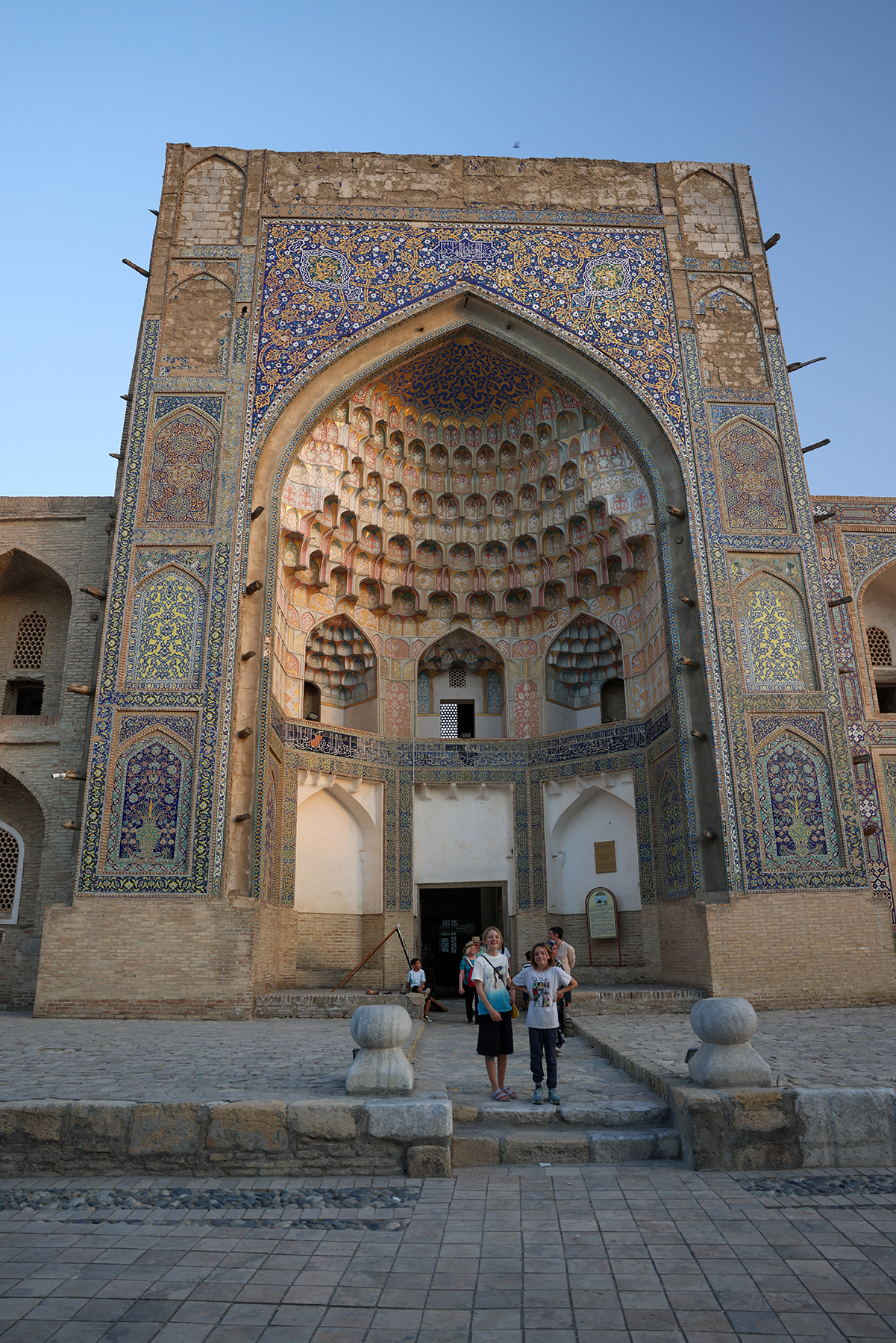
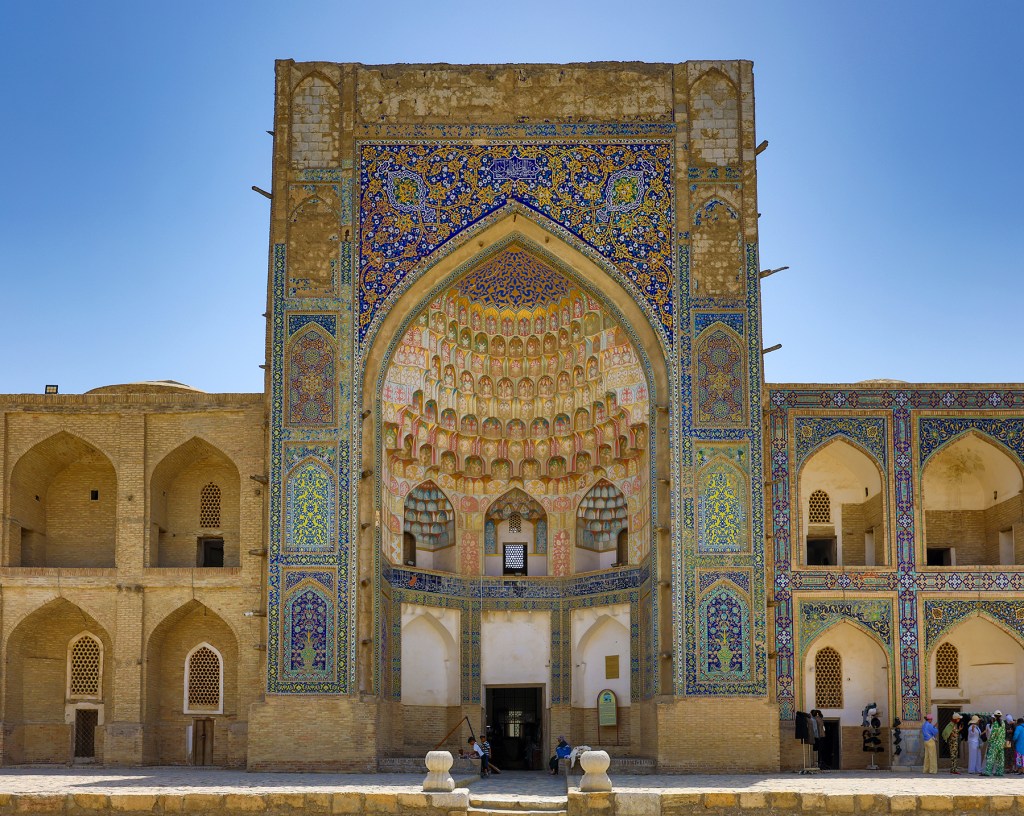


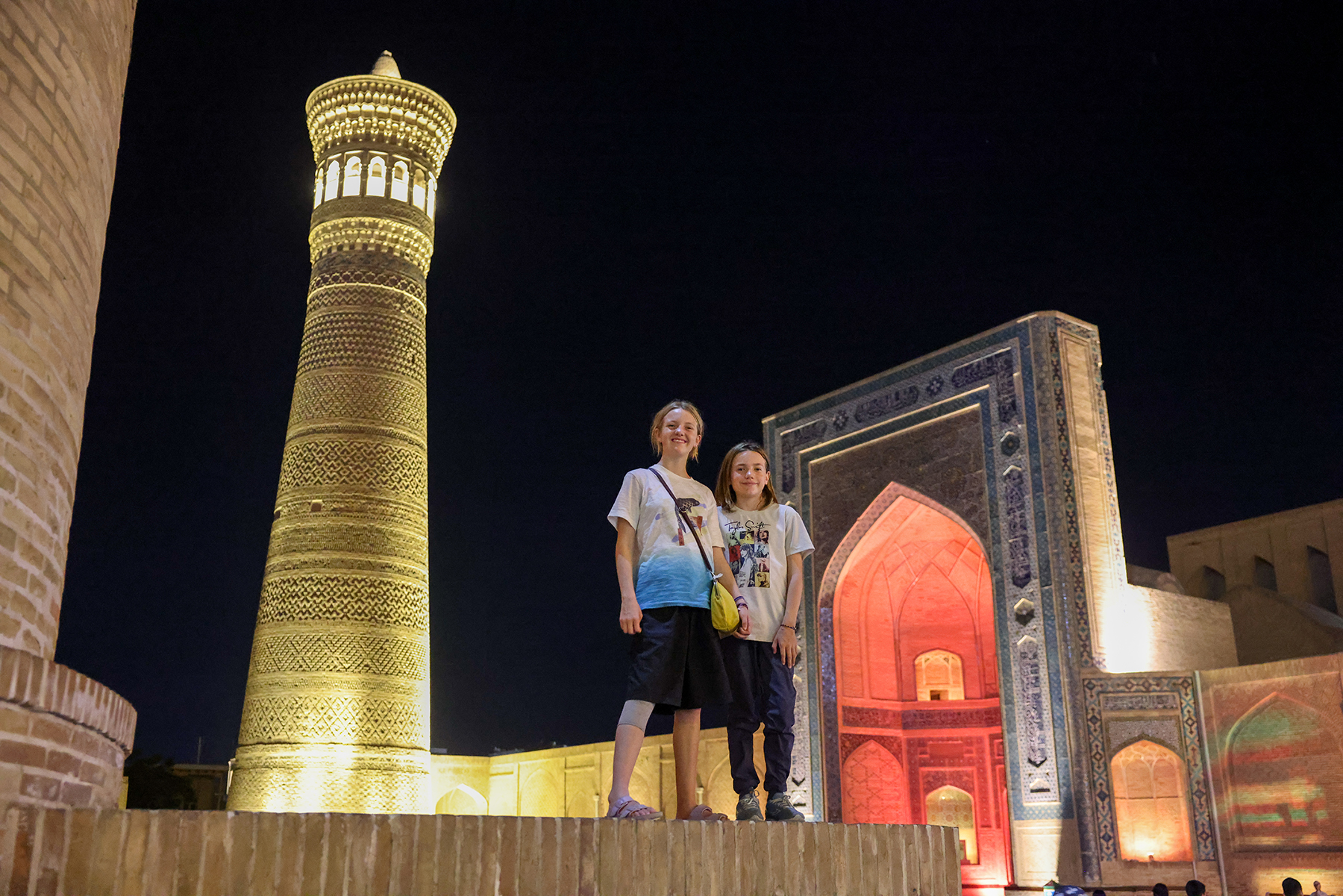
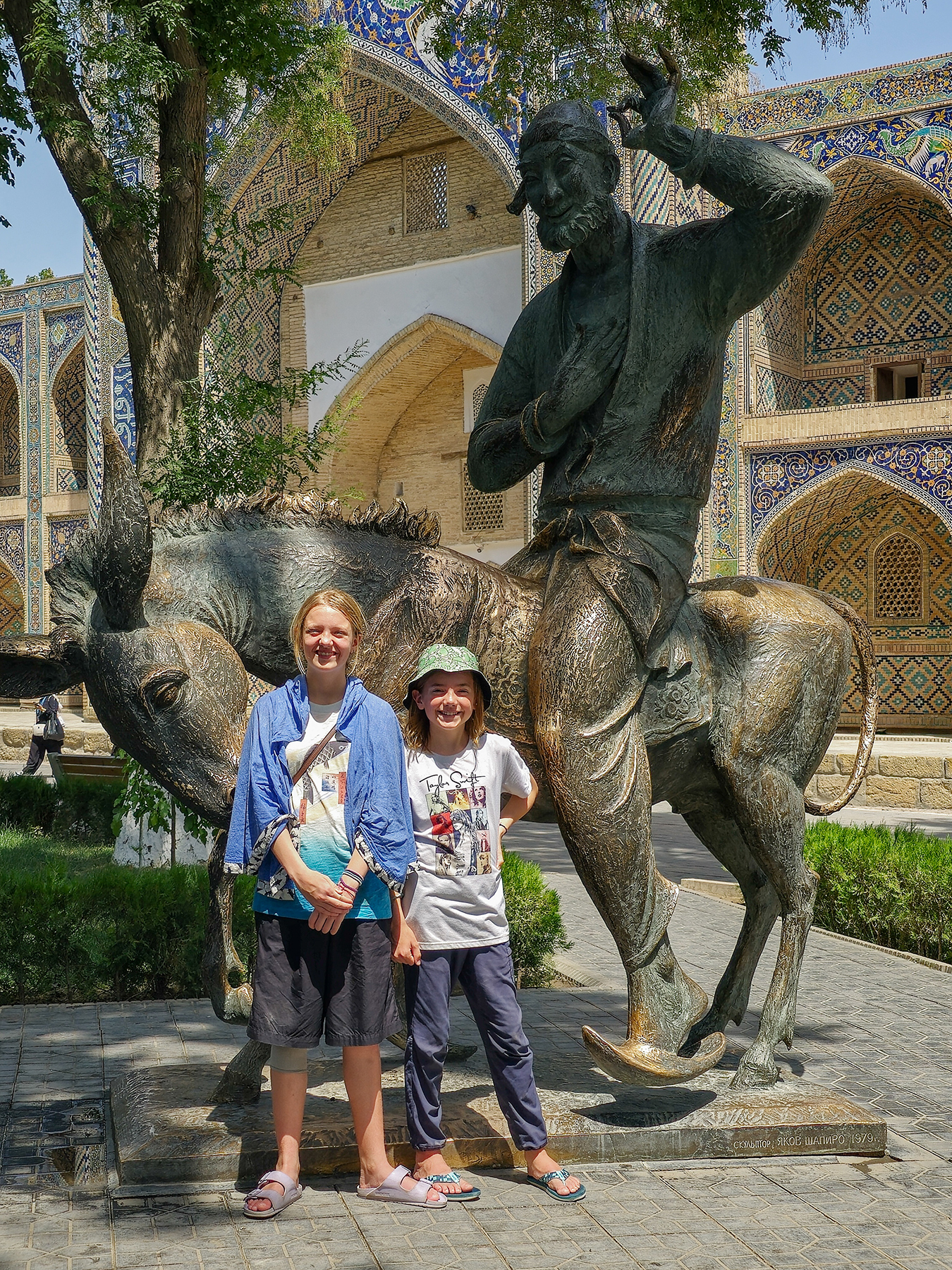
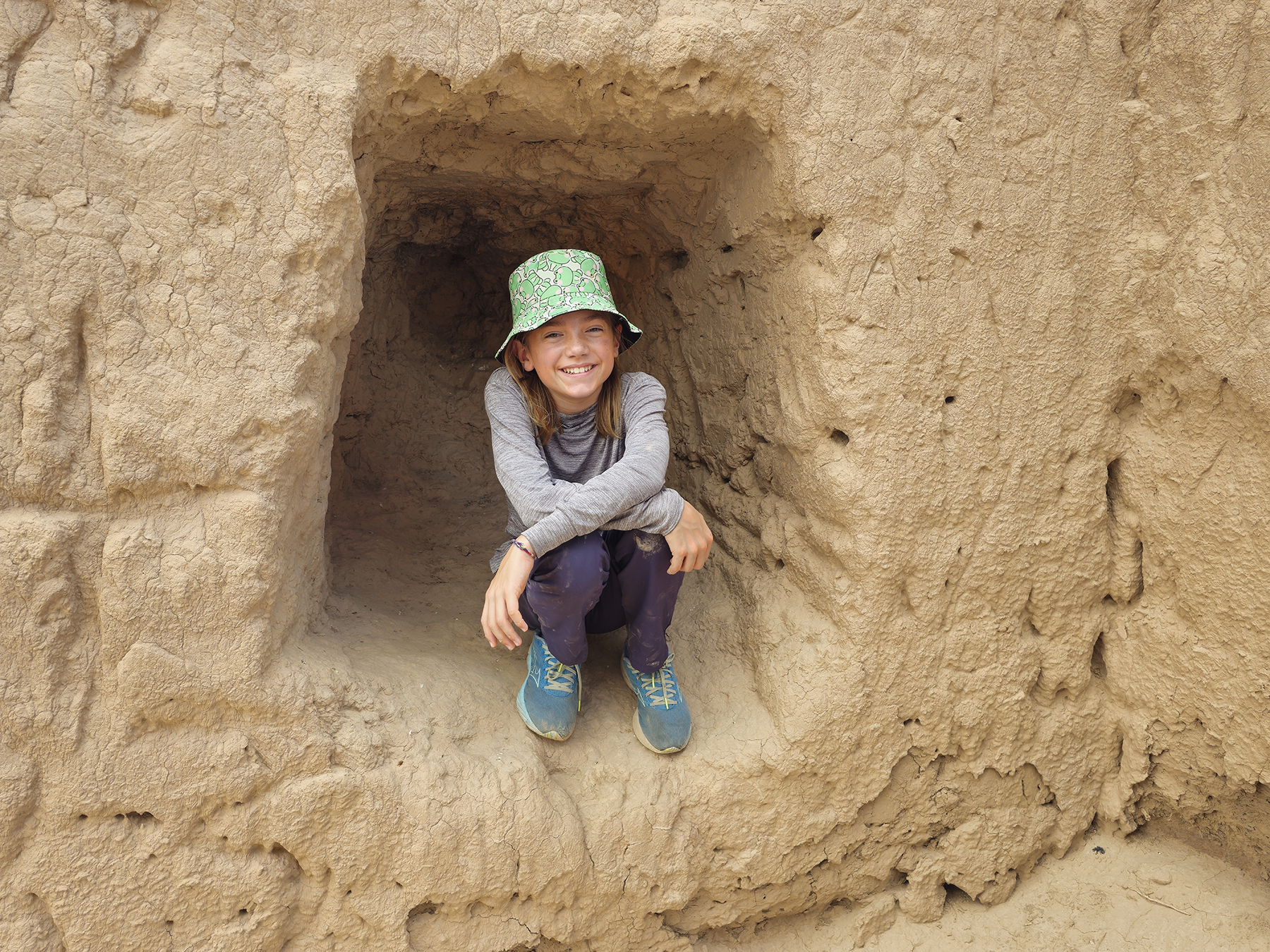
Our final major stop, the ancient walled city of Khiva, featured still more spectacular architecture. From Khiva, we visited a number of the Khorezm fortresses scattered about the desert of Karakalpakstan. Seeing these ancient sites (some of which date from as far back as the 7th century BCE) in various states of ruin hinted at how much of our human history is either lost to time or entirely unknown. It was also fascinating, after an entire year of visiting so many carefully preserved and regulated cultural monuments across the globe, to simply walk about freely through the remains of these ancient structures, finding shards of ancient pottery scattered in the sand, untouched for centuries and still almost entirely ignored today, judging from the almost complete lack of other visitors to these desolate sites.
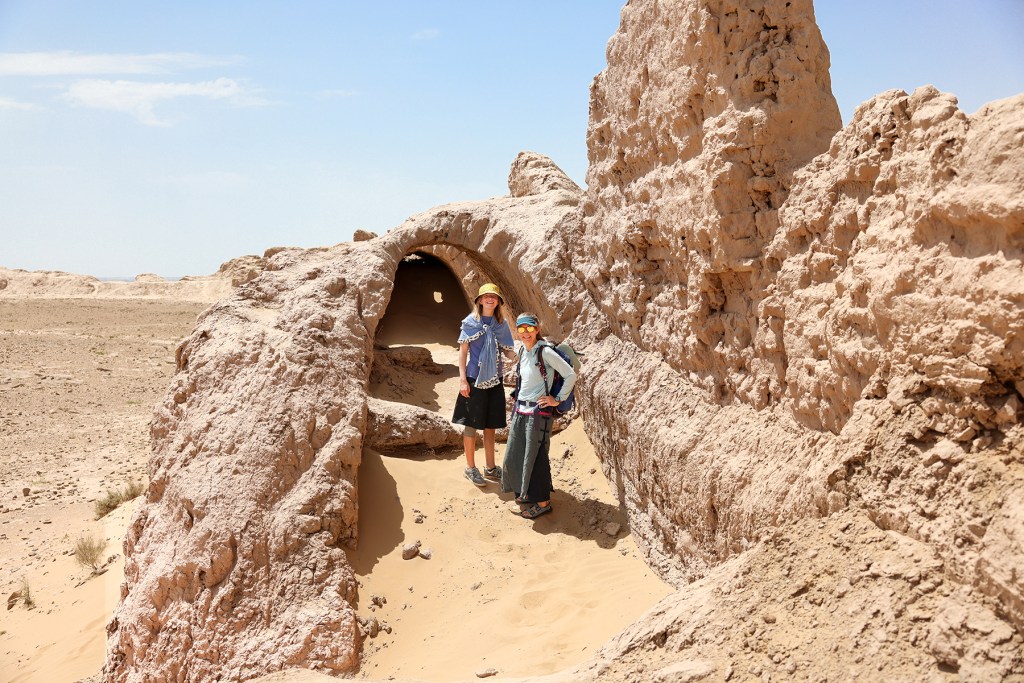



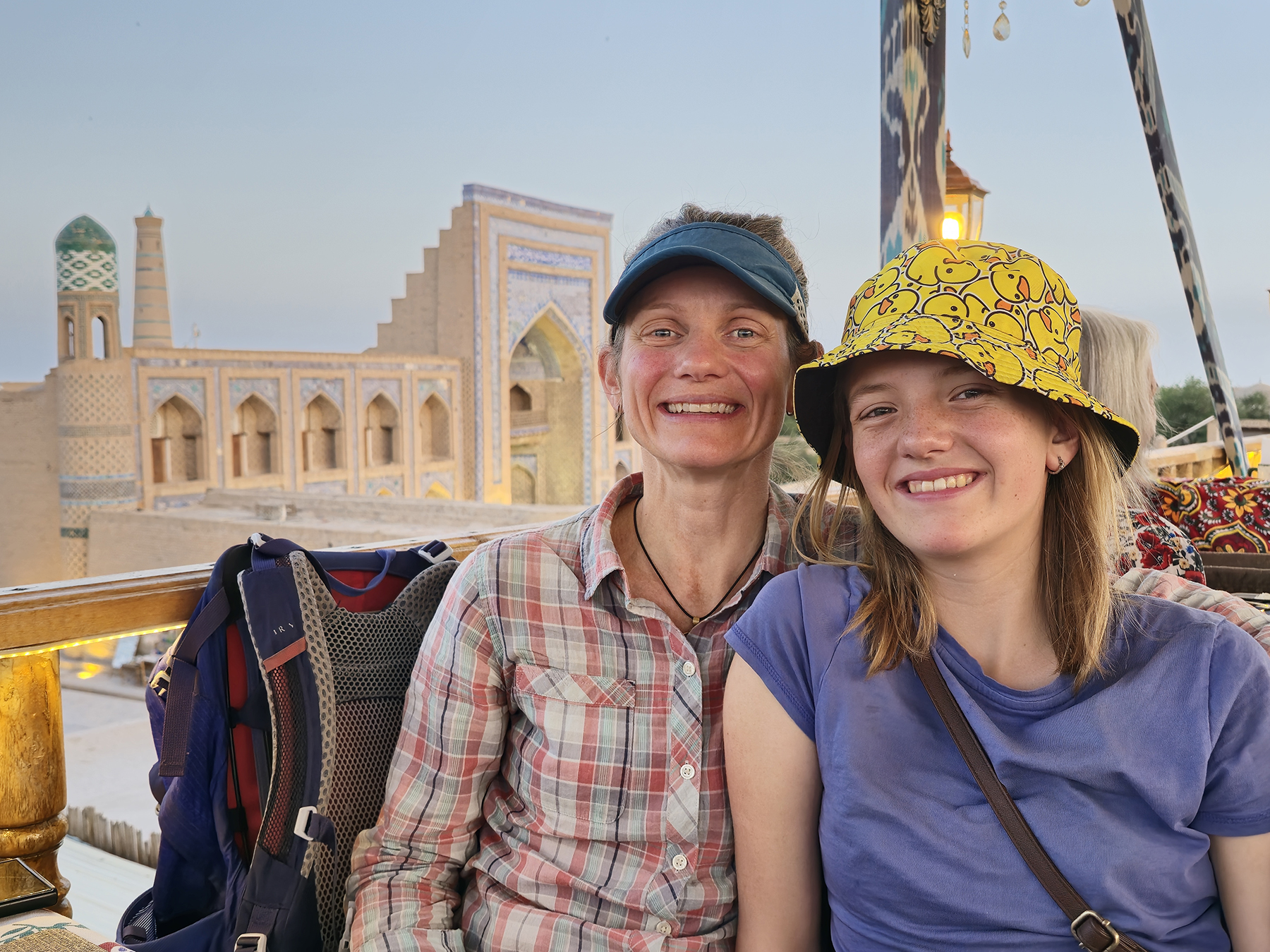
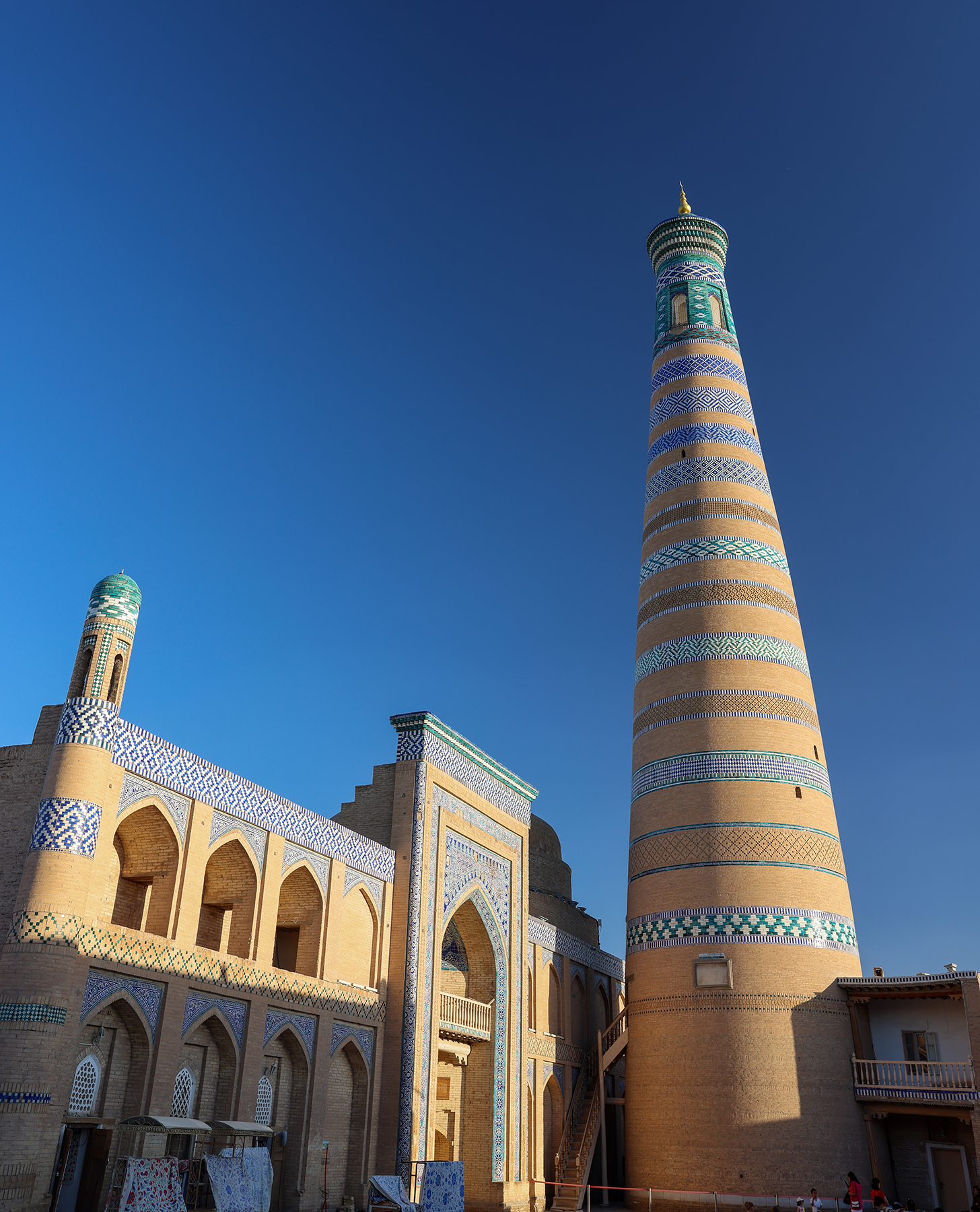
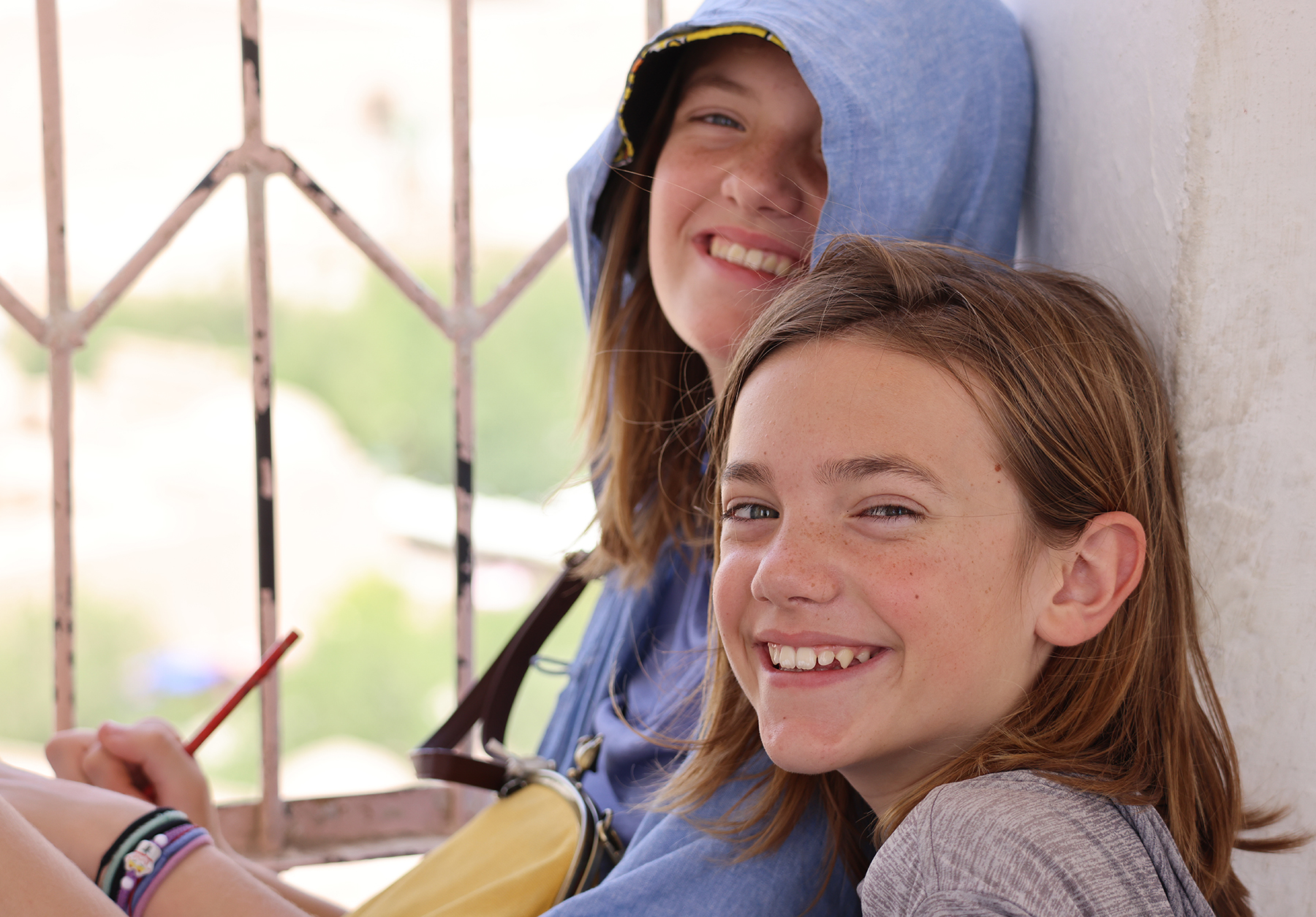
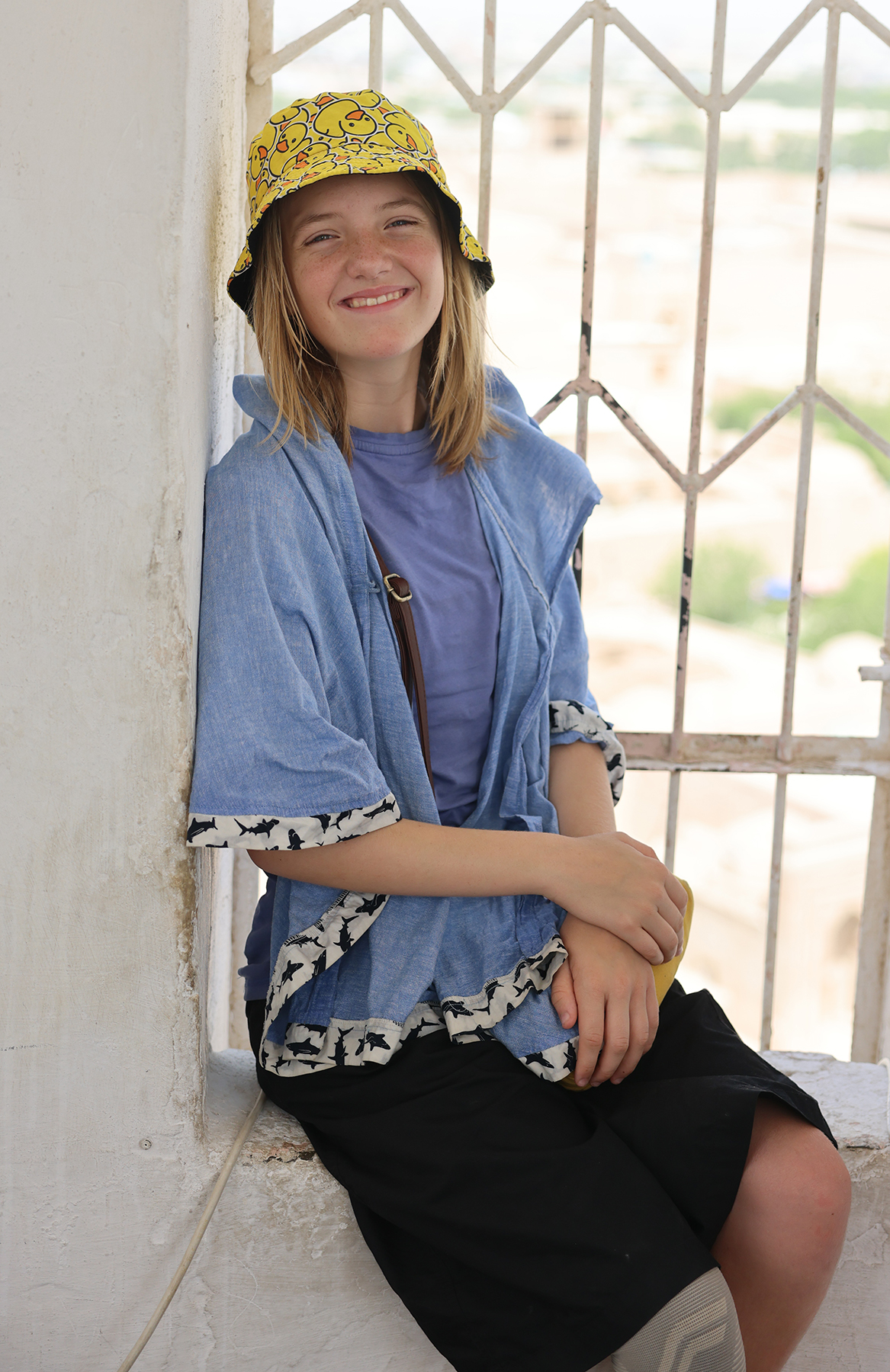
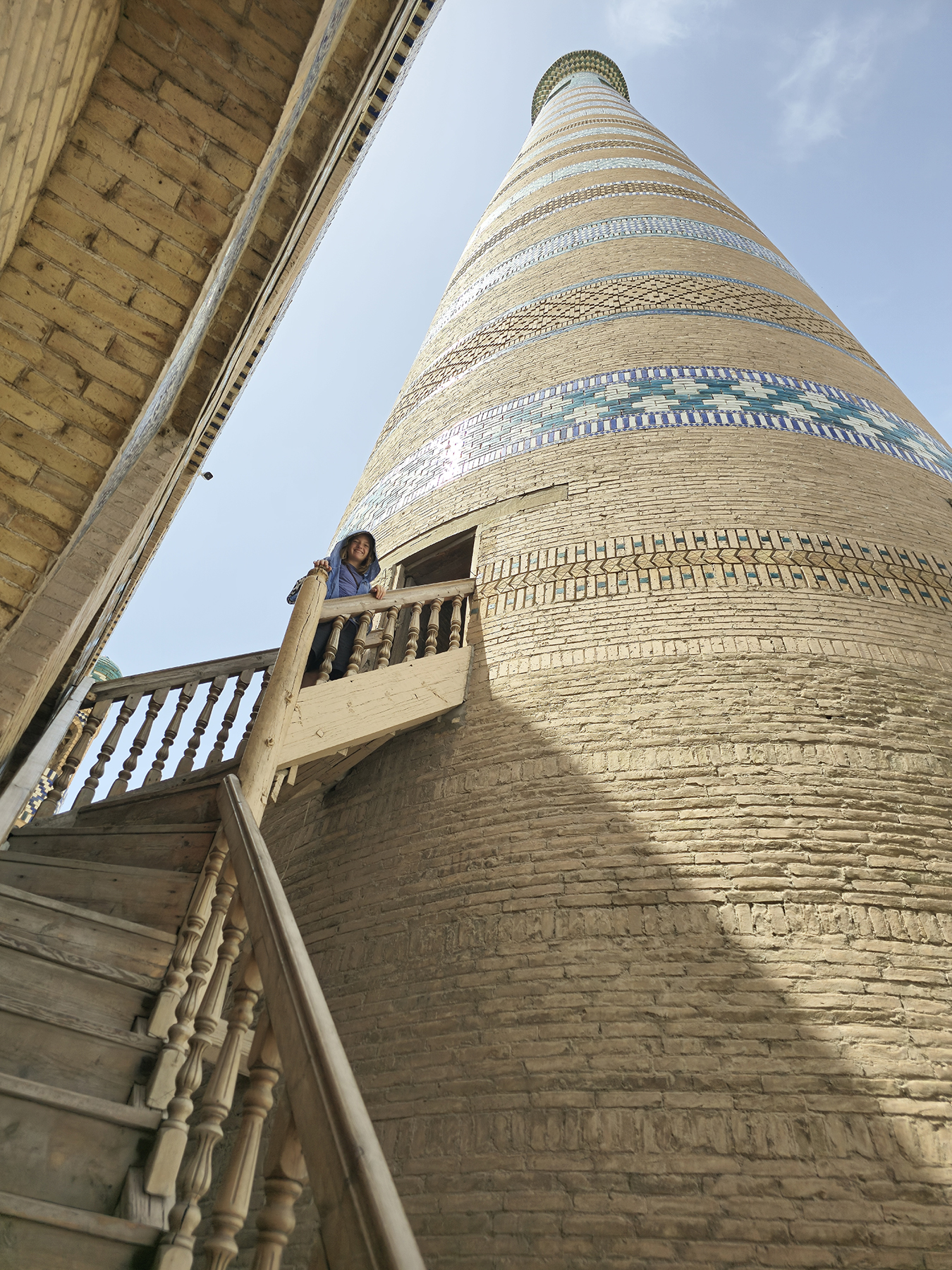
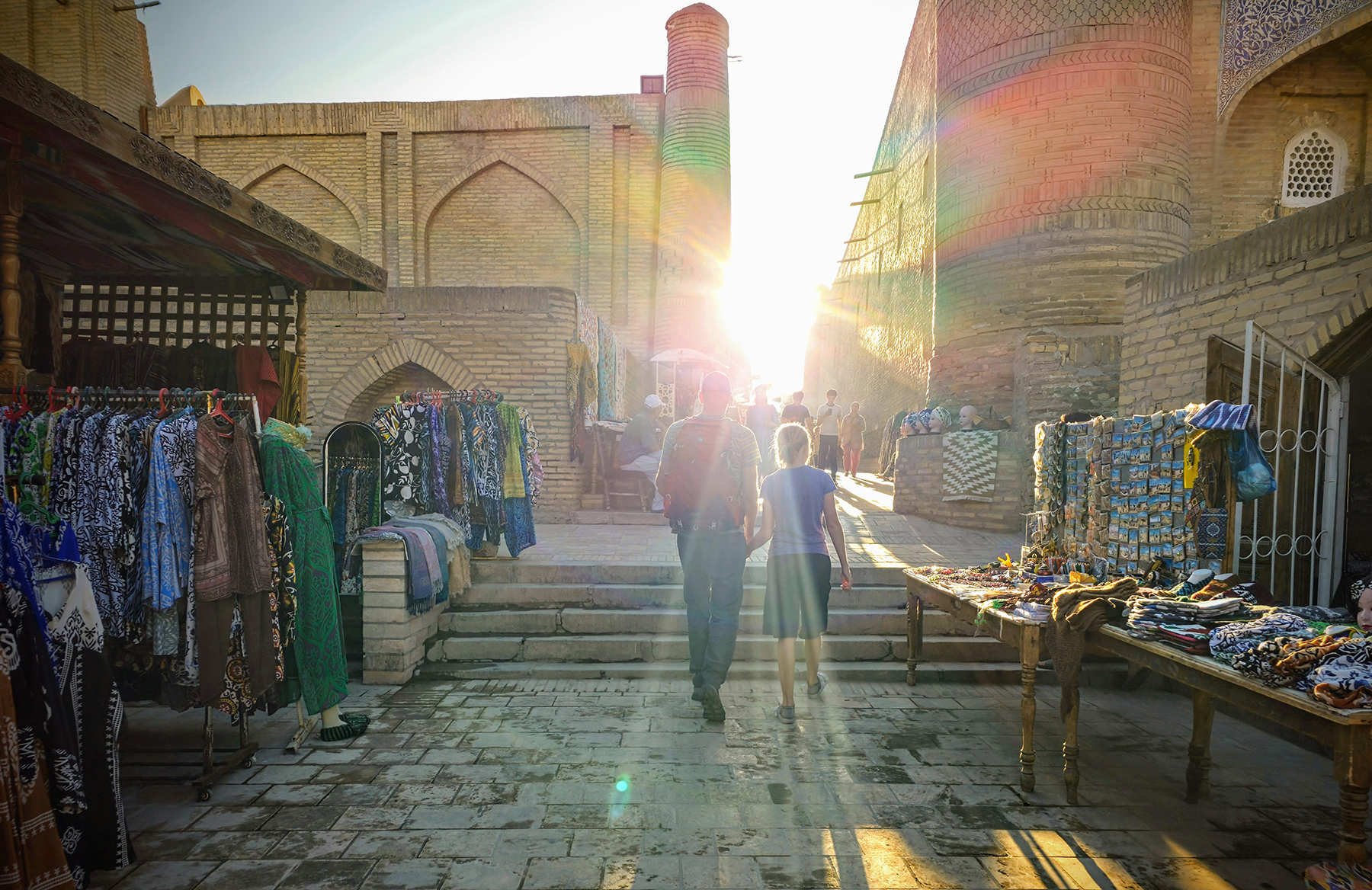
Our family loved exploring the car-free center of Itchan Kala in Khiva, especially during the late afternoon and evenings as the light (and temperature) faded. Some of my favorite moments were spent at our favorite rooftop restaurant, eating plov (a rice pilaf dish) and shashlik (kebabs) as we looked out across the square towards the madrasahs, the enormous unfinished Kaltaminor minaret, and Konya Ark. We concluded our time in Khviva with a final climb to the top of the Islam Khoja Minaret for a sweeping view out over the ancient city.











Departing Khiva was a strange feeling, as it marked the beginning of our trip back to the United States. There would be quite a number of stops on the way, and we were still weeks removed from setting foot back in Colorado, but it really did feel as if each step from that point on would be one step closer to our return home.
 Eight Boots Abroad
Leave a comment