
Completing the Kumano Kodo, the last big scheduled trek of our sabbatical year, left our family with a lot of feelings. At this point in our year of travel, it felt like we had been away from home forever, but also simultaneously that we had just left our home in Colorado – our sense of the passage of time was definitely distorted by the frequent changes in our surroundings and constant new experiences. We were so proud of all we had been through together, and starting to look forward to some of the comforts of home, but at the same time we were apprehensive about returning and not ready for the year to be over. Luckily, we still had some excitement planned for our last month and a half of travel, and a planned rendezvous with old friends coming up!
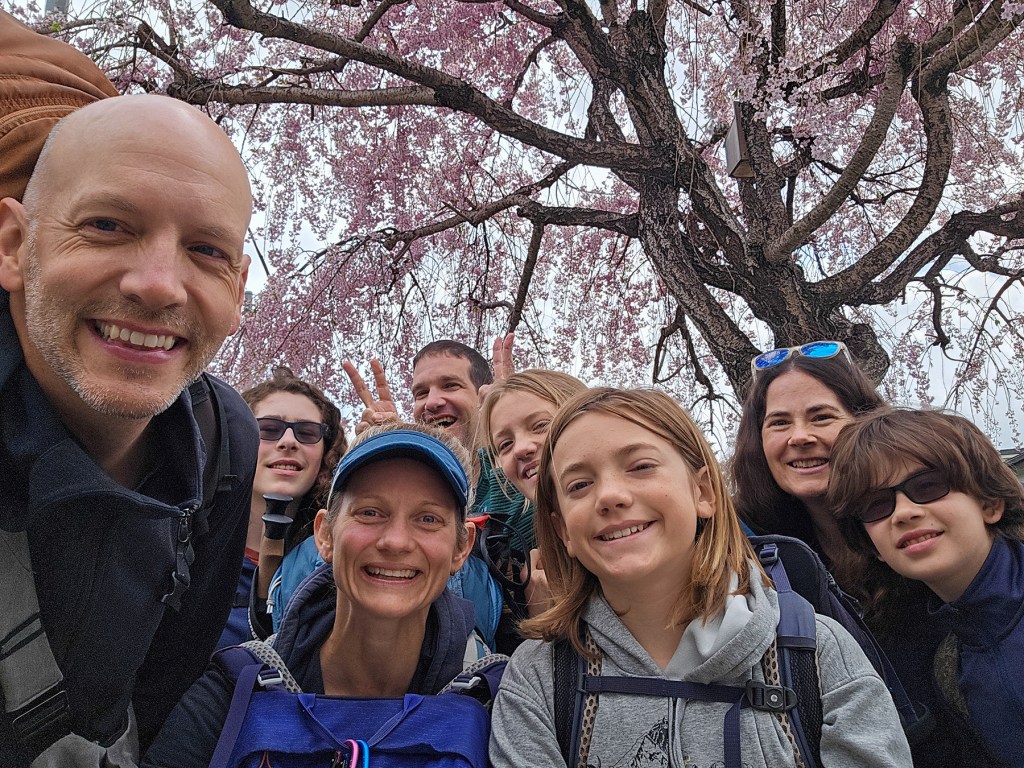
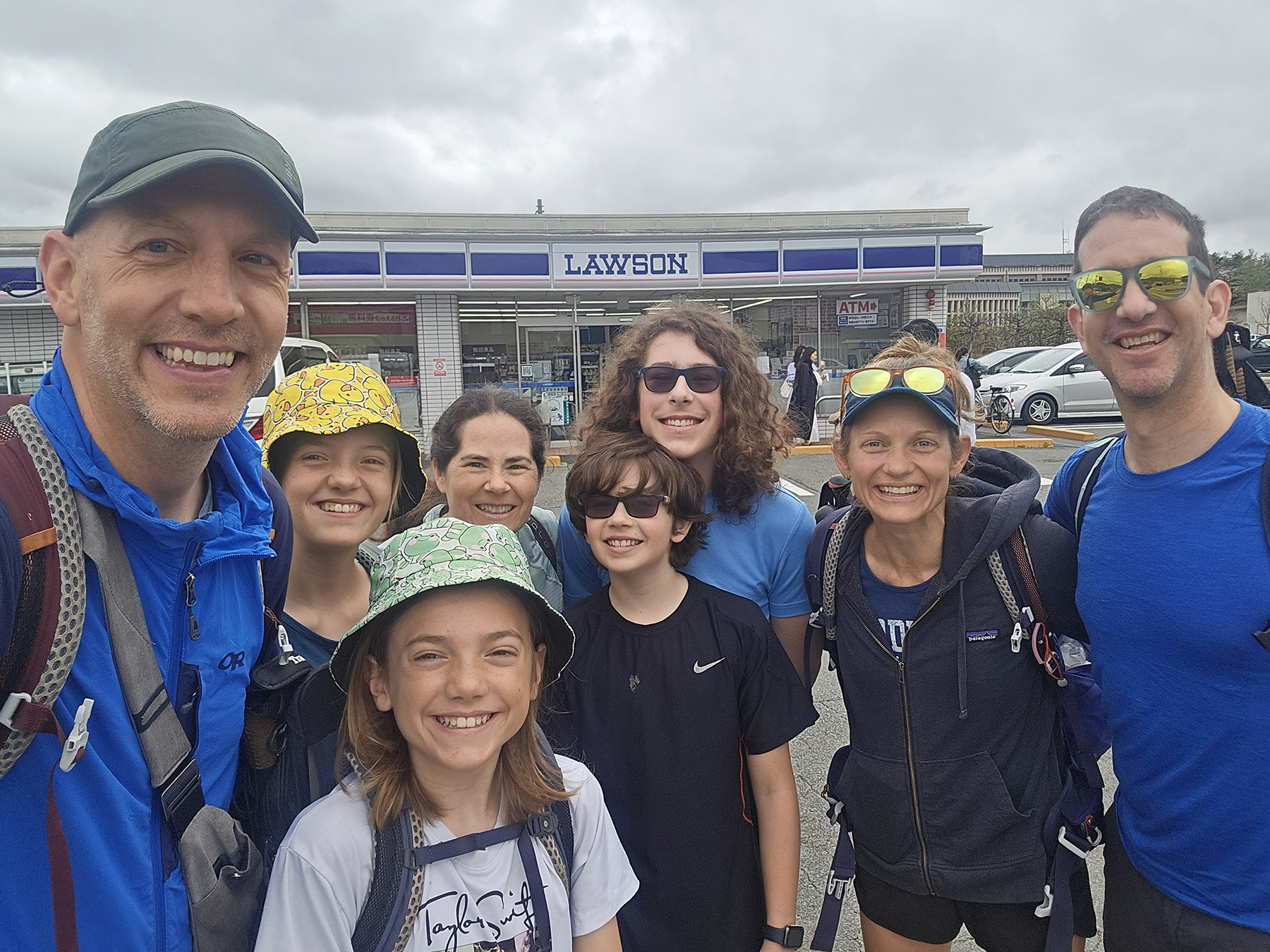
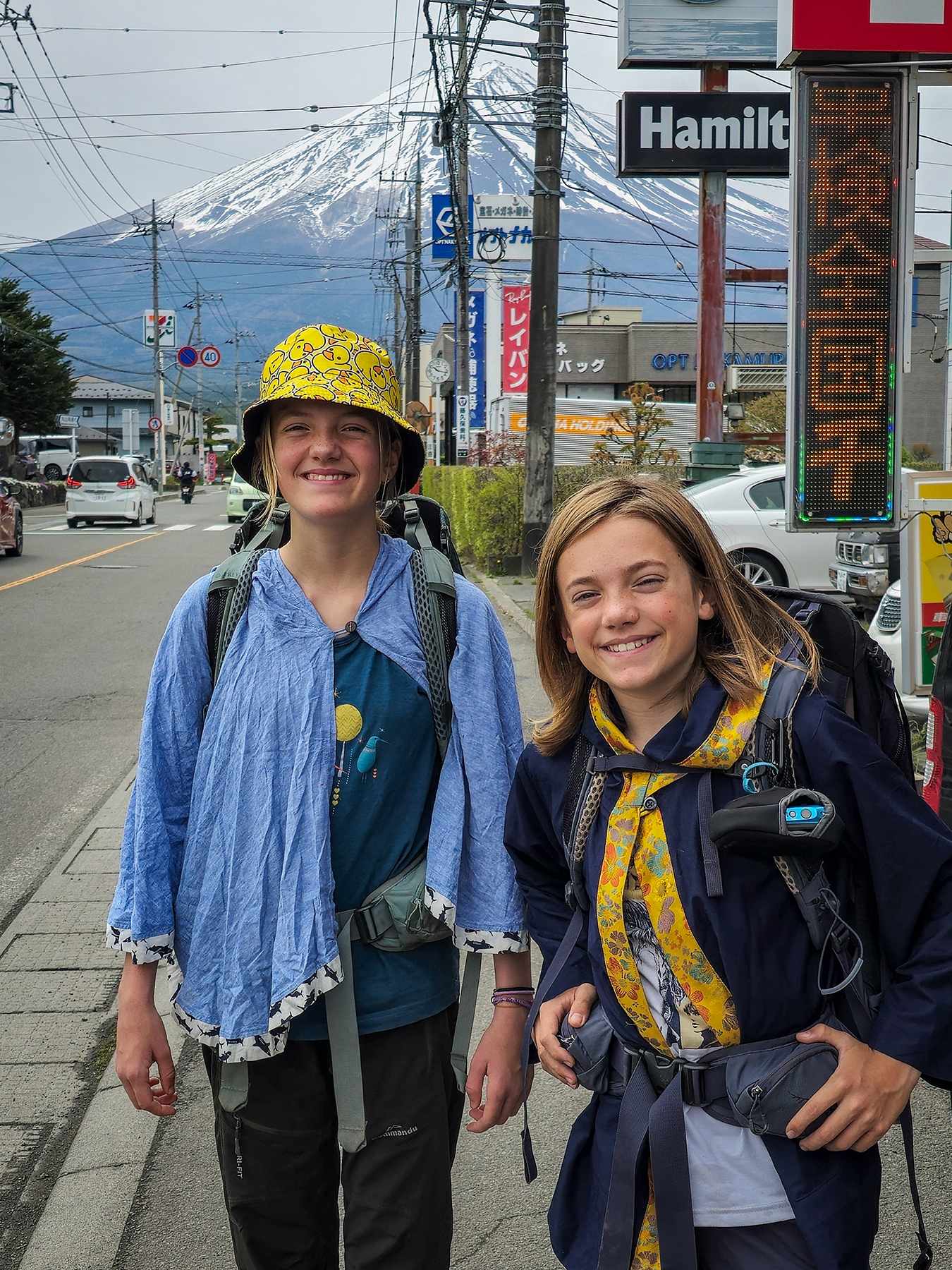
We left the Kii Peninsula via a chaotic route we pieced together at the last moment, with the goal of reaching the town of Fujikawaguchiko at the foot of the iconic Mt. Fuji. Unfortunately, we were unable to get train tickets all the way into our destination, and instead found ourselves traveling all the way into Tokyo via train, then somehow managing to catch a bus that miraculously still had four seats available from the side of a random highway. Hours of travel later, we pulled into Fujakawaguchiko and were greeted with an iconic view of … clouds. Lots of clouds. The forecast looked poor for getting even a glimpse of Mt. Fuji, but we were still thrilled to be there, as later that evening we were met by our dear friends Scott and Karyn, as well as their two kiddos, who had come all the way to Japan to meet up with us during their spring break. We celebrated our reunion with a first dinner together in a superb Indian restaurant, and it felt so good to be back together with old friends.
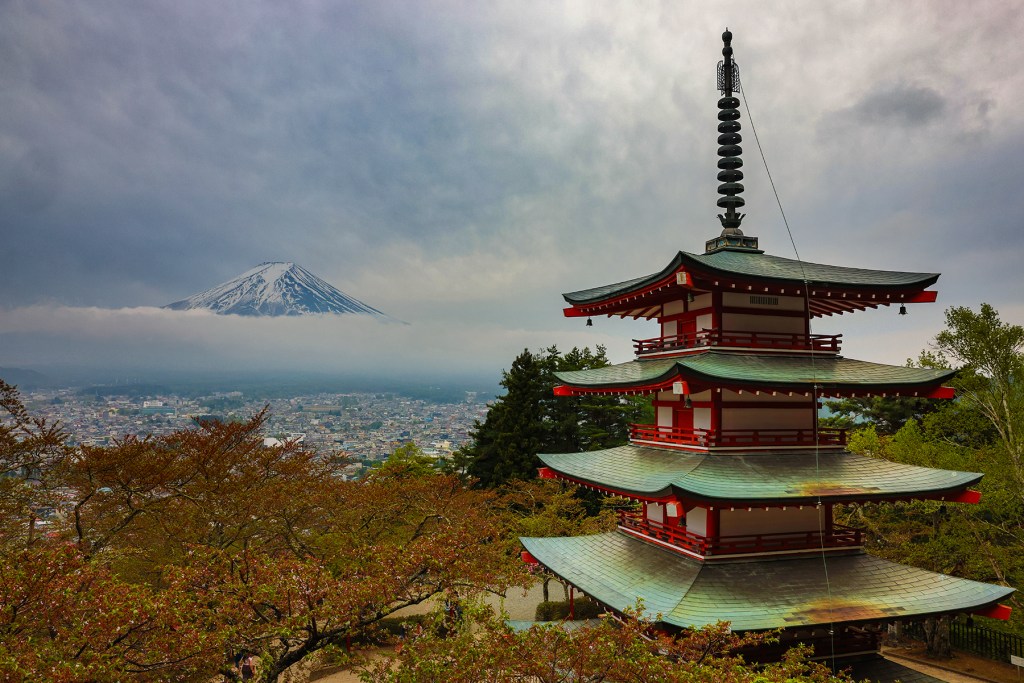
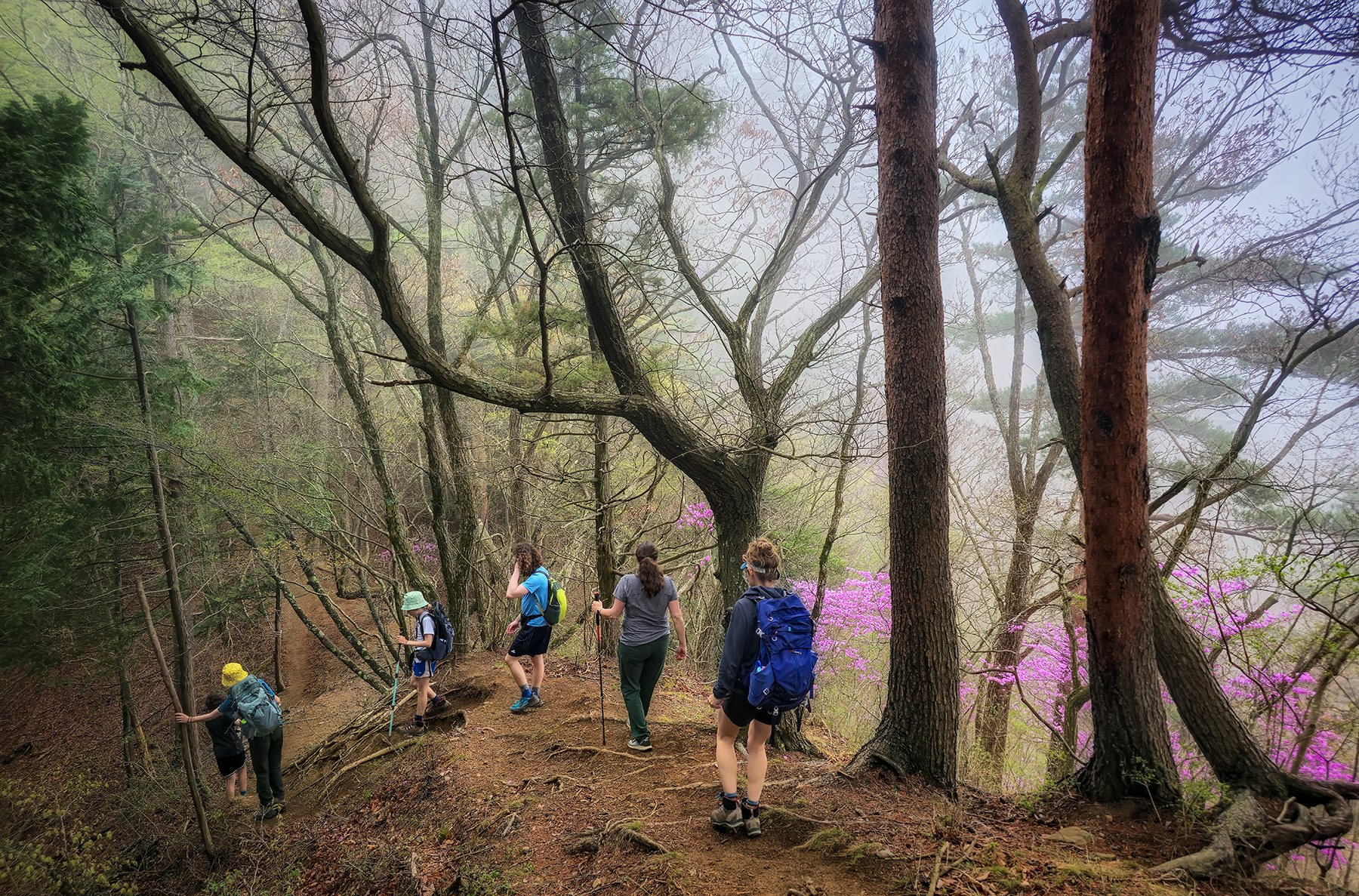
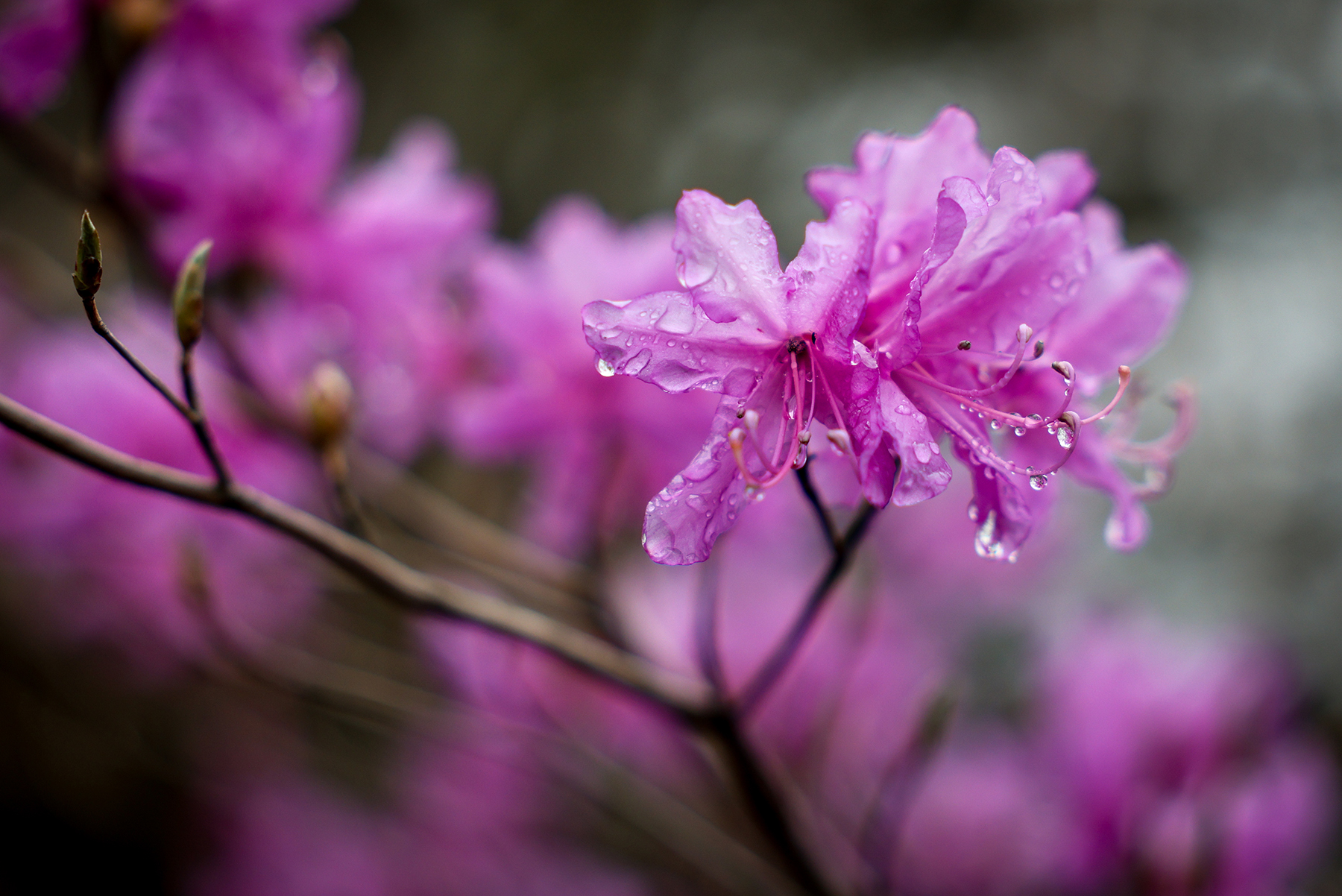
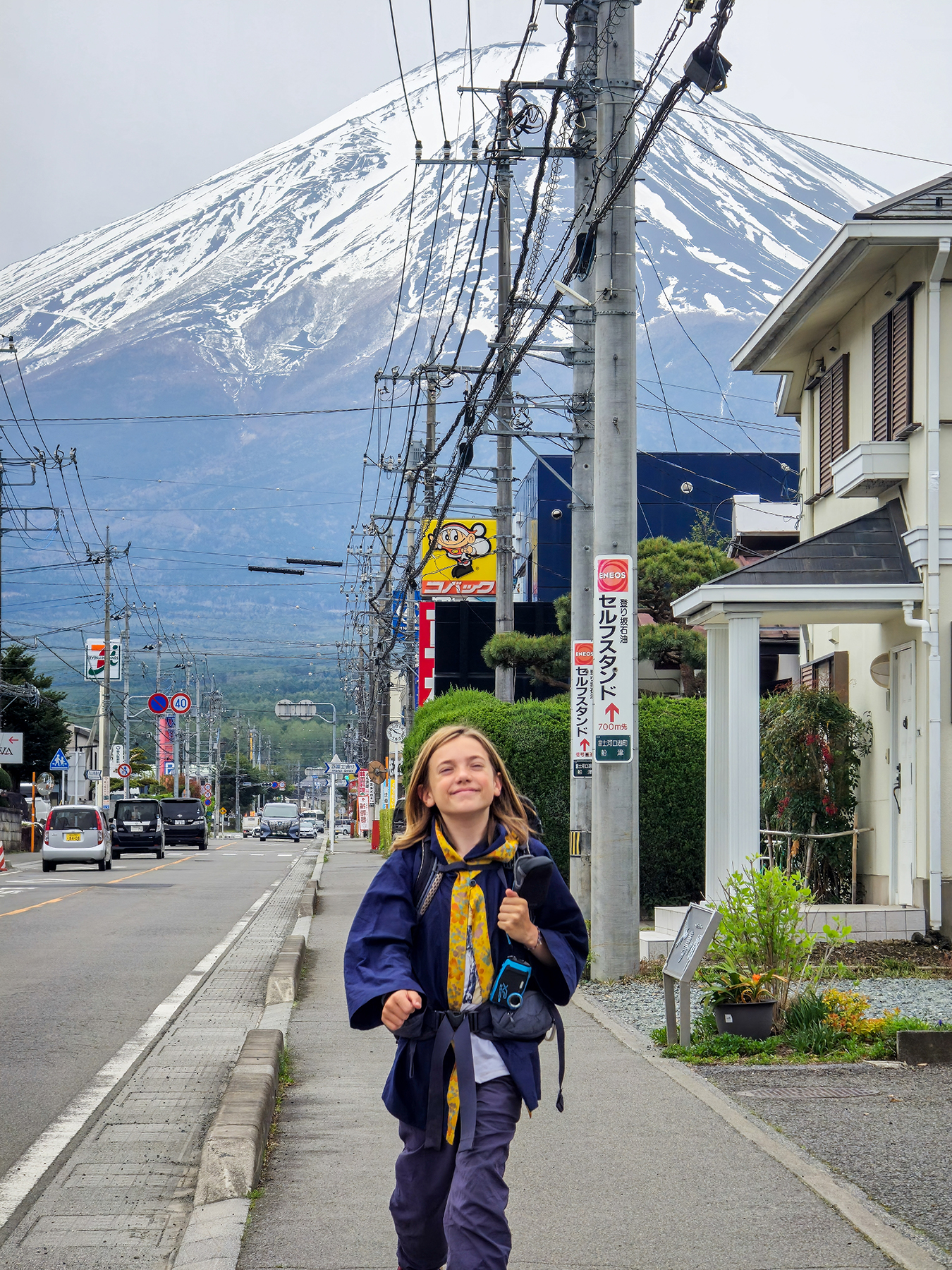
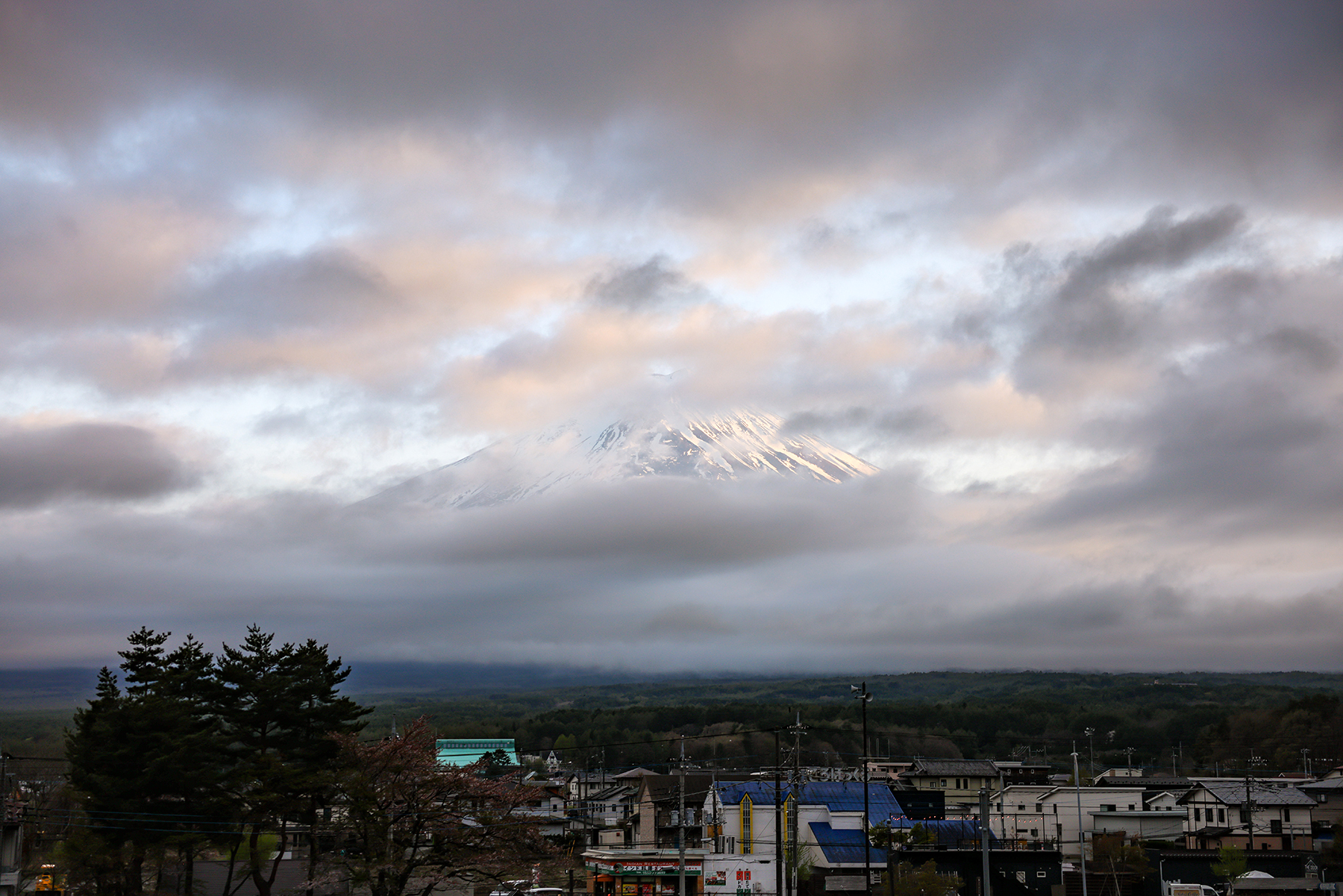
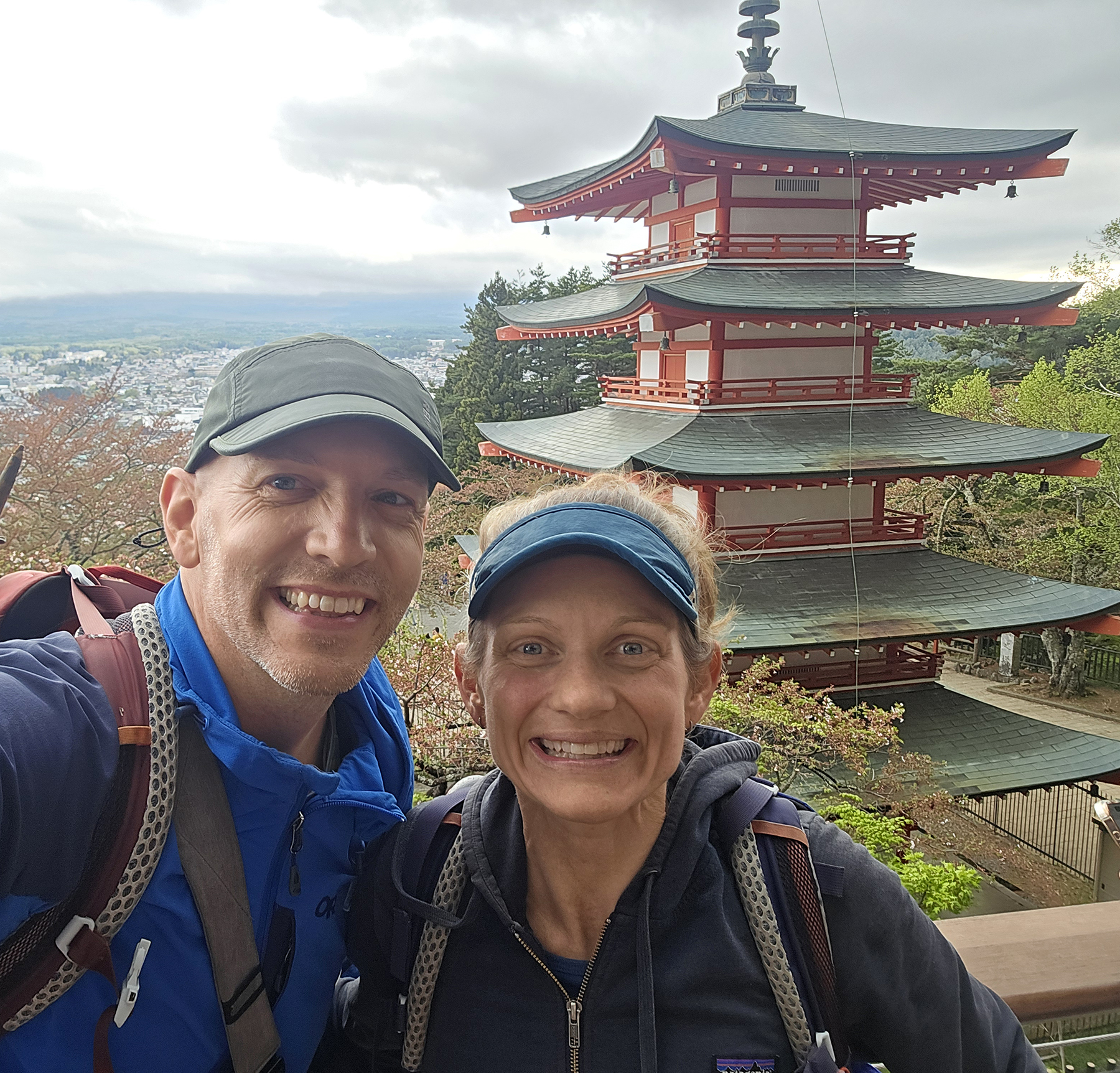
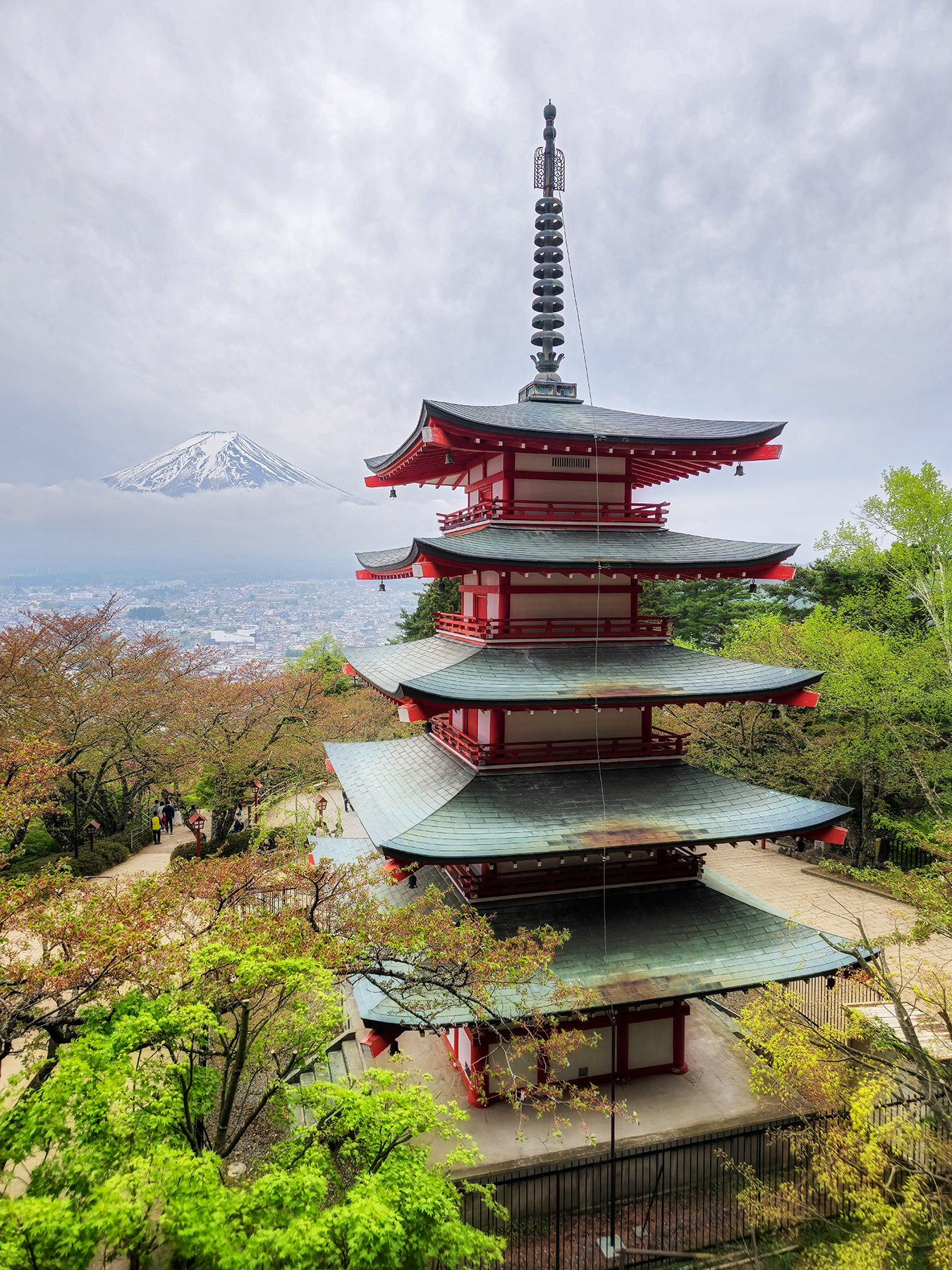
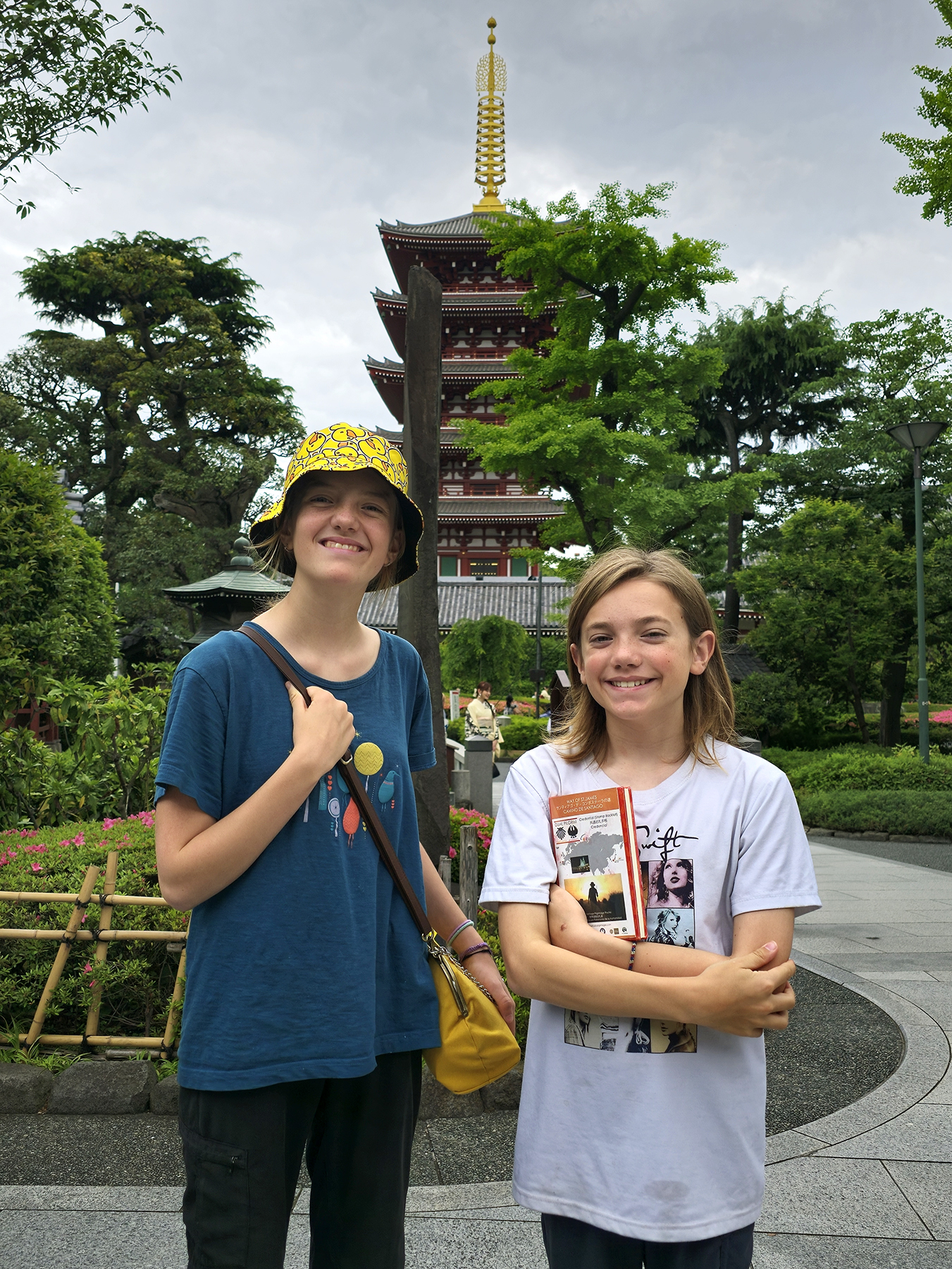
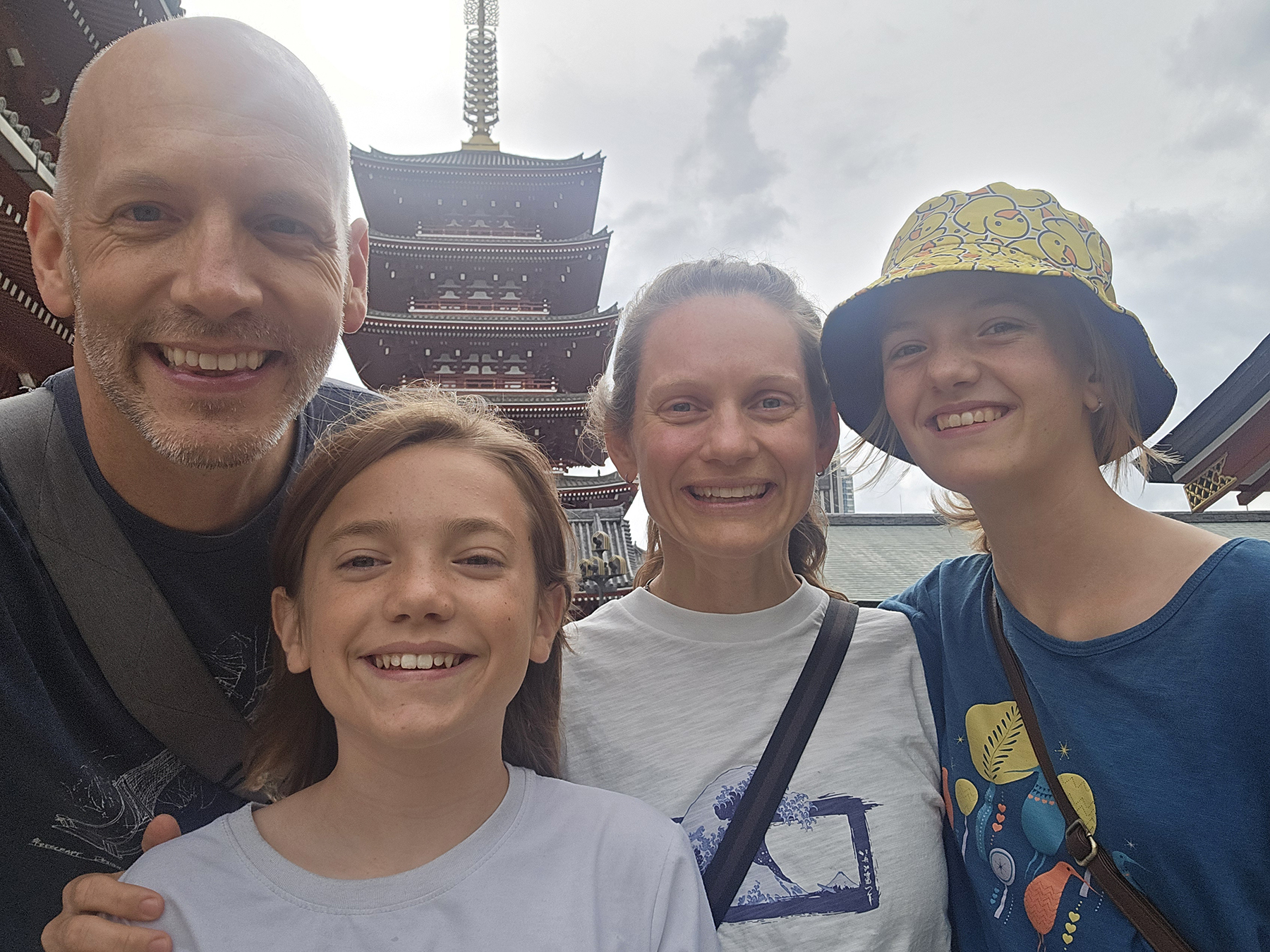
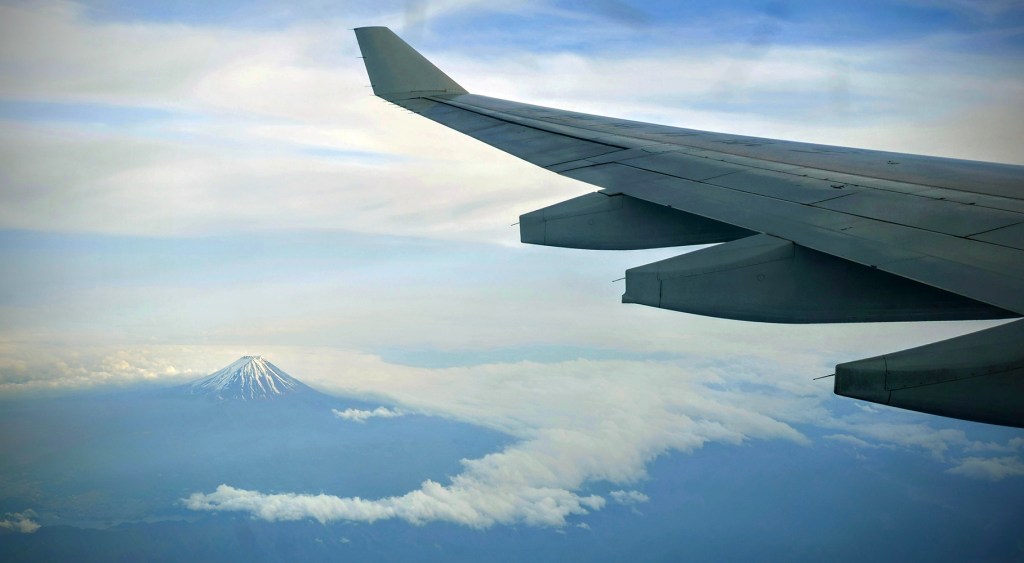
Our next day was spent hiking along a ridgeline outside of town. After leaving the green forests of the warm Kii Peninsula, it felt like spring had not quite fully arrived in this part of Japan, at least in the higher elevations. The hiking was enjoyable, though we were still clouded-in and had no sight of the elusive Mt. Fuji. The hike ended at the spectacular Chureito pagoda at the Kawaguchi Sengen shrine, one of the iconic views in all of Japan, which was stunning even in the cloudy weather. After completing the hike and returning to our hostel for dinner, we excitedly rushed to the roof when we spied a glimpse of Mt. Fuji emerging from the clouds! The mountain felt immensely large as it loomed over the town. It was a thrill to see the enormous pyramidal volcano, and we were relieved that our visit to Fujikawaguchiko would not leave us completely deprived of a view of the peak.
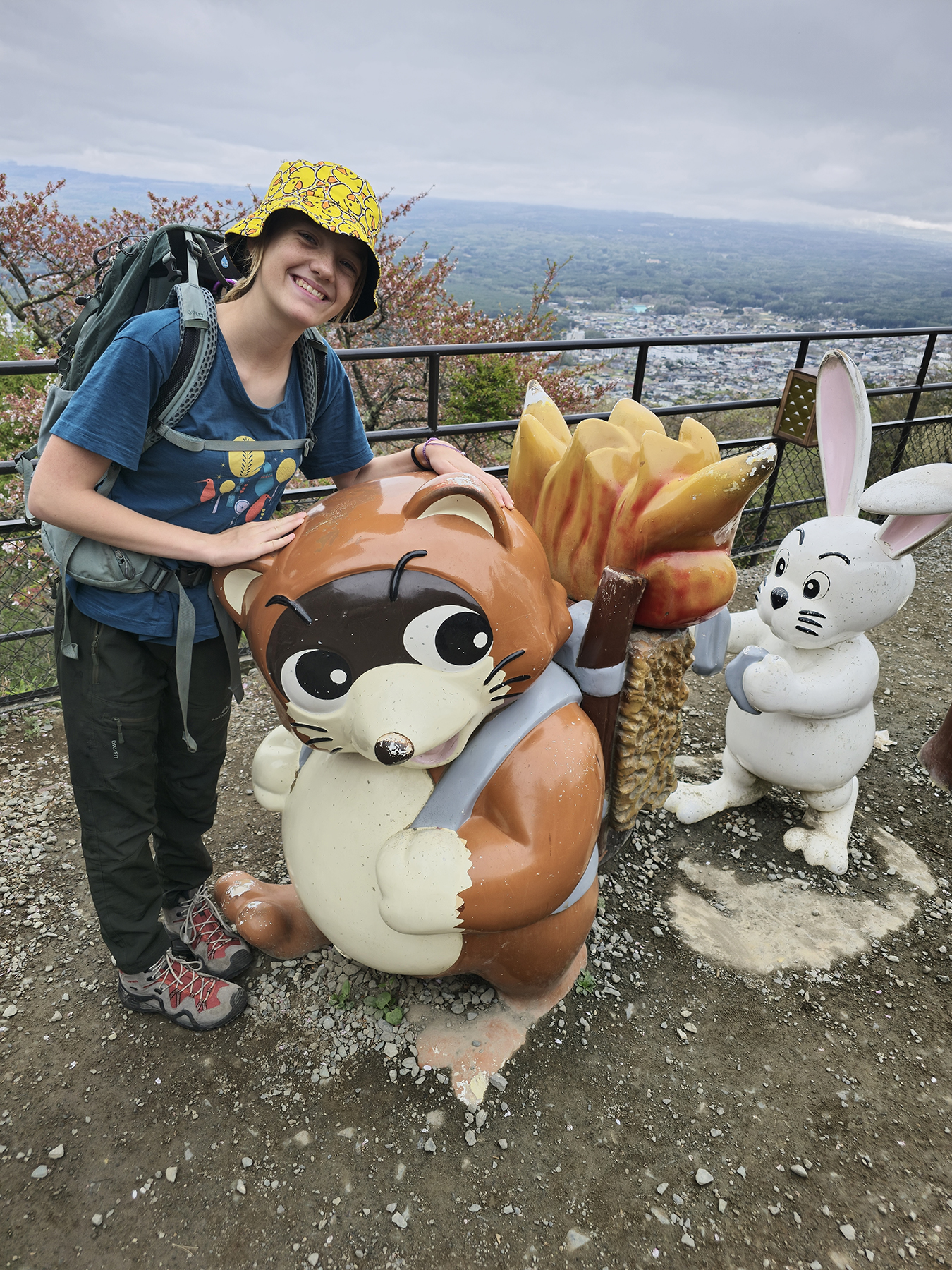
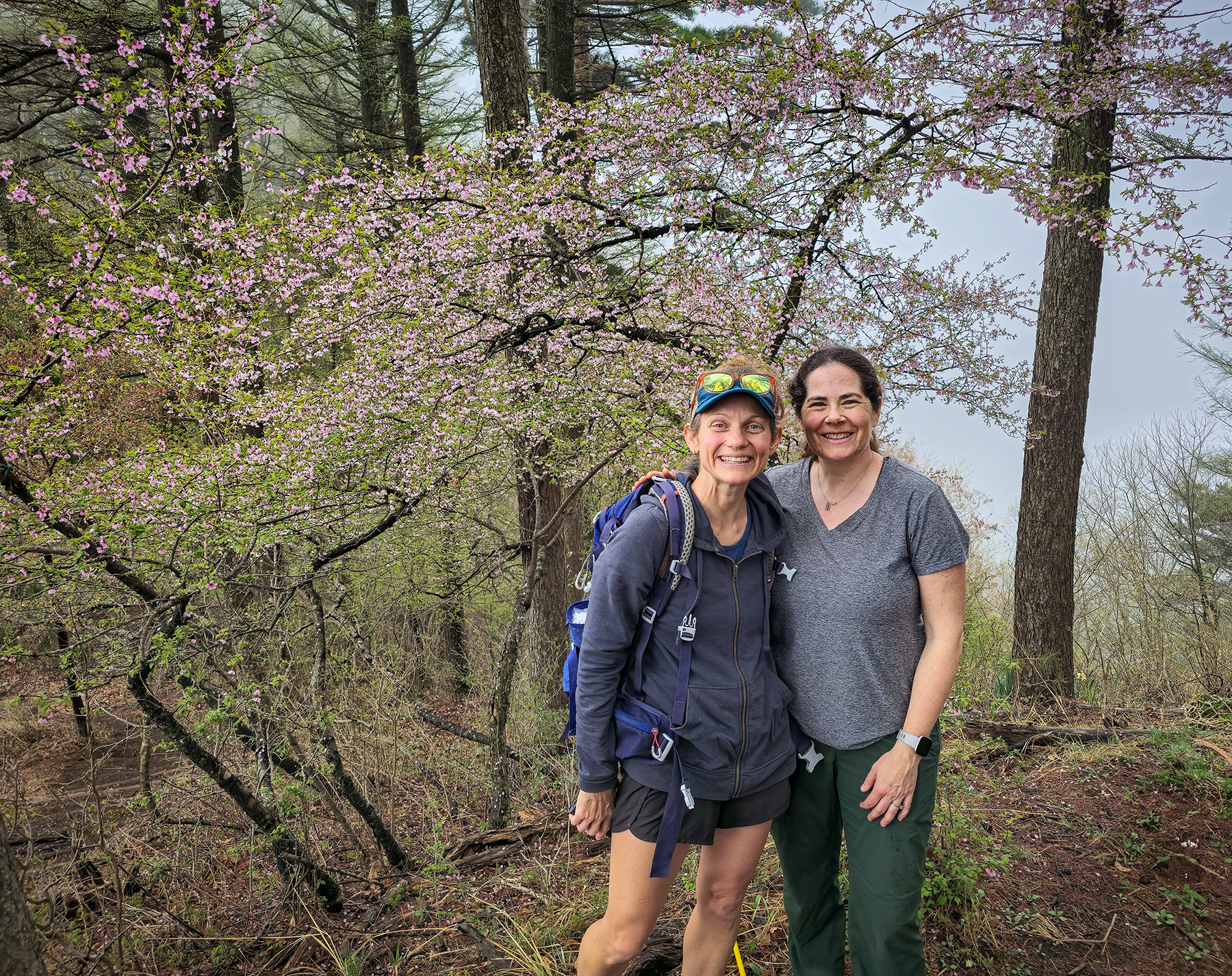
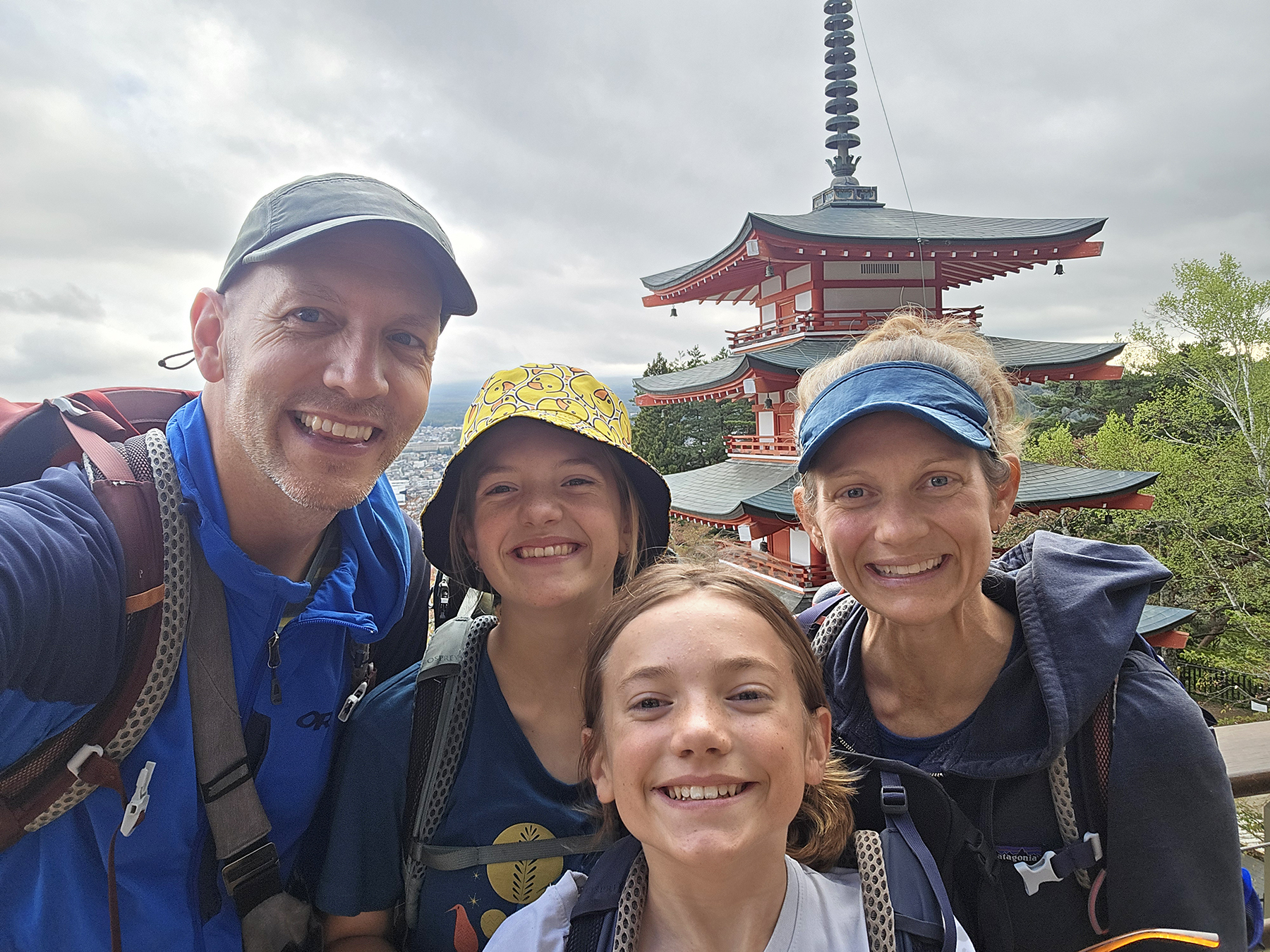
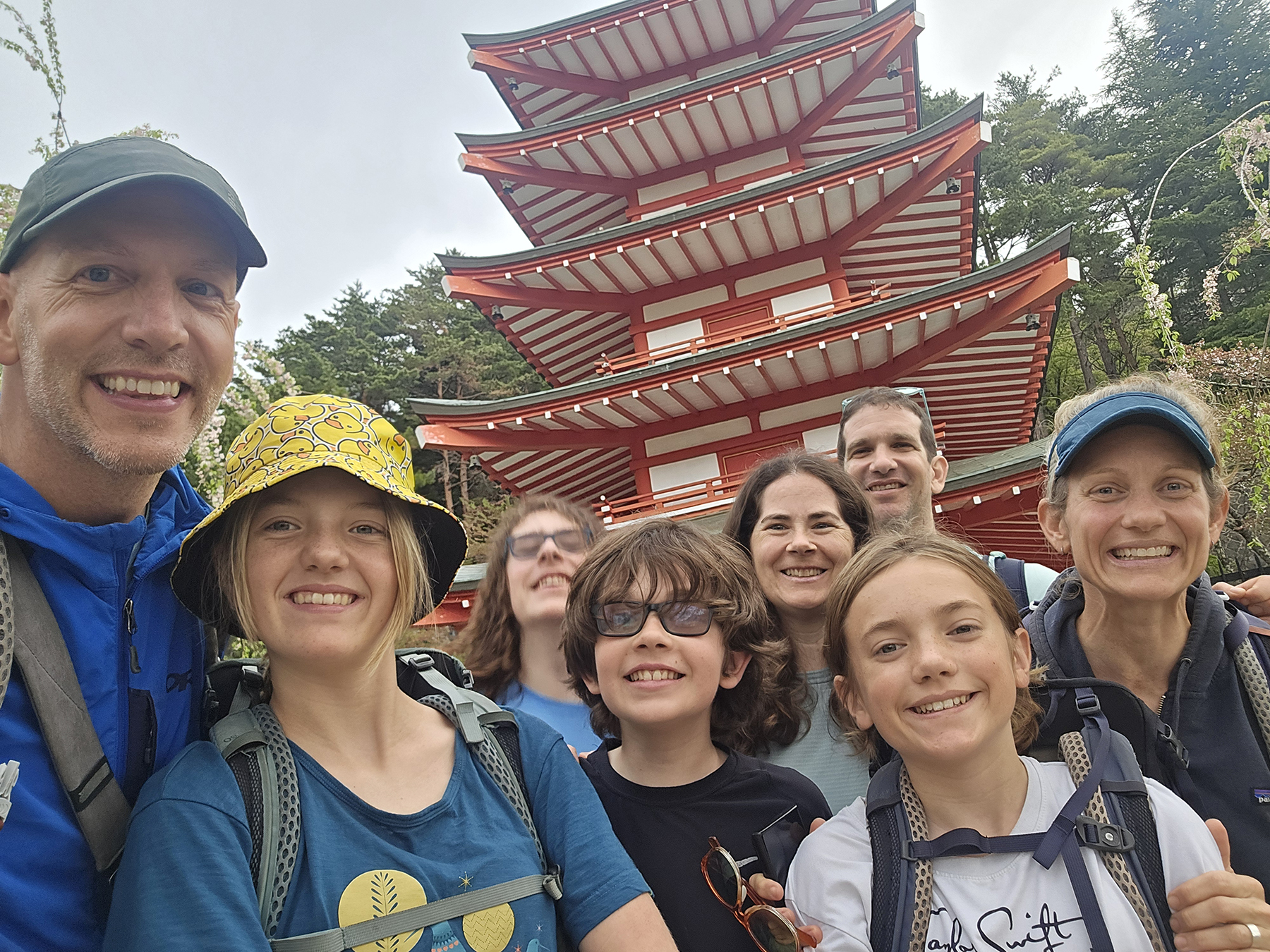
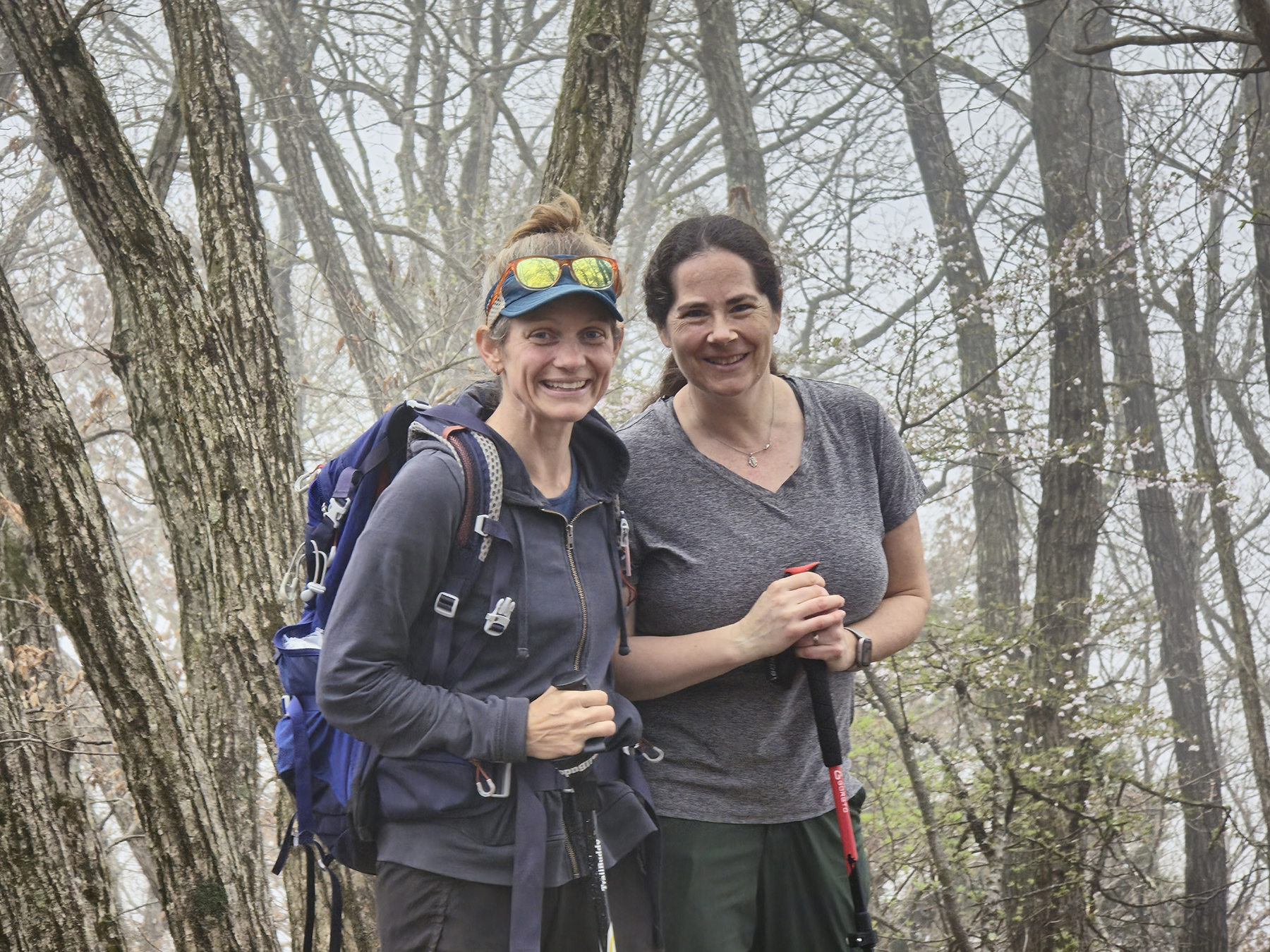
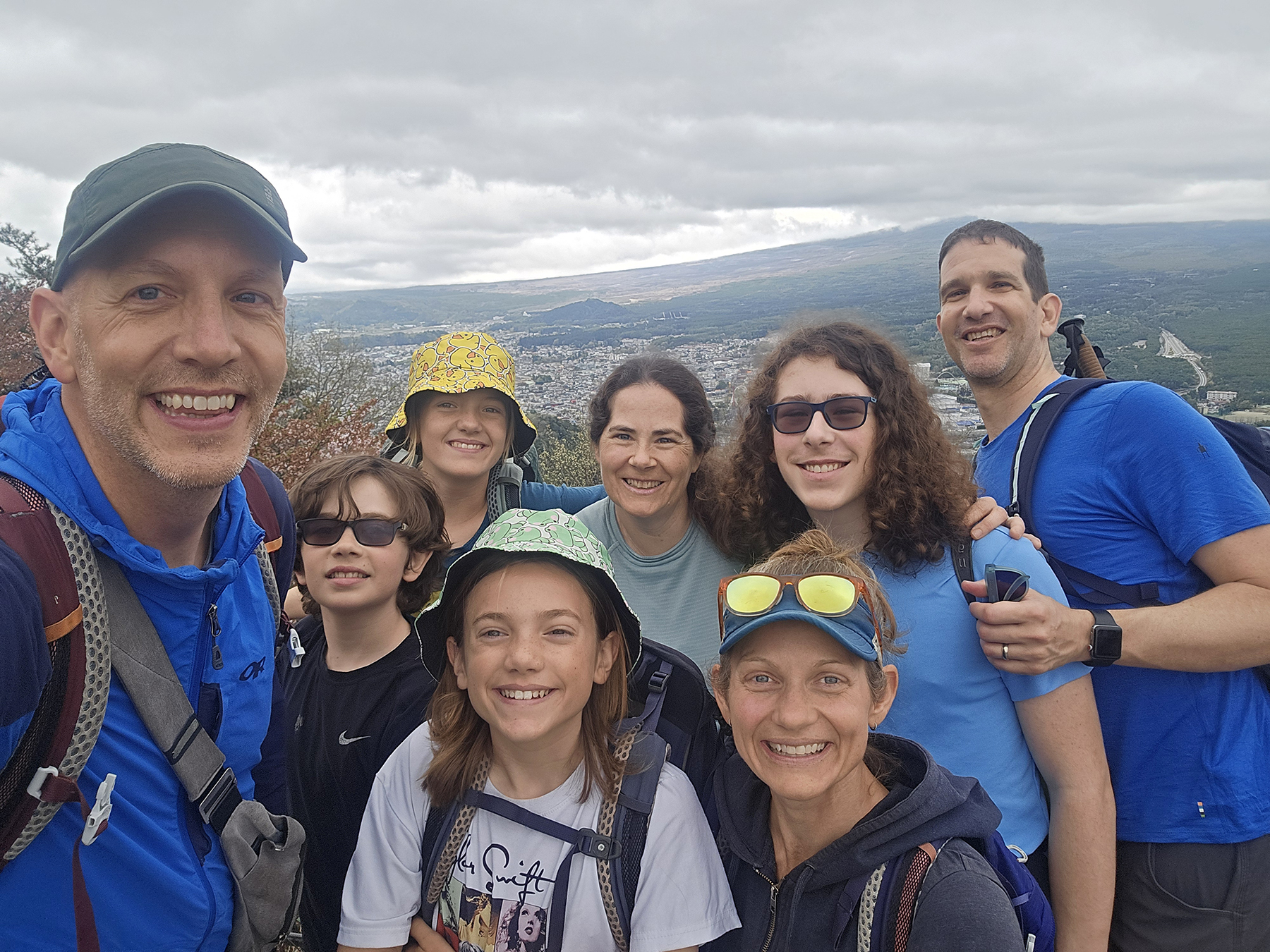
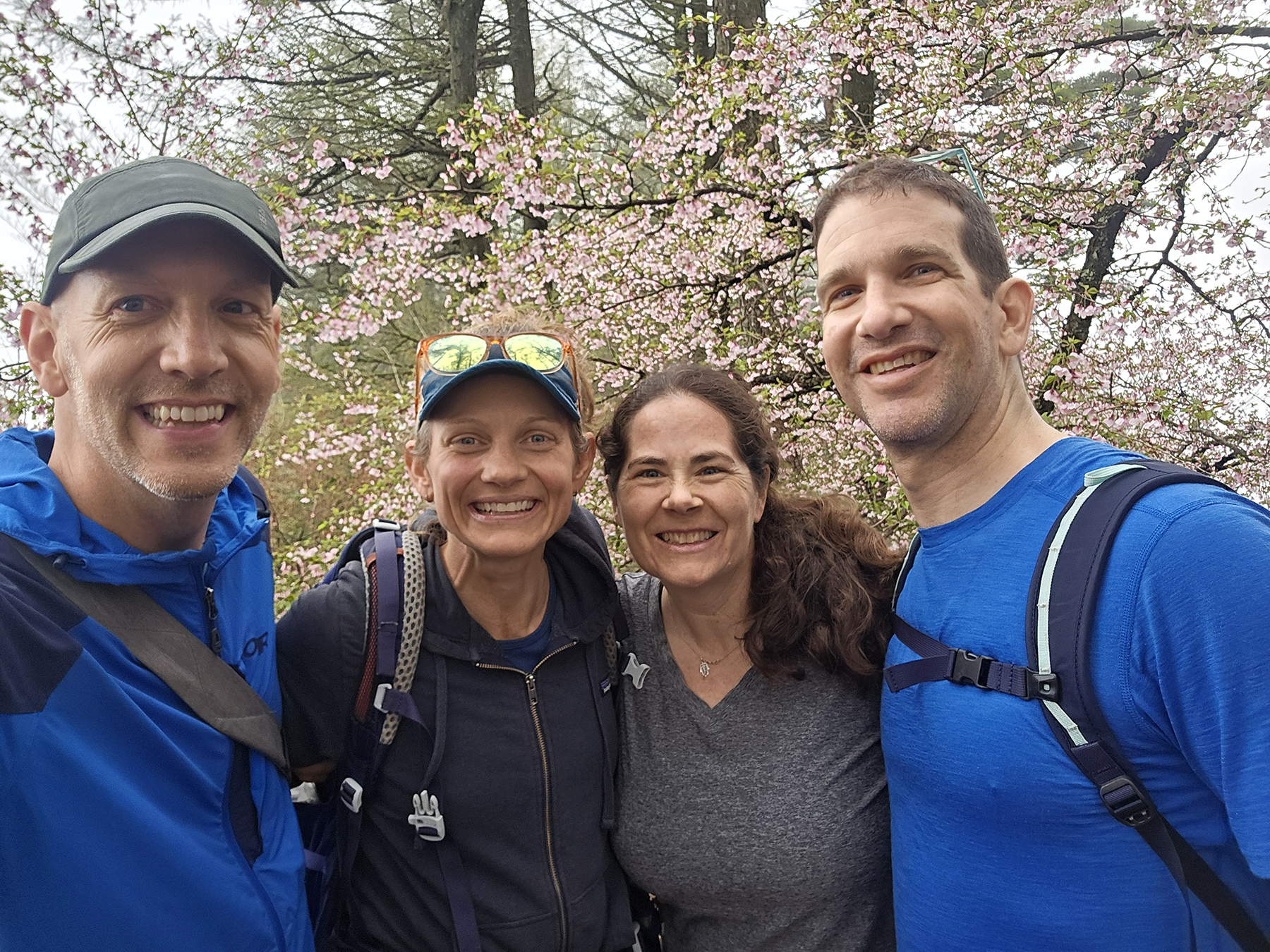

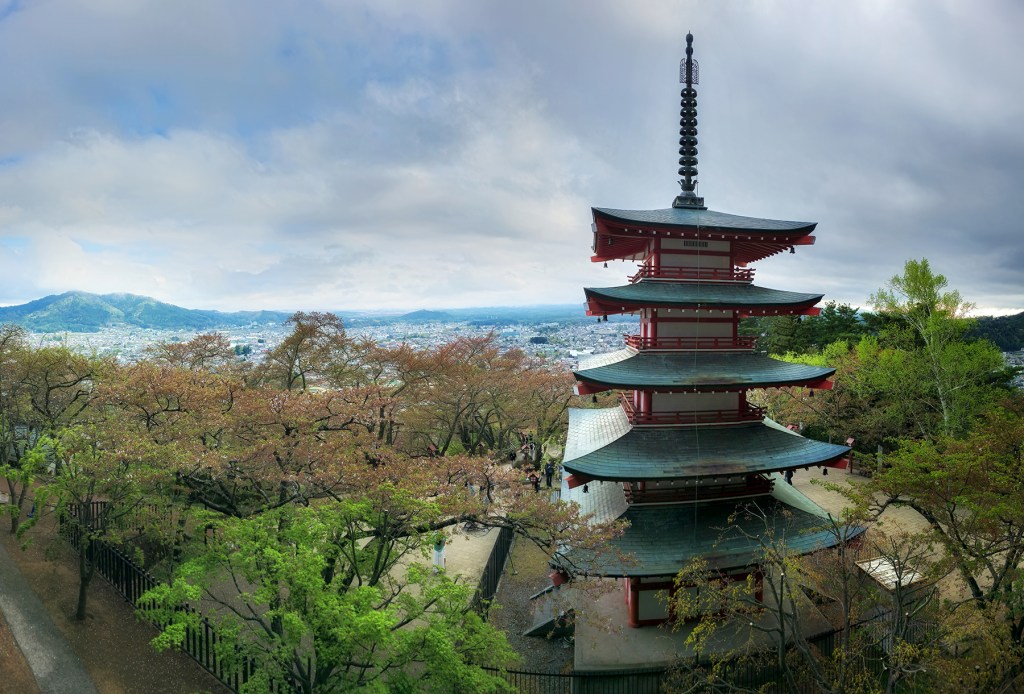
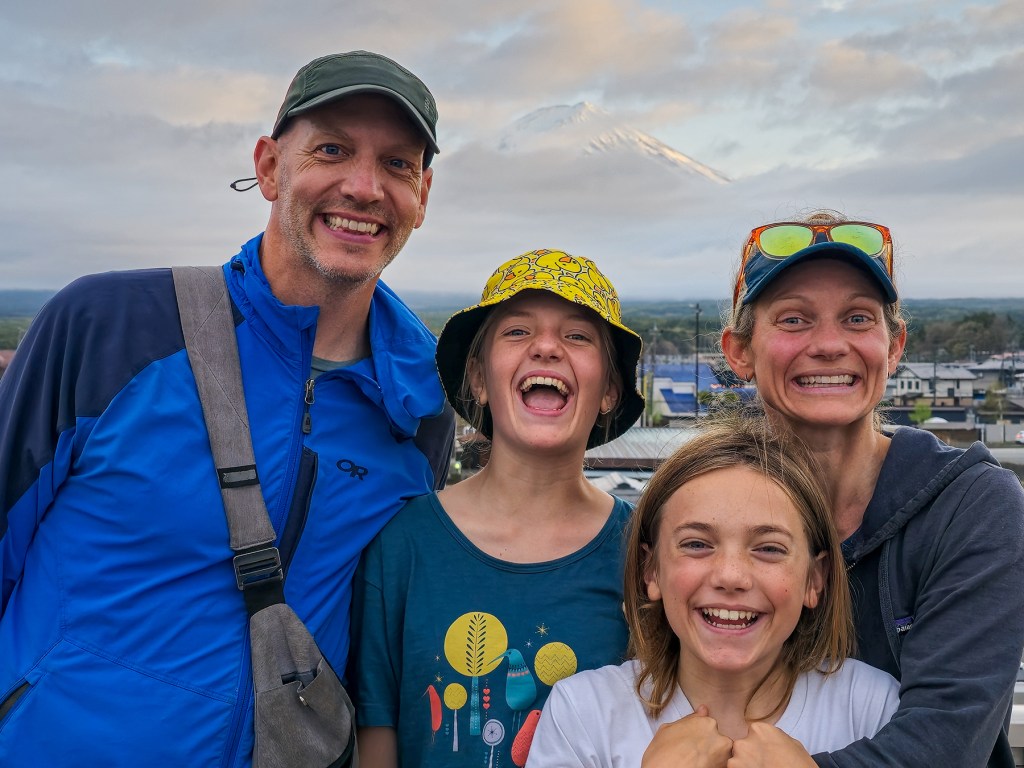
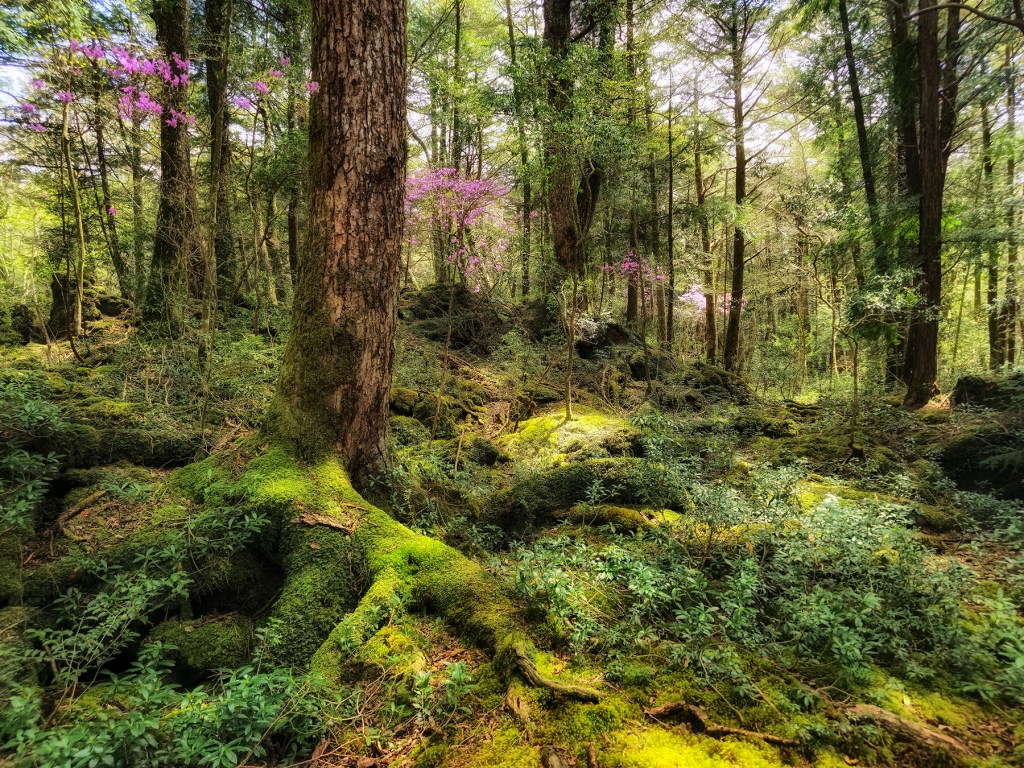
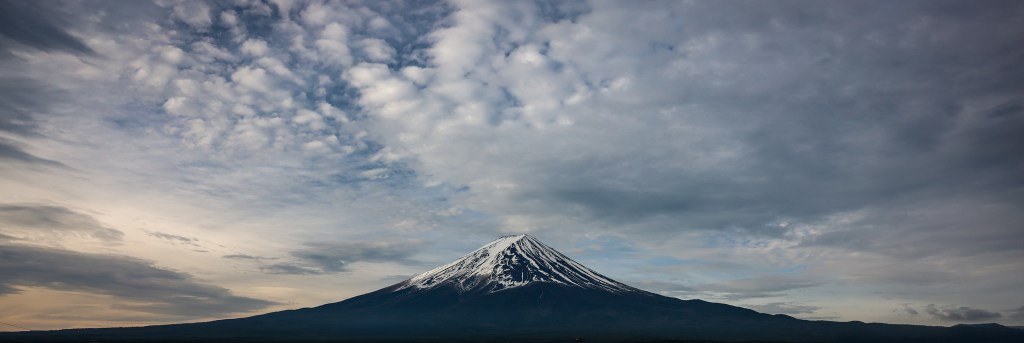
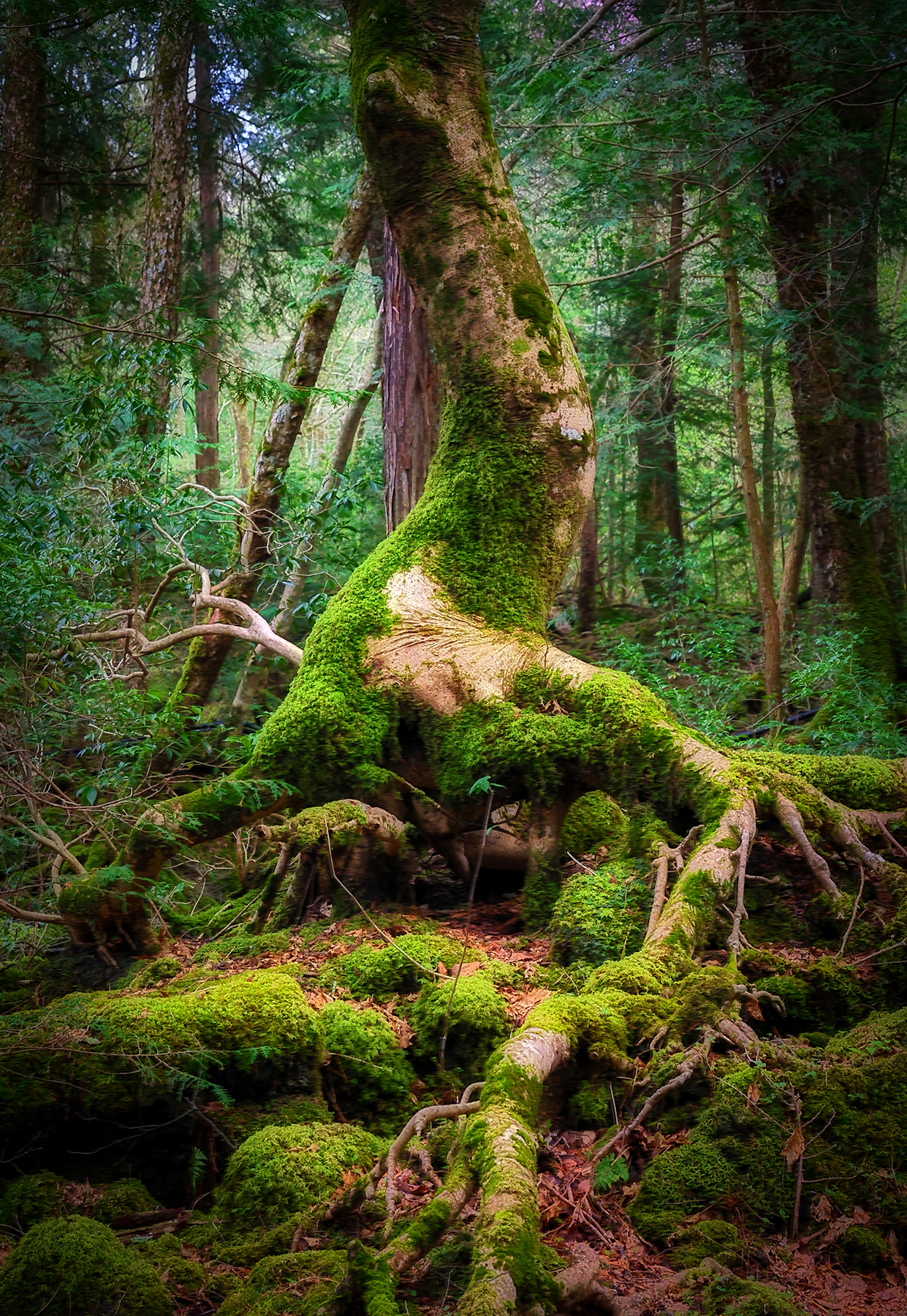
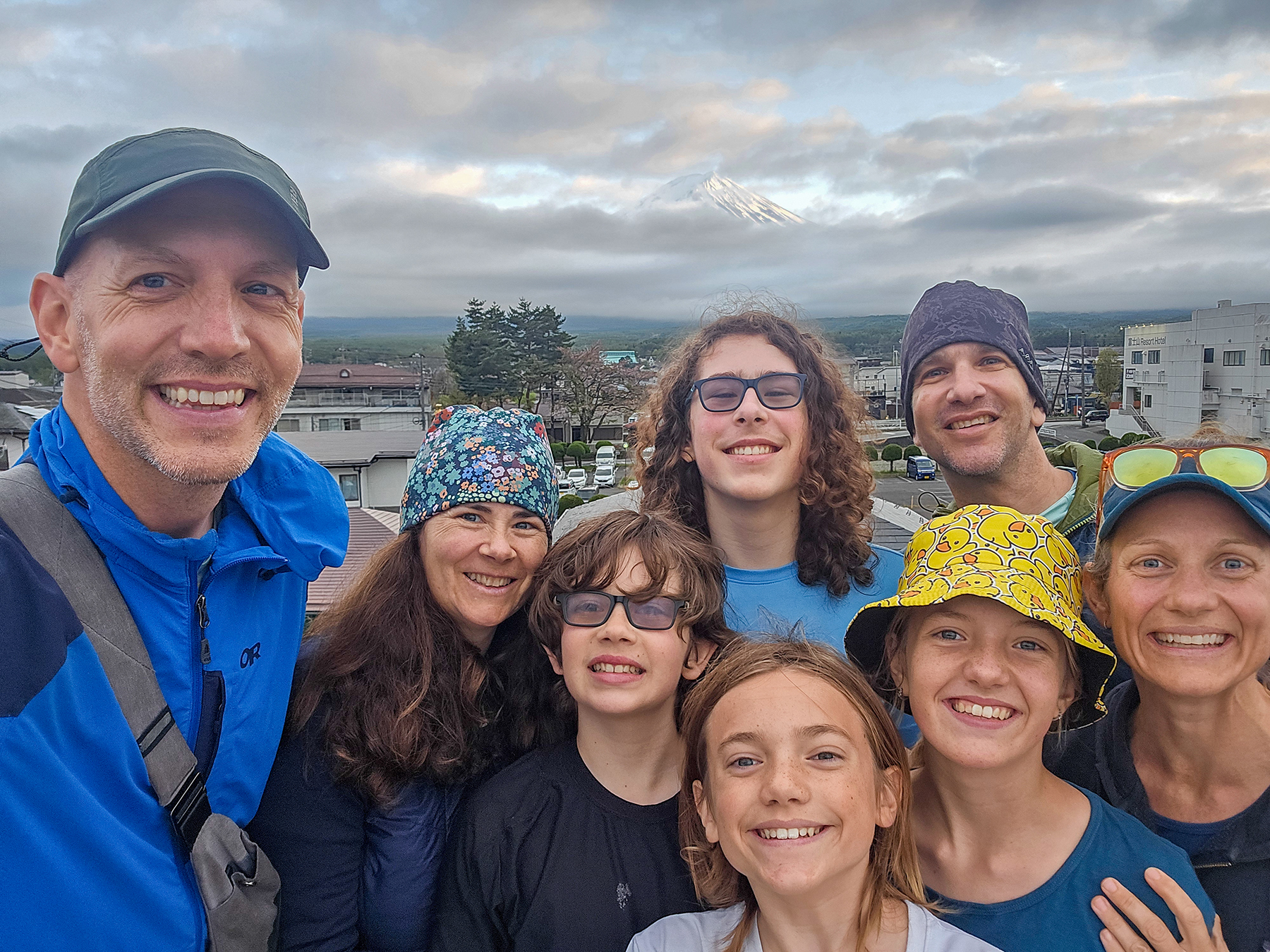
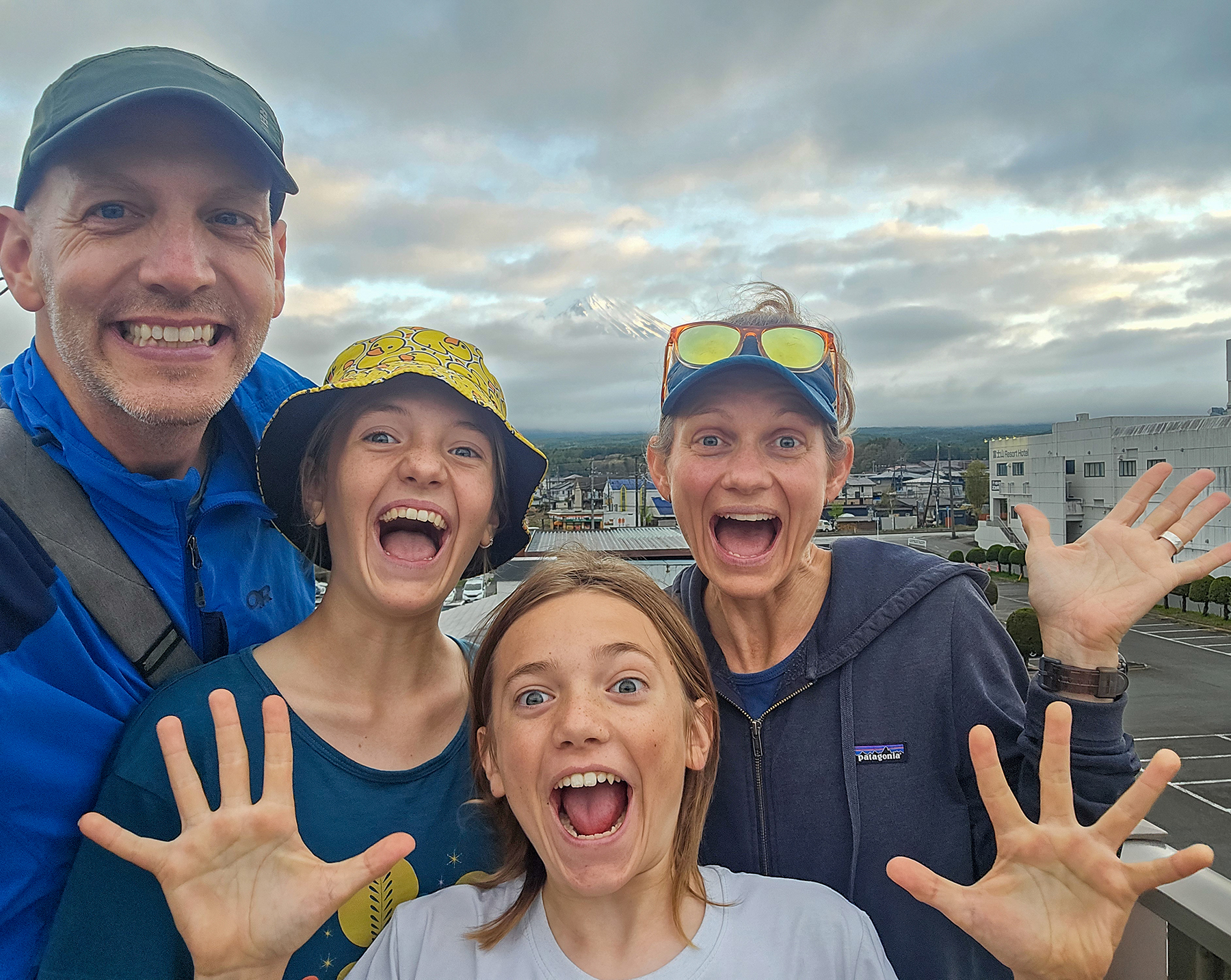
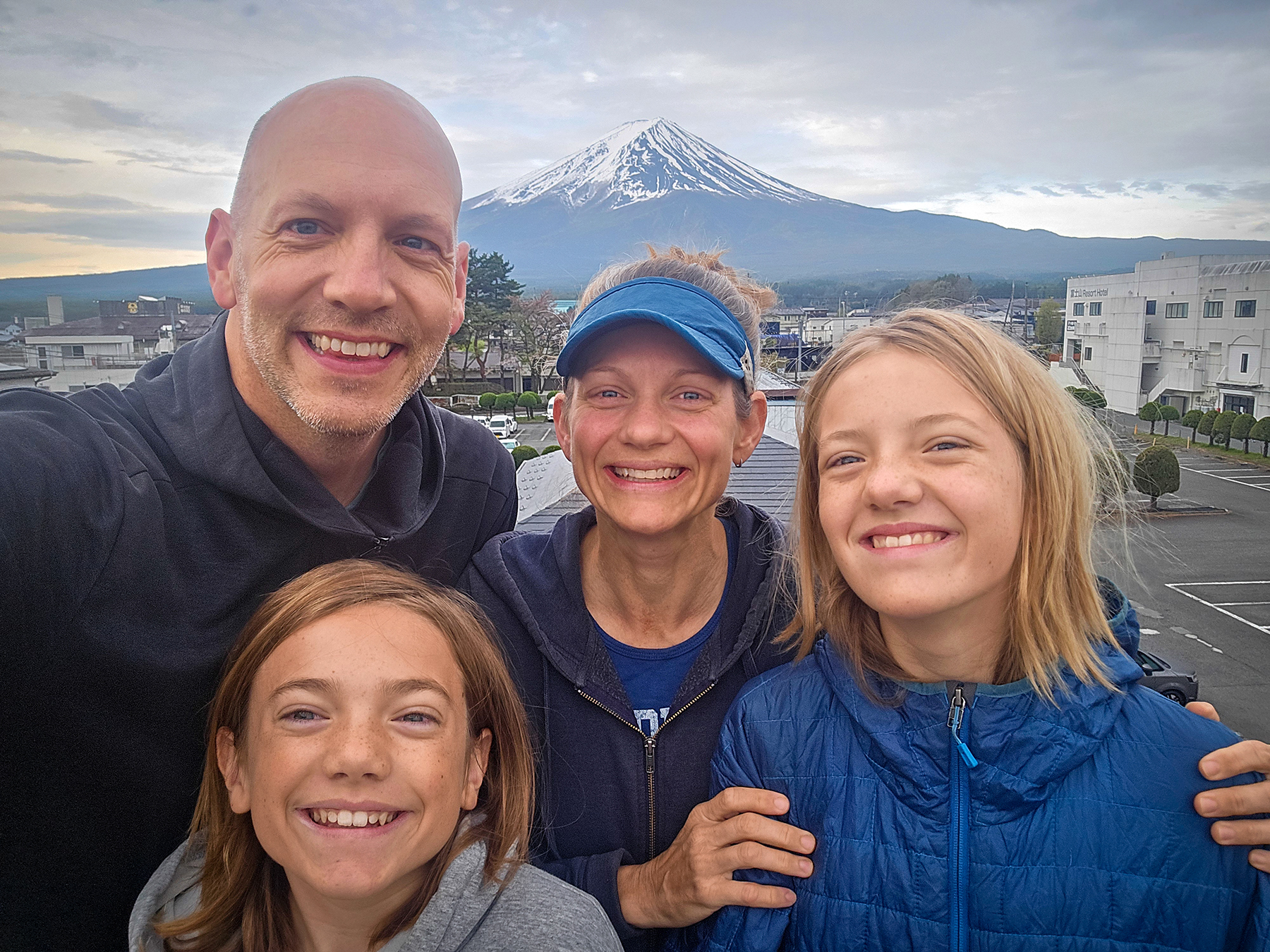
The following morning we were awoken very early by an excited Karyn to discover that the clouds had completely lifted overnight, so we again rushed up to the roof where we were met with a beautiful unobstructed view of Mt. Fuji! It was a fantastic start to our day. Having now accomplished our major goal of seeing the mountain, we were free to spend the remainder of the day wandering along hiking trails in the mossy Aokigahara forest. The kiddos particularly enjoyed exploring the “ice cave” and “bat cave” with their friends. After a full day of hiking, Scott and Karyn took the four kiddos back to the hostel while Sonya and I returned to the Chureito pagoda, hoping to take a picture of the shrine with the beautiful Mt. Fuji as a backdrop. As the train approached the station, the clouds again began to obscure the peak, so I ran at top speed up what felt like ten million stairs to reach the viewpoint just before the view disappeared. We ended up with a fun picture of Mt. Fuji rising up above the blanket of clouds, so the sprint up the hillside was well worth the effort!
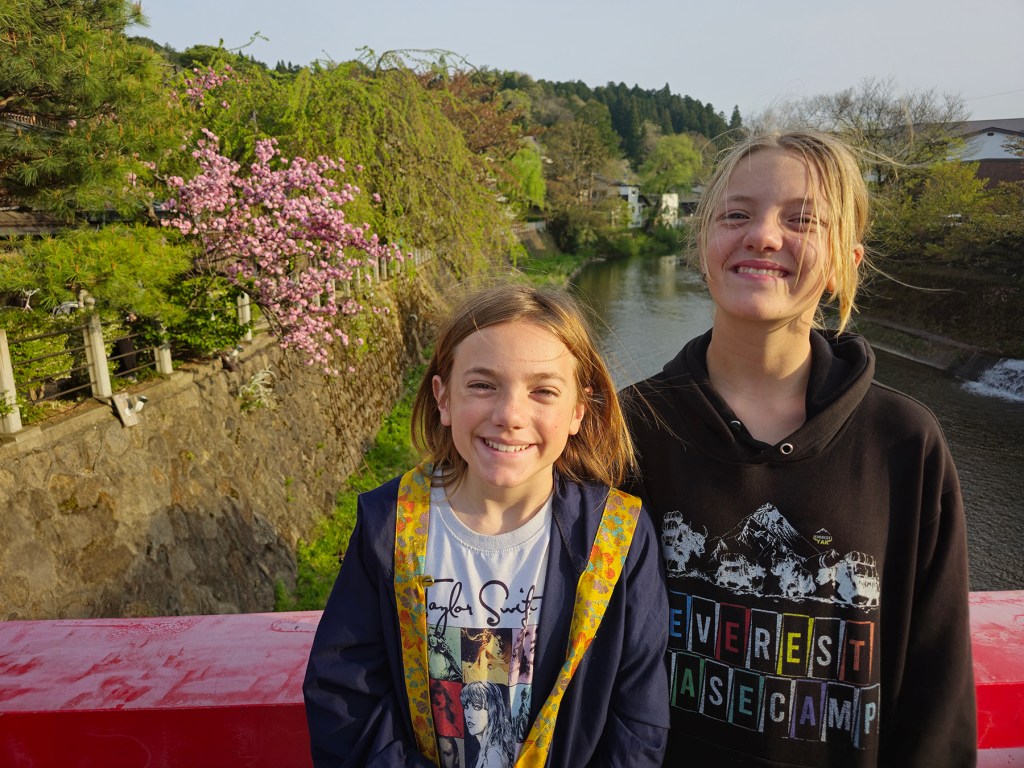
Our short time together with the Peabody family came to an end too early the next morning, though we left knowing we would be seeing them again soon to celebrate a bar mitzvah in August. From Fujikawaguchiko, we boarded another bus, a pair of trains, and another bus for an epic day of travel to arrive late at night to the town of Takayama in the Gifu prefecture. We didn’t have a clear agenda for our time planned in Takayama, other than to explore the historic Edo period town, eat some tasty ramen, and perhaps search for a piece of artwork as a memento. We loved browsing through the myriad storefronts packed with antiques and handicrafts, and happily stumbled upon a small store that specialized in kakejiku (Japanese hanging scrolls). While we have generally not made many purchases over the course of this year, as transporting keepsakes while we’re abroad is challenging, we did fall in love with a few scrolls that found their way into our backpacks.
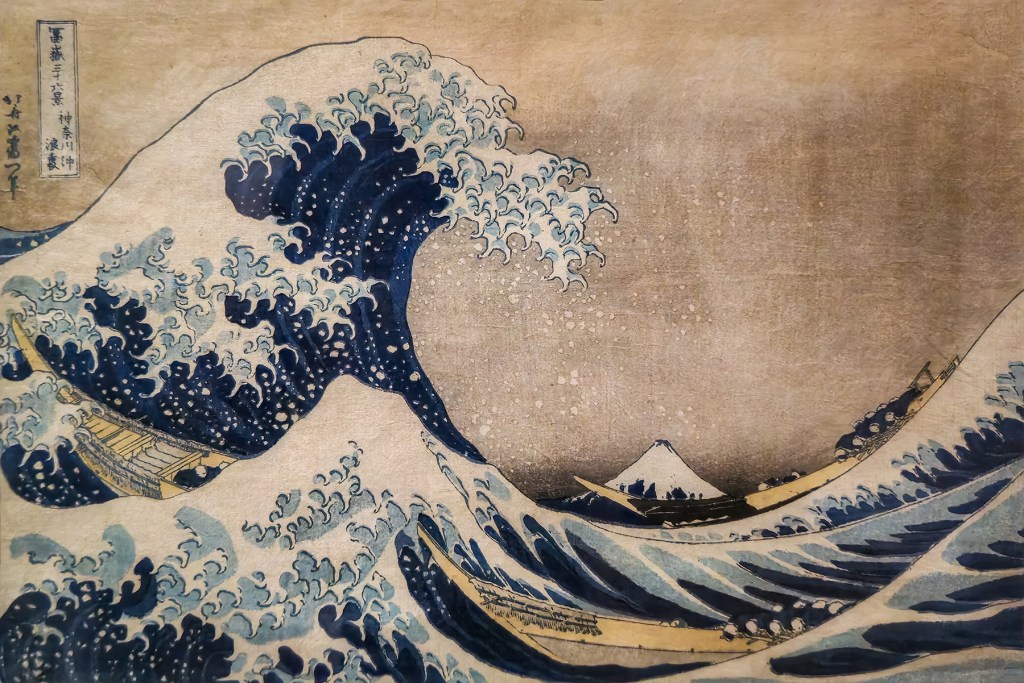
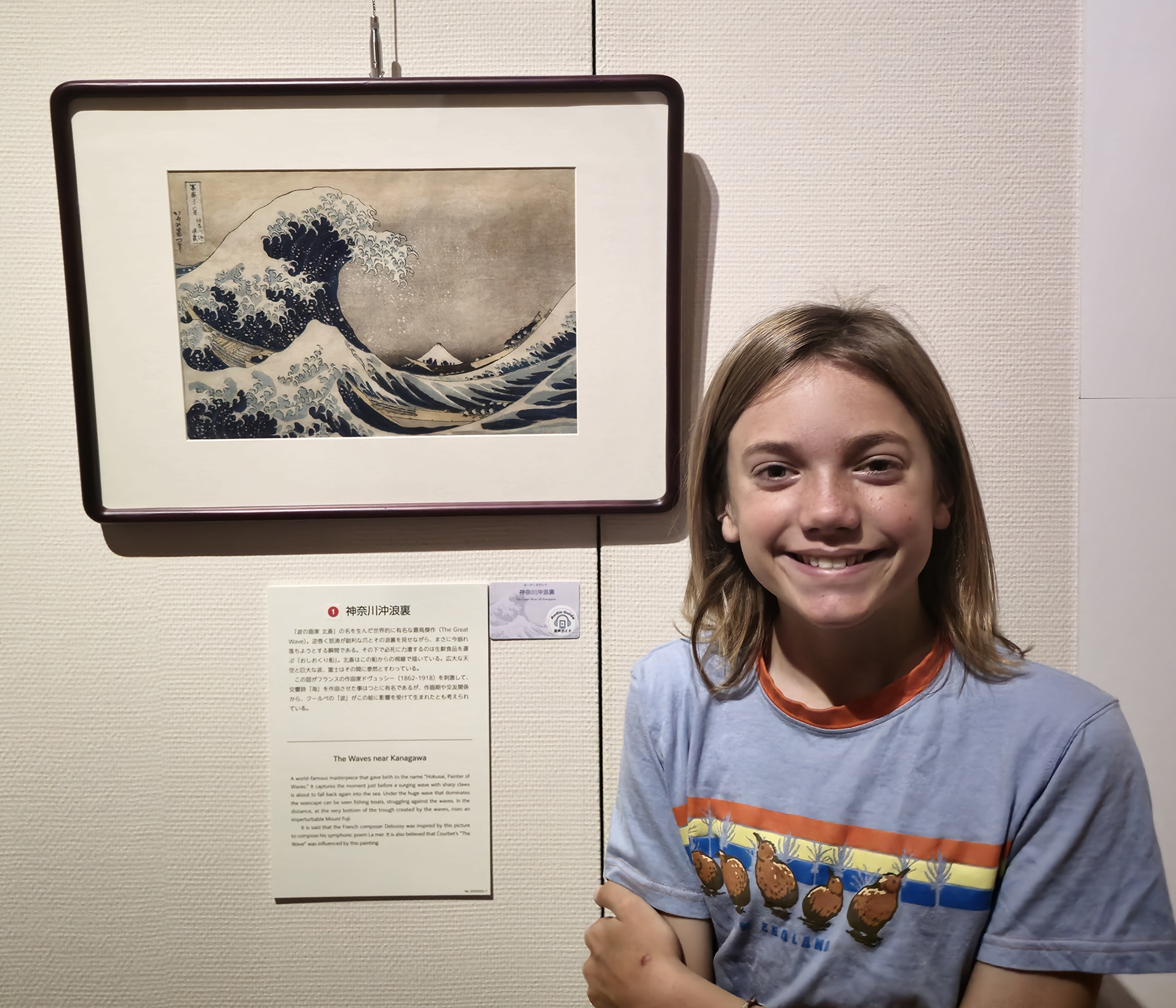
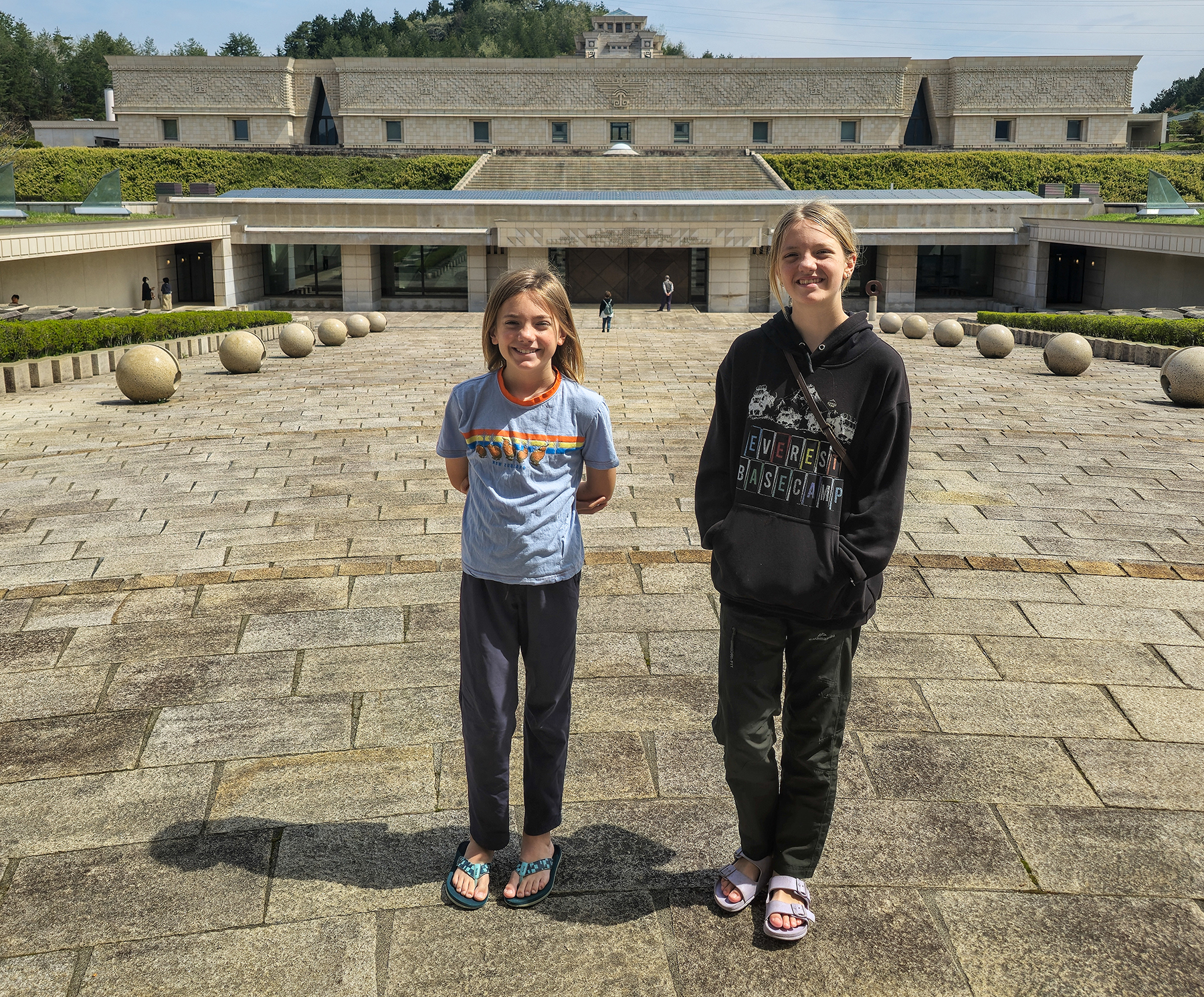
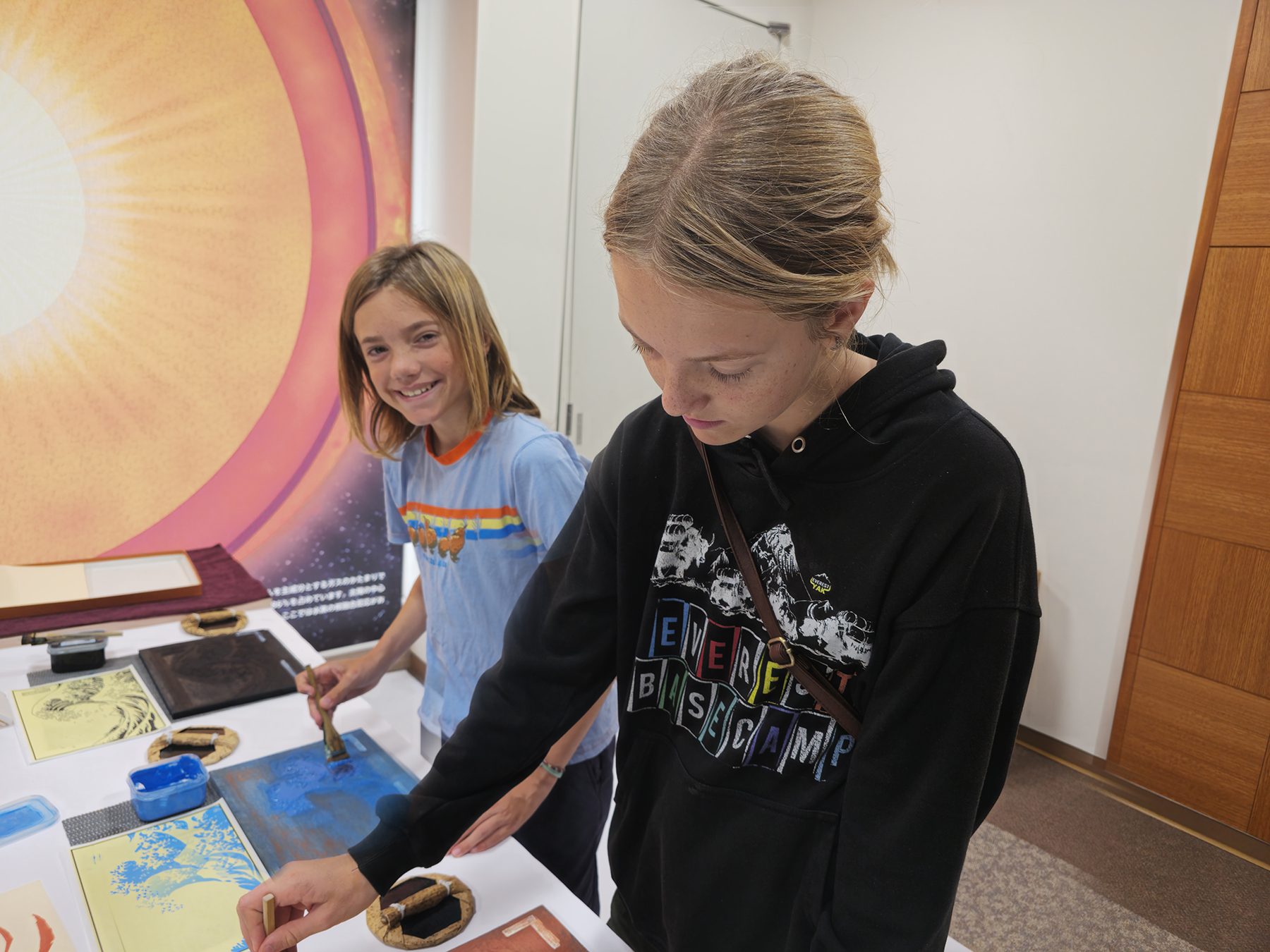
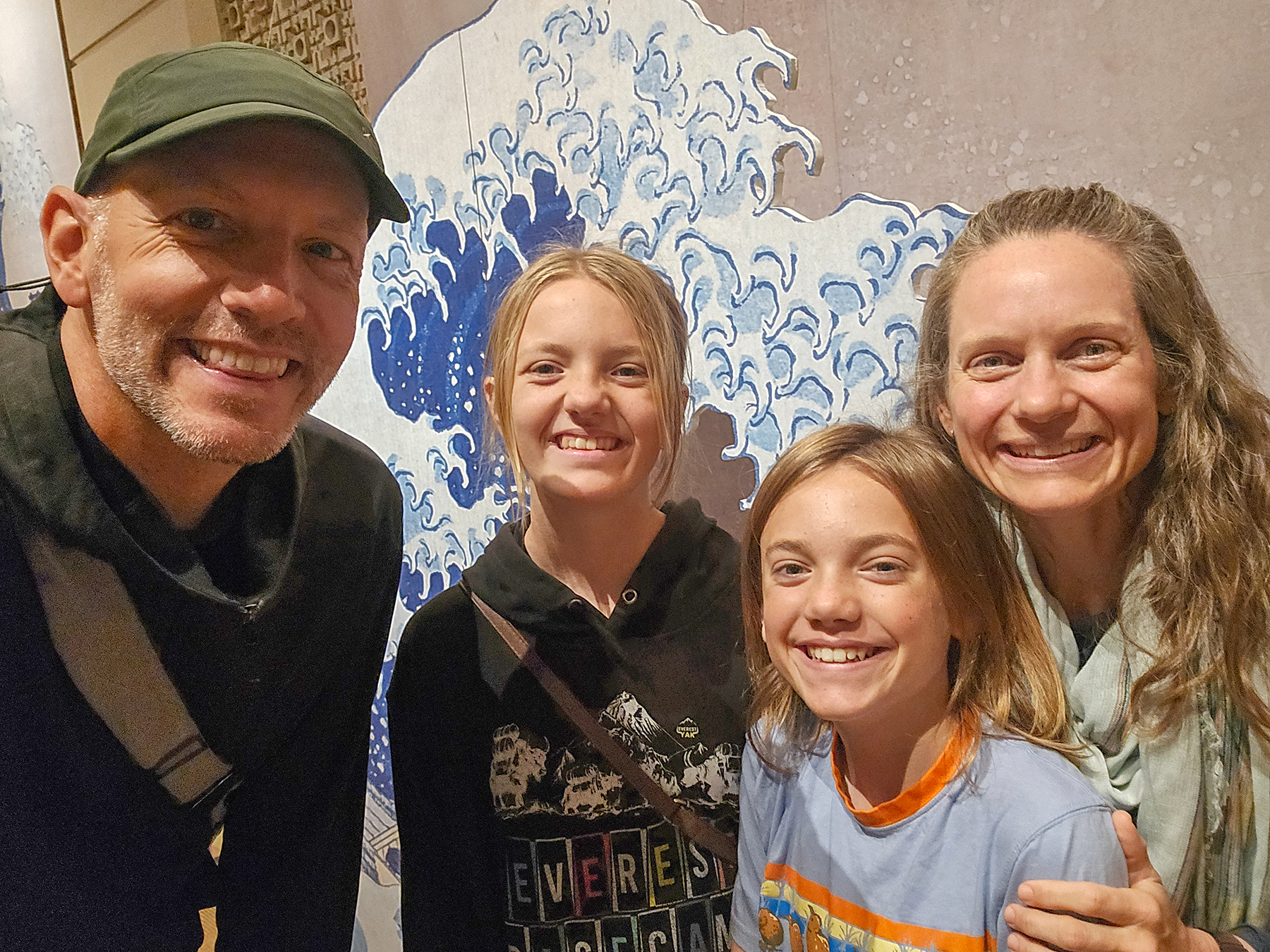
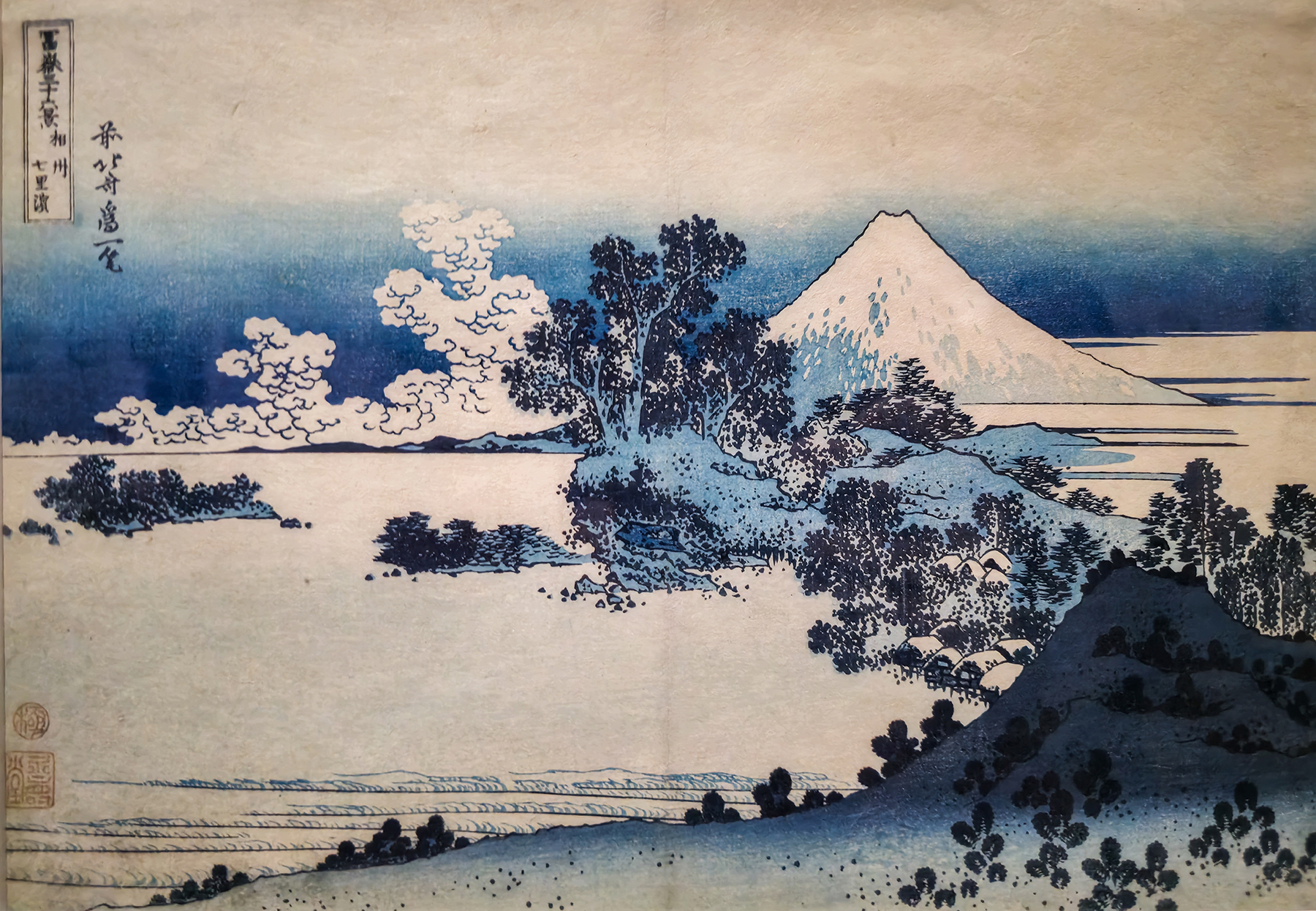
While wandering around Takayama, we came across a poster advertising a special exhibition in a local museum of Katsushika Hokusai prints. We hurried to purchase tickets, expecting the exhibit to quickly sell out. After taking a local bus to arrive right at the museum’s opening, we were surprised to discover that the entire museum is housed in what appears to be a recreation of a Mayan pyramid, and that the entire enormous structure was eerily essentially empty. On further research, we learned that the museum is maintained by a “new religious organization” (cult?), which perhaps limits the number of interested visitors. So, long story short, we enjoyed viewing the entire series of Thirty Six Views of Mt. Fuji, as well as the beautiful and iconic Great Wave off Kanagawa, essentially alone in a giant Mayan pyramid run by a cult in the the Japanese Alps. Another great (quirky? …surreal?) sabbatical year experience!
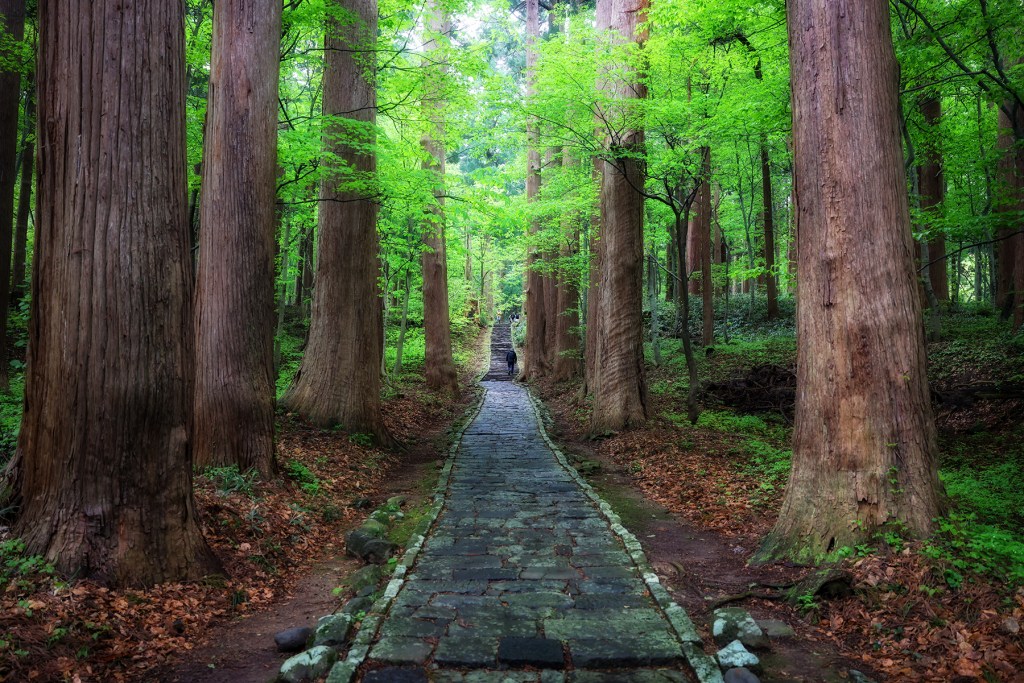
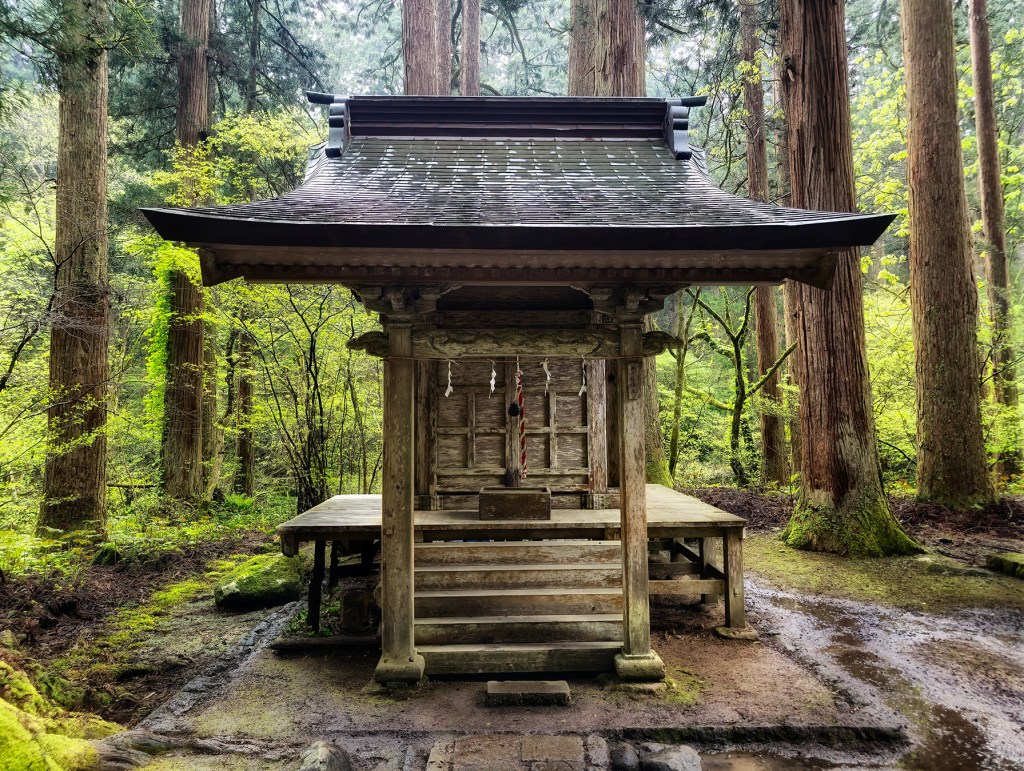
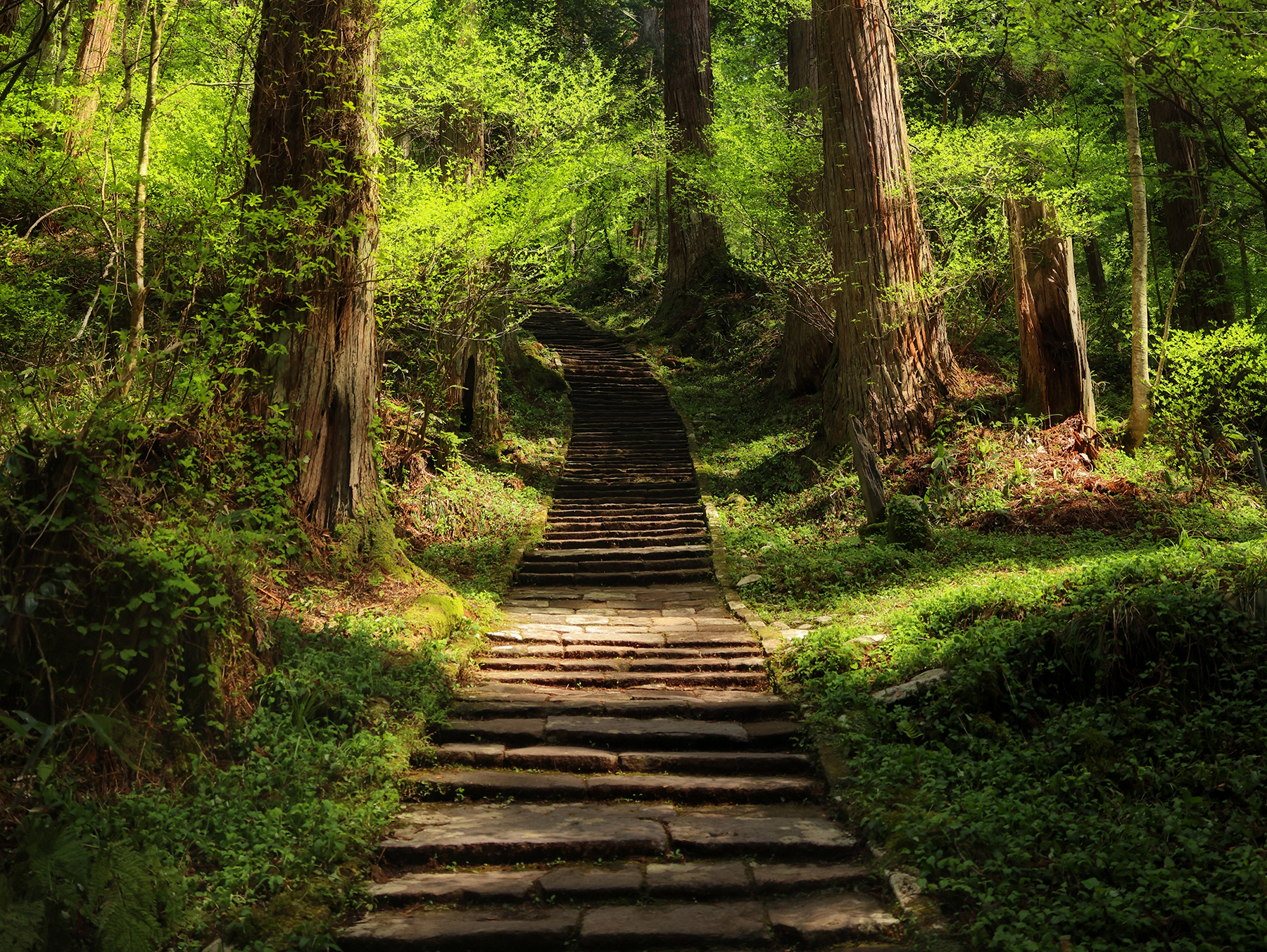
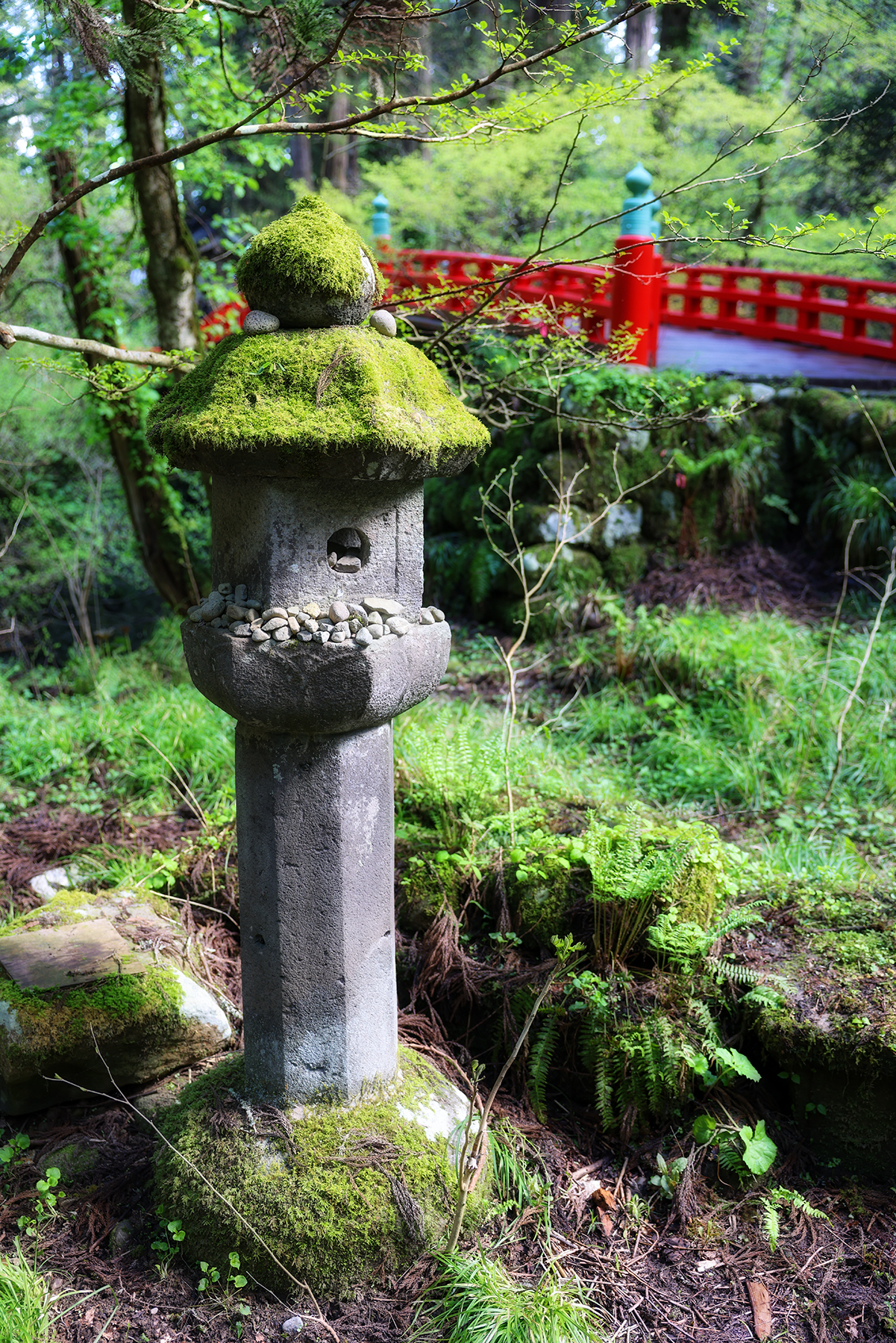
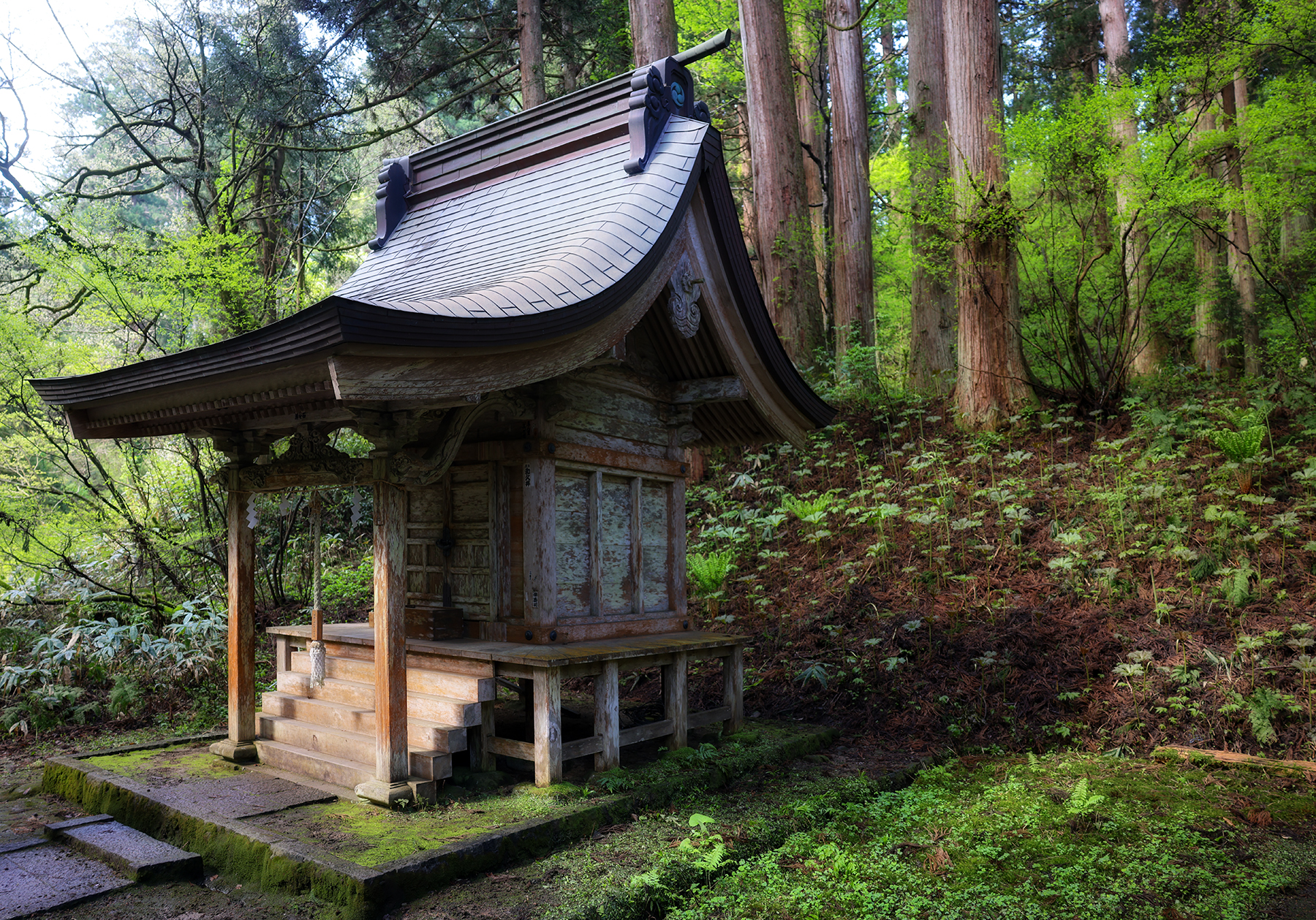
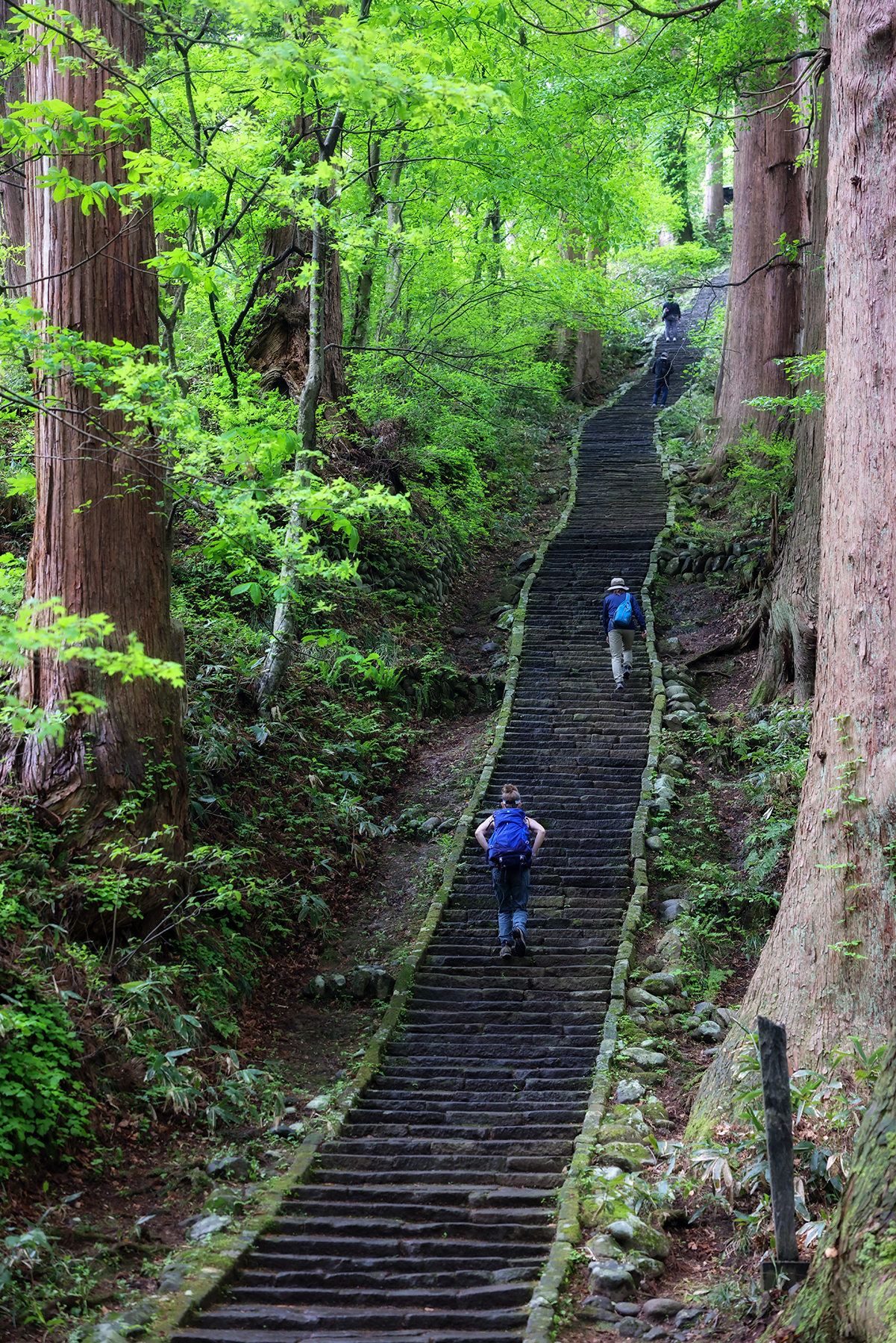
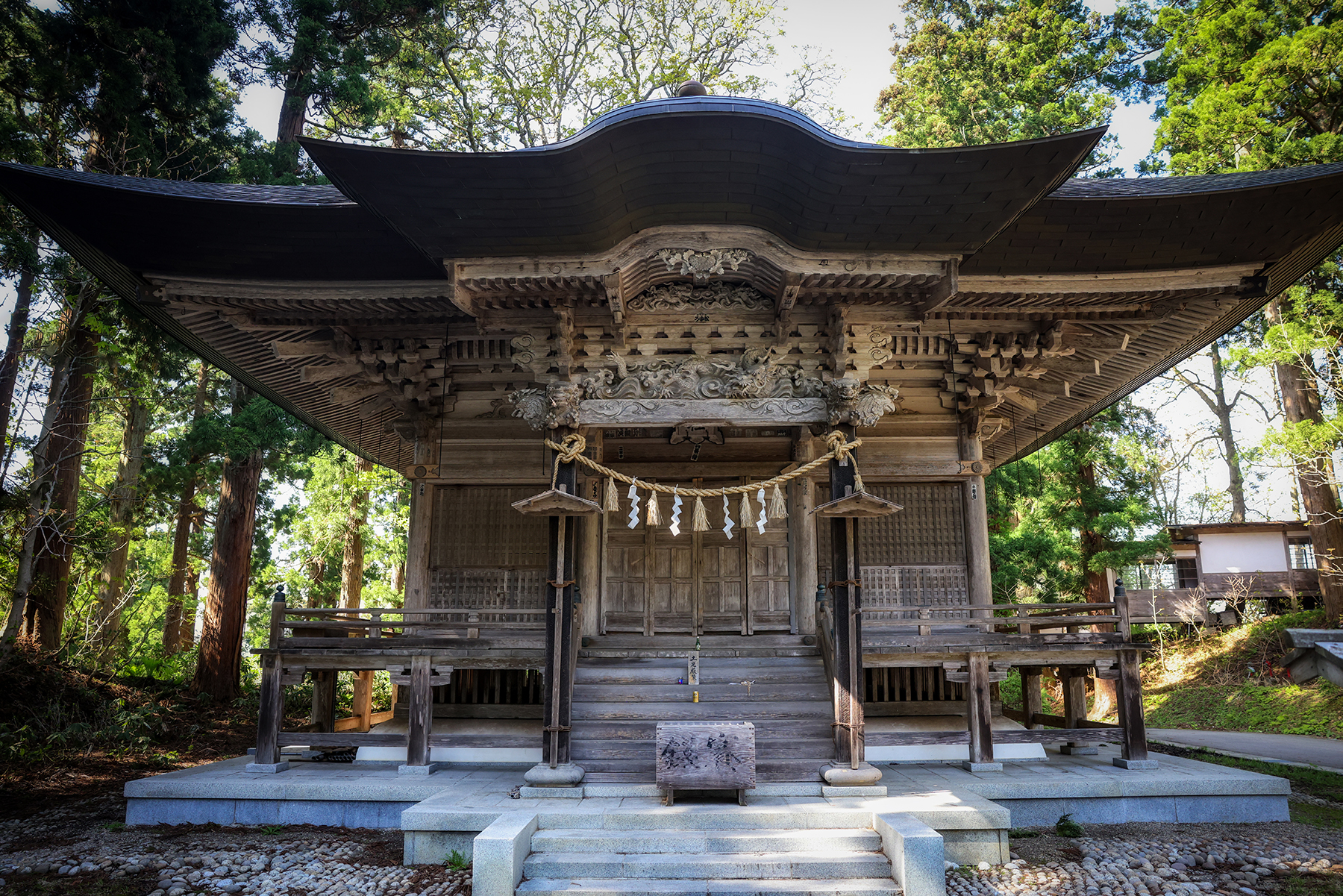
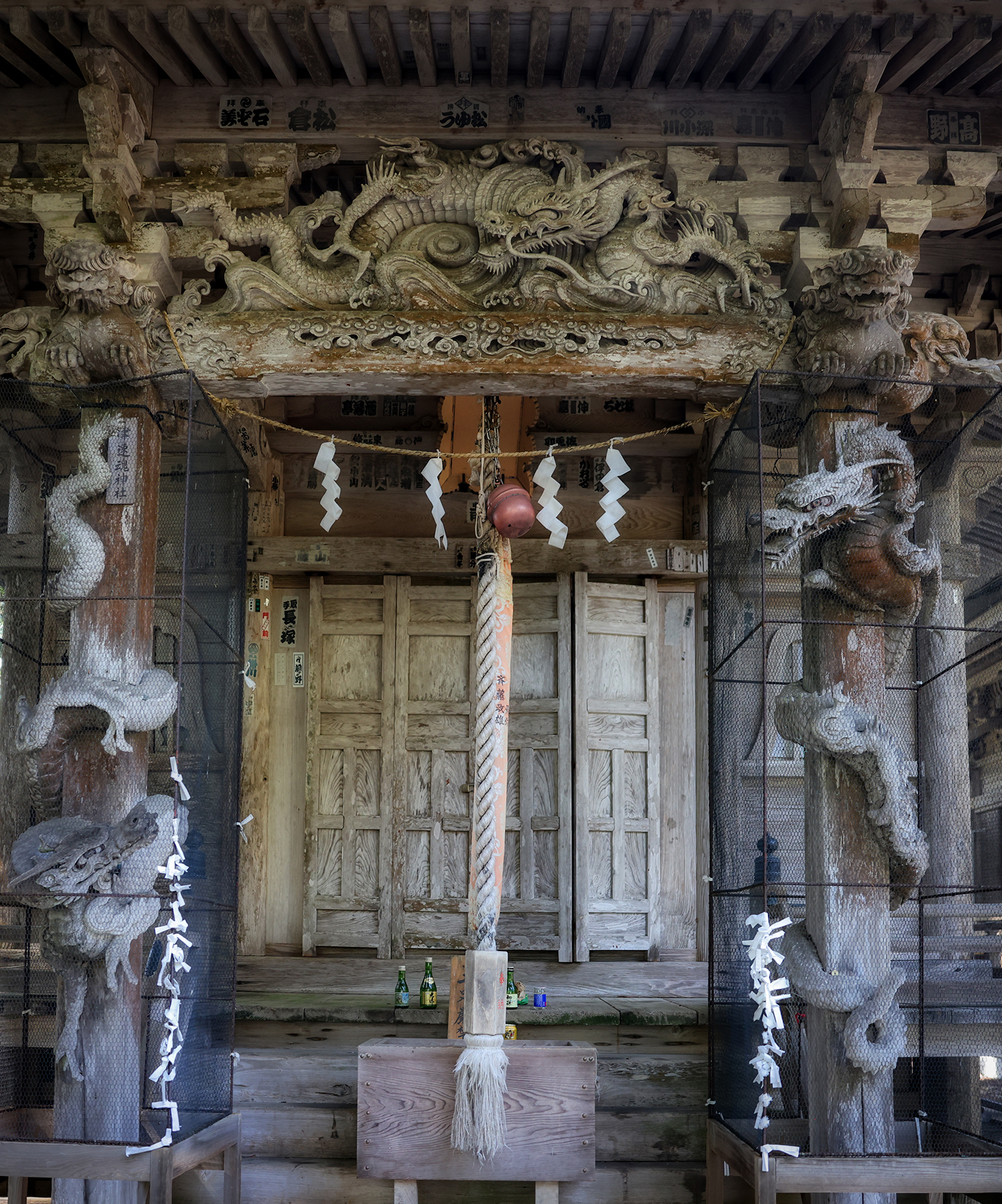
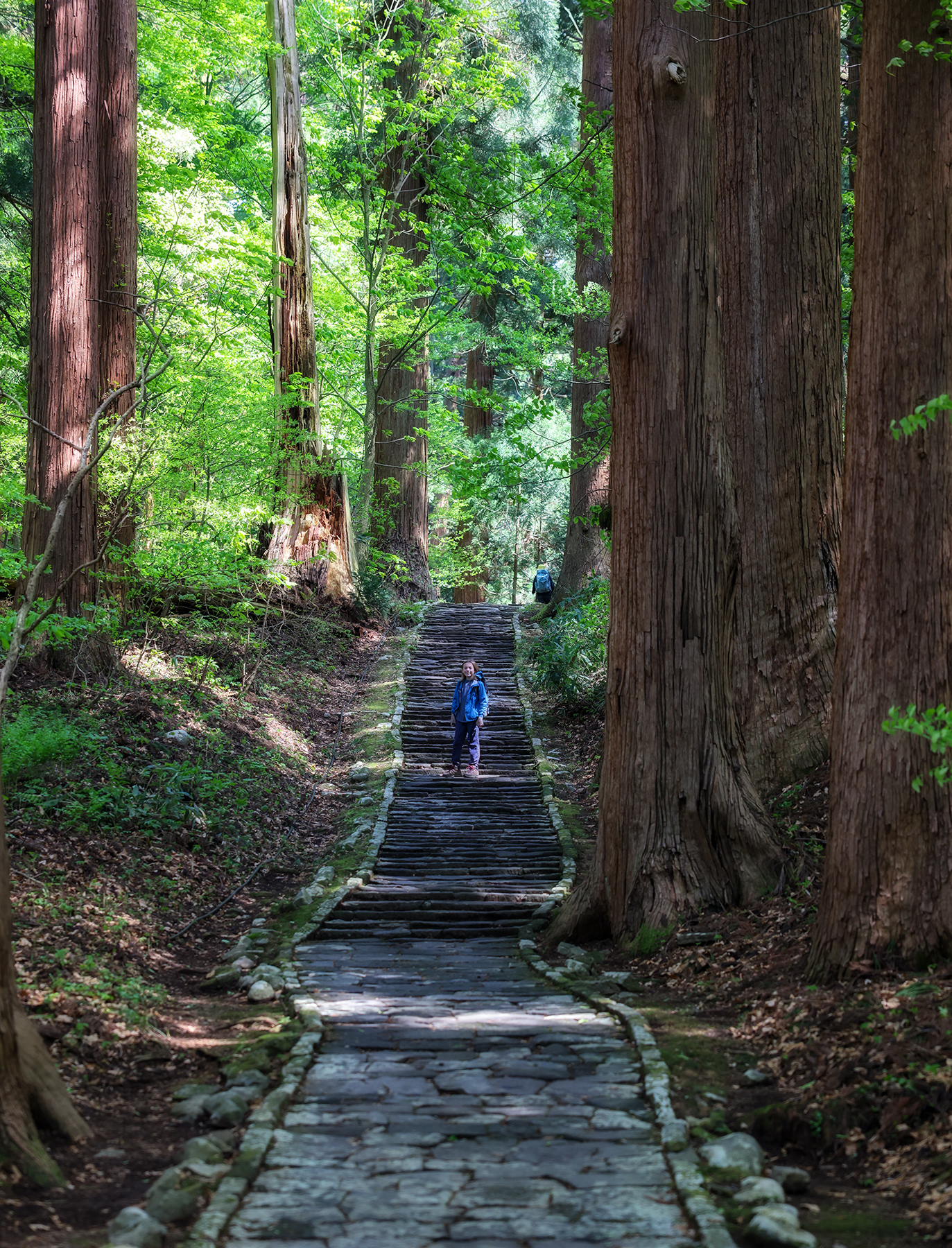
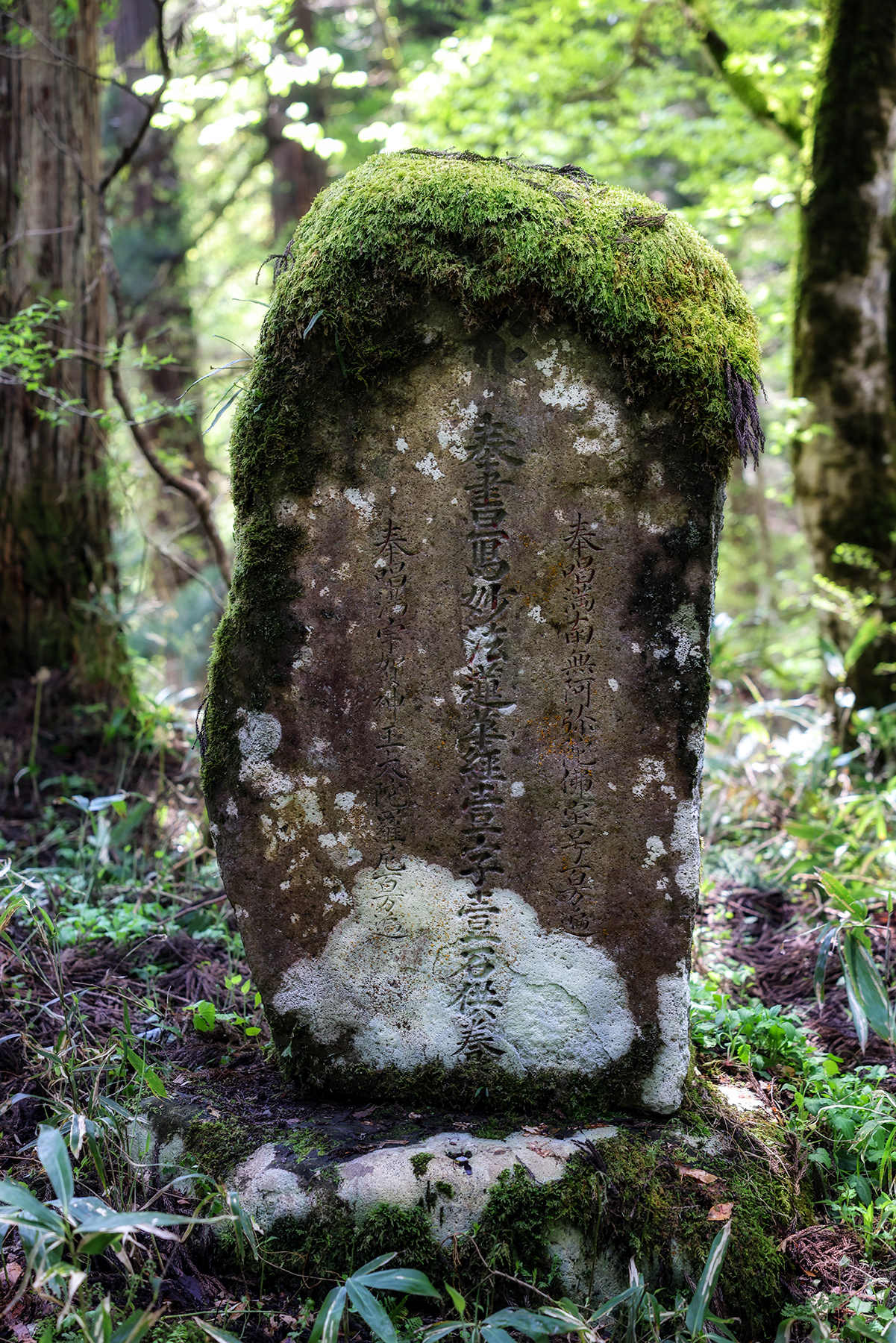
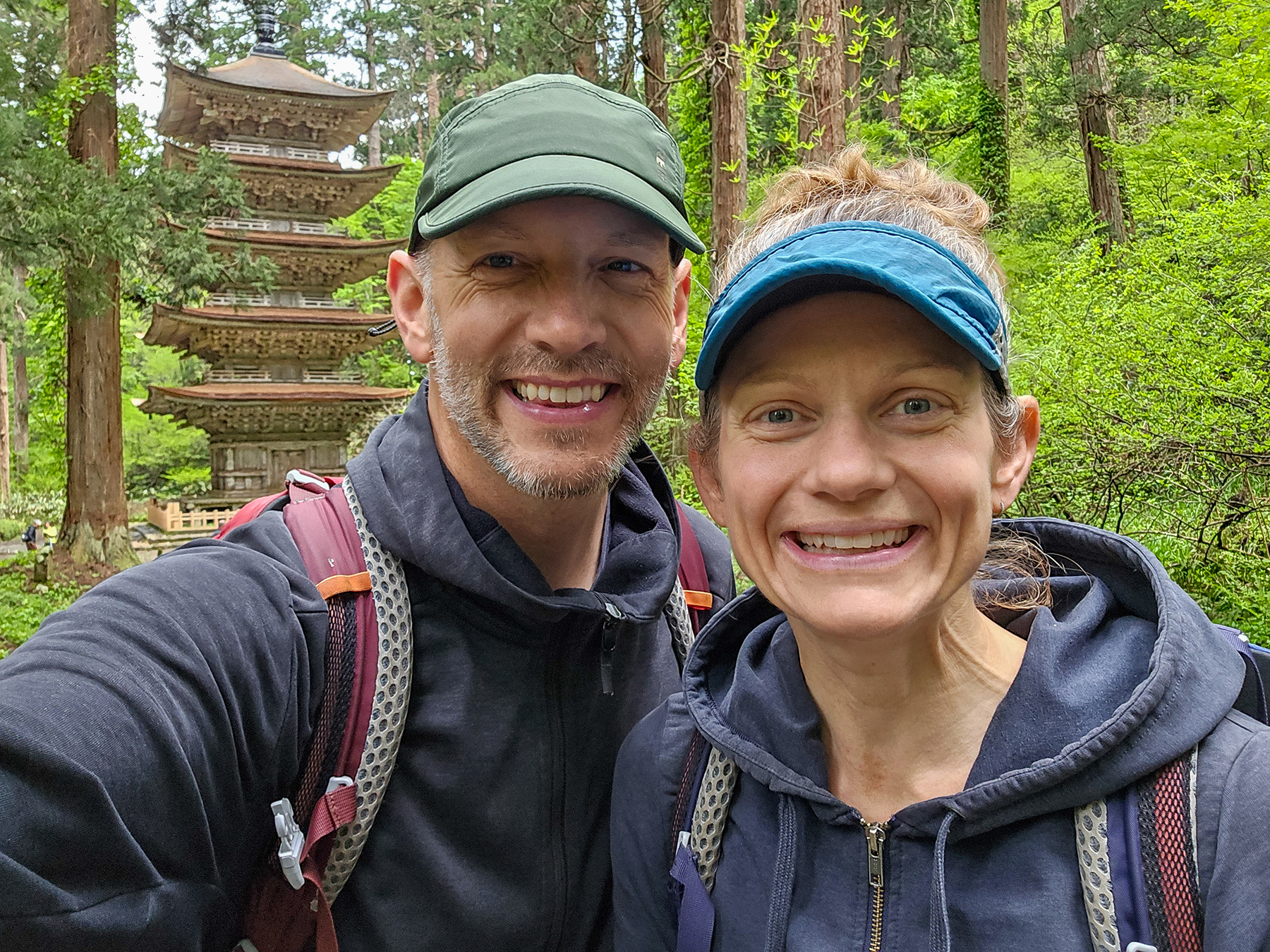
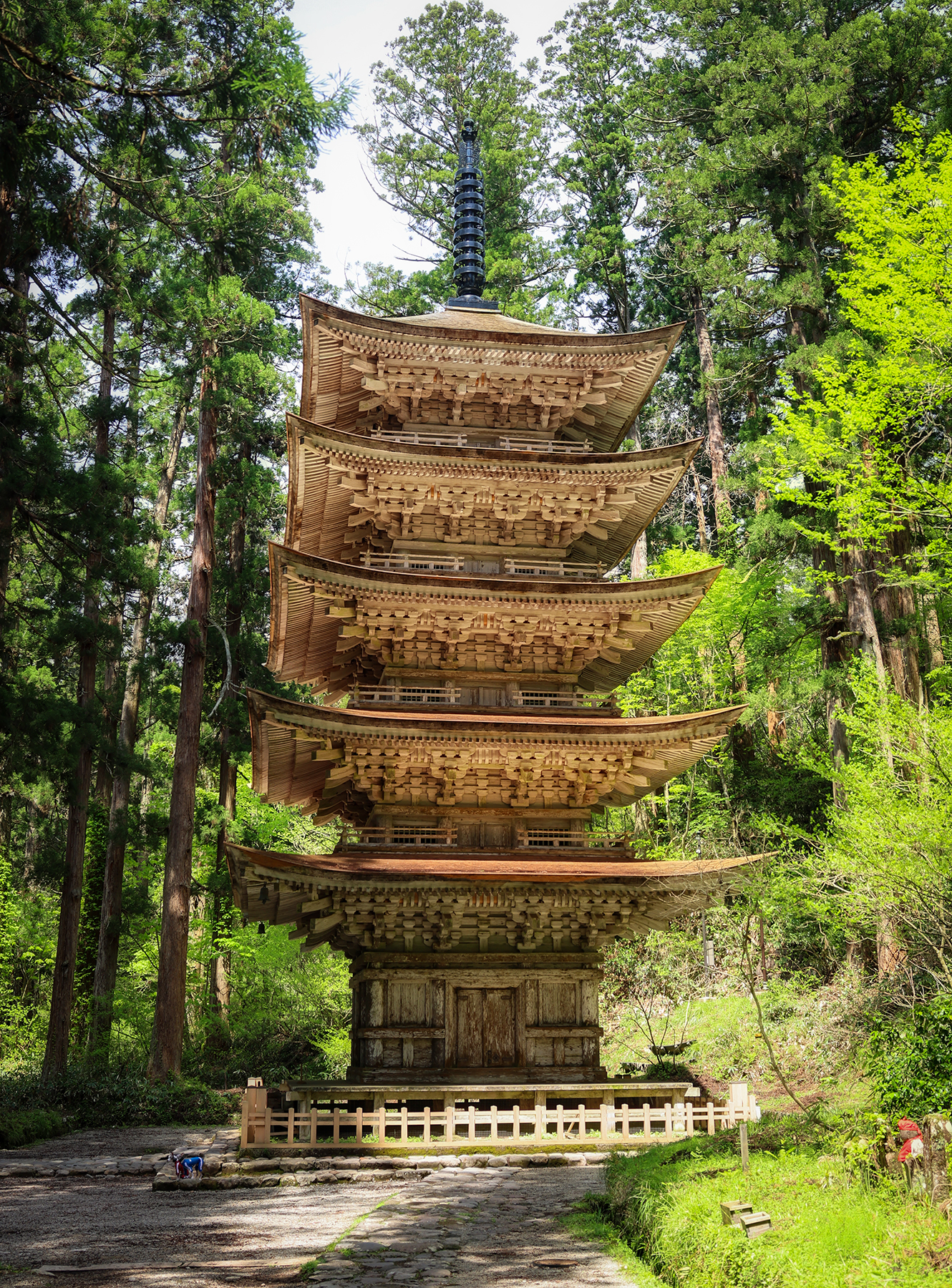
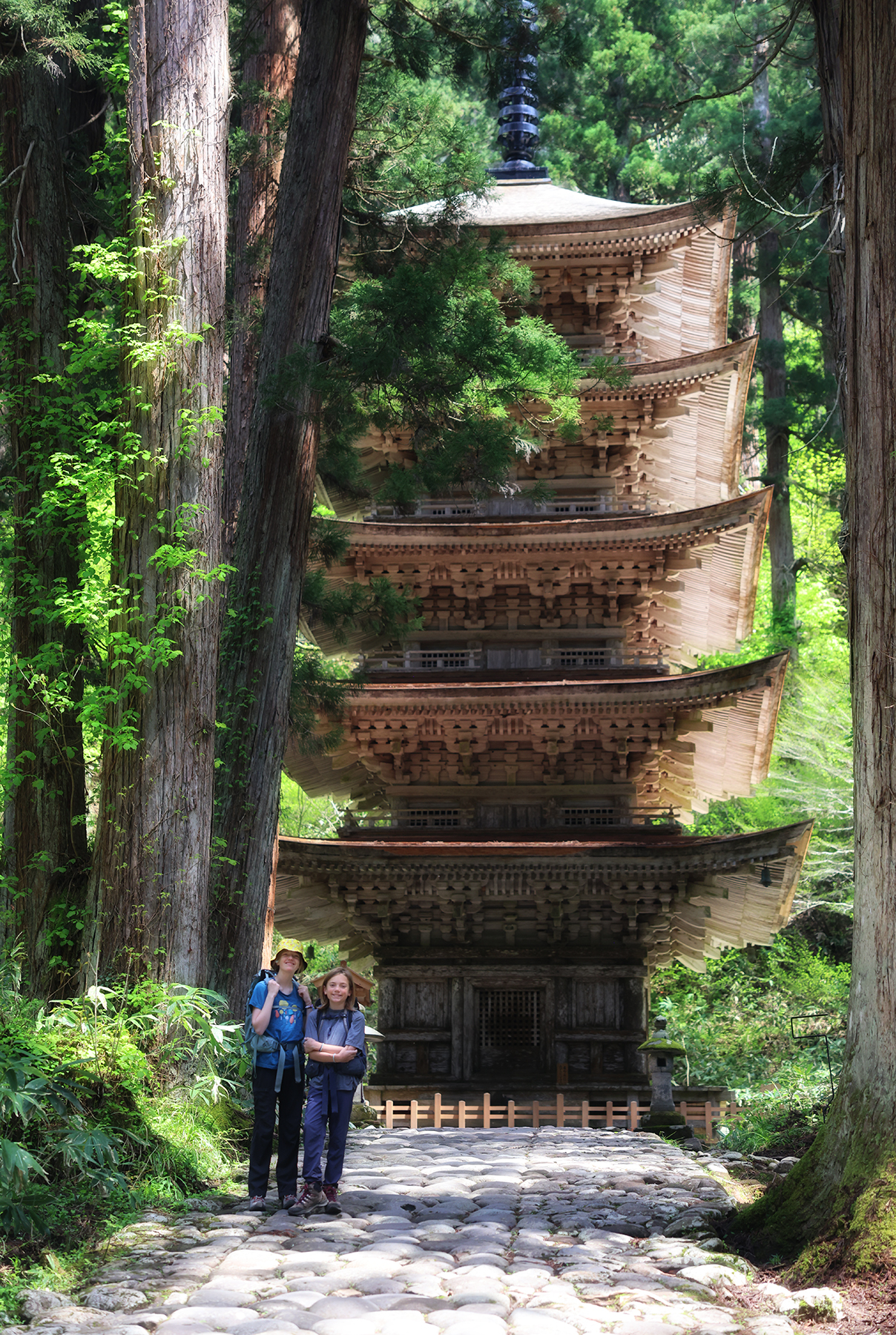
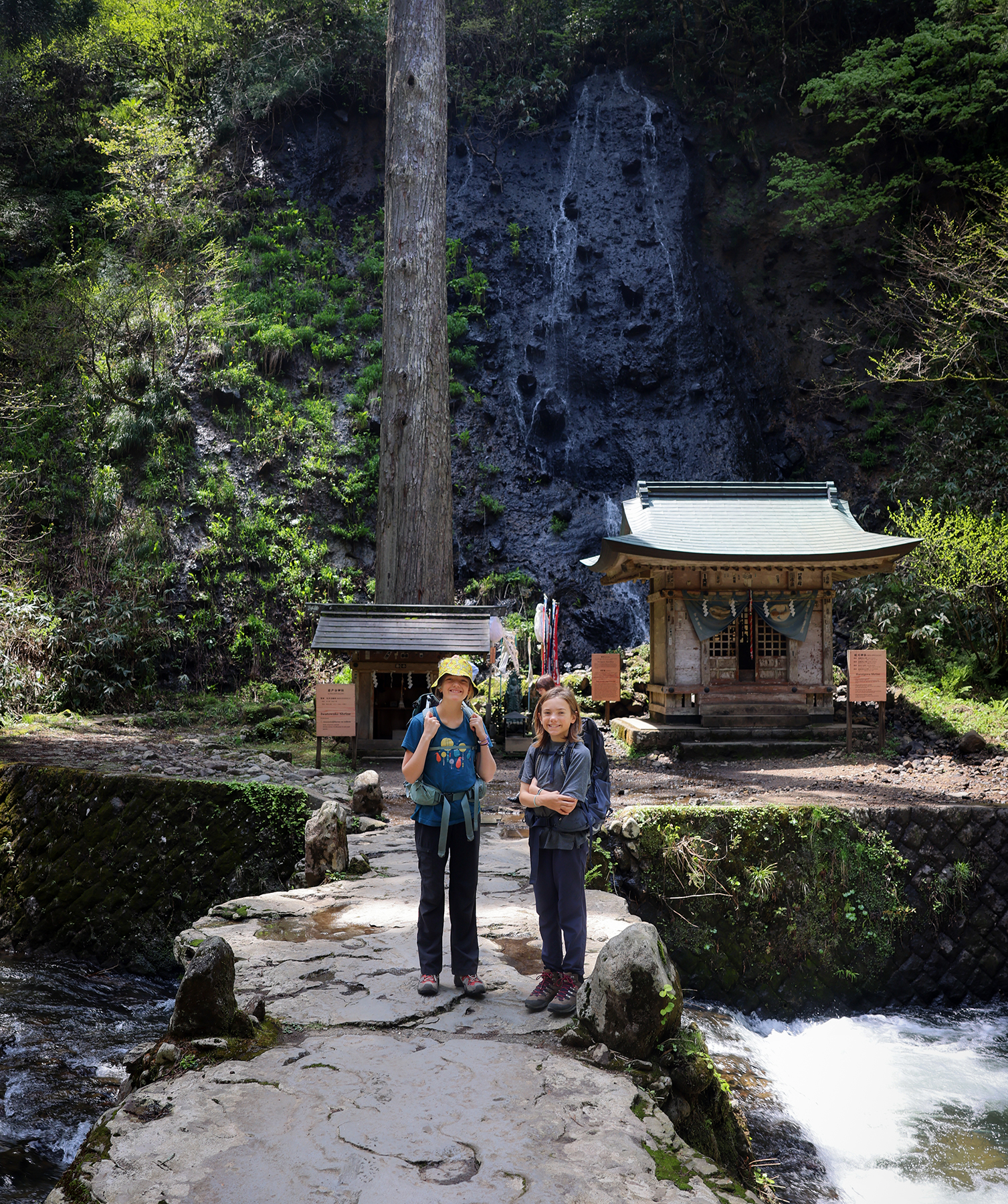
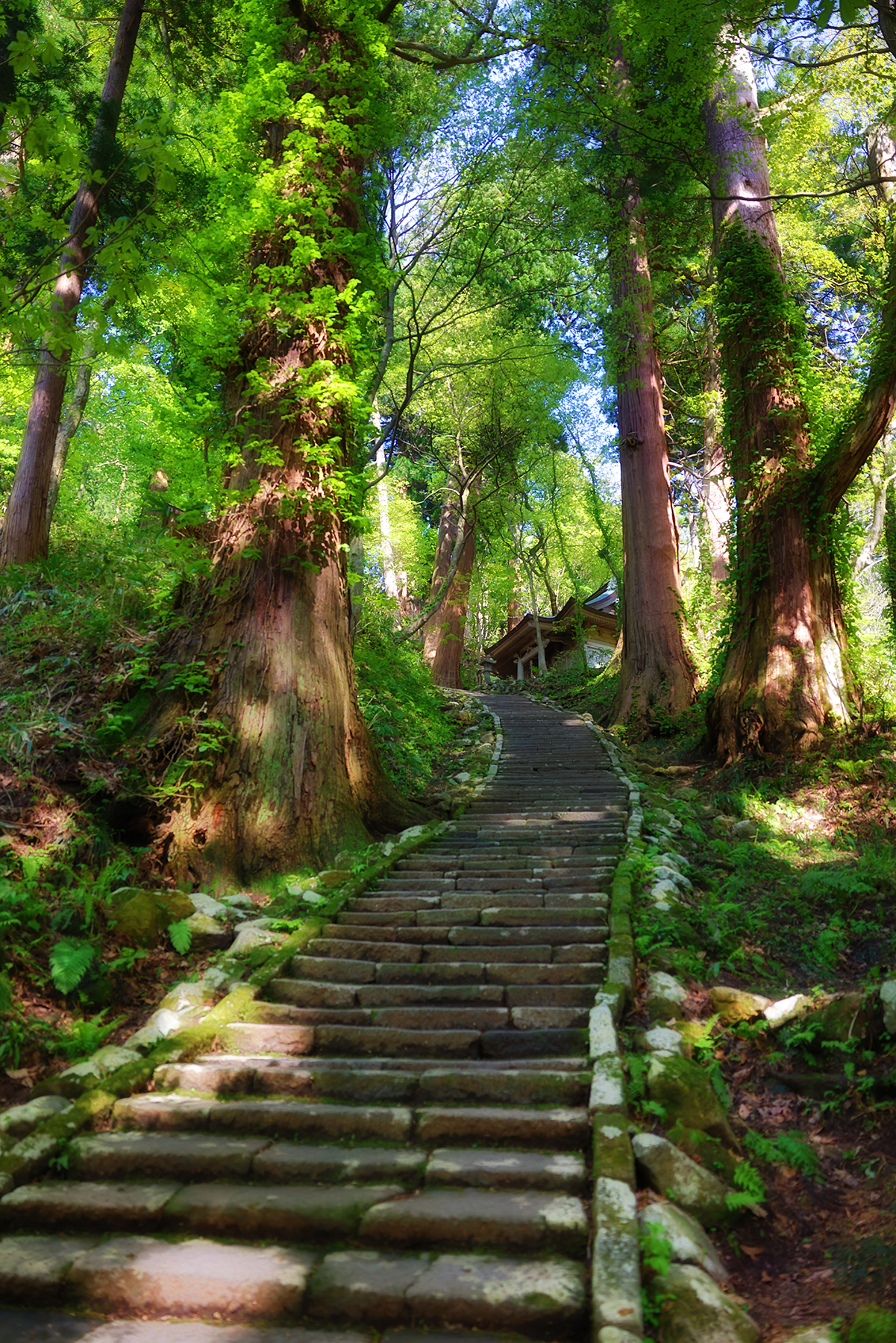
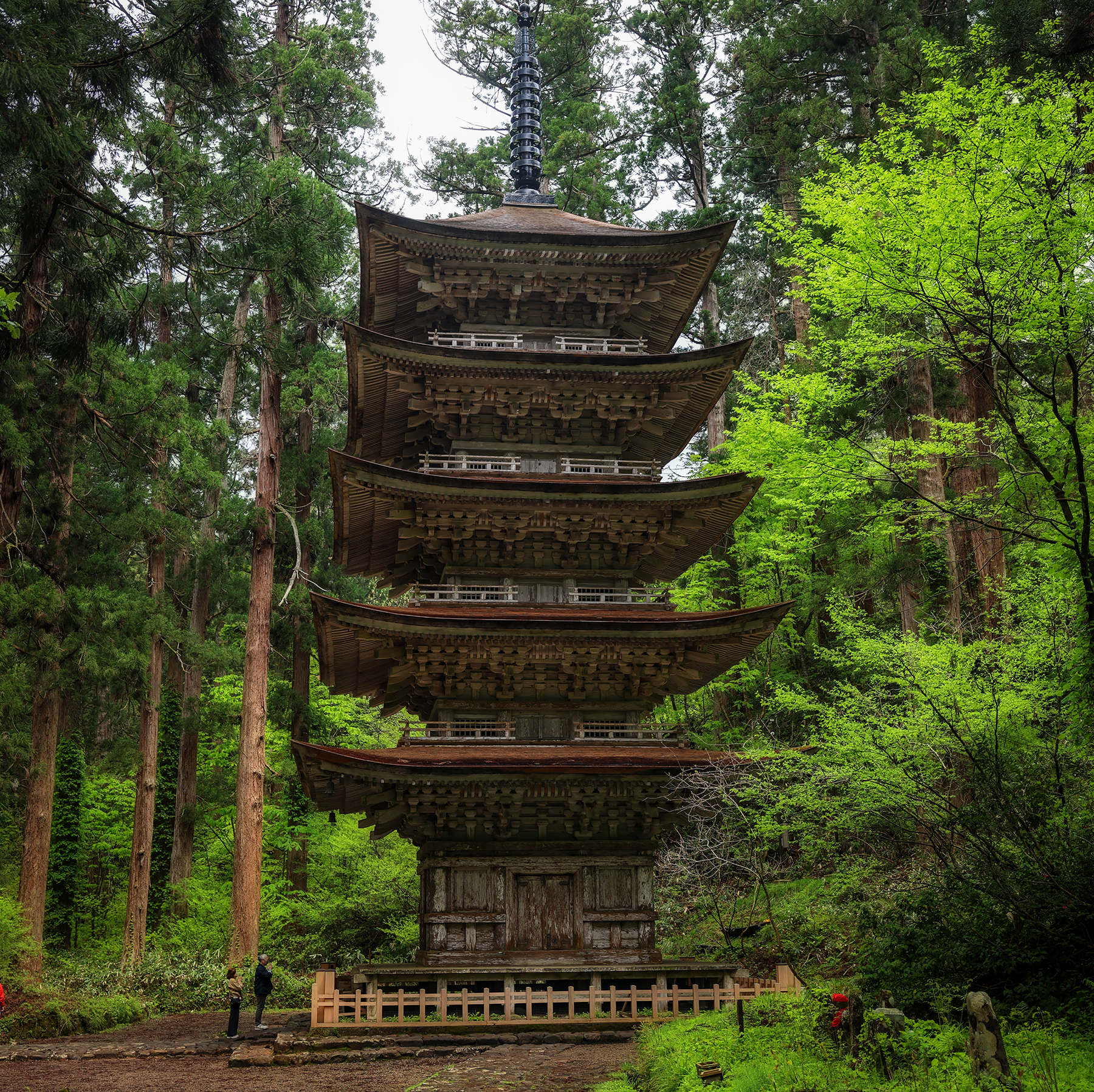
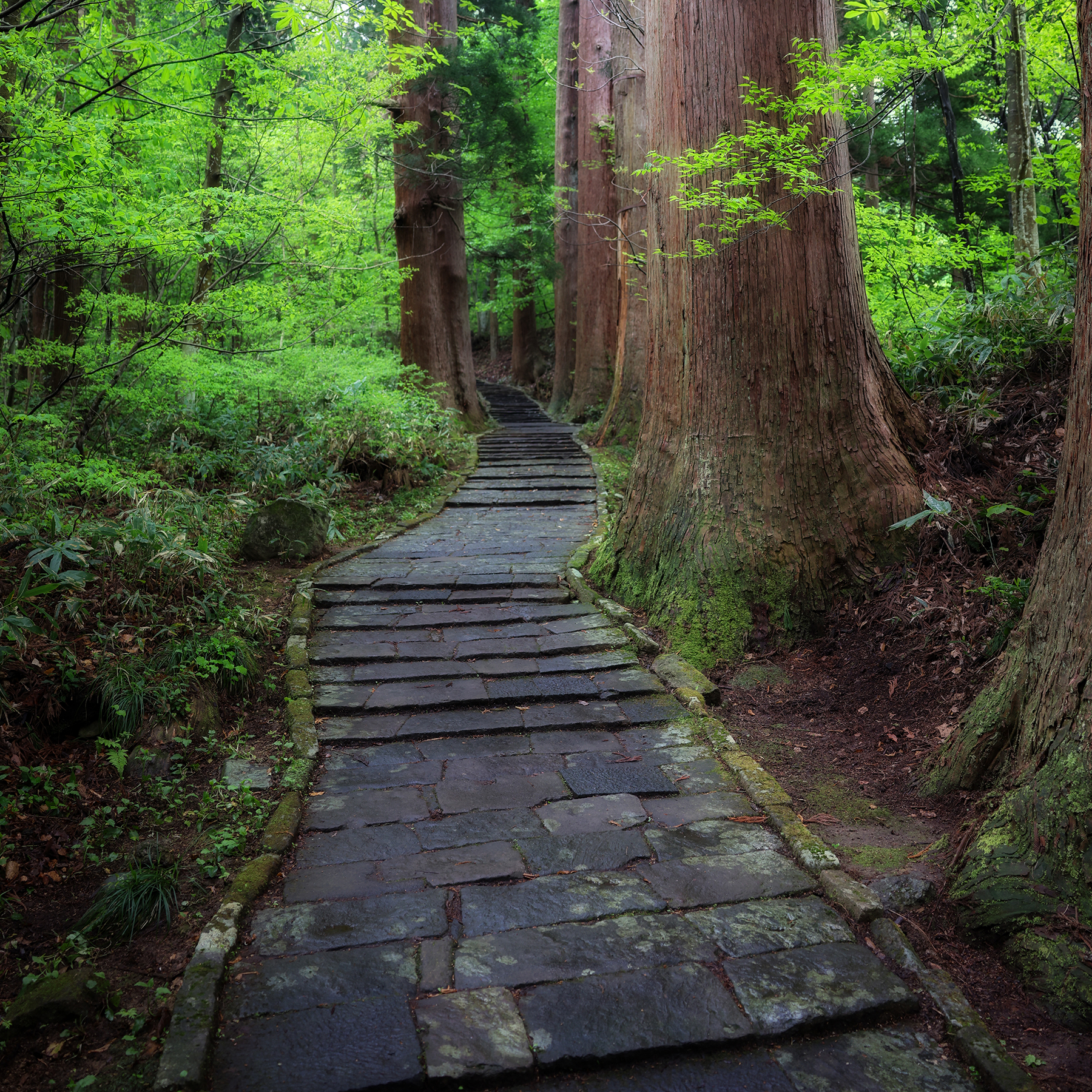
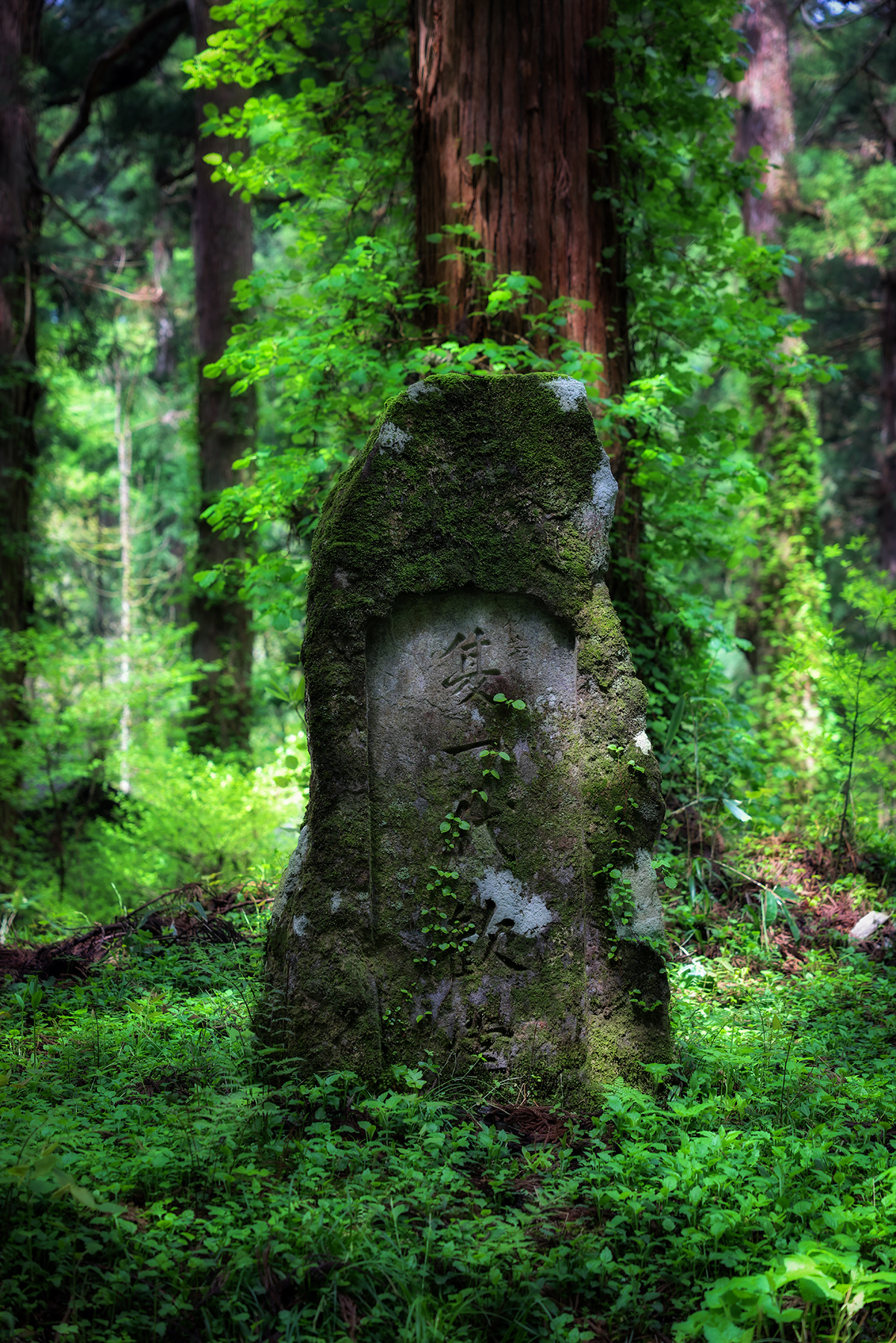
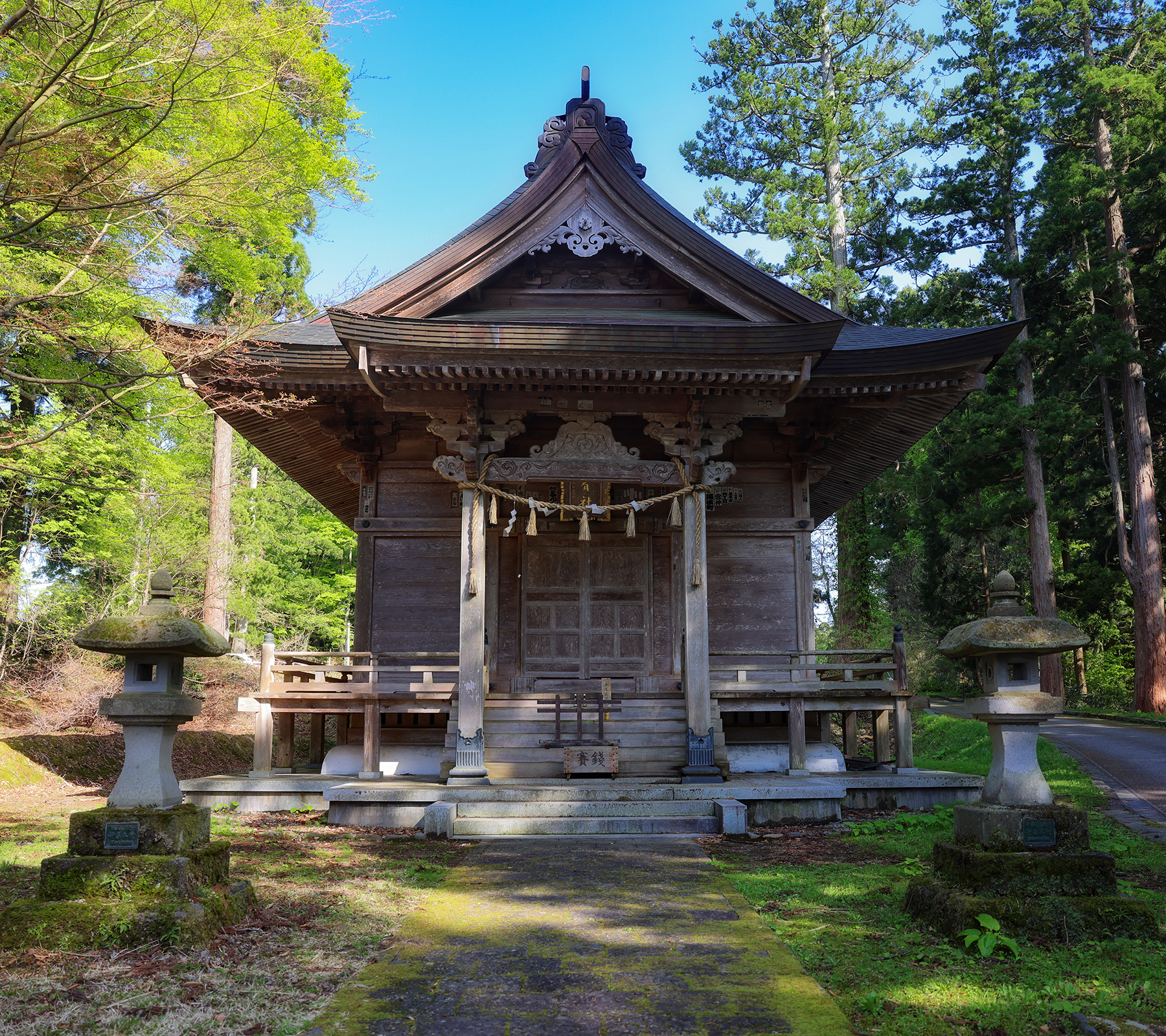
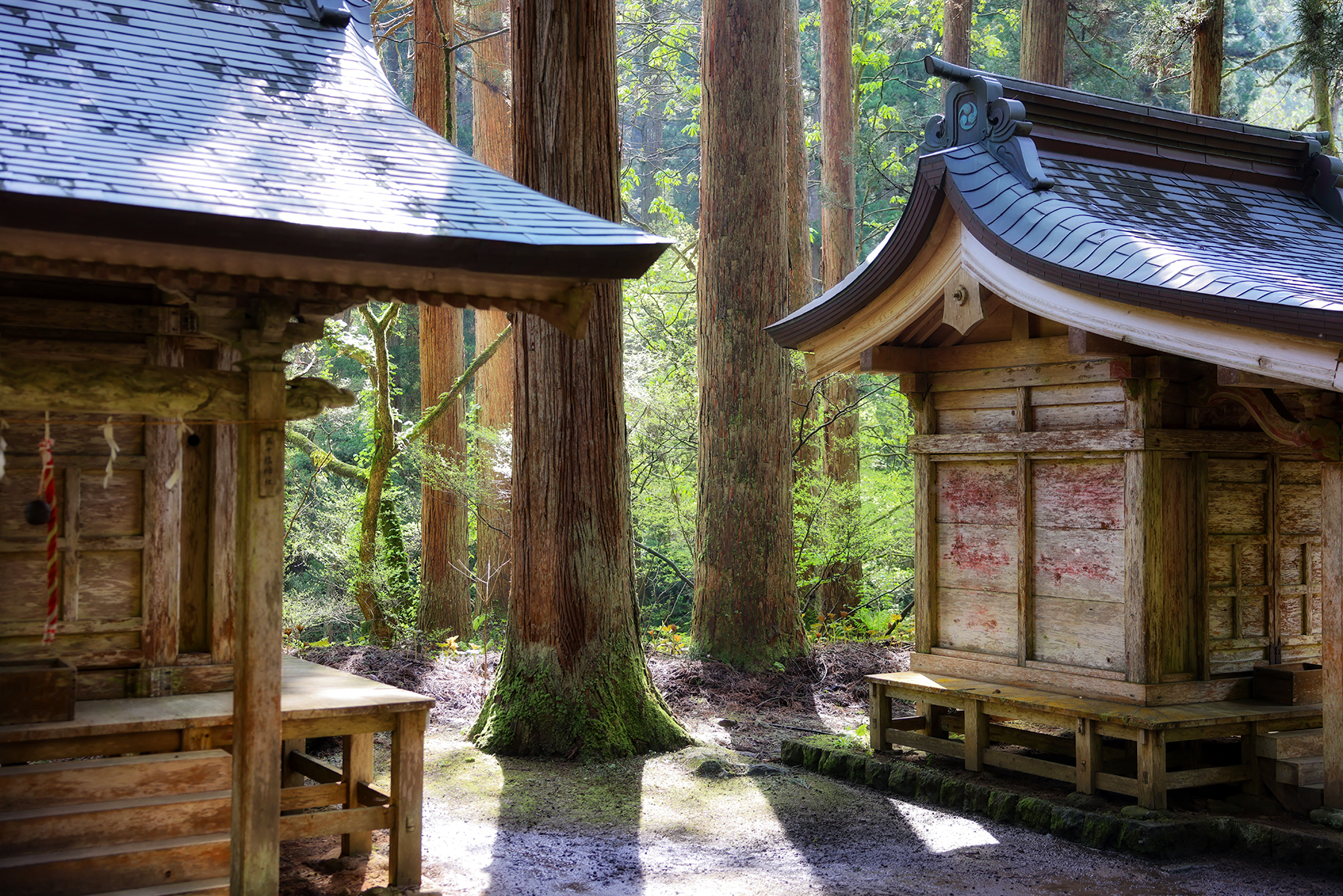
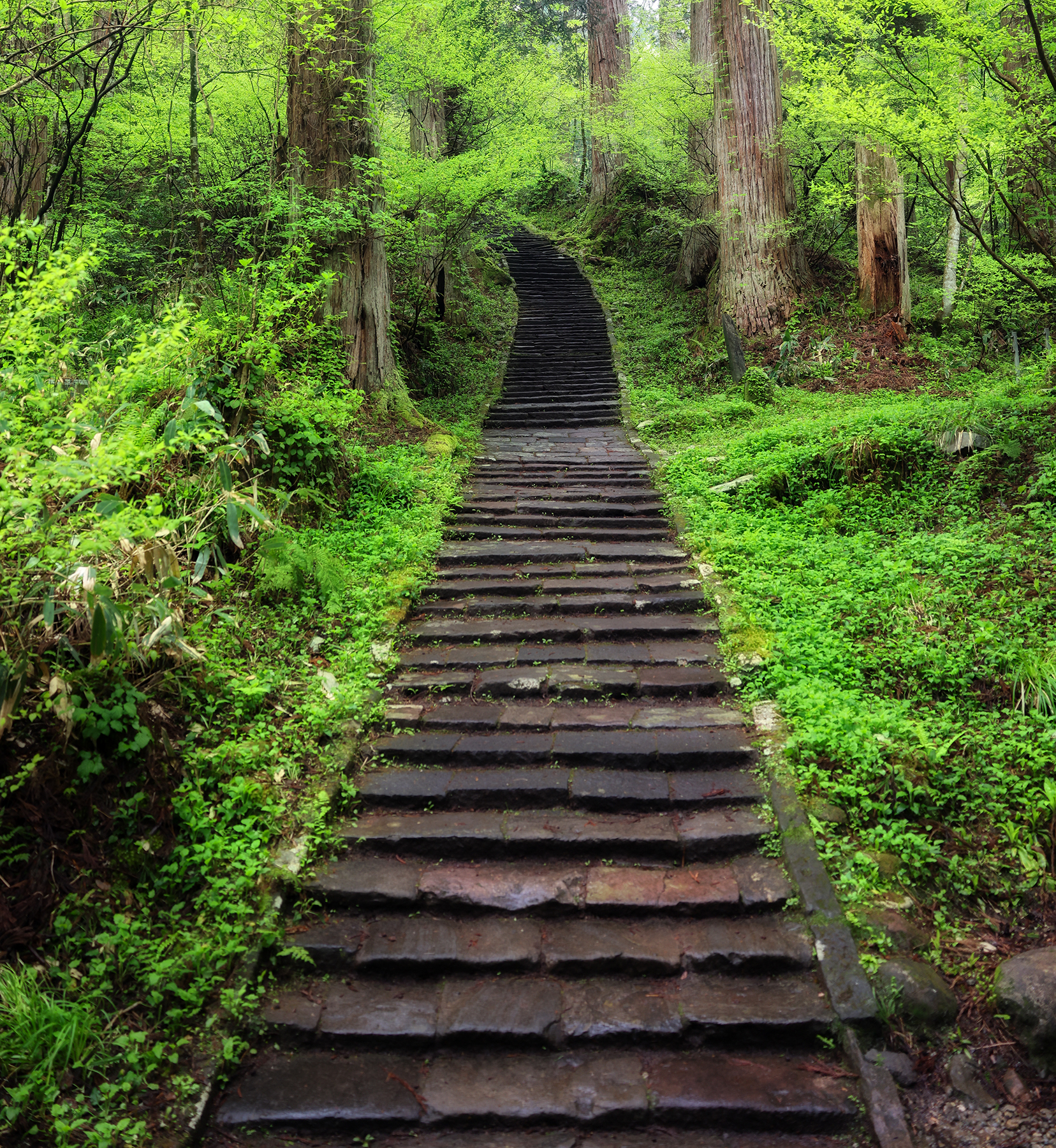
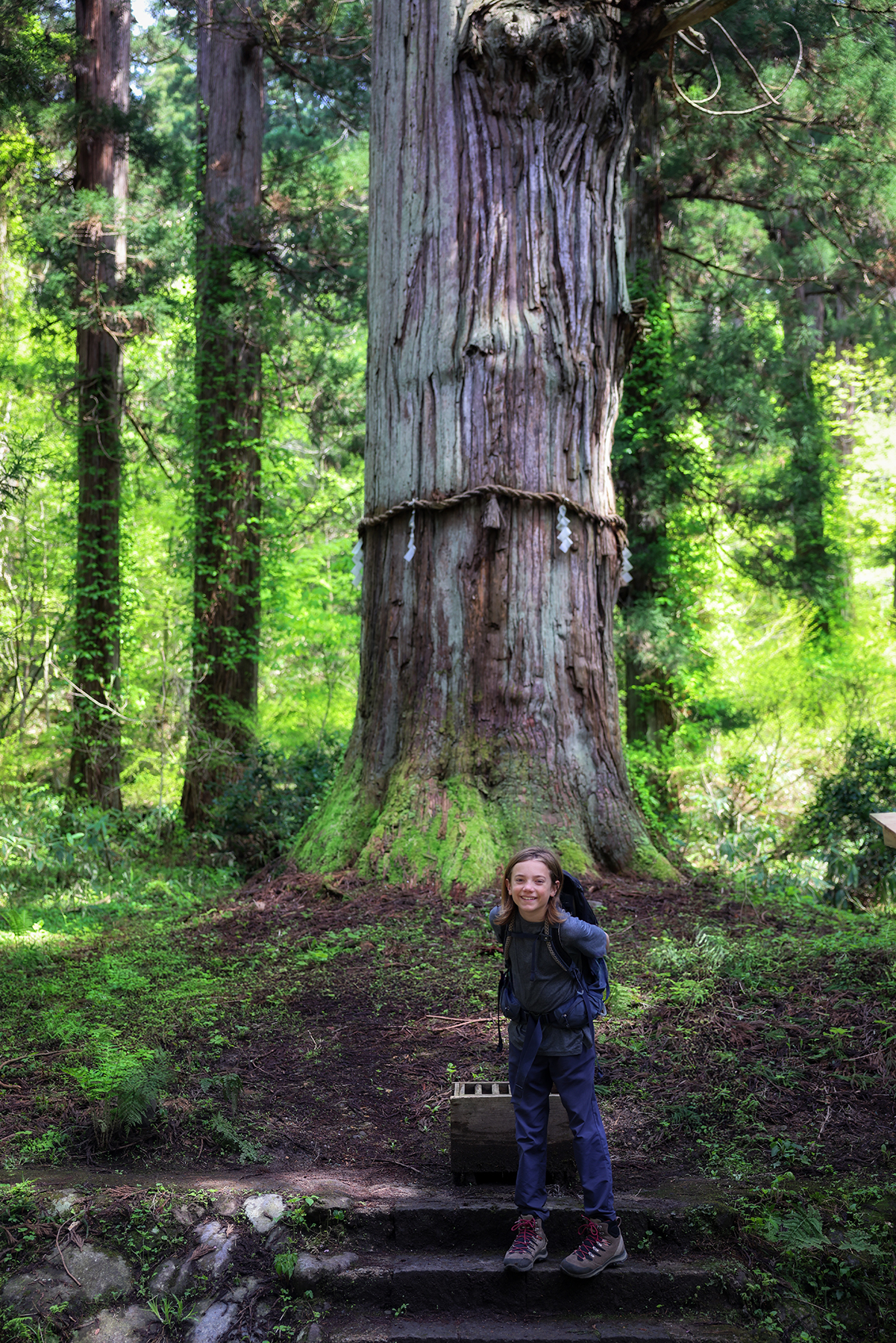
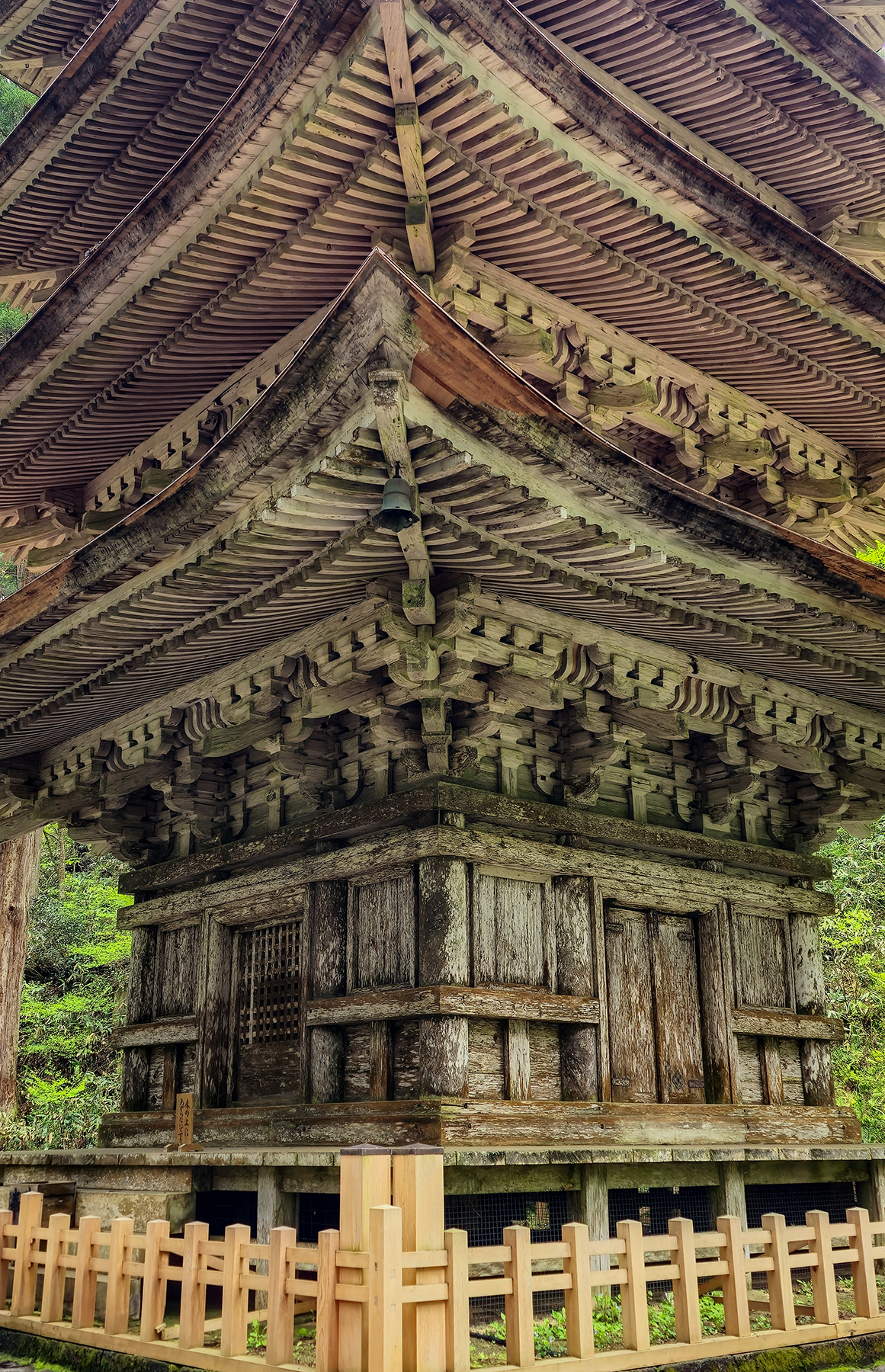
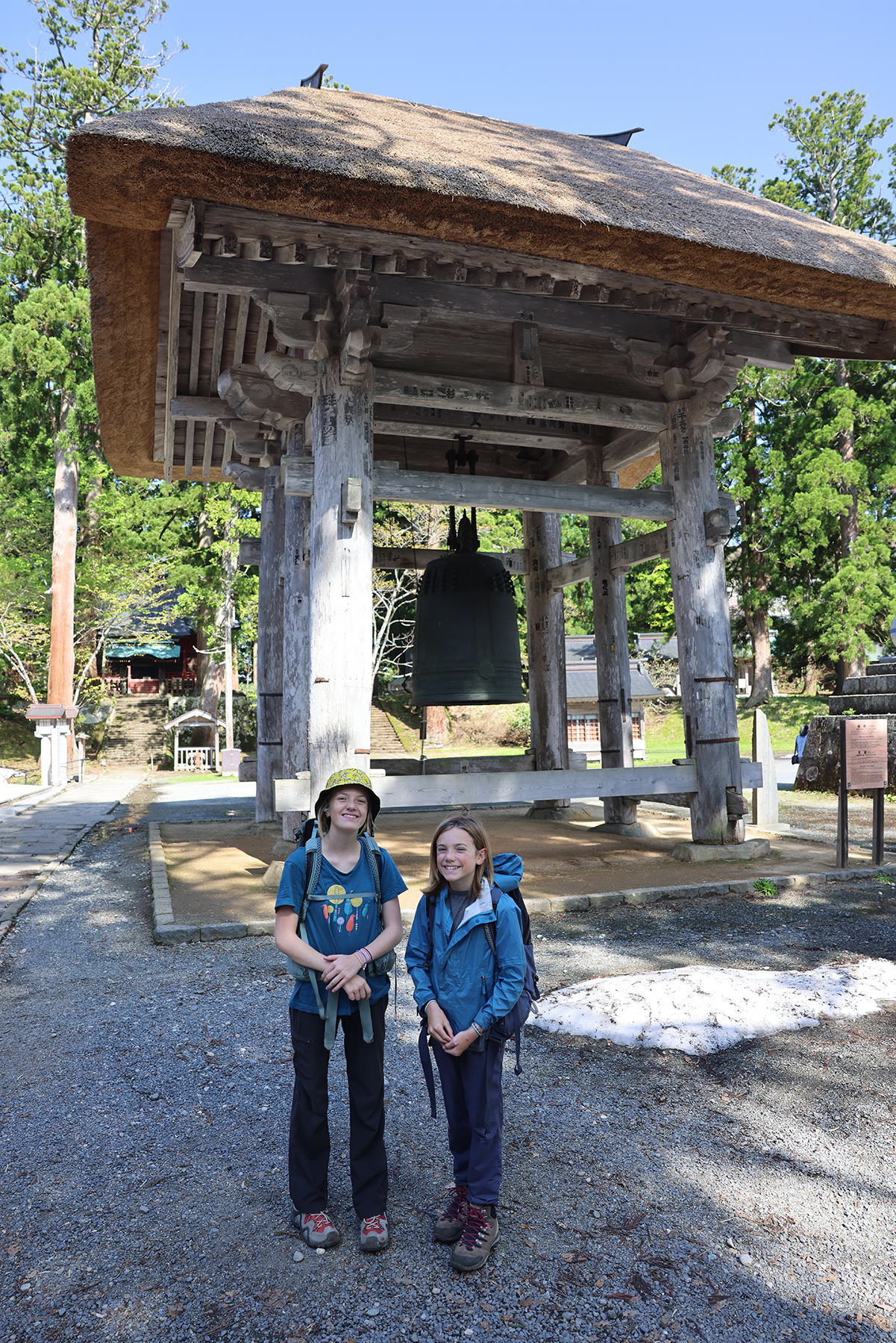
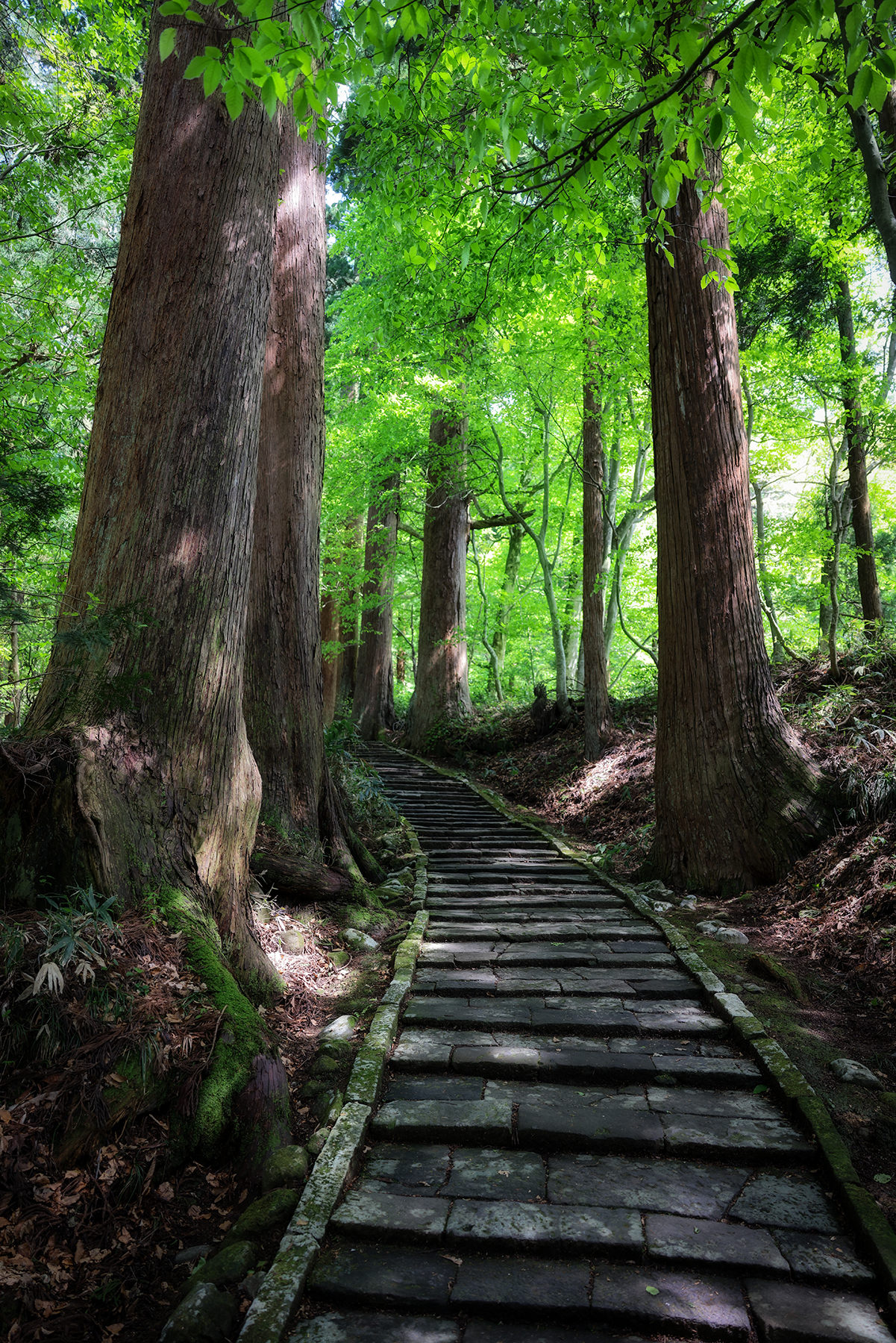
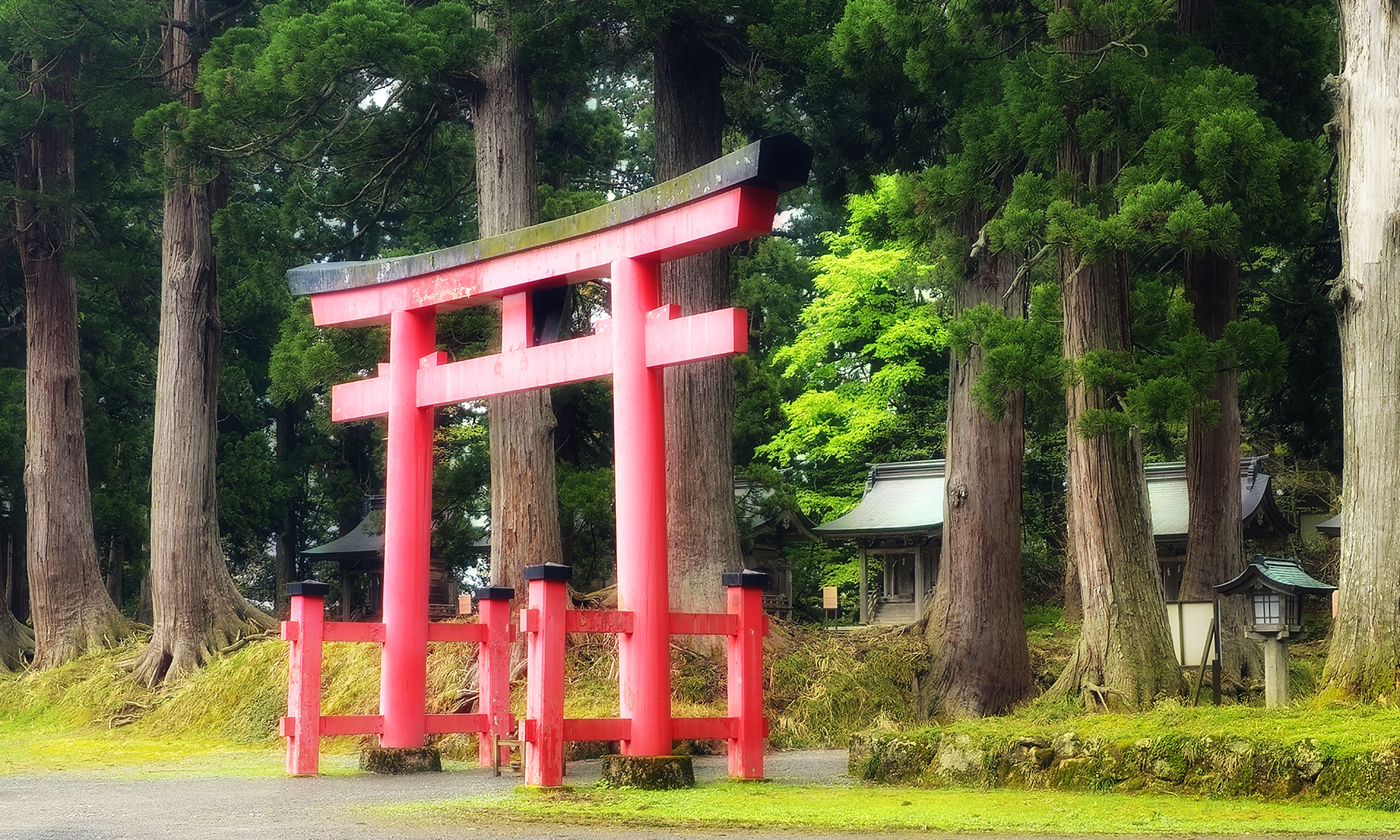
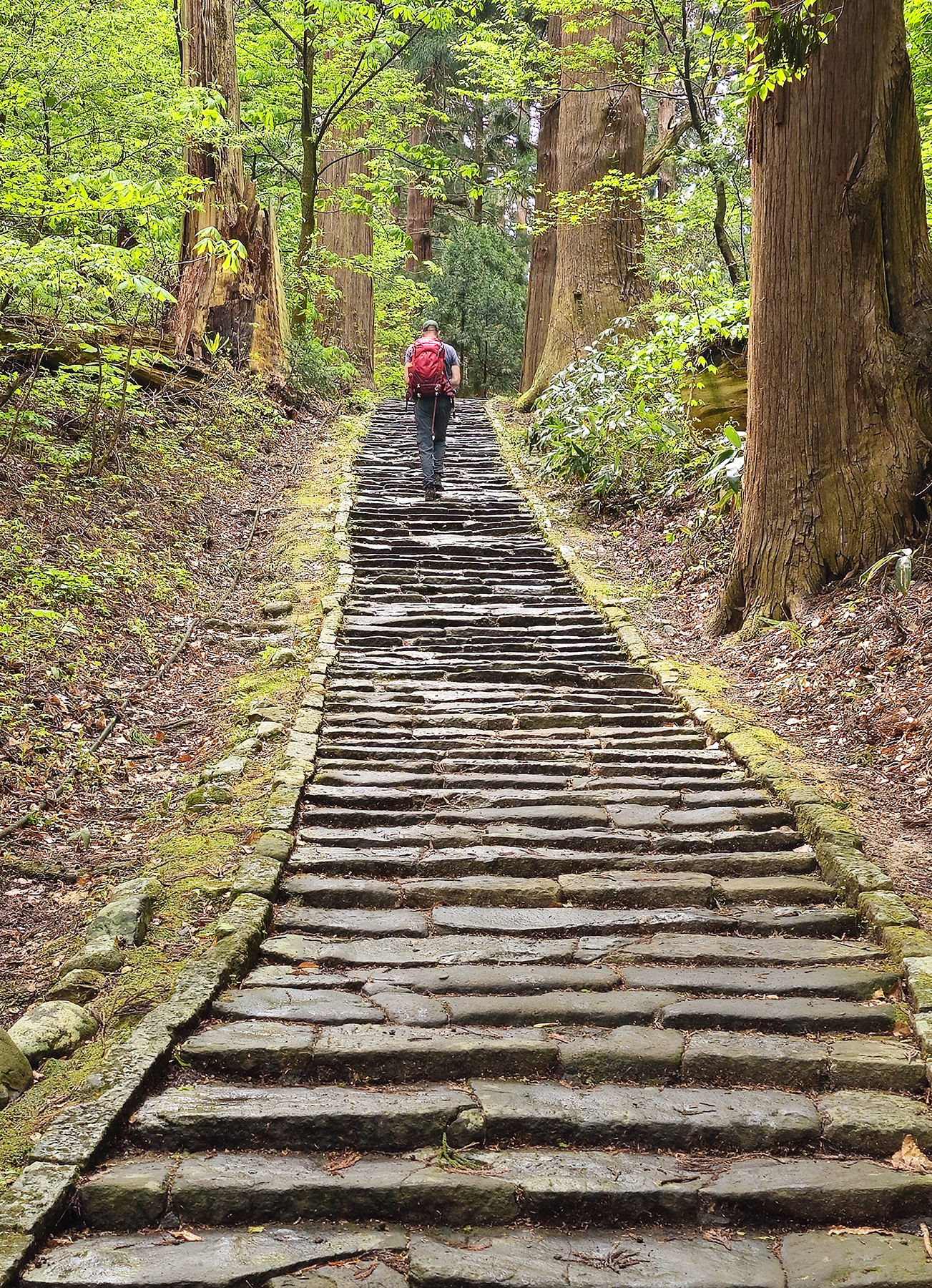
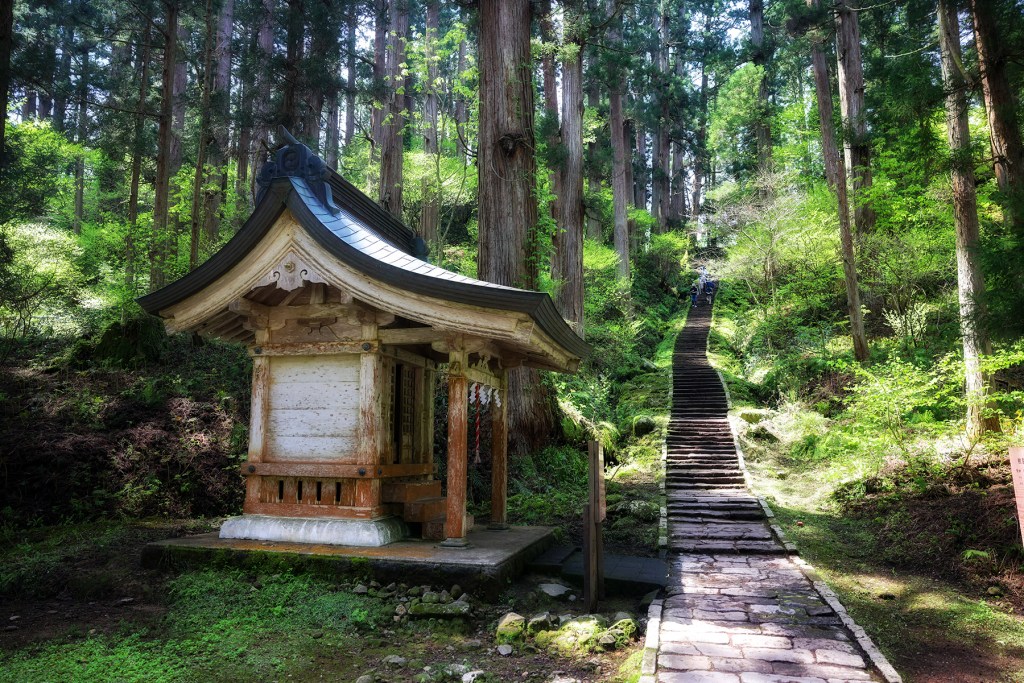
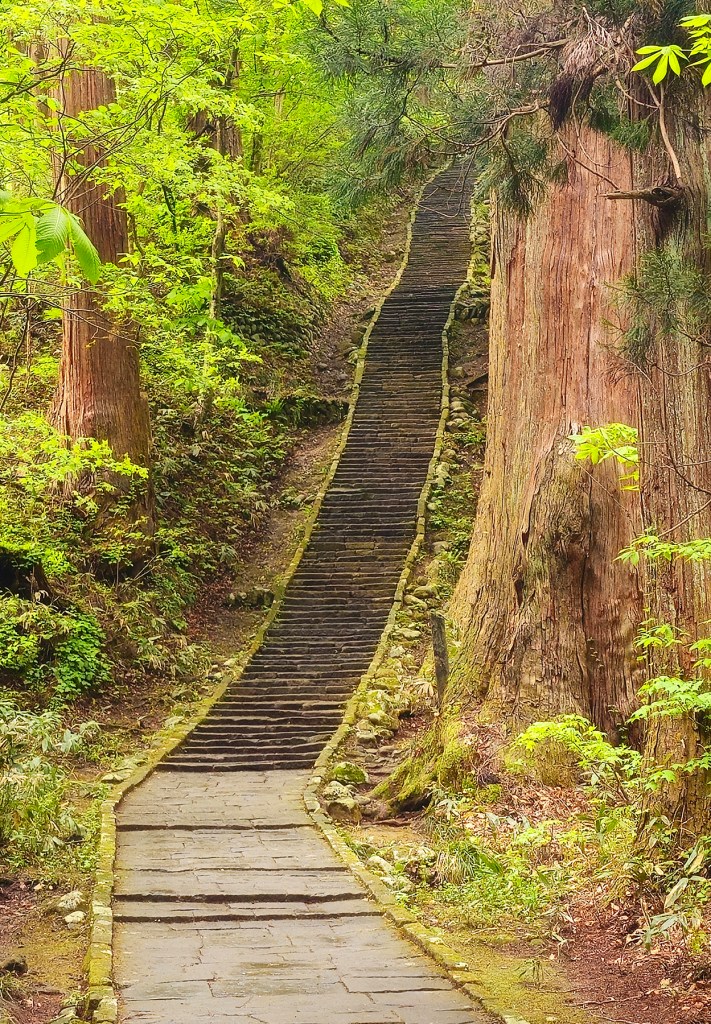
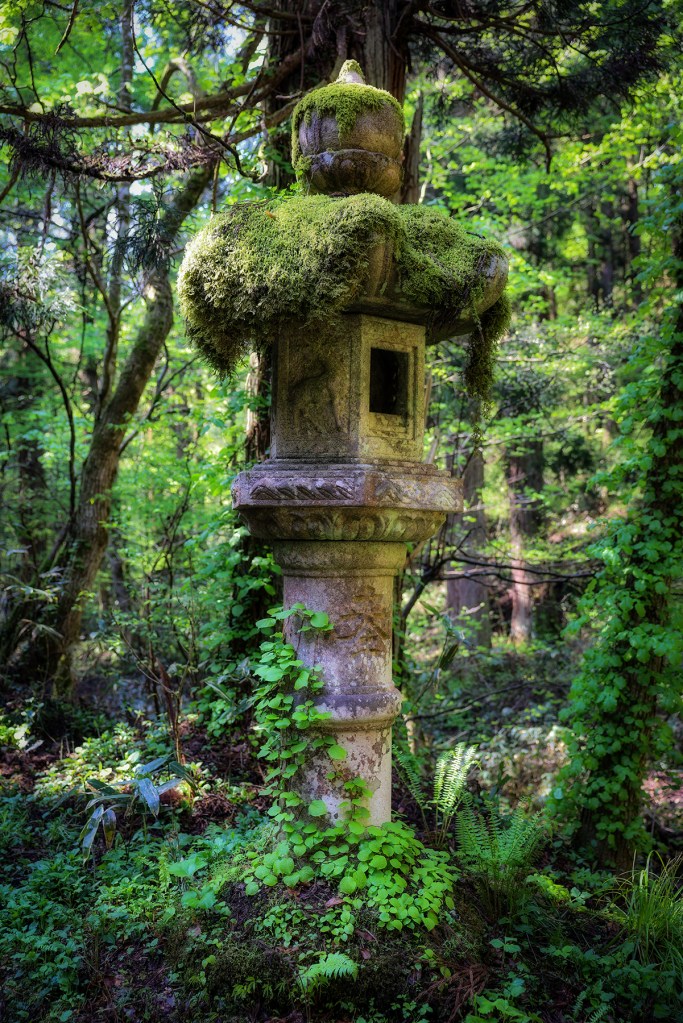
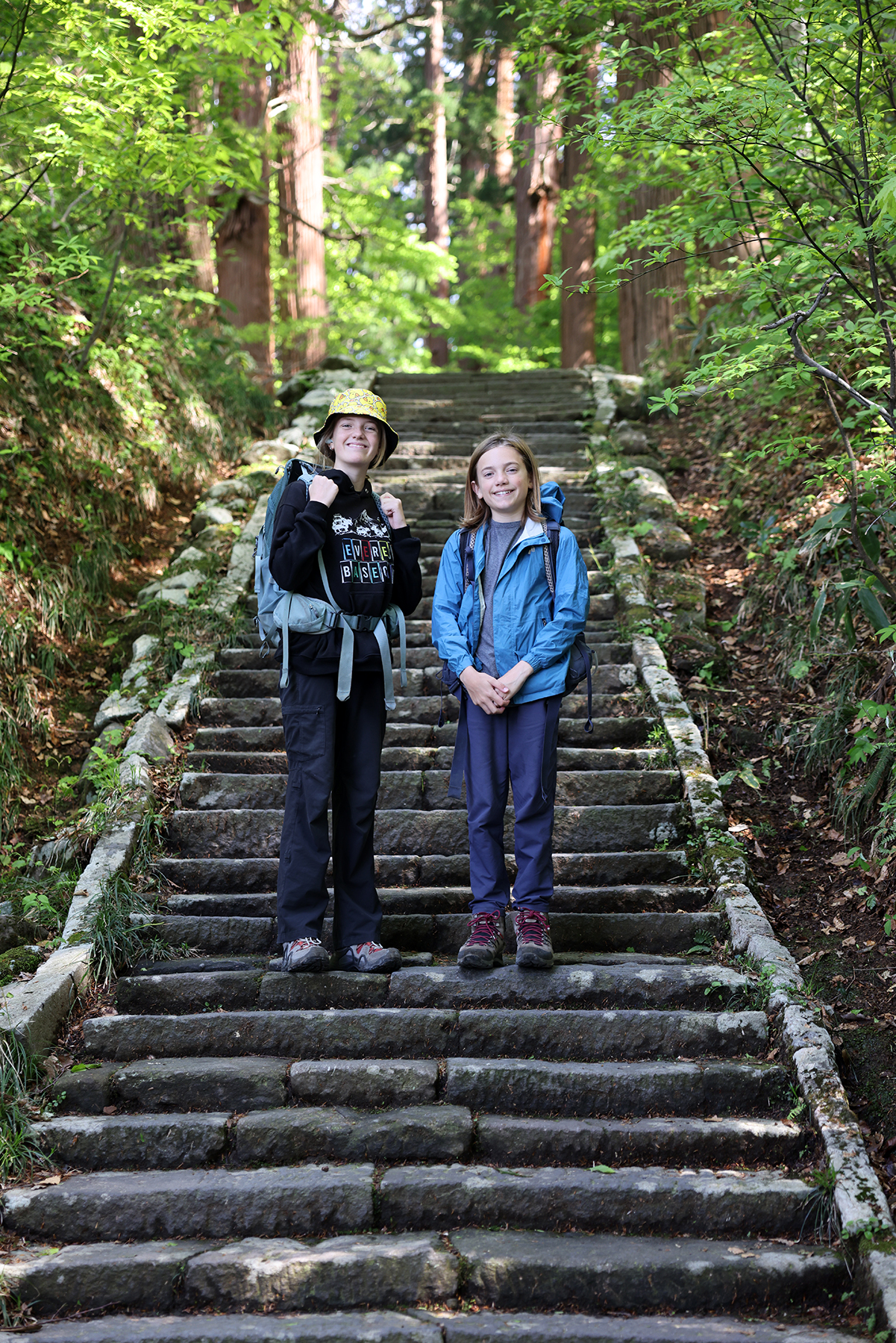
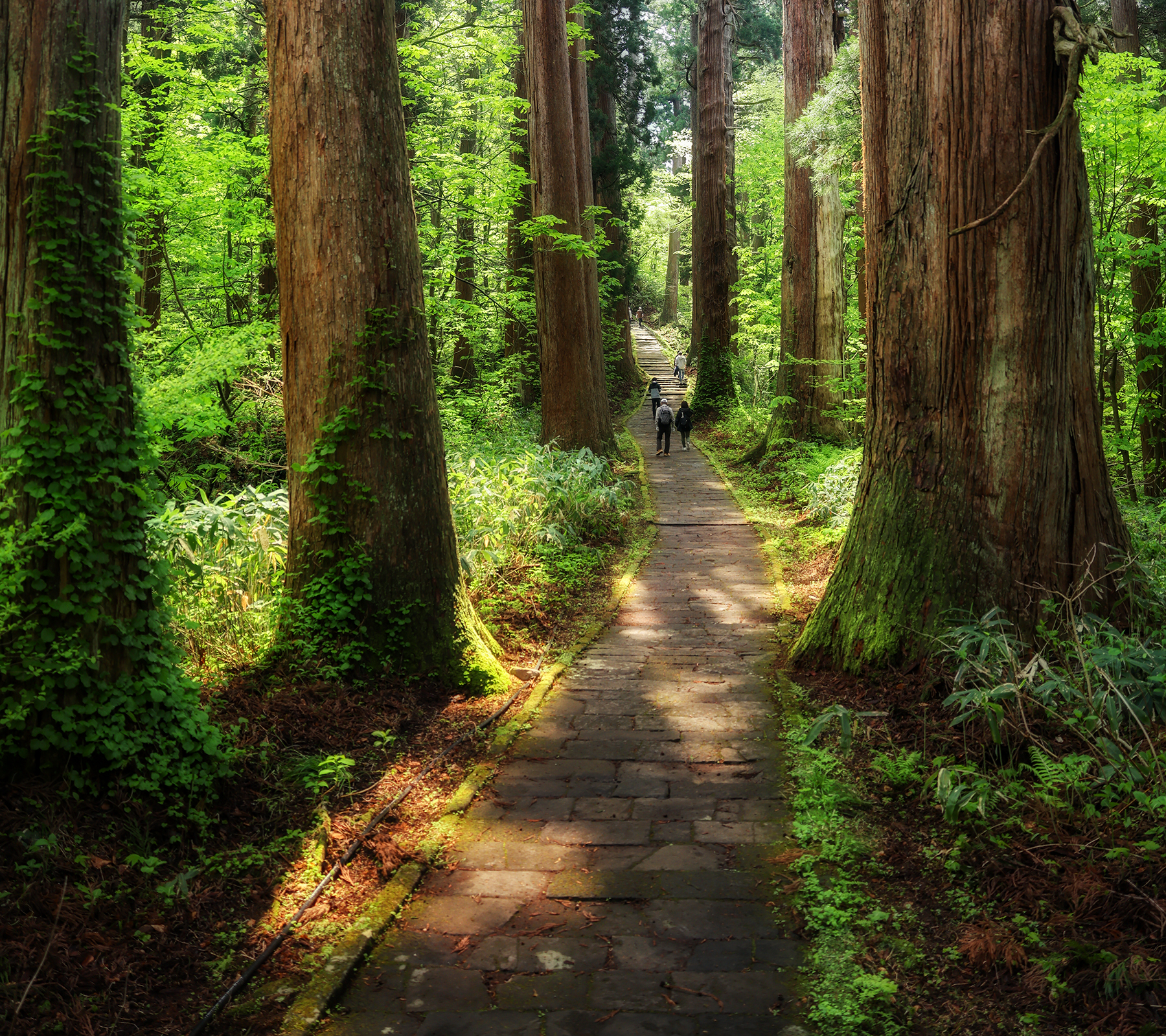
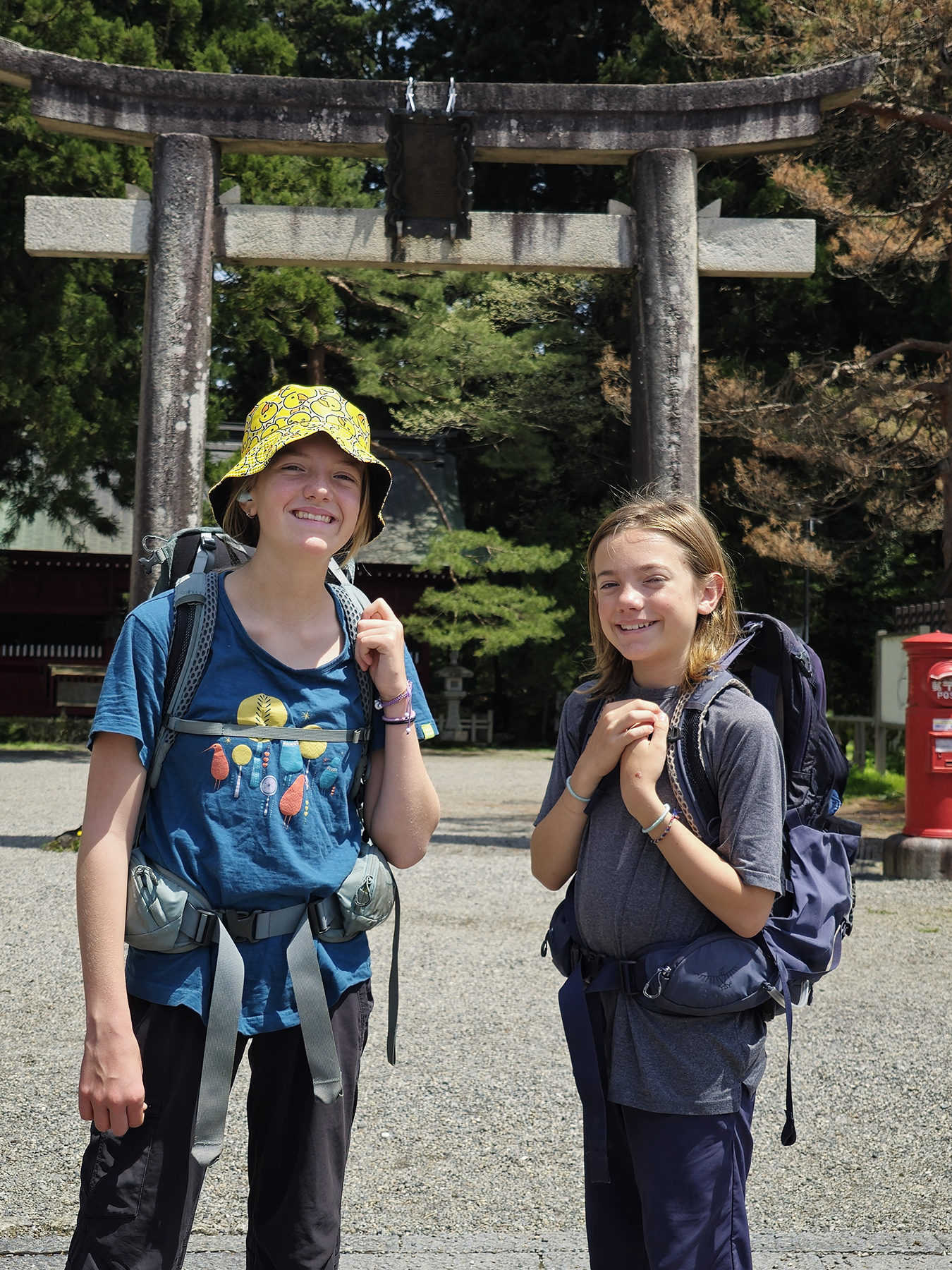
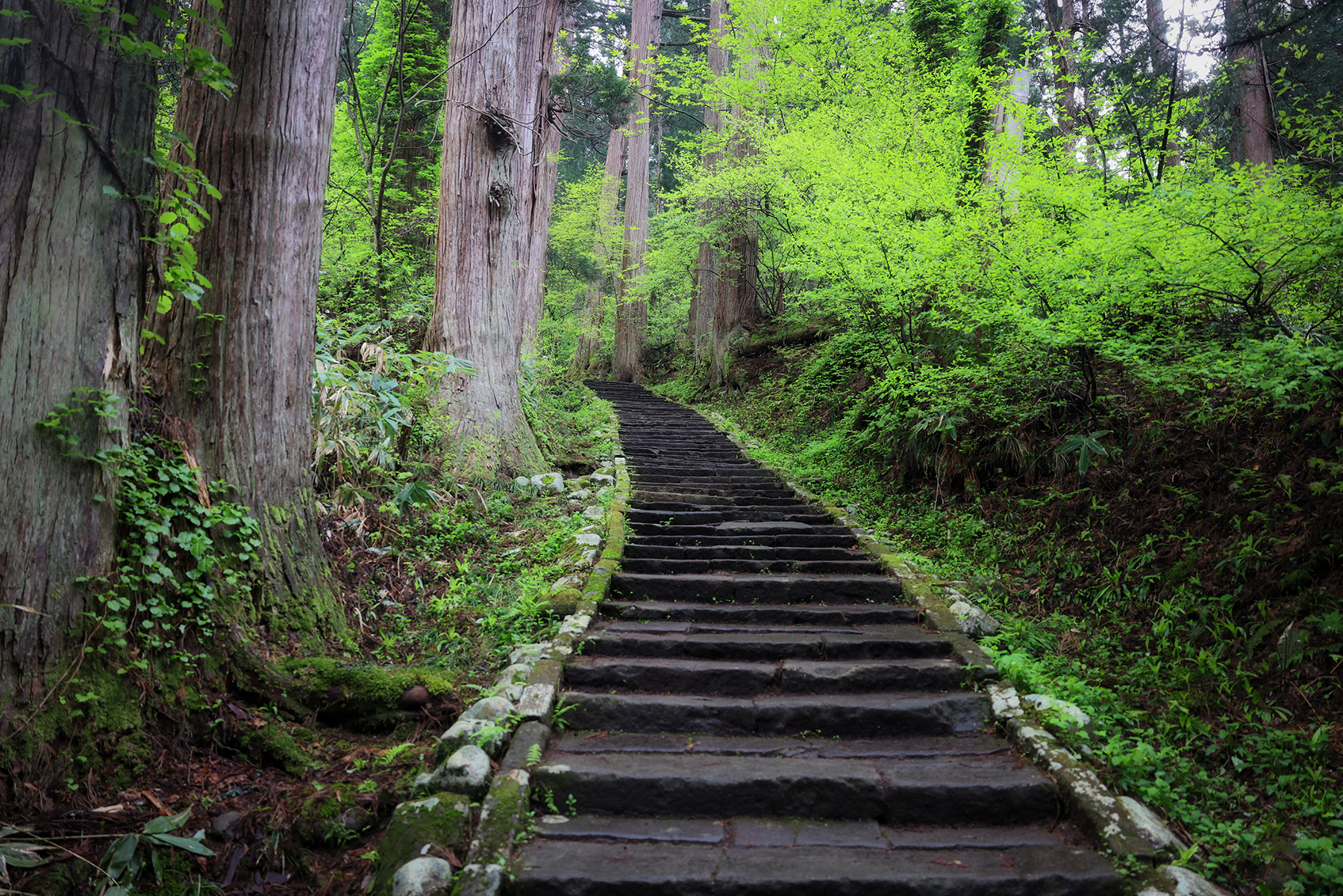
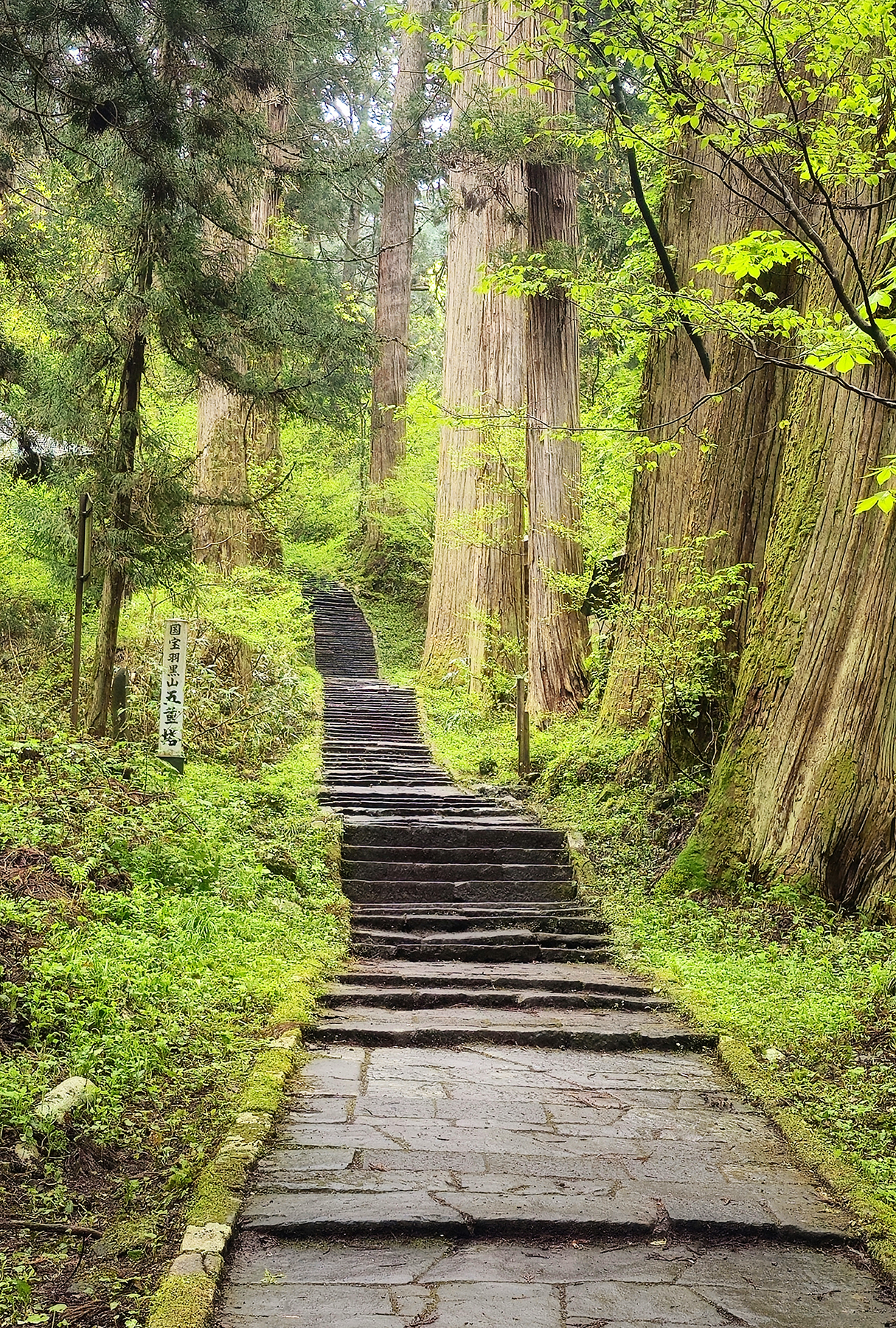
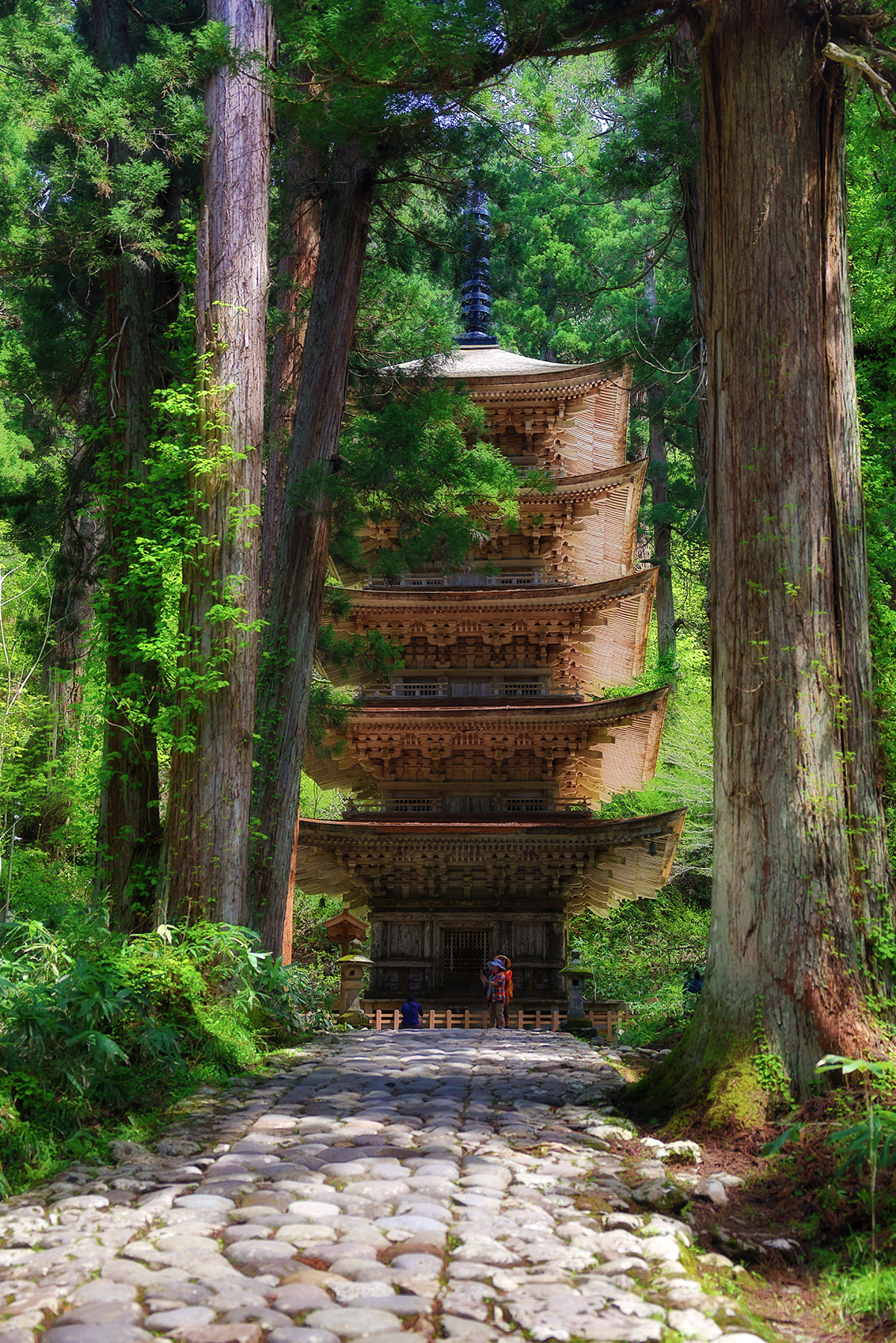
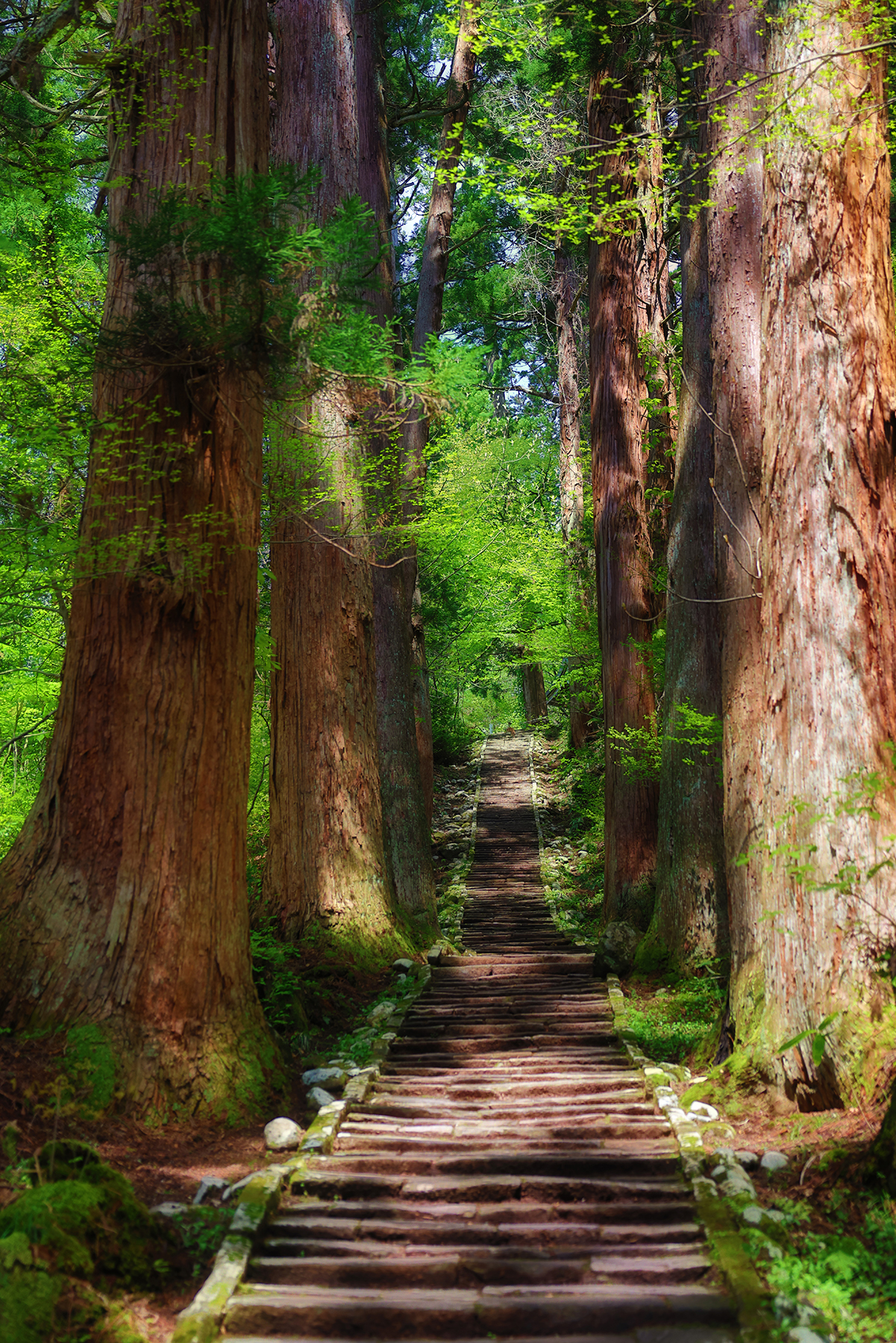
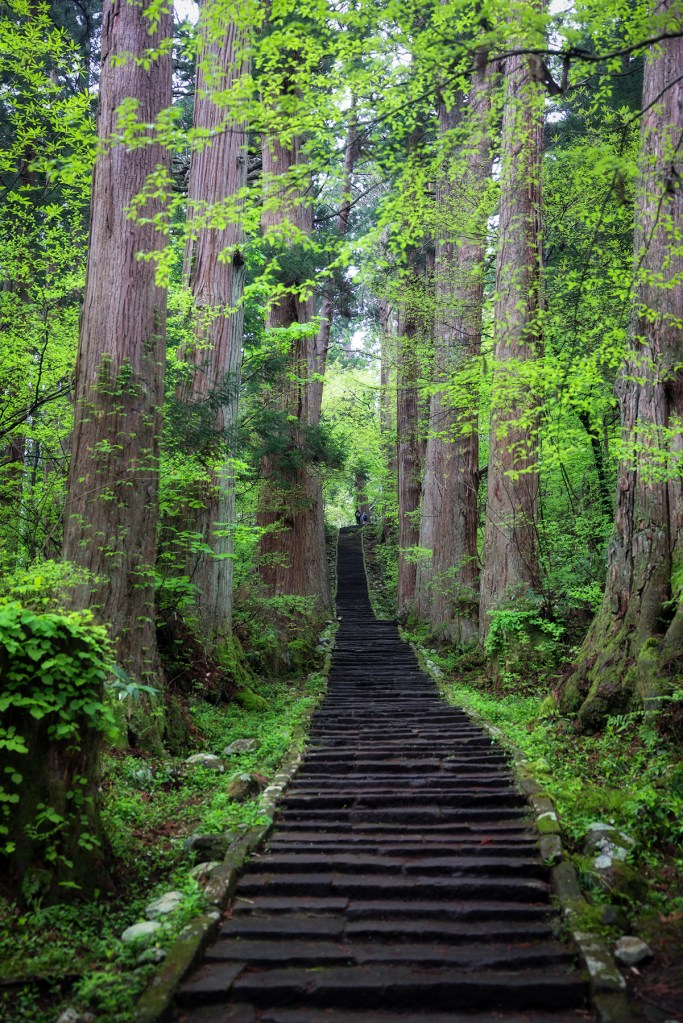
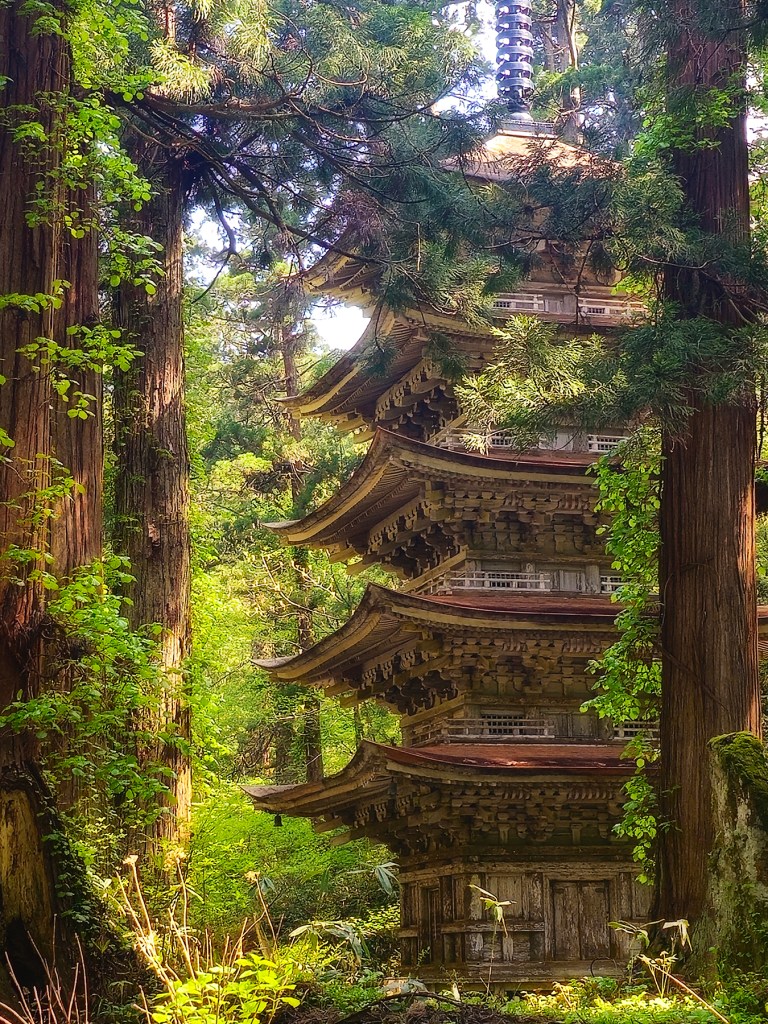
After a few relaxed days in Takayama, we continued on via a scenic train route up the west coast to the town of Yamagata. Our main goal while in the area was to complete another short pilgrimage hike, this time up to the Haguro-san shrine, one of the three main shrines located in the sacred Dewa Sanzan mountains. The pilgrimage route climbs 2,446 steps up a winding stone staircase past the incredible five story pagoda (built in 937), through a lush green cedar forest to arrive at the main shrine at the summit. The main building at the shrine, Sanjin Gosaiden, features a two-meter thick thatched roof, and is said to house the mountain deities of the Shugendo folk religion, which combines aspects of Buddhism and Shinto beliefs. After our first visit as a family, Sonya and I loved the peaceful hike through the forest so much that we returned twice more to walk the paths (and thousands of steps) each morning of our visit.

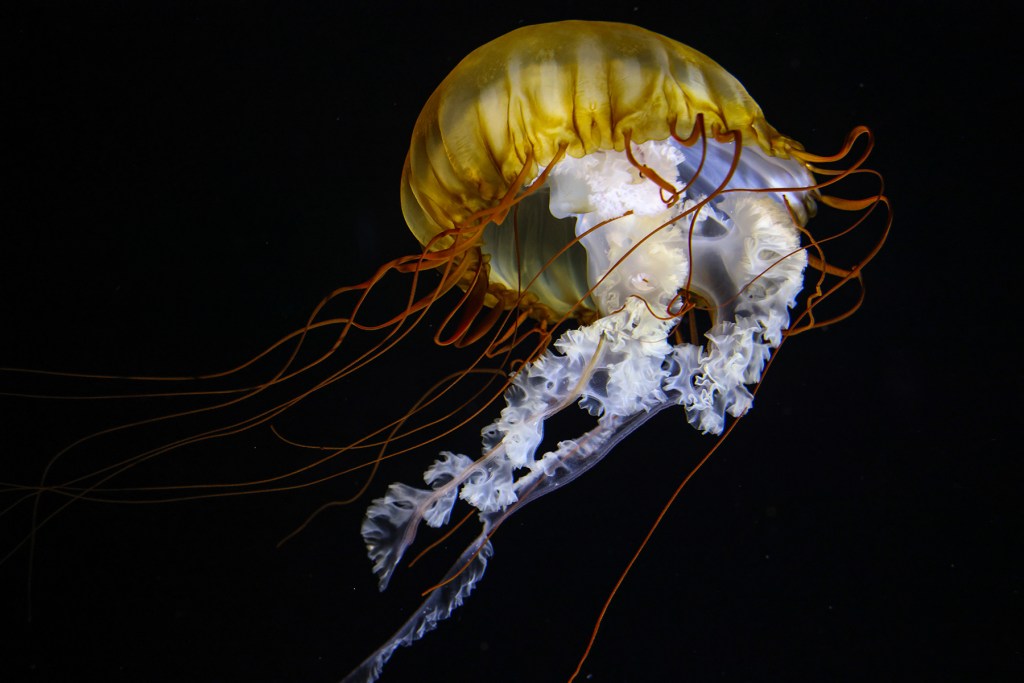
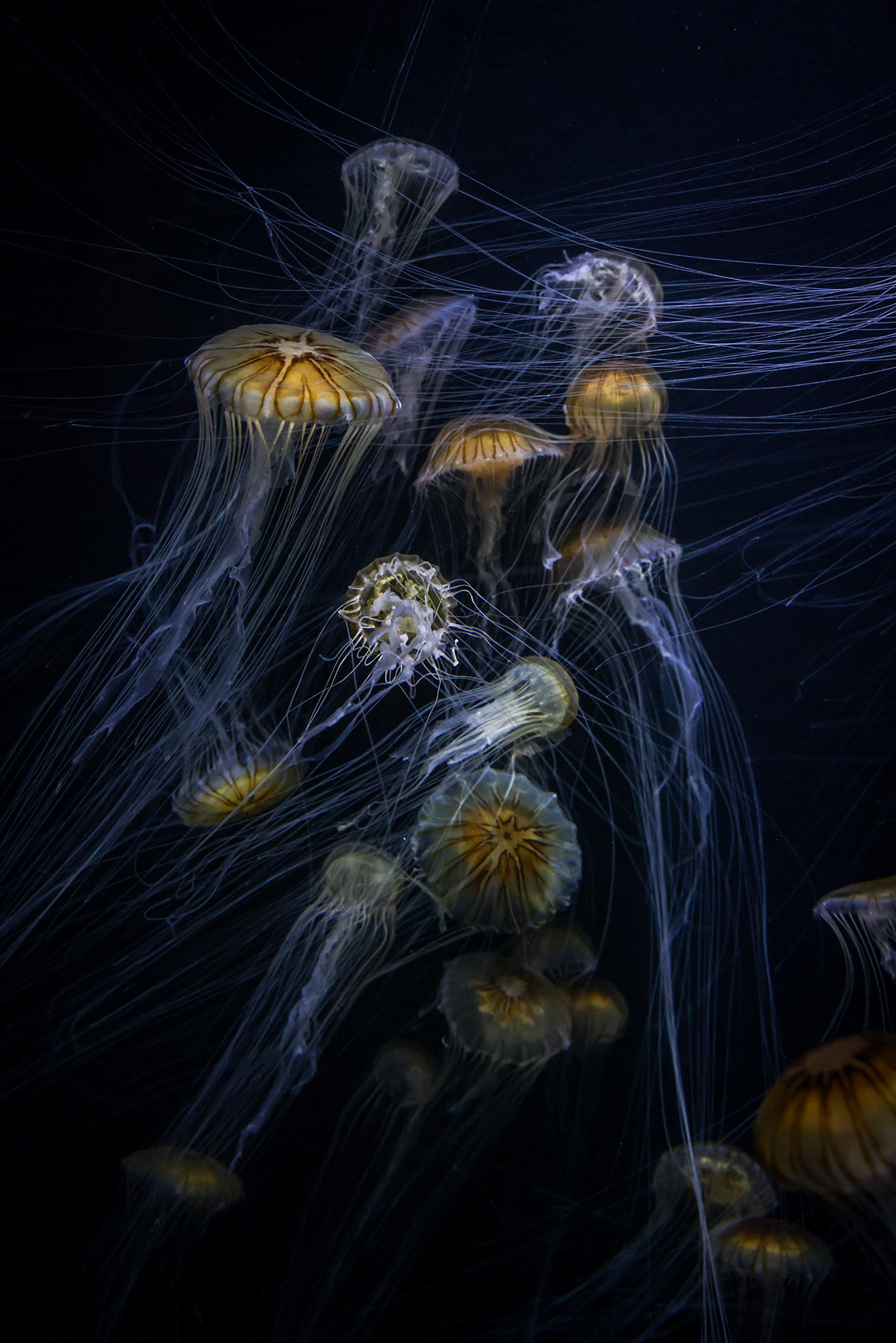
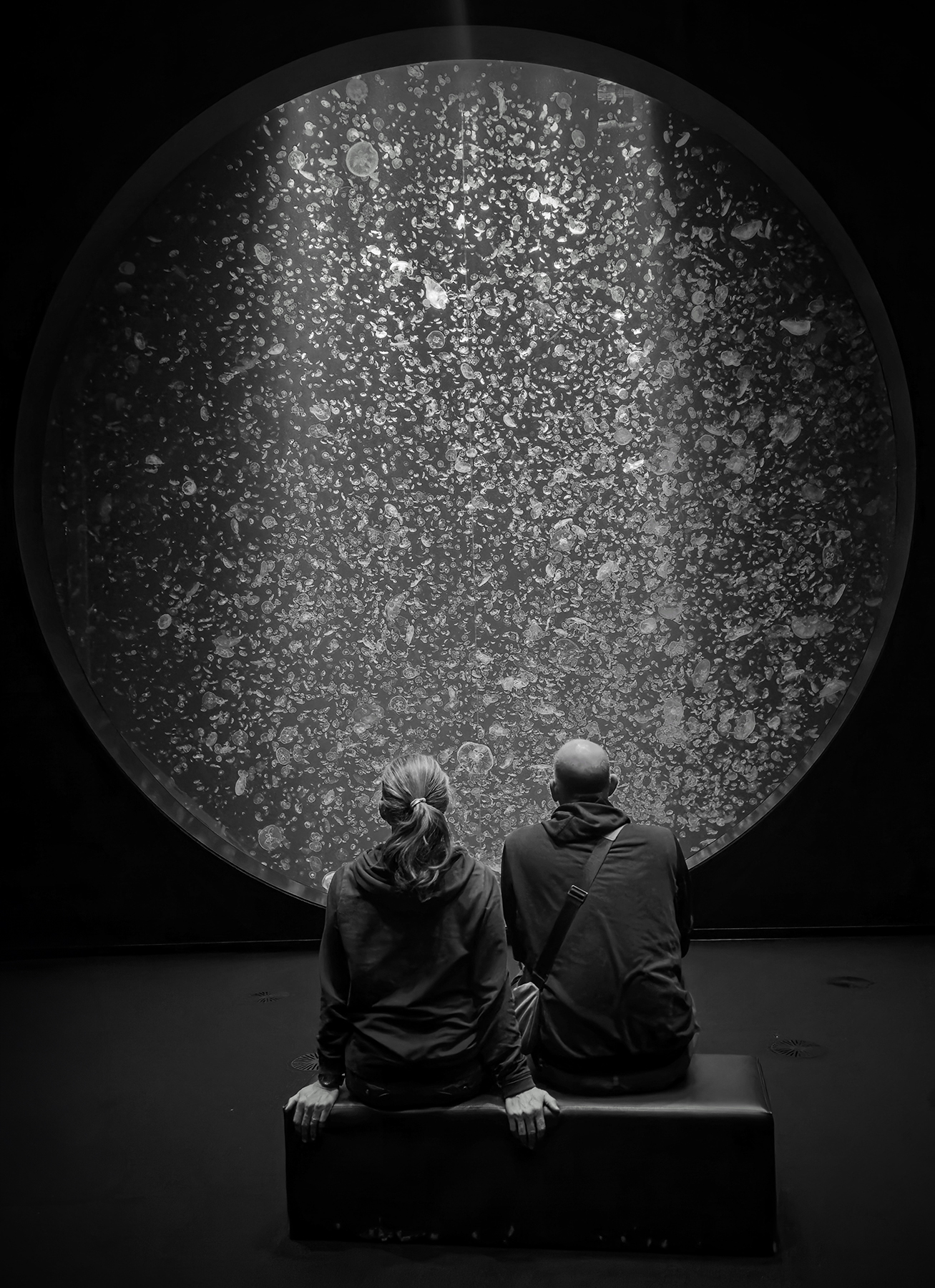
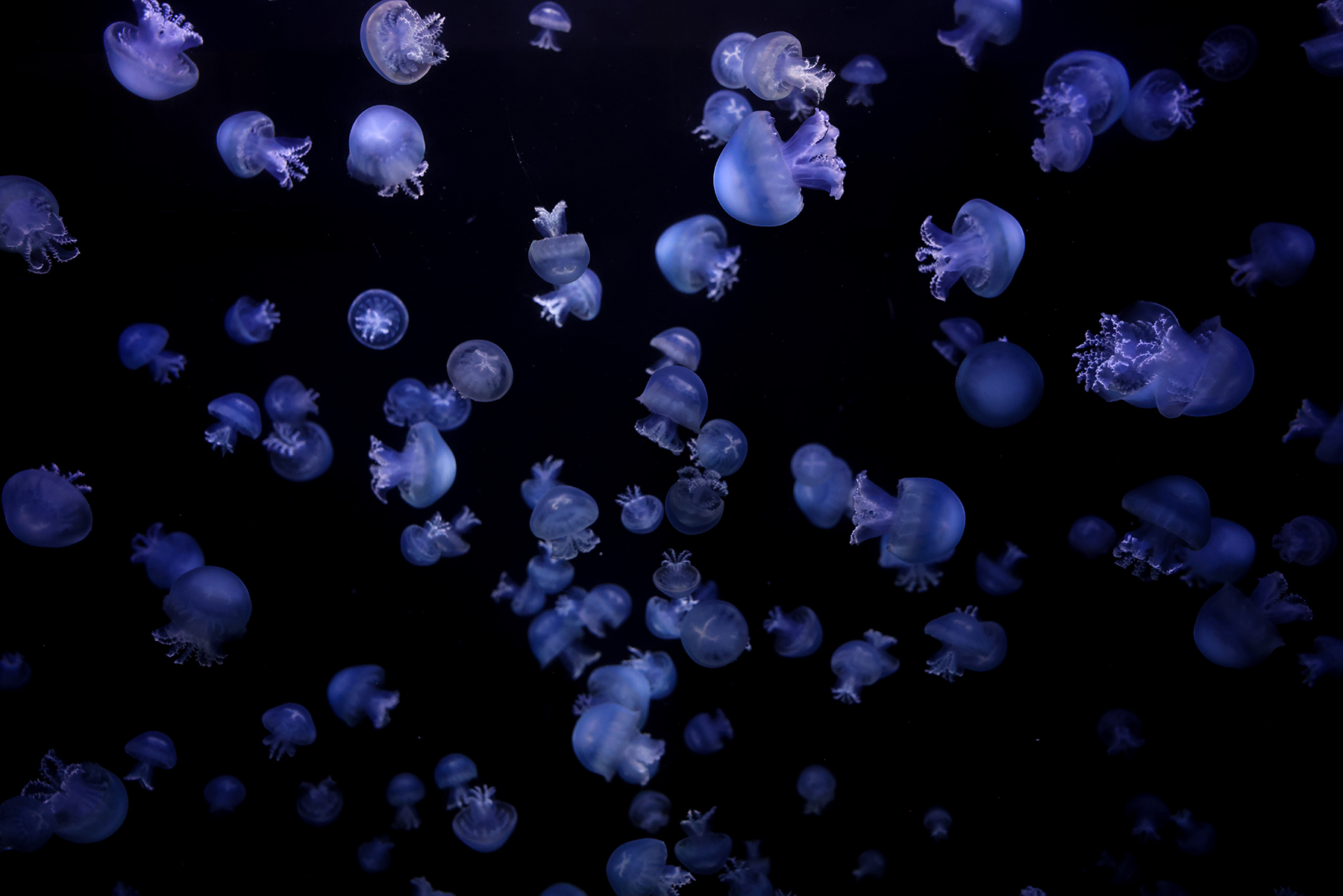
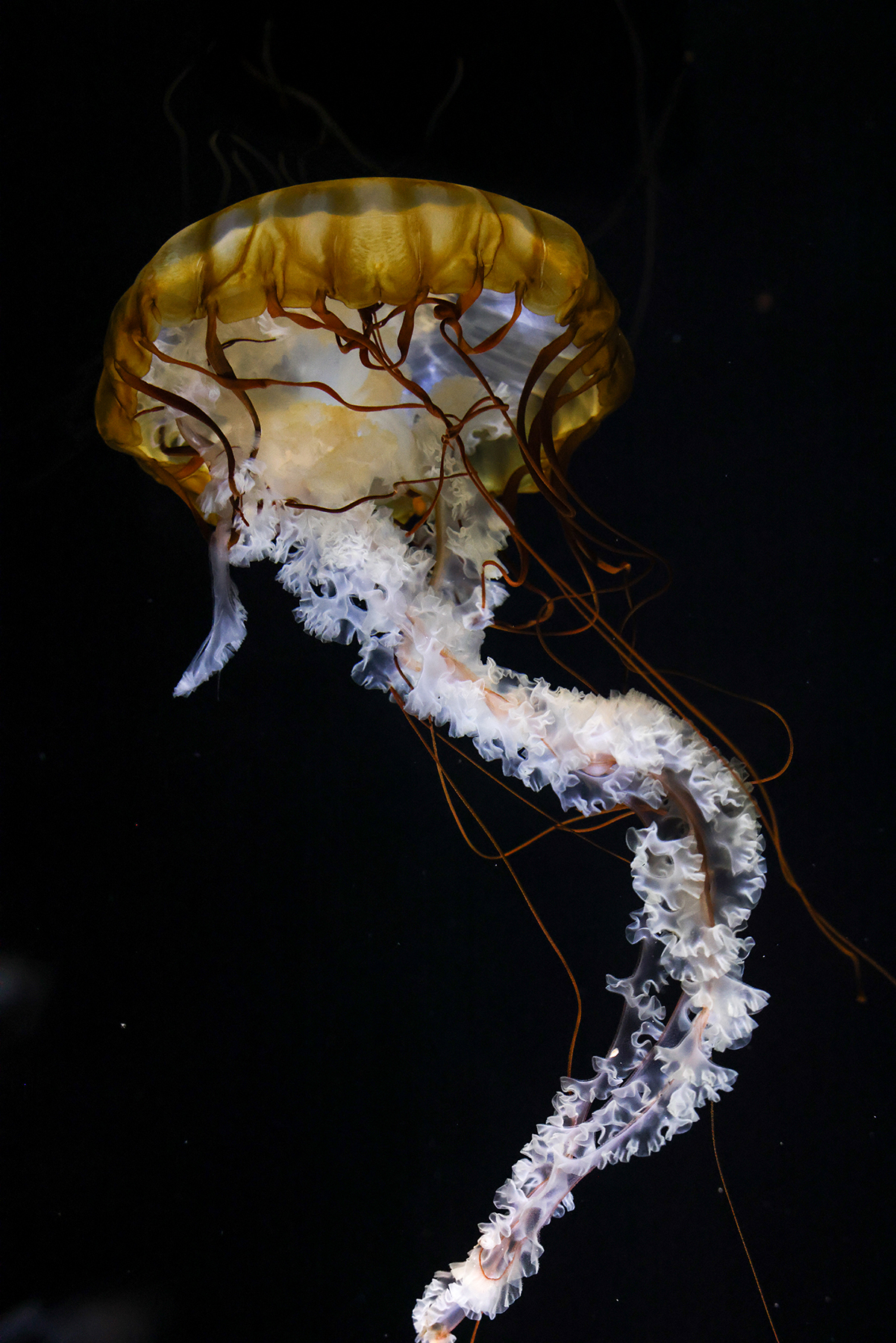
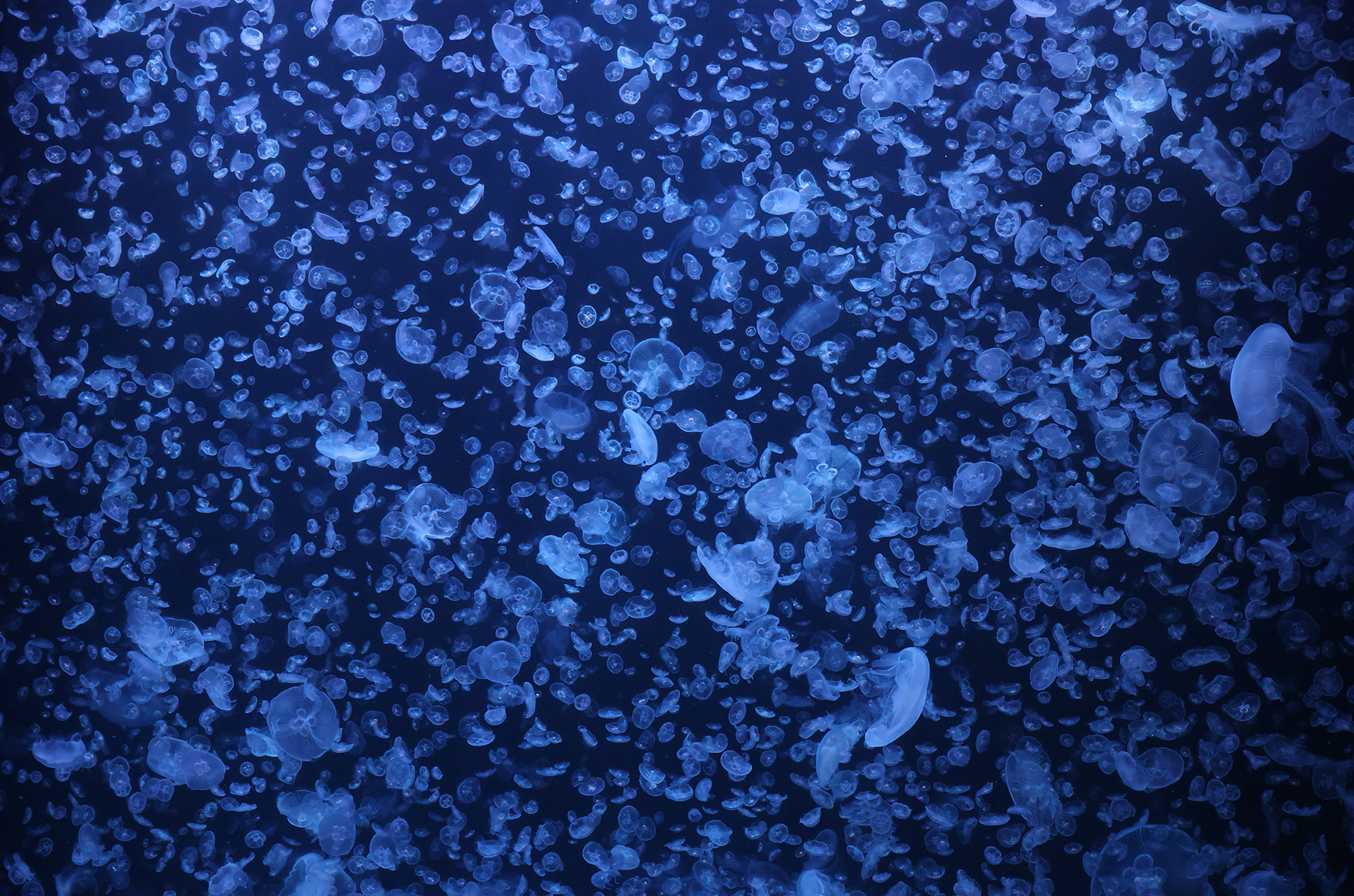
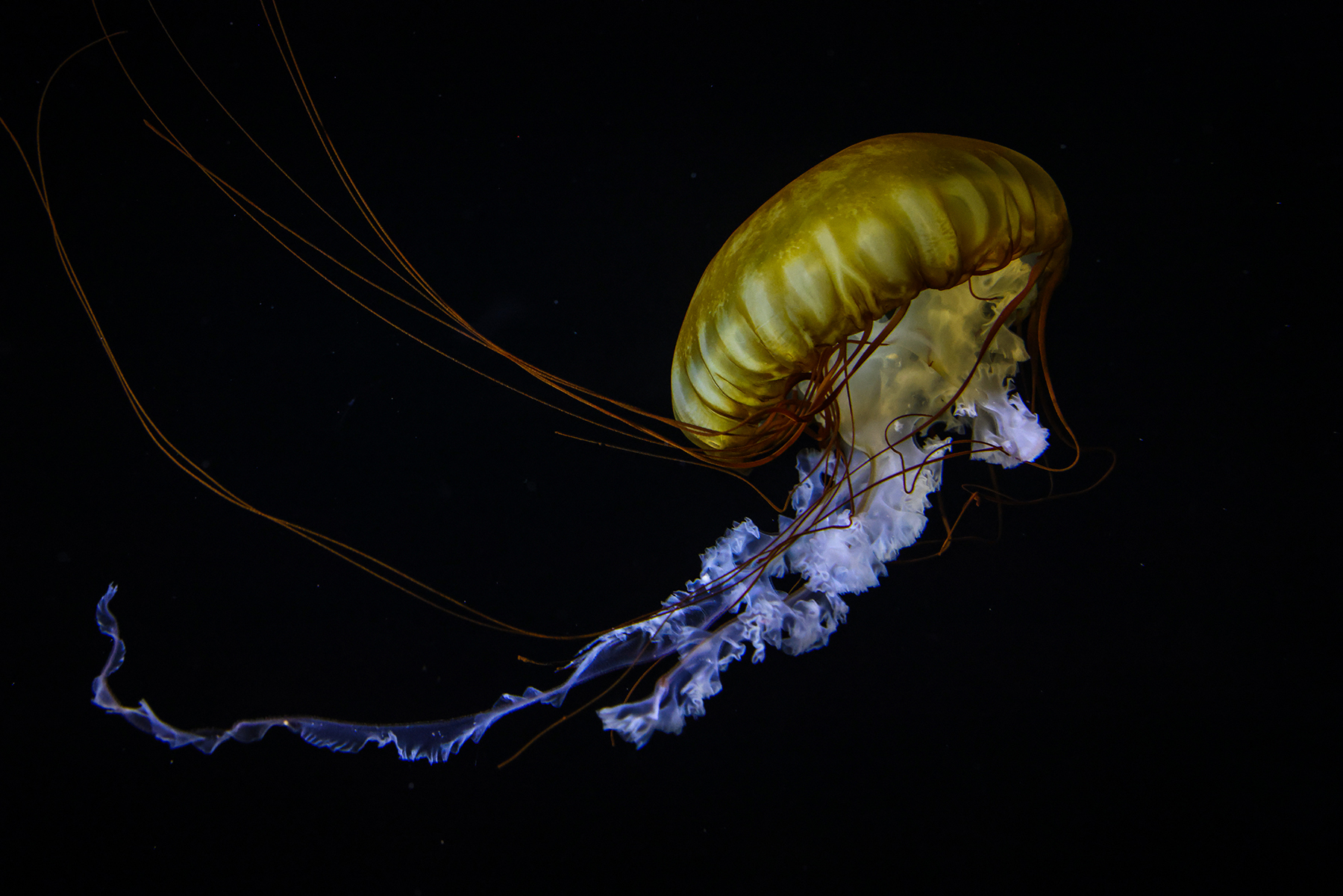
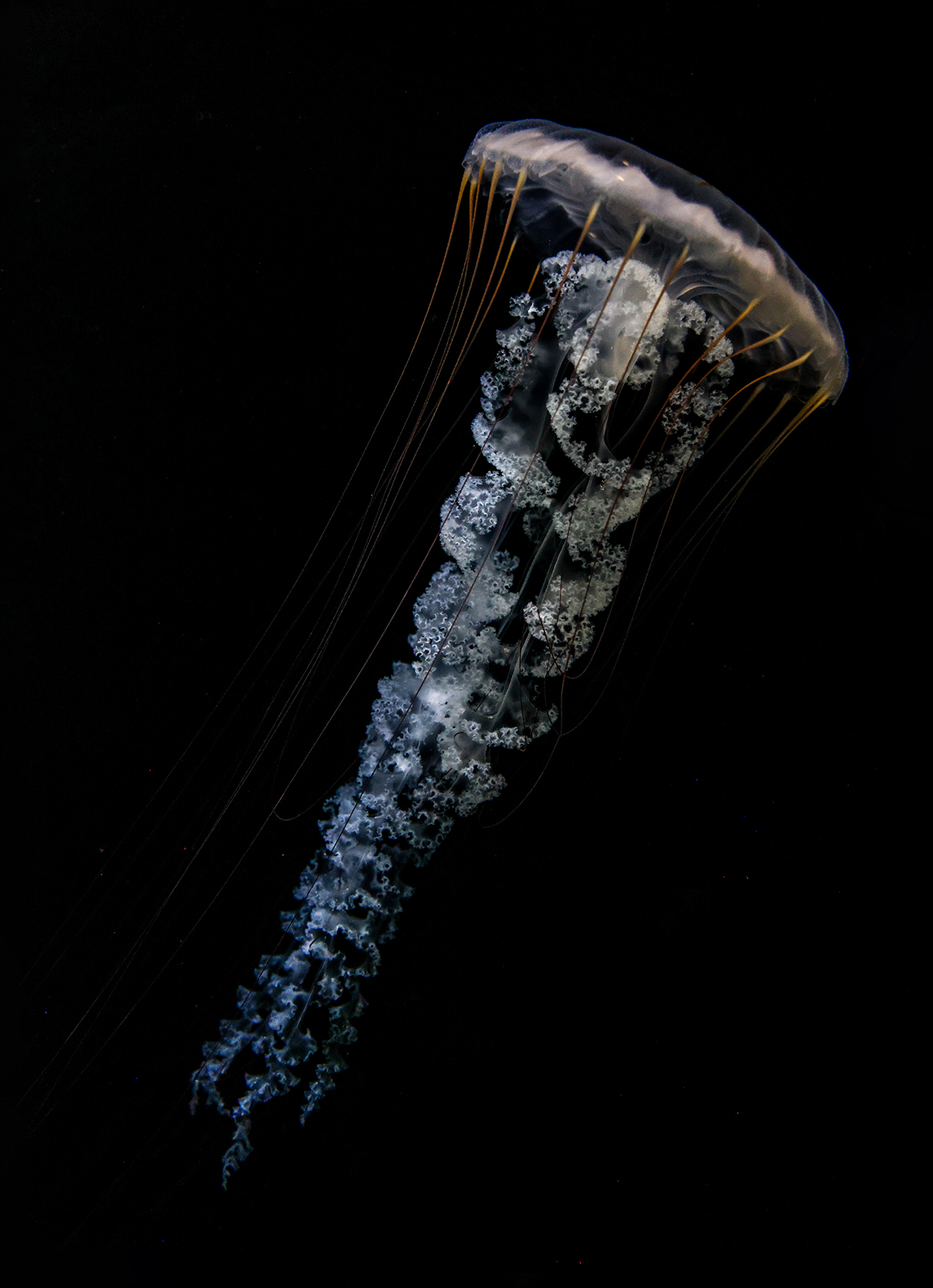
We also spent an afternoon in Tsuruoka City visiting the Kamo Aquarium, specifically to view their spectacular collection of jellyfish species. While much of the aquarium seemed far too small to comfortably house the species in residence, and was honestly quite depressing, the jellyfish exhibit was absolutely incredible. The aquarium features the world’s largest collection of more than 60 species of jellyfish, as well as an unbelievably large display of 10,000 moon jellyfish in a single tank.
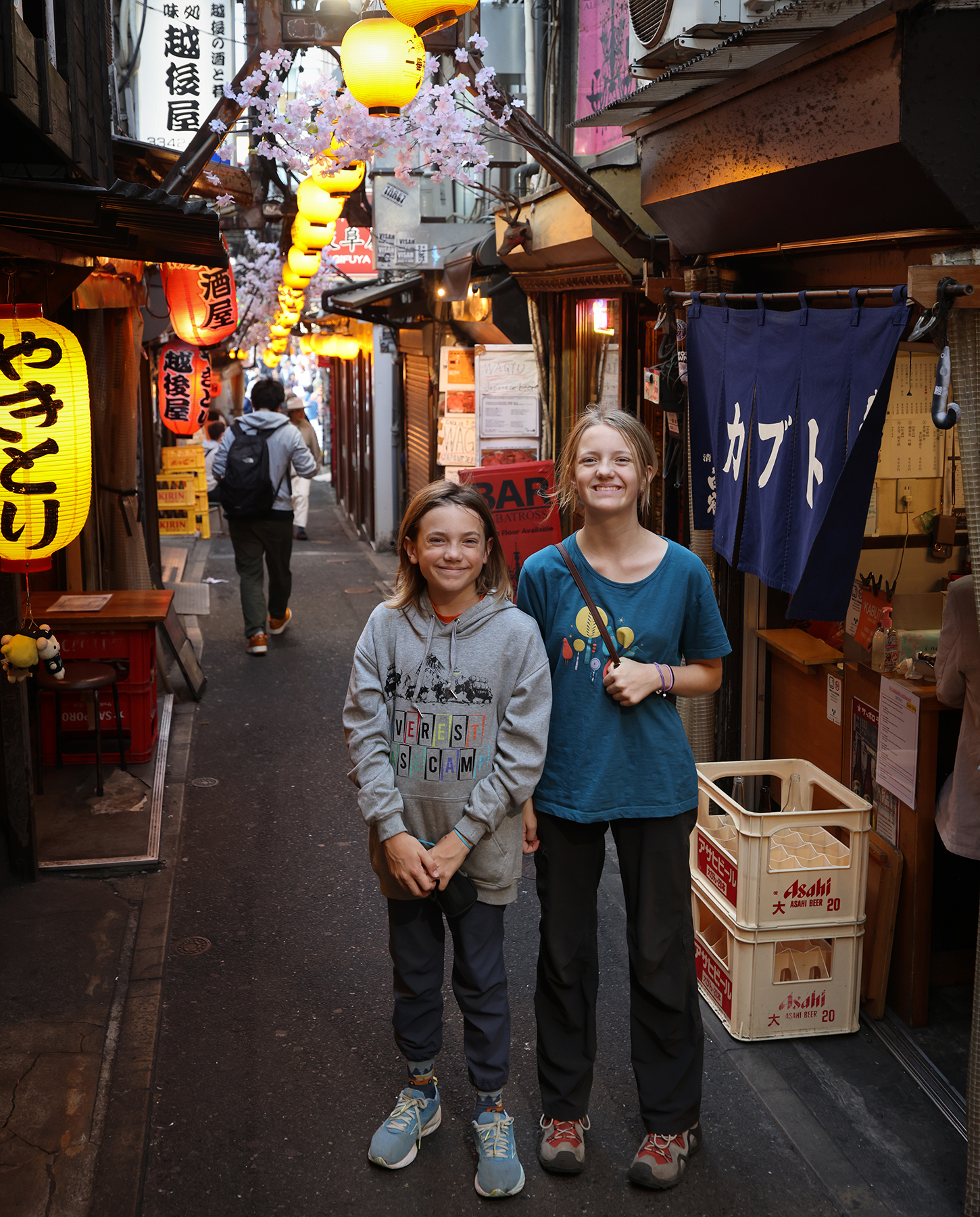
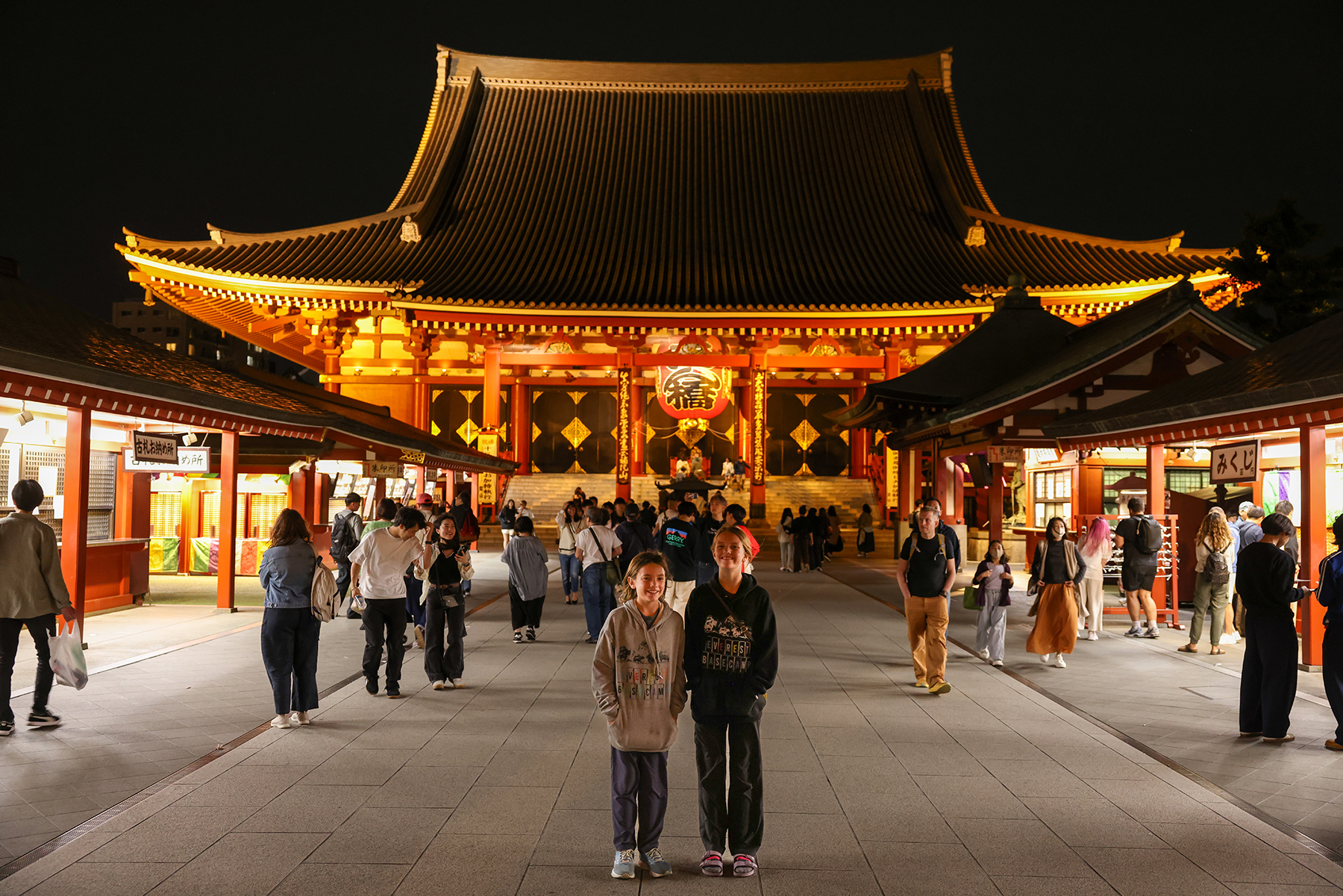
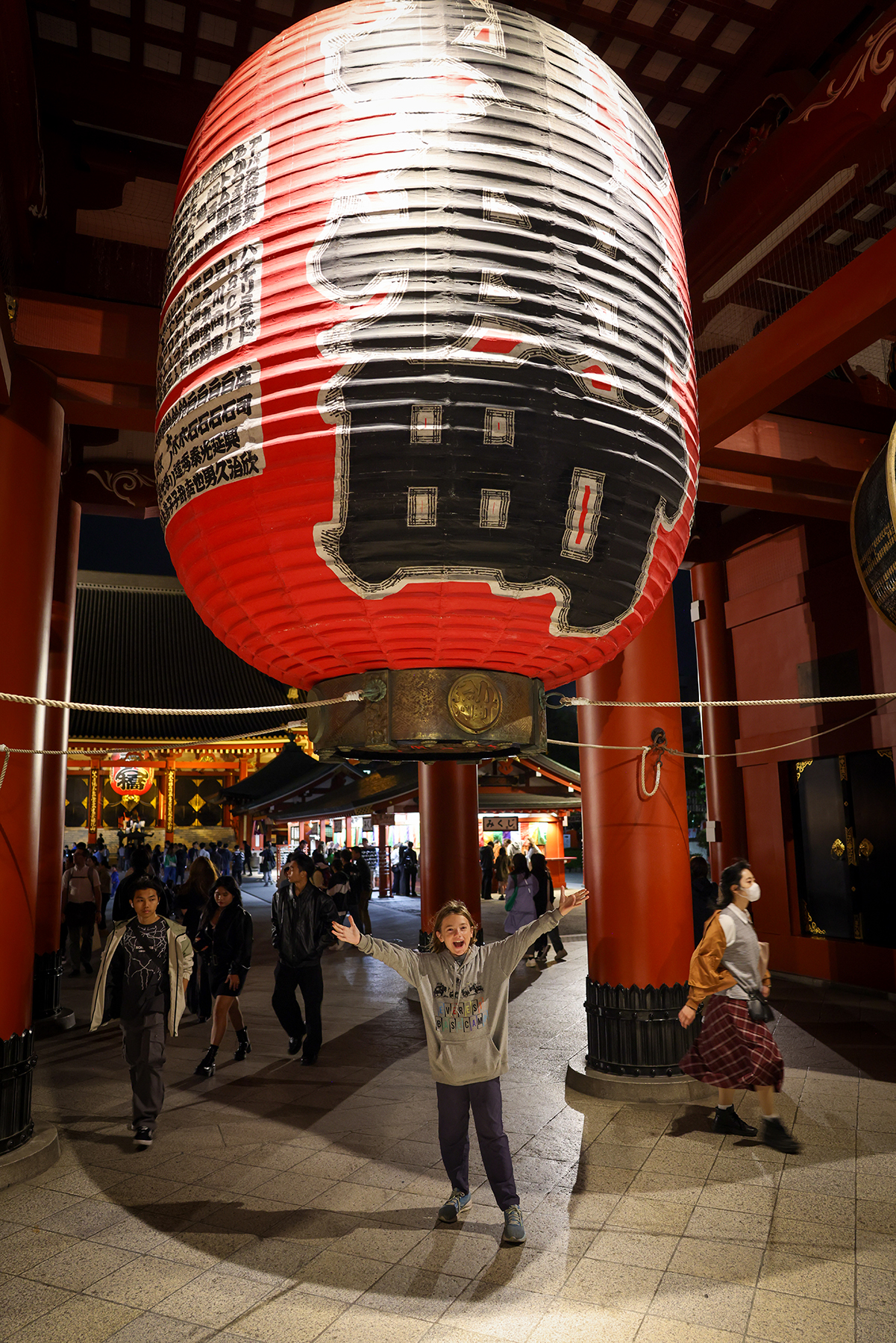
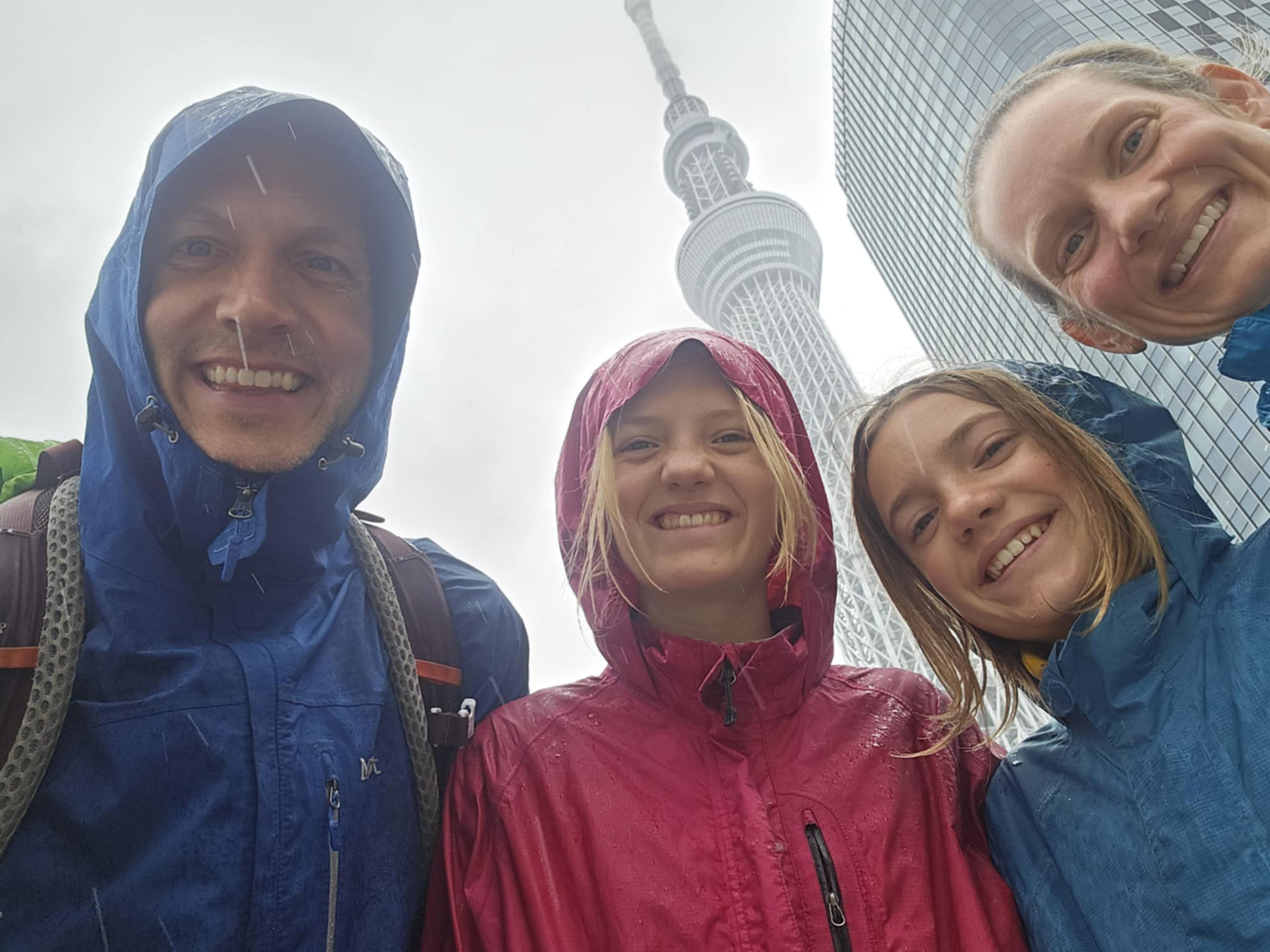
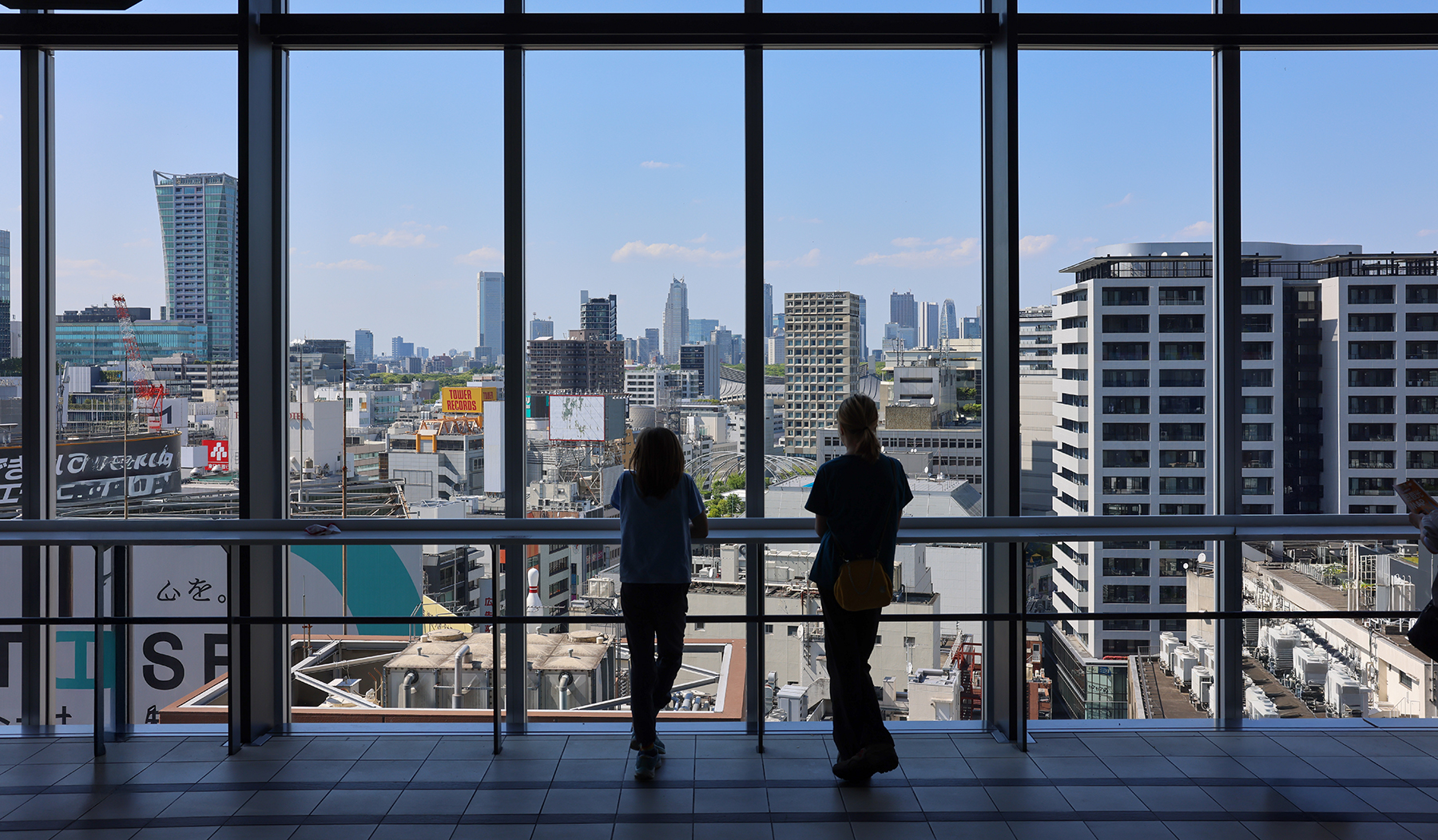
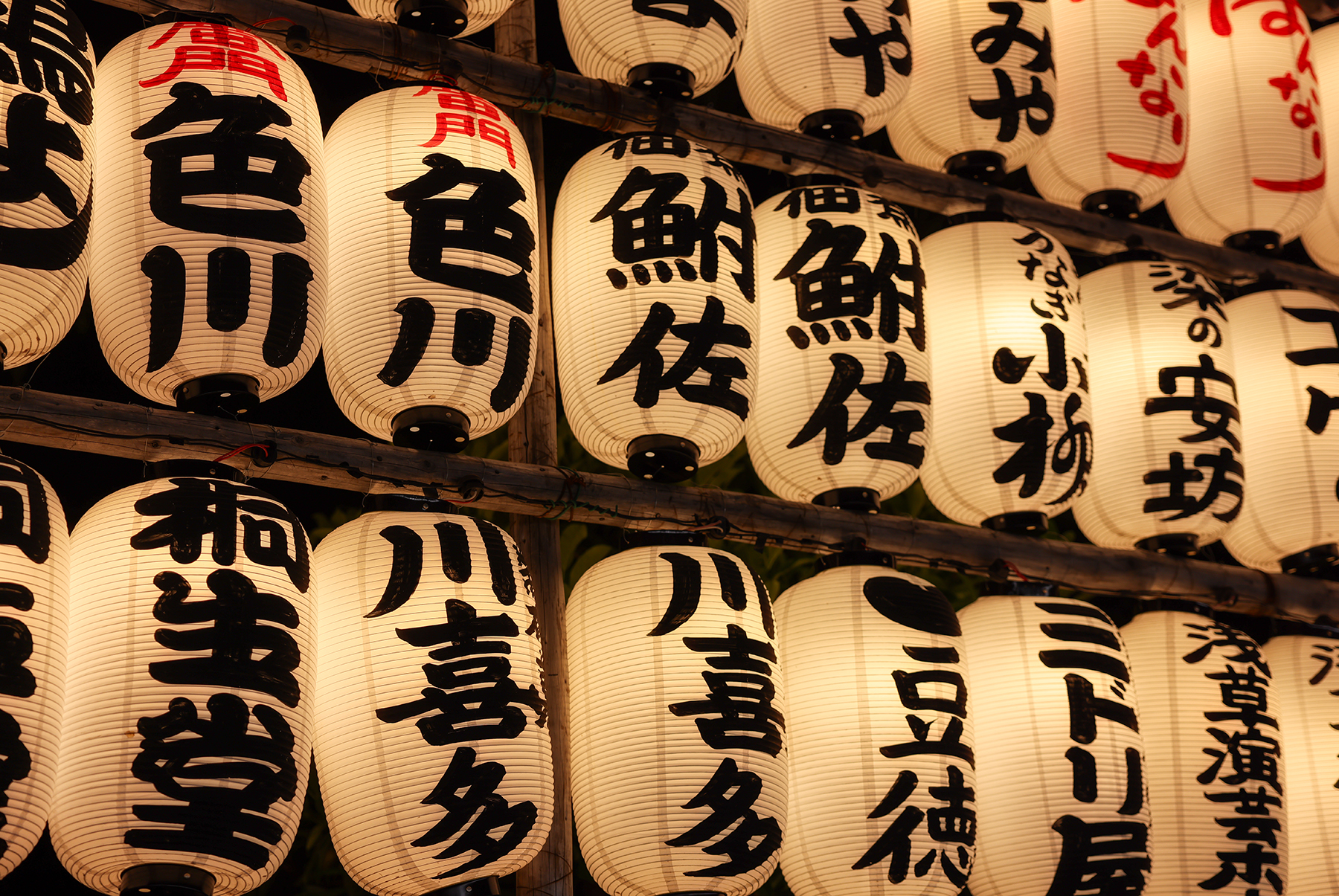
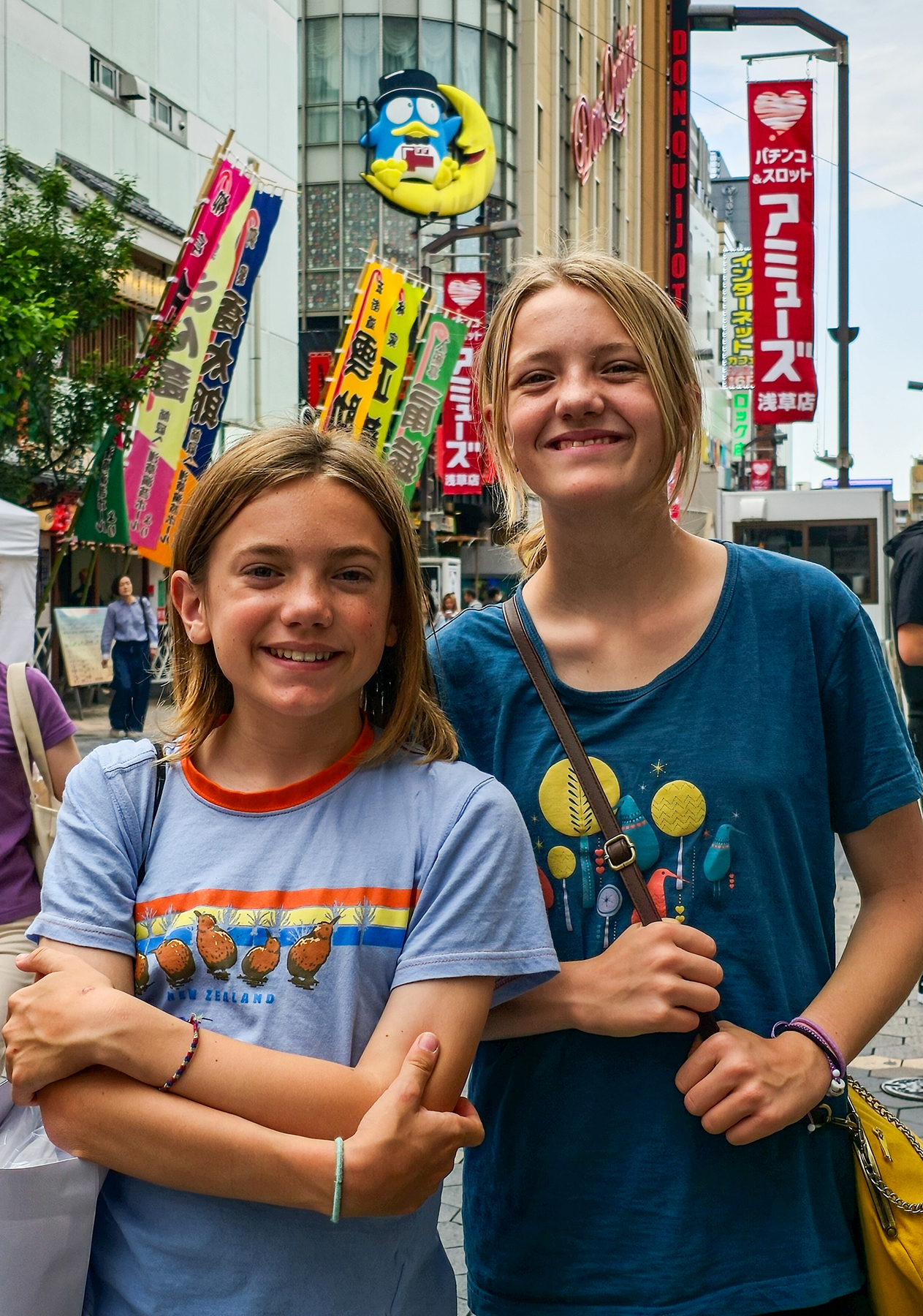
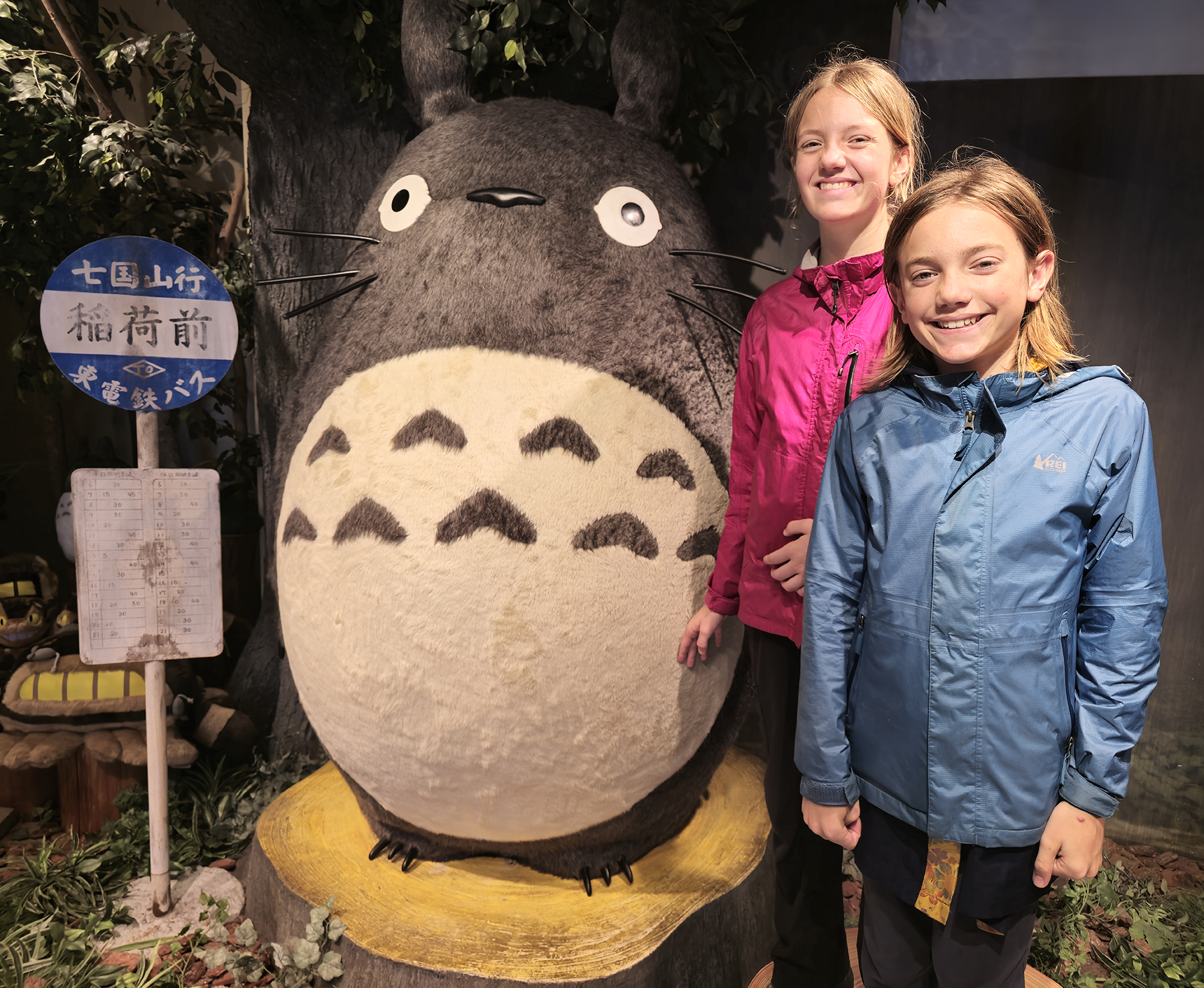
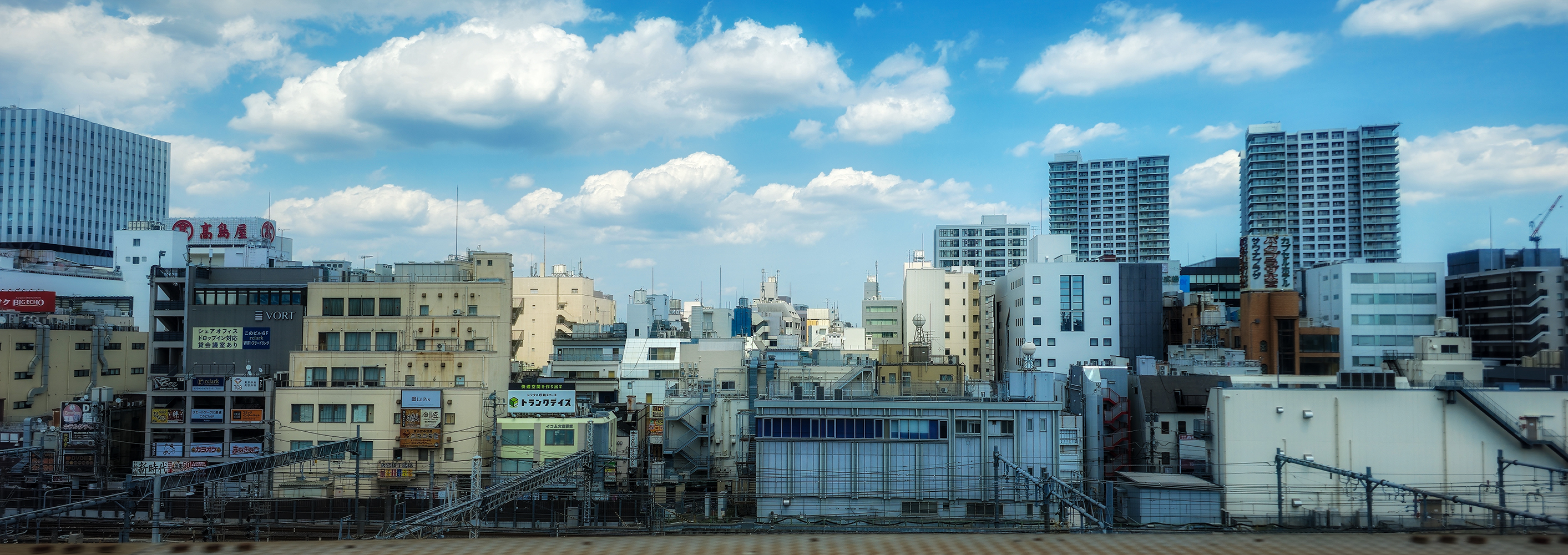
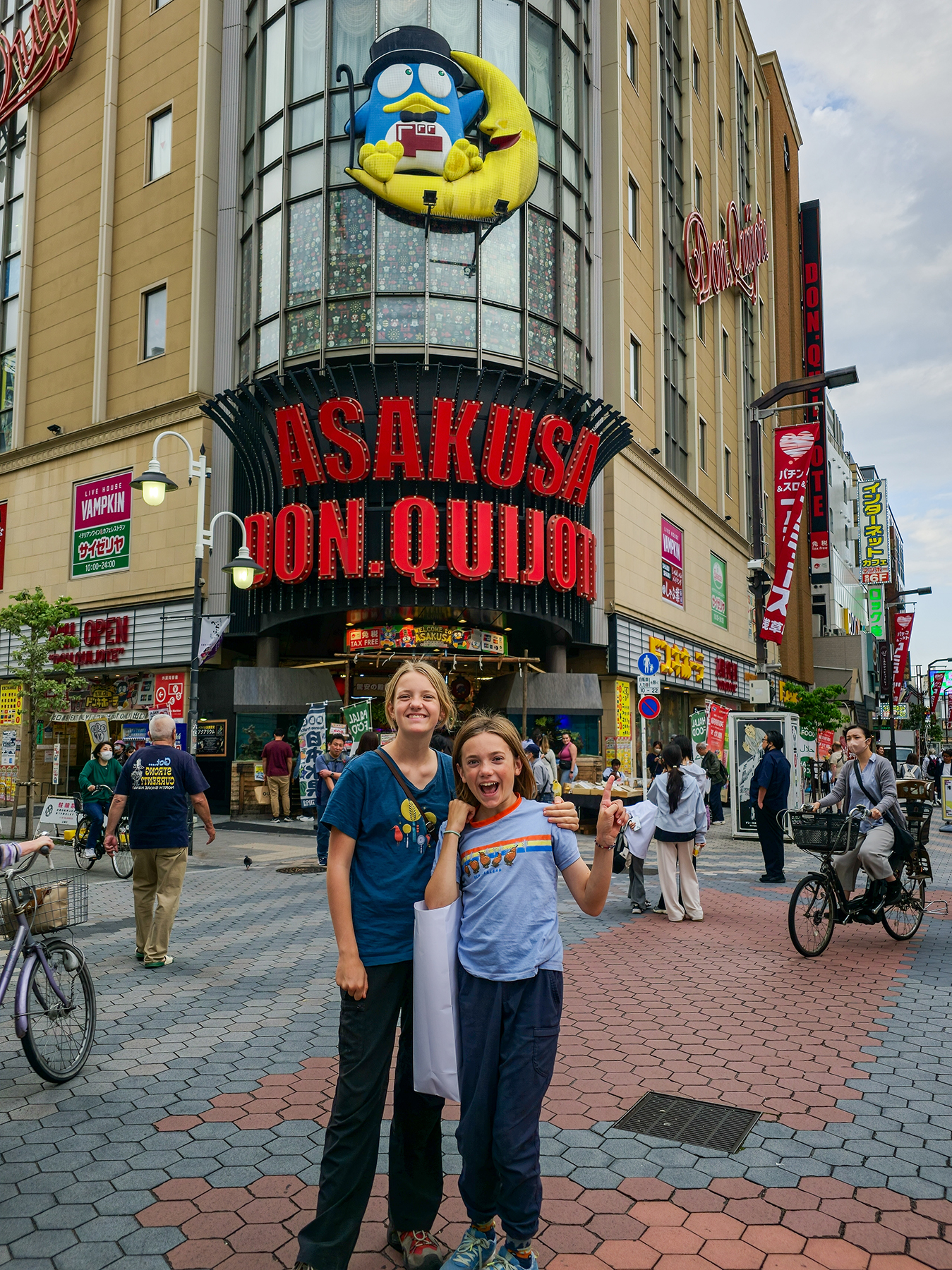
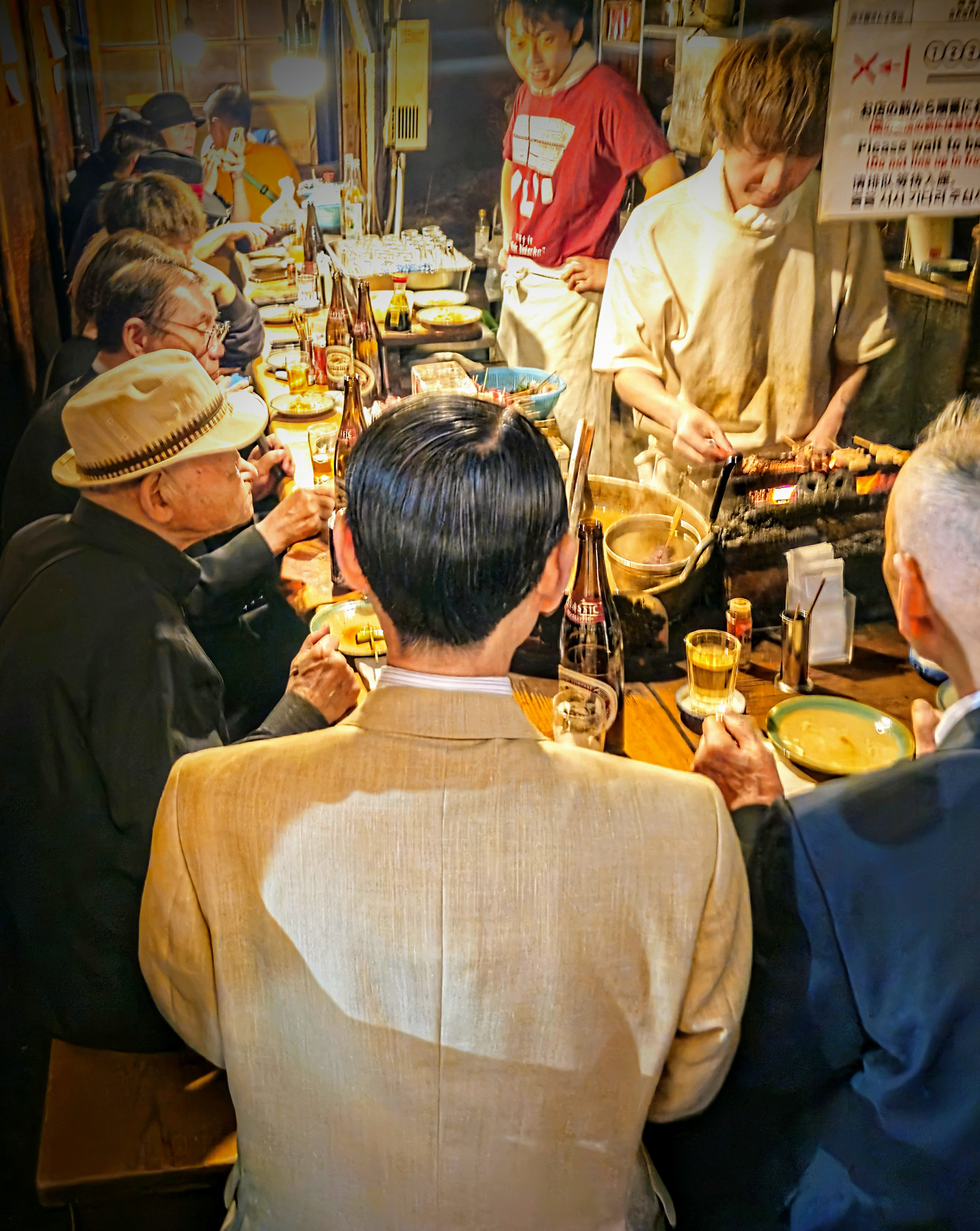
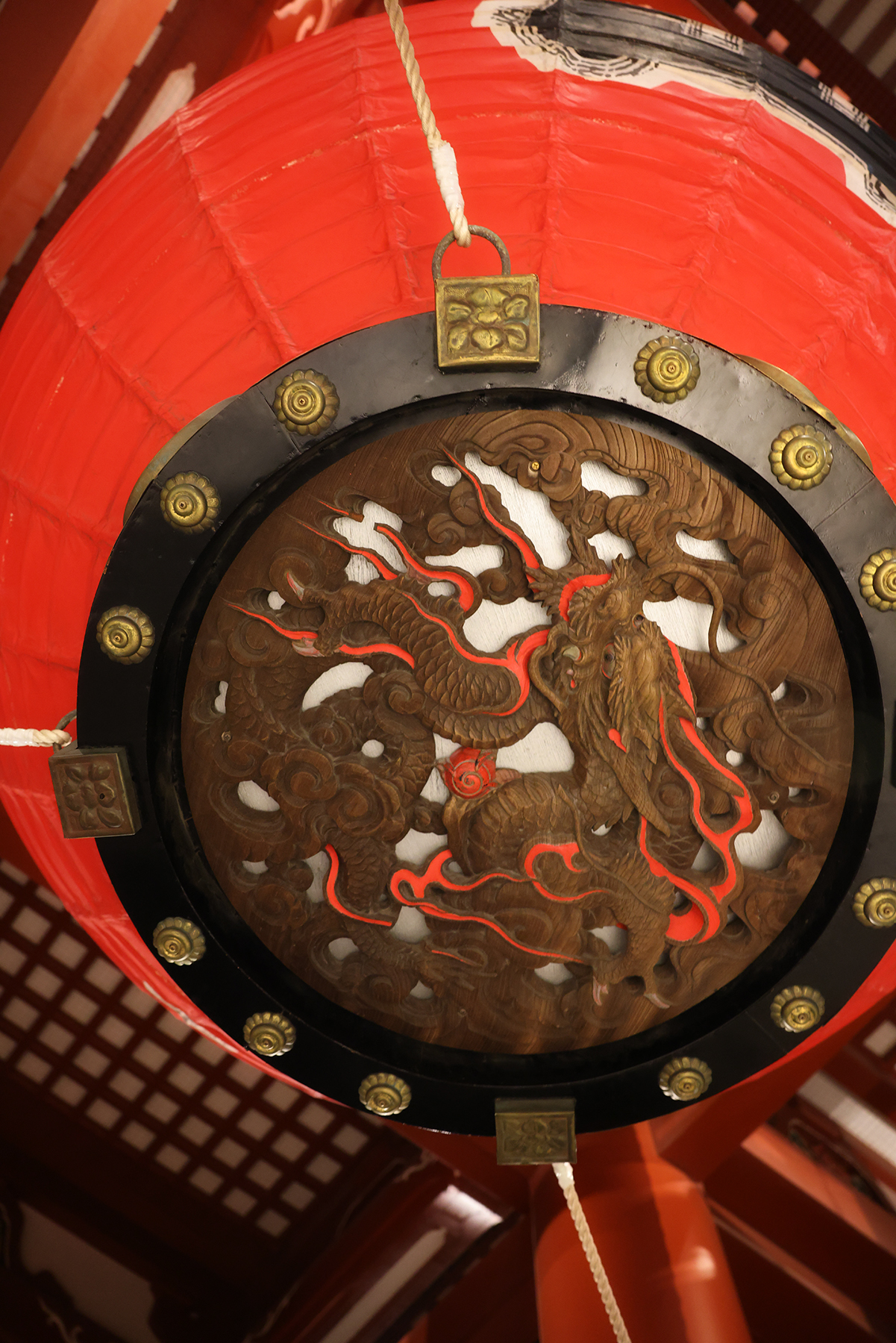
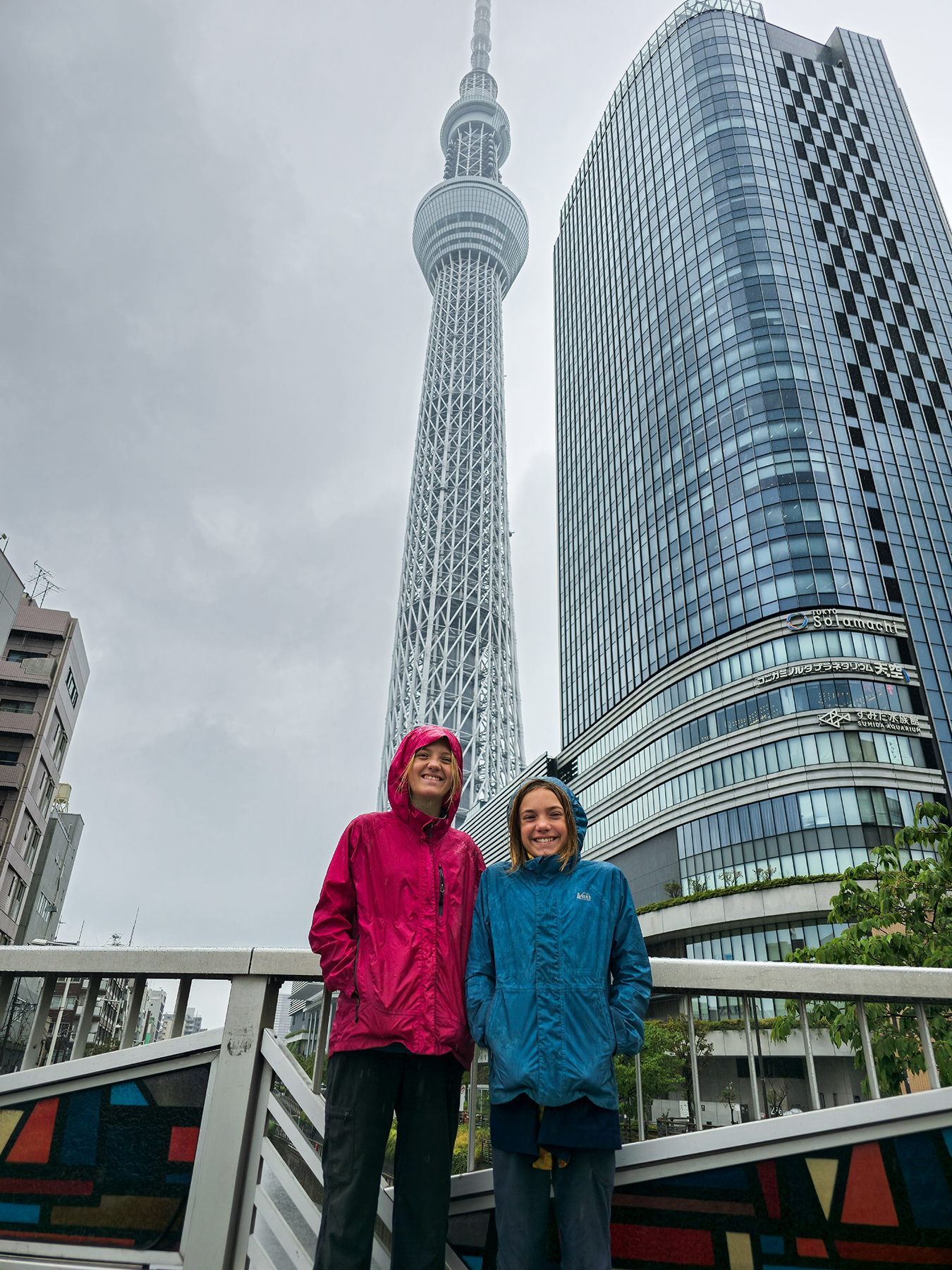
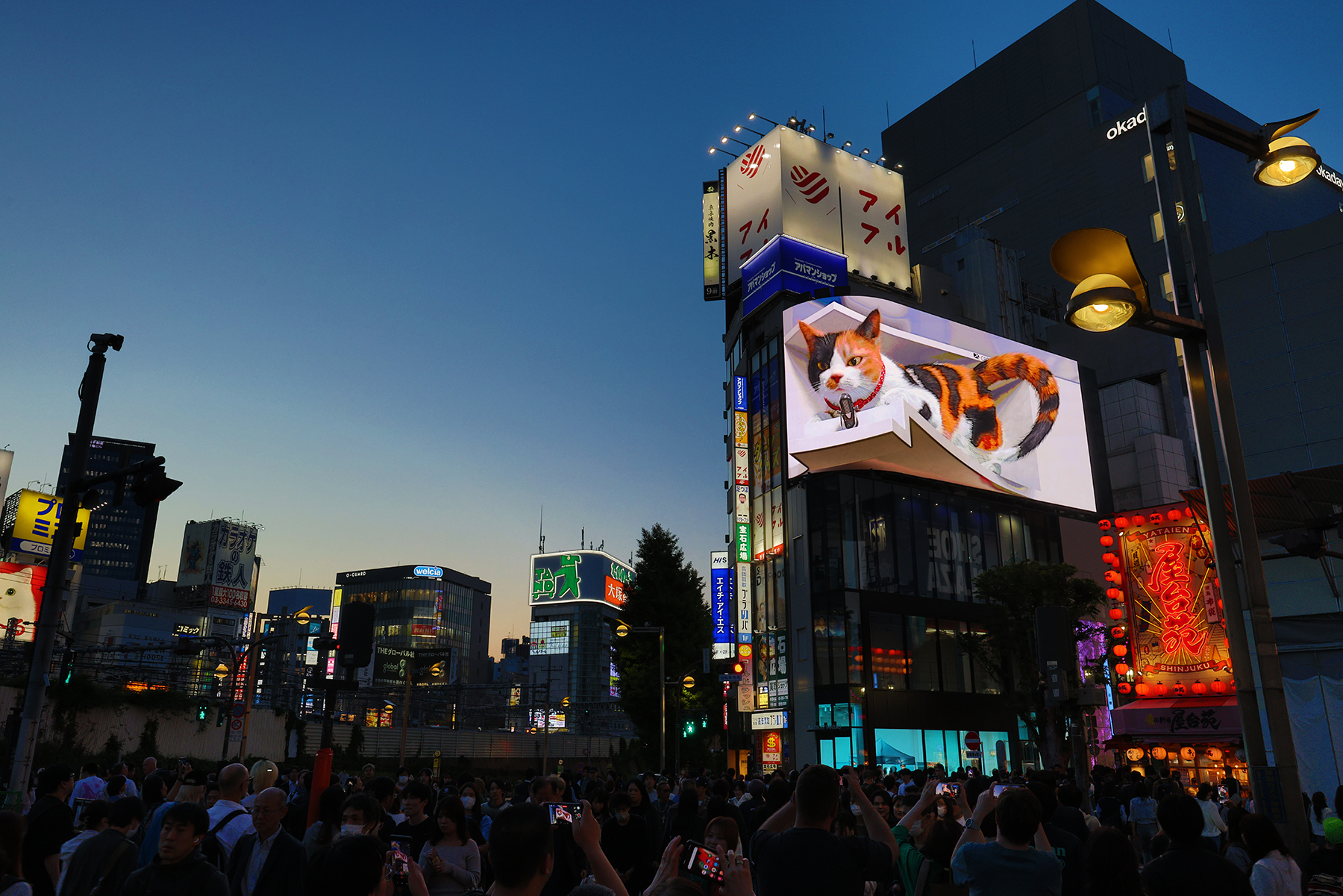
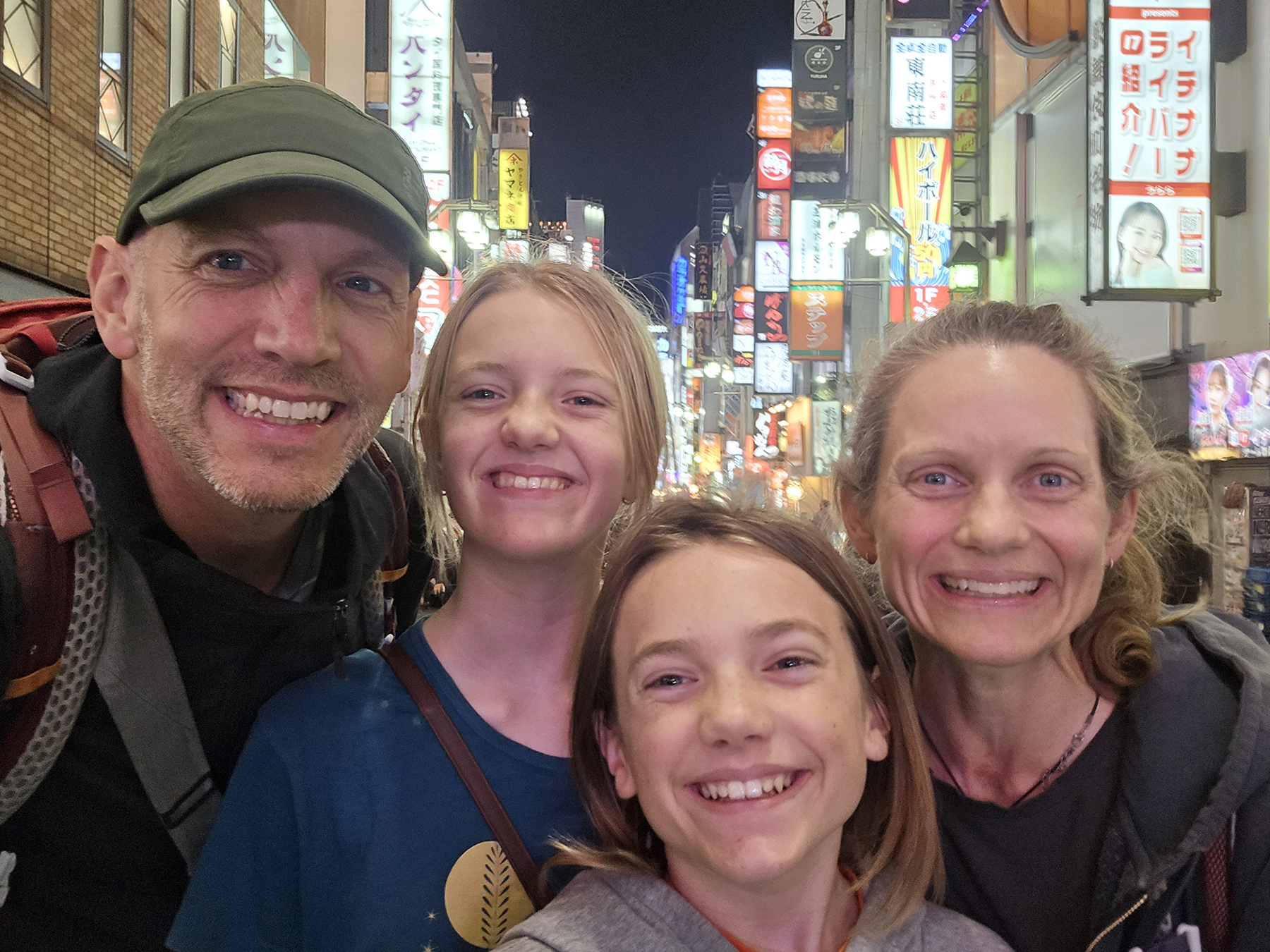
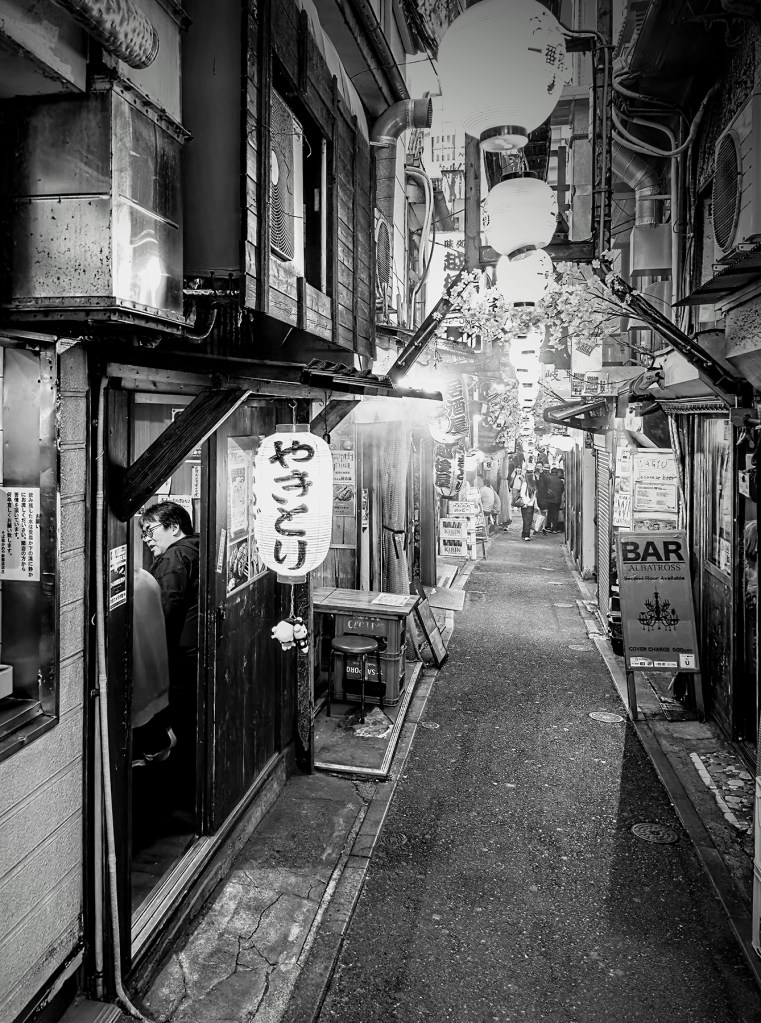
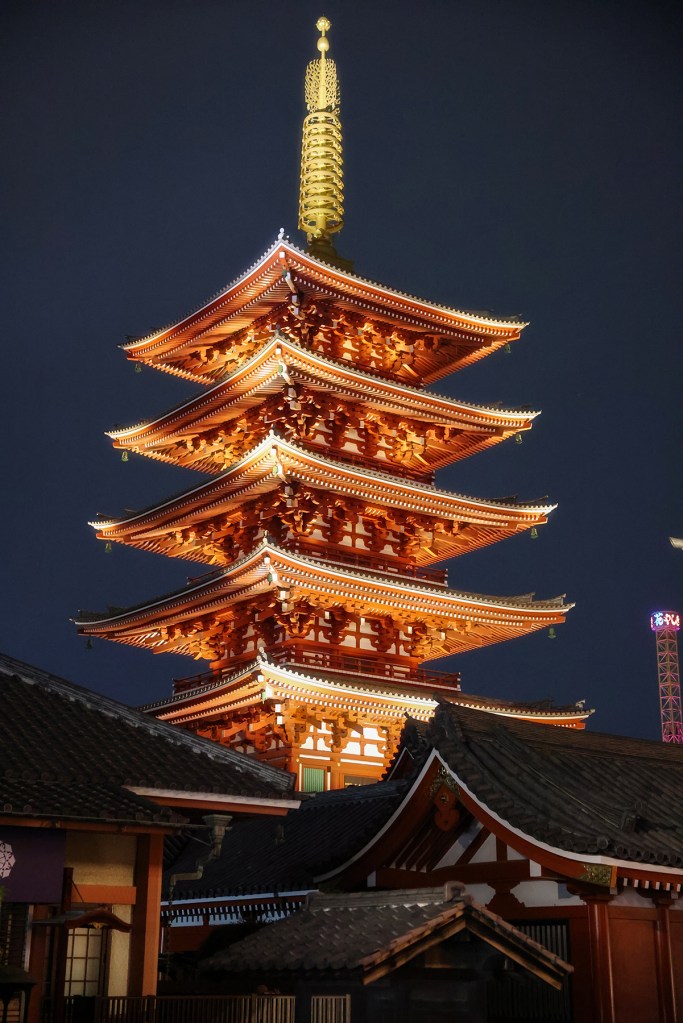
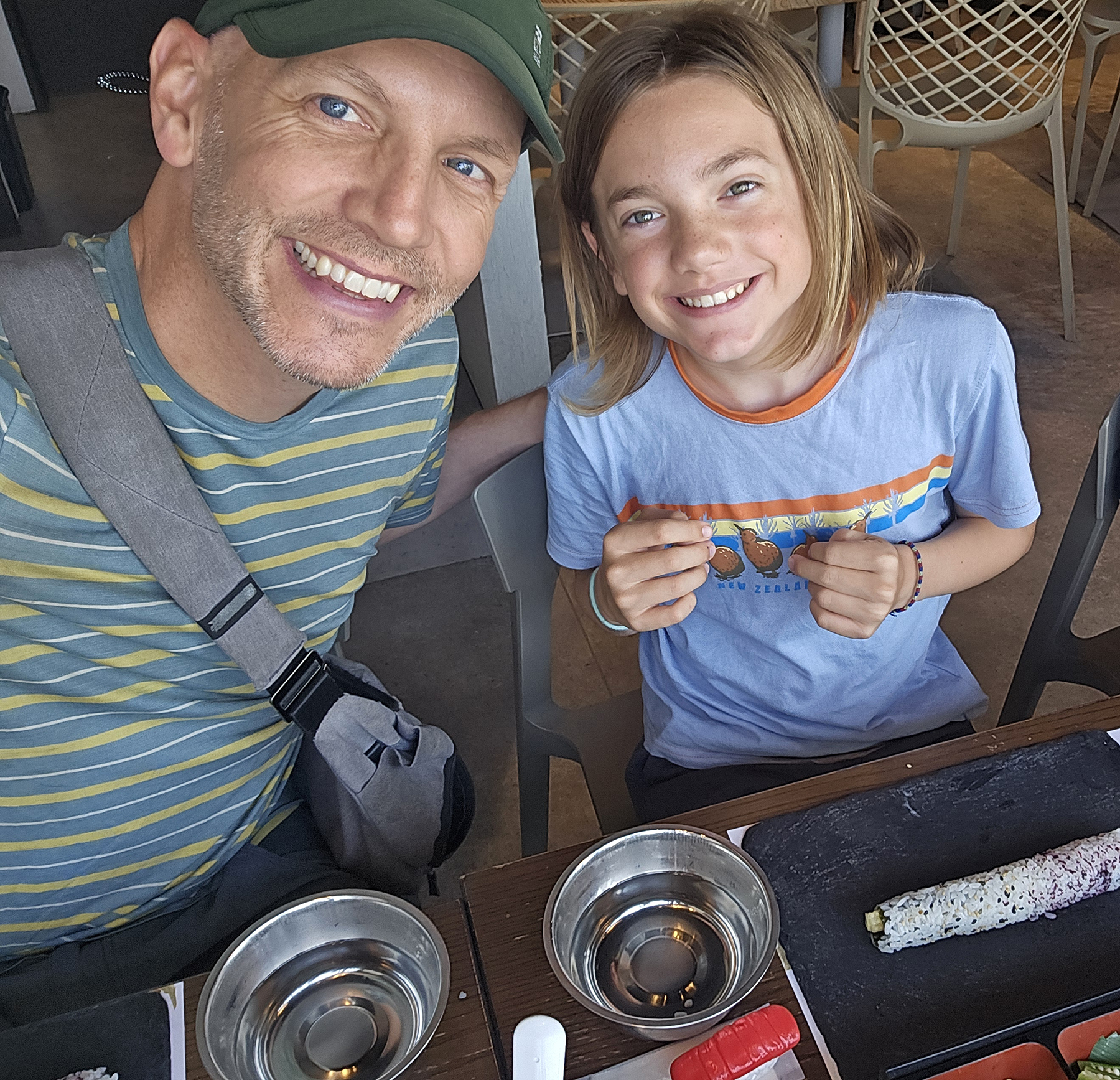
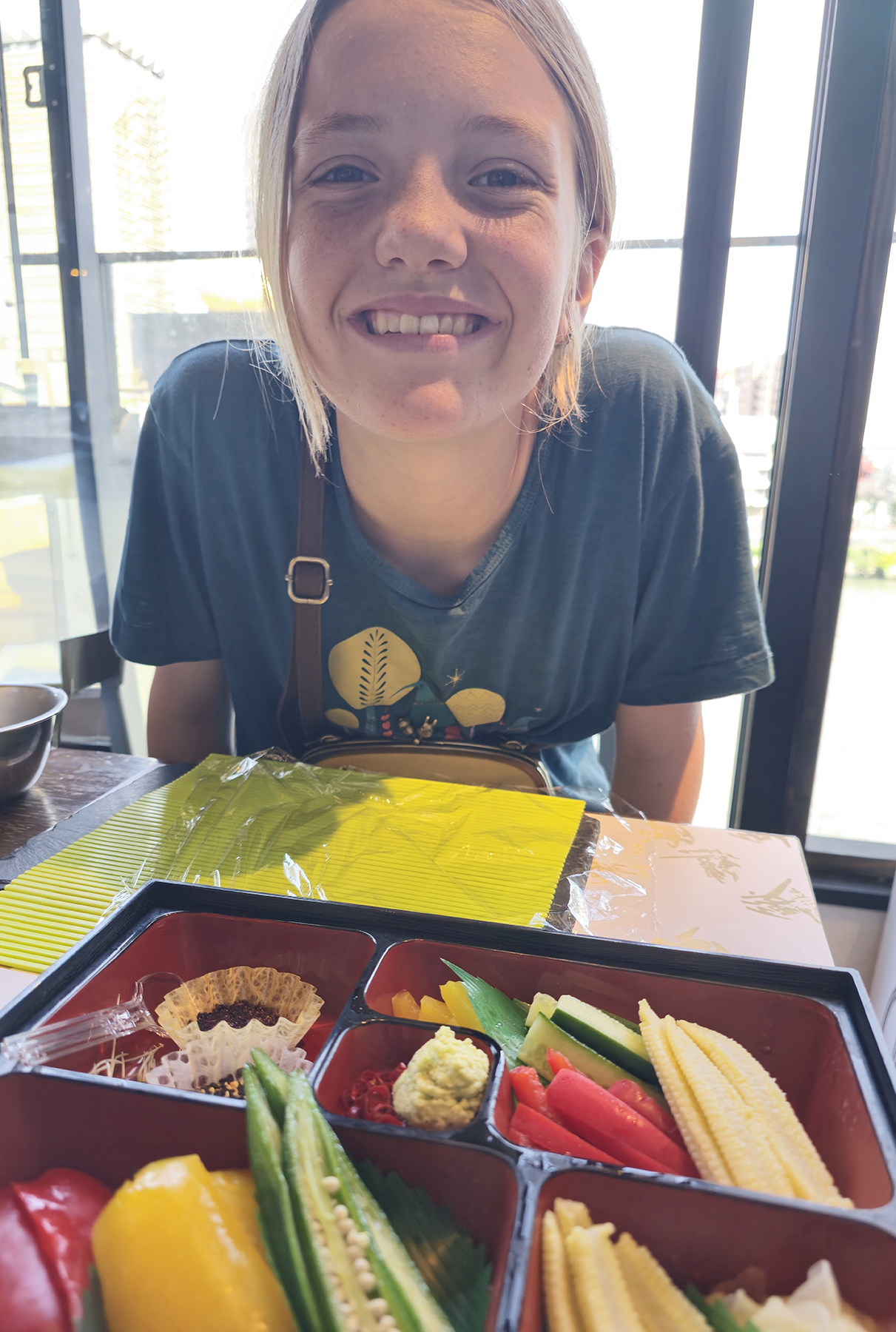
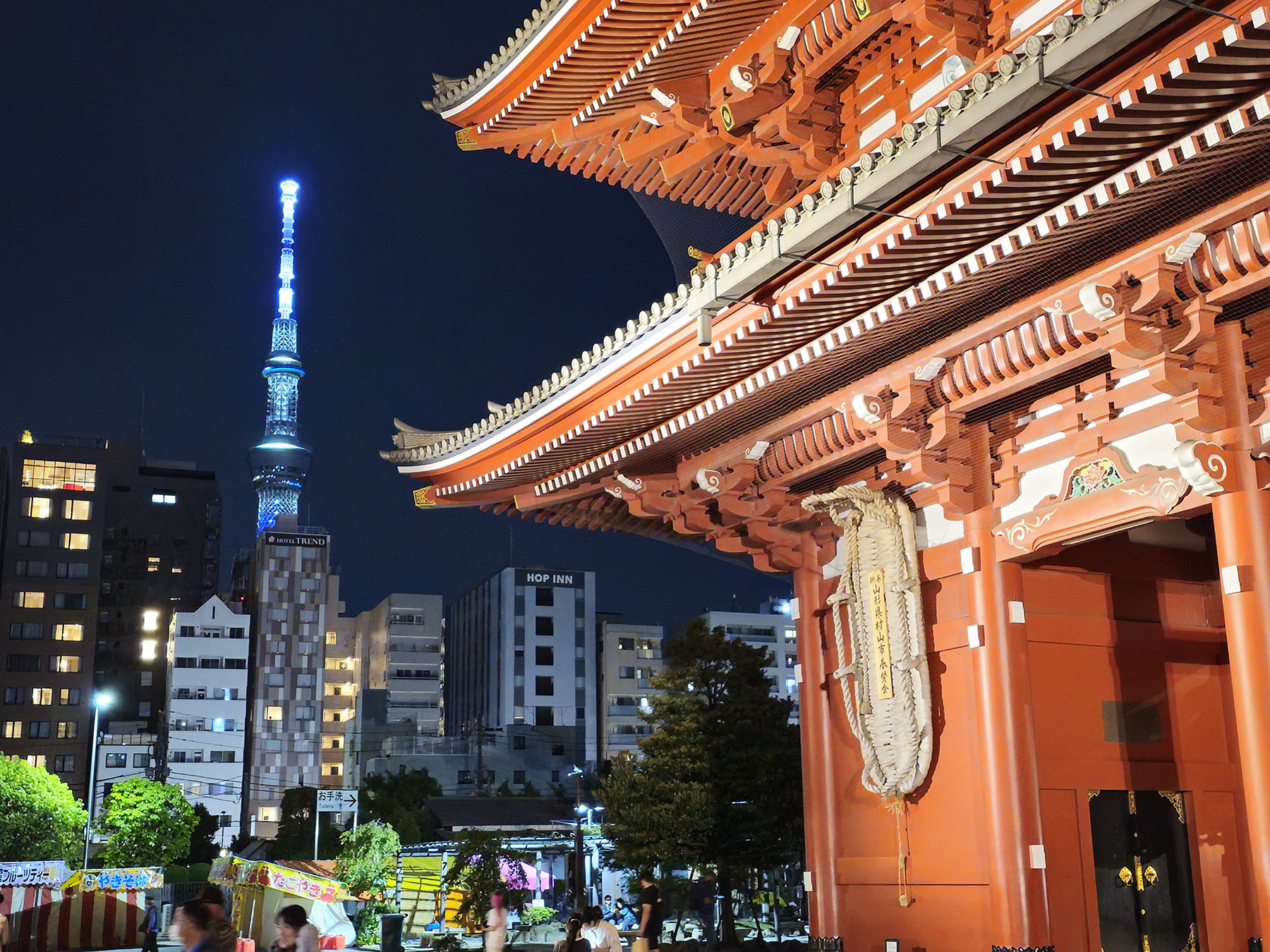
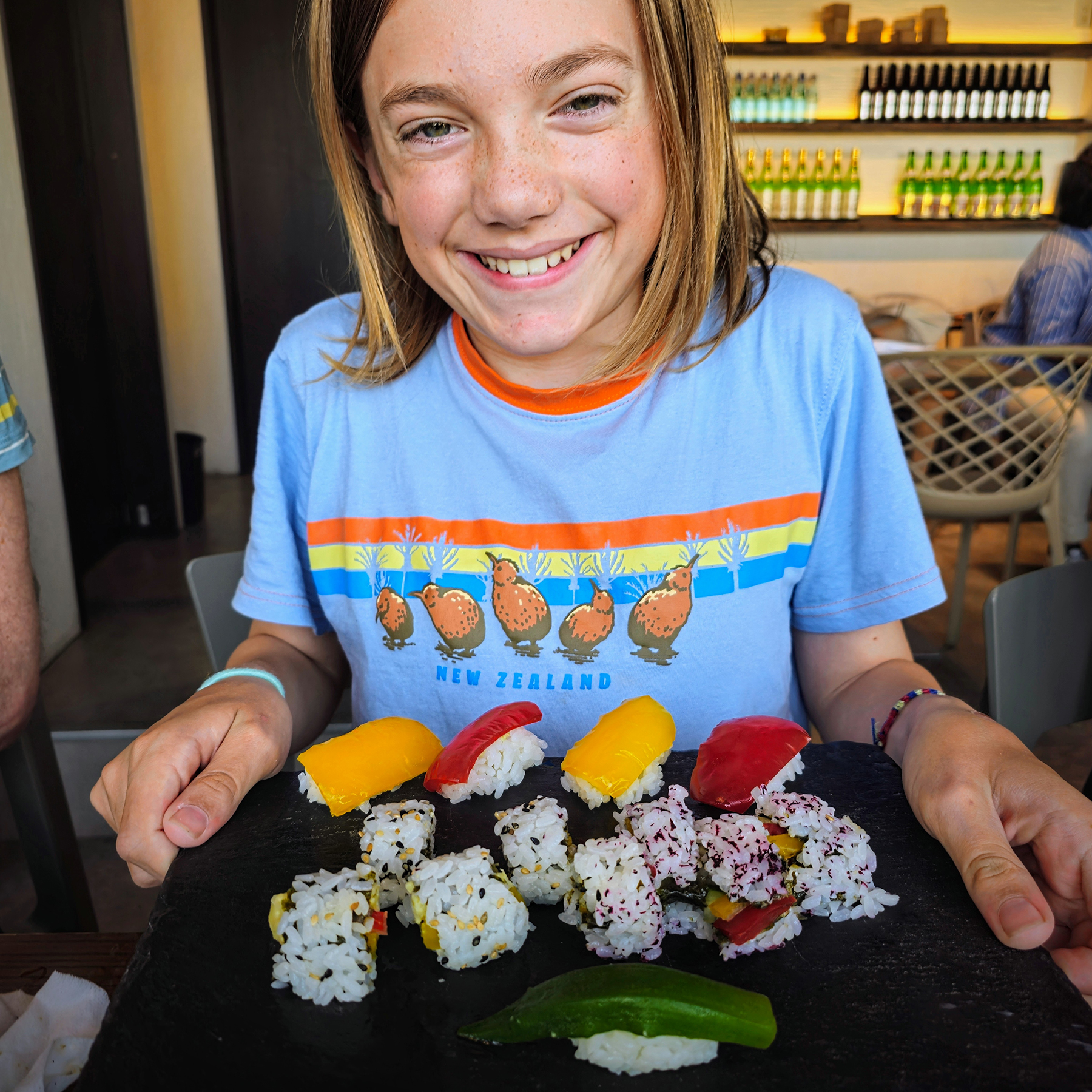
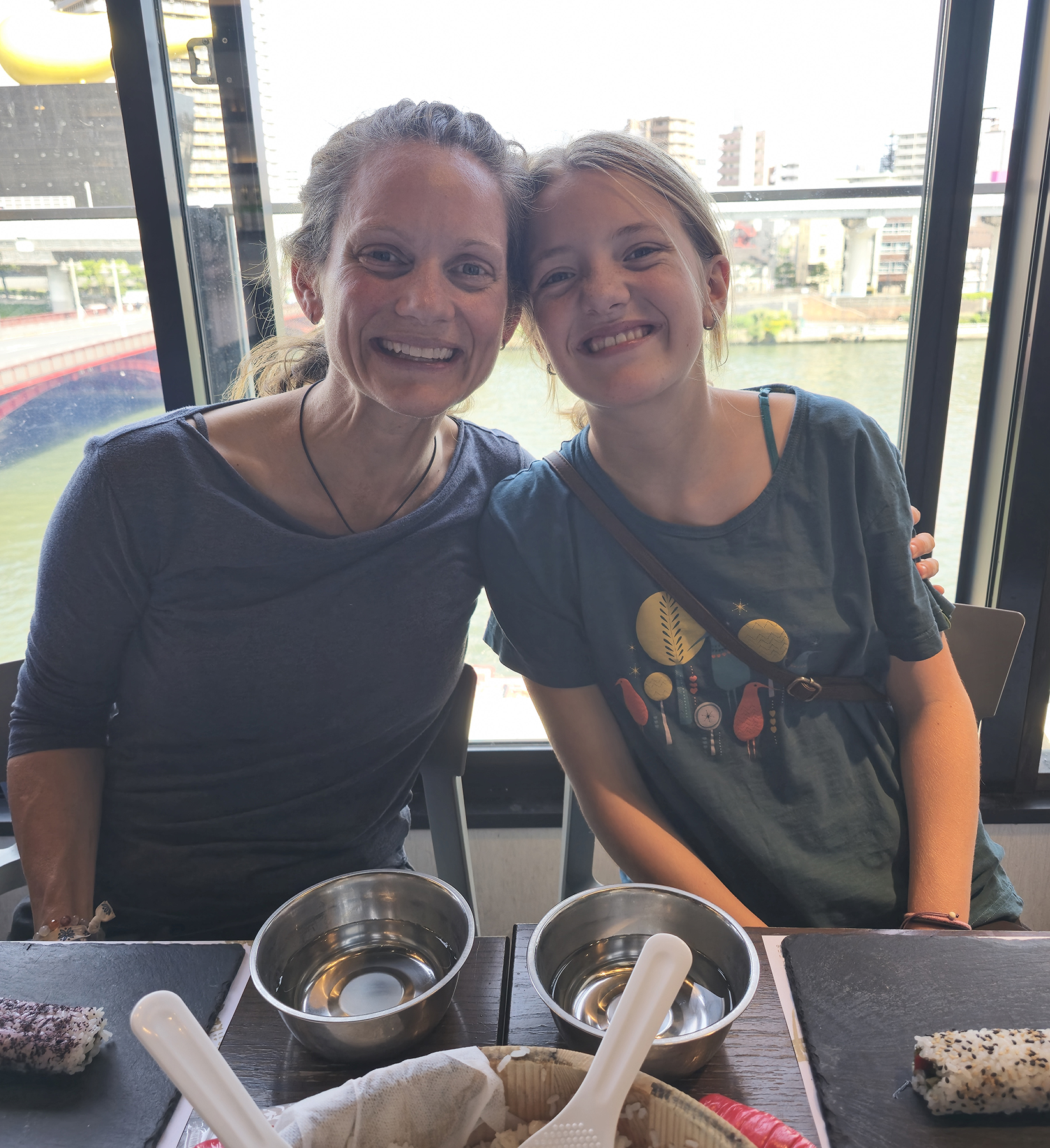
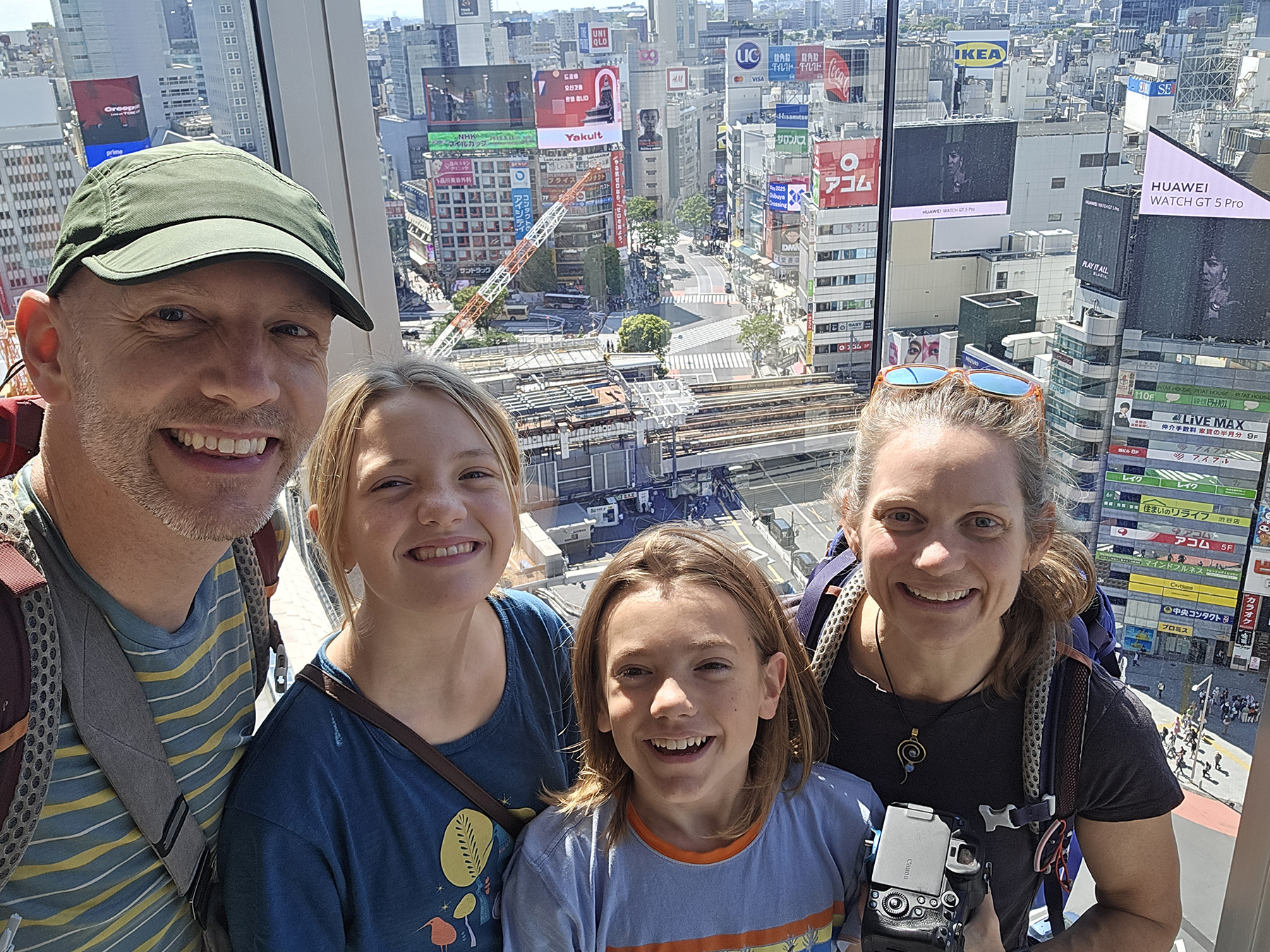
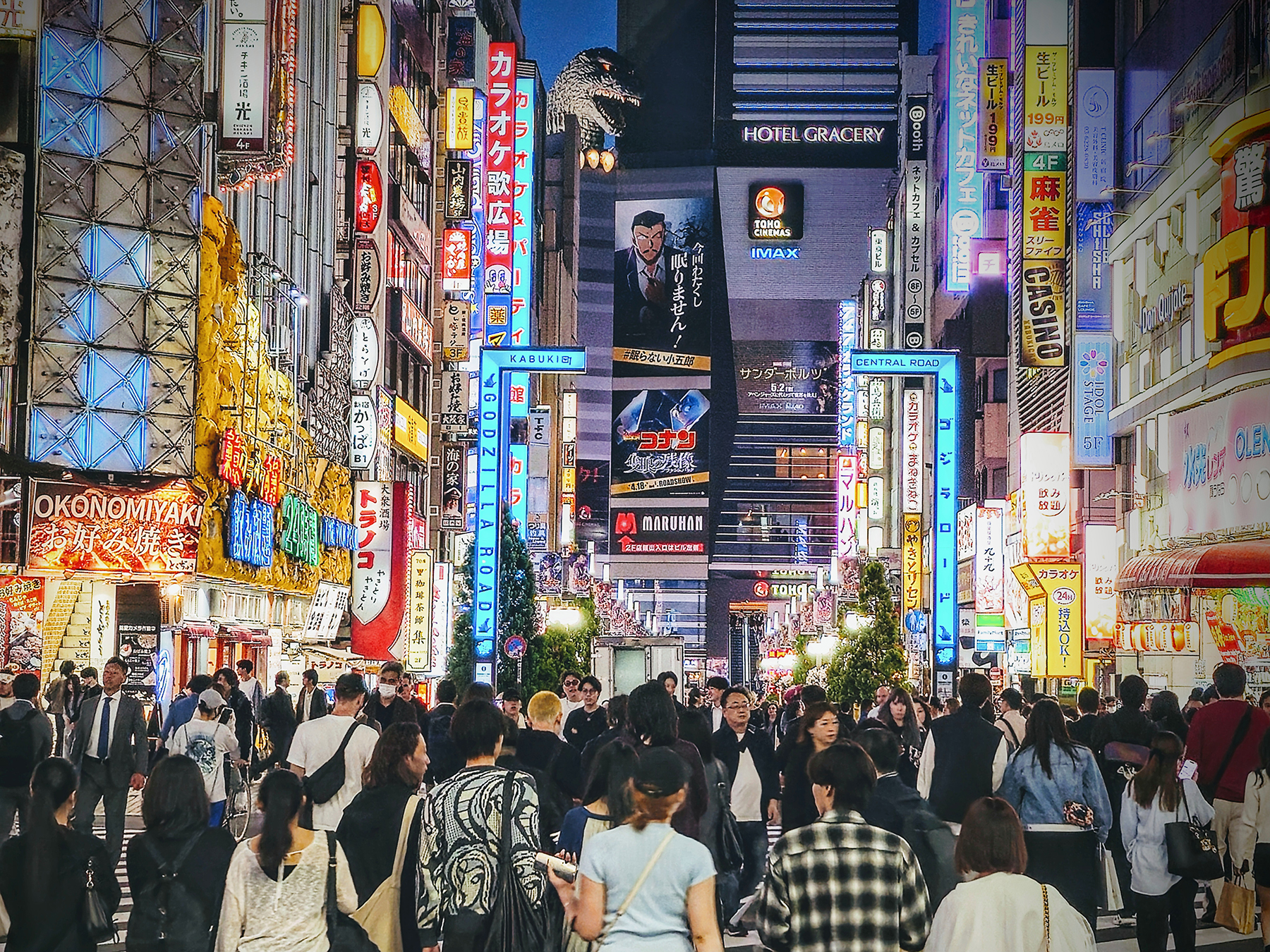
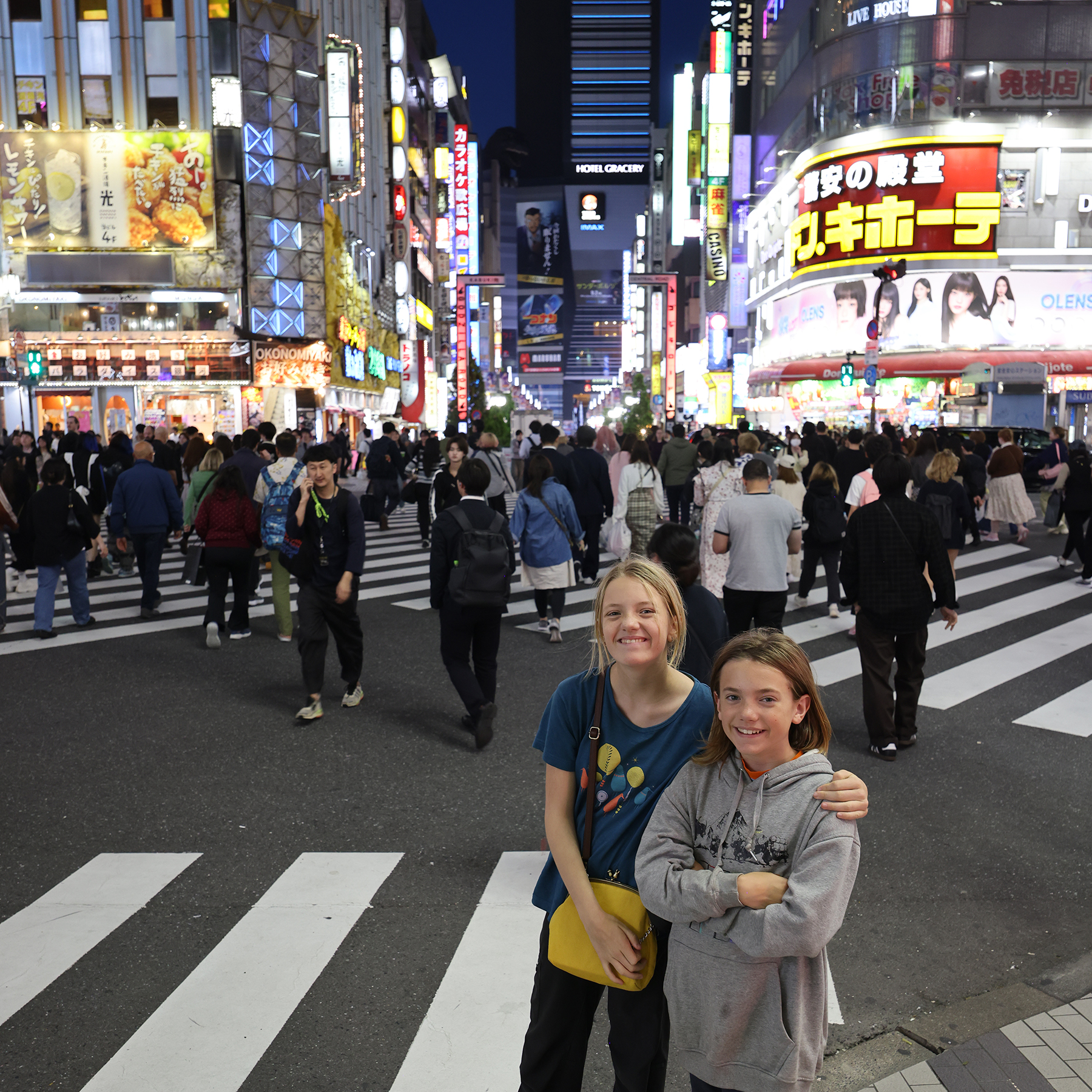
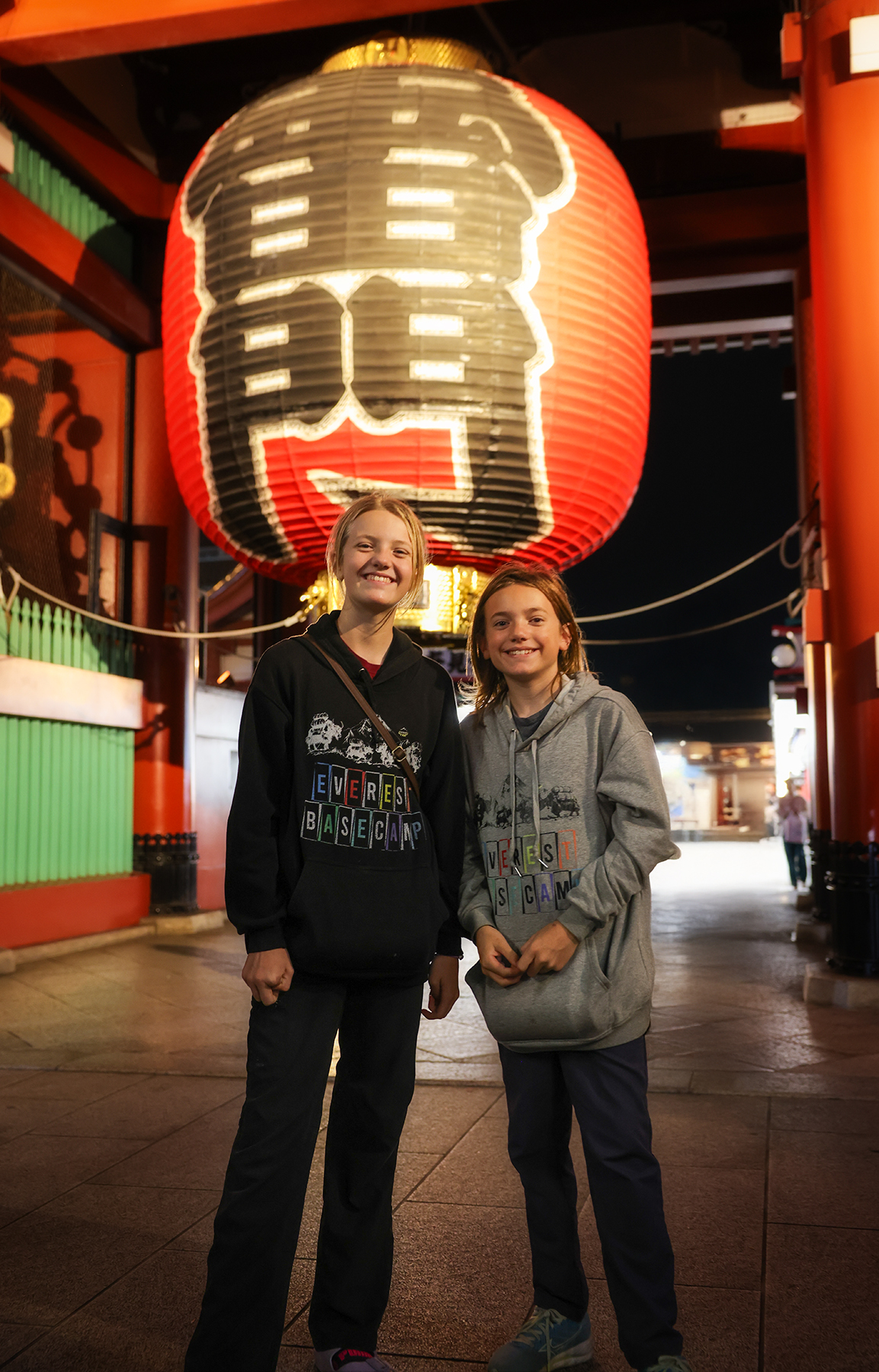
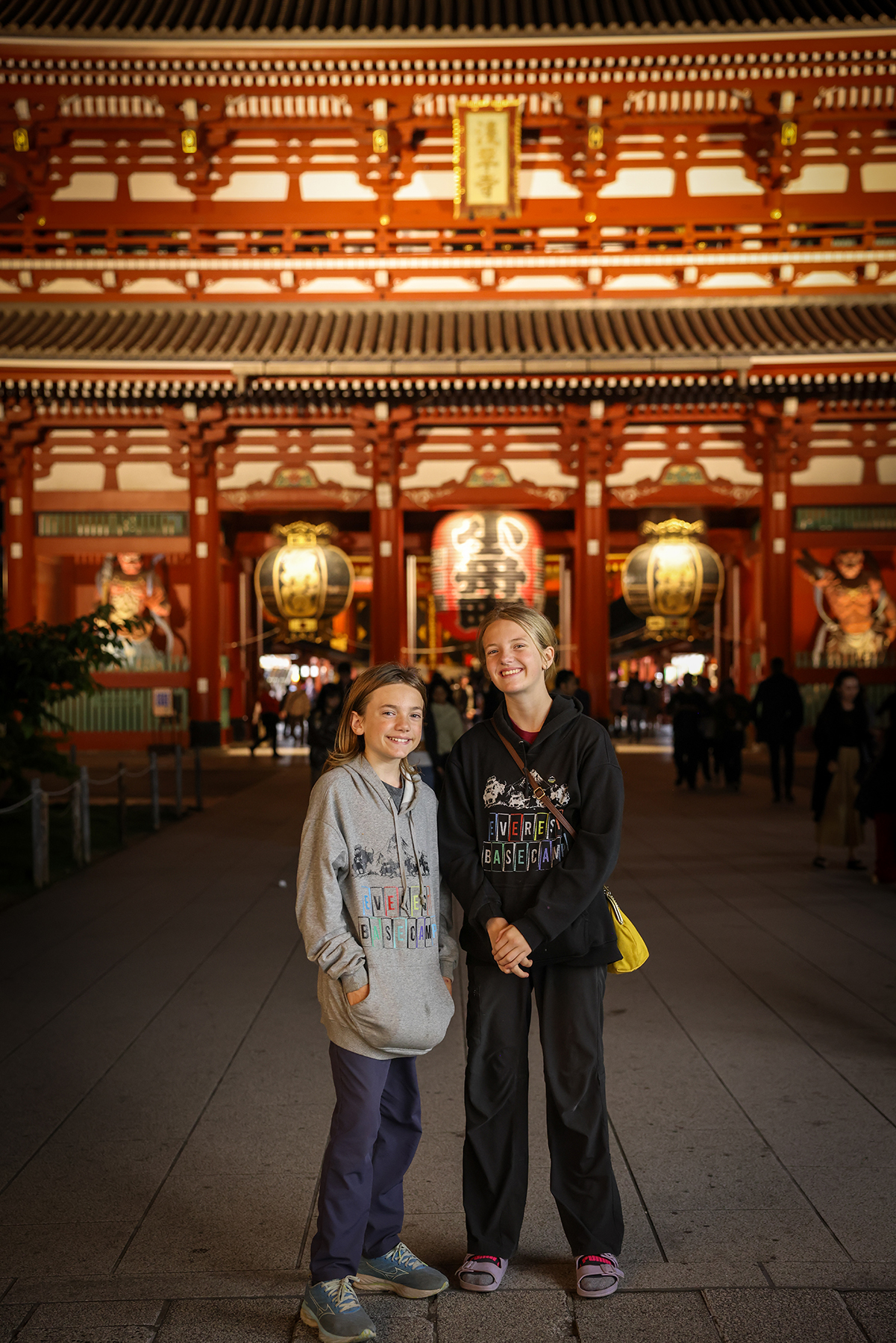
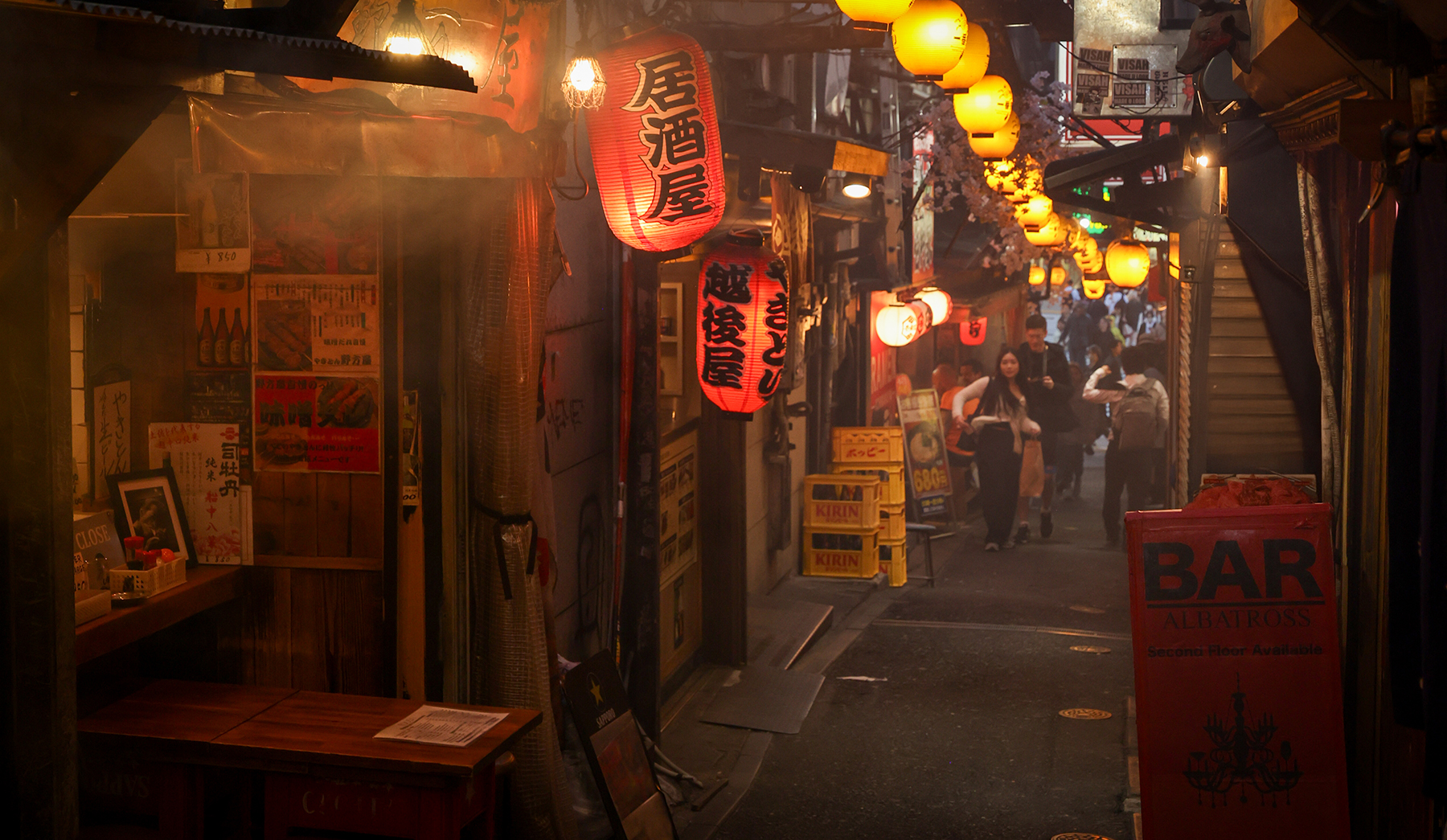
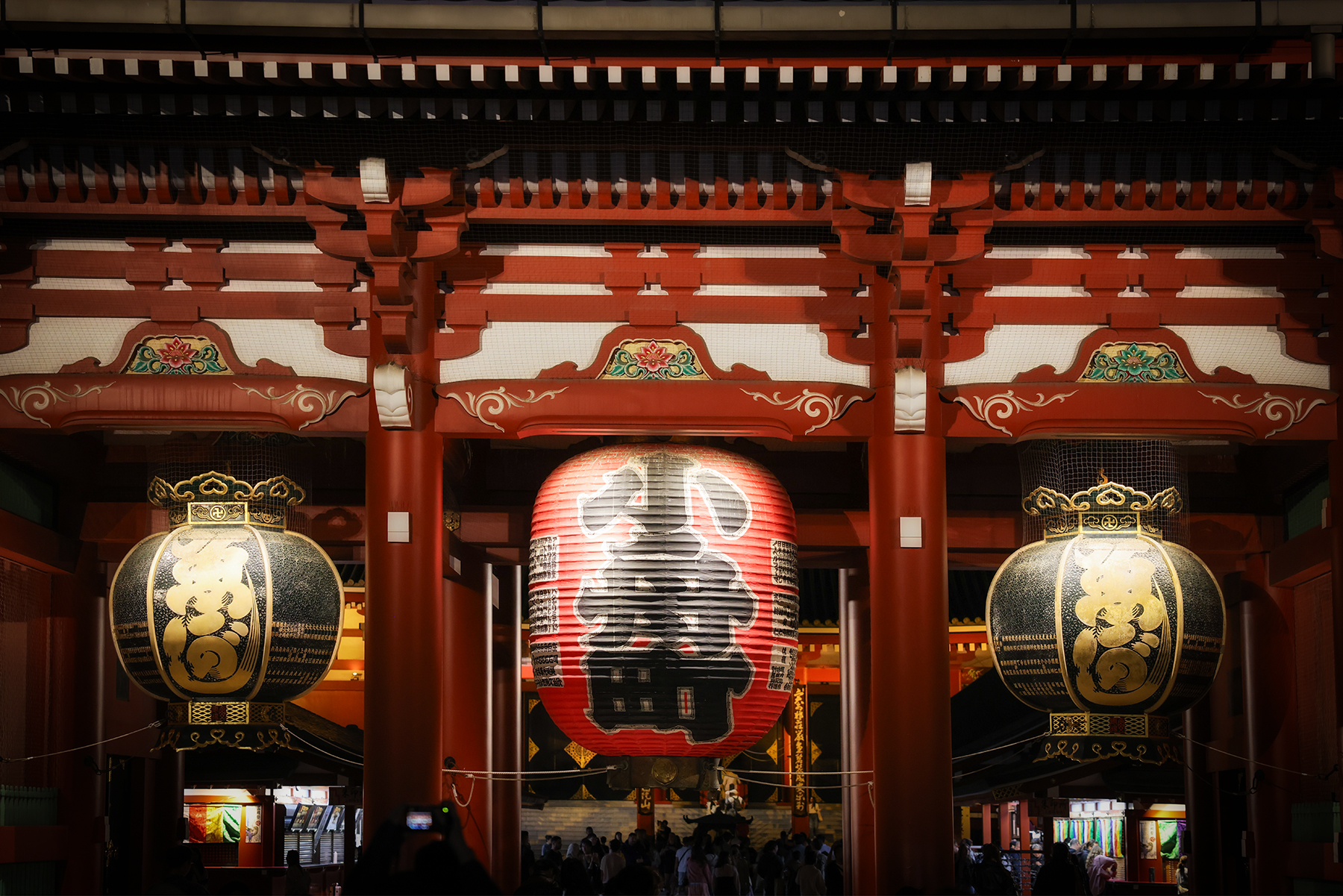
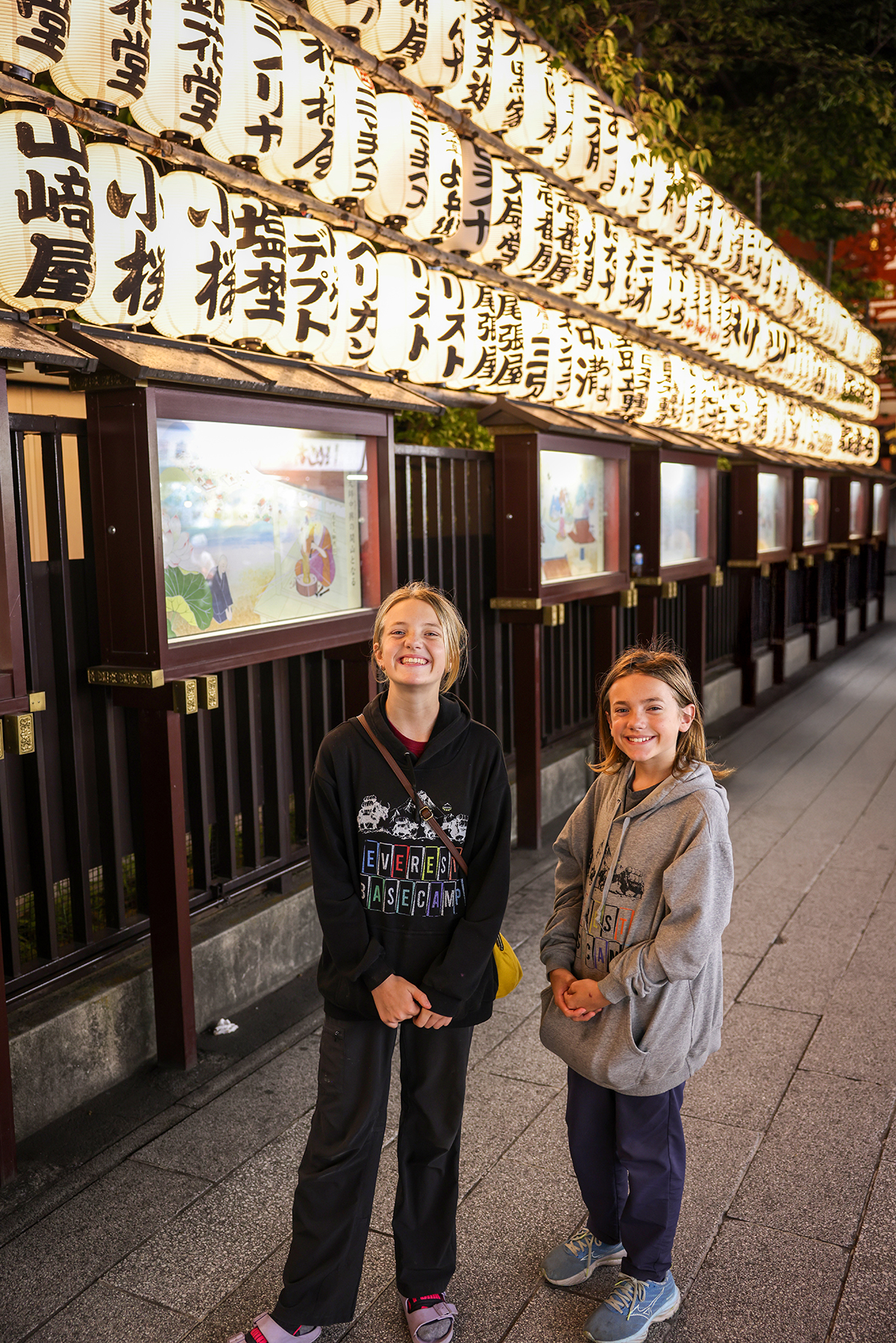
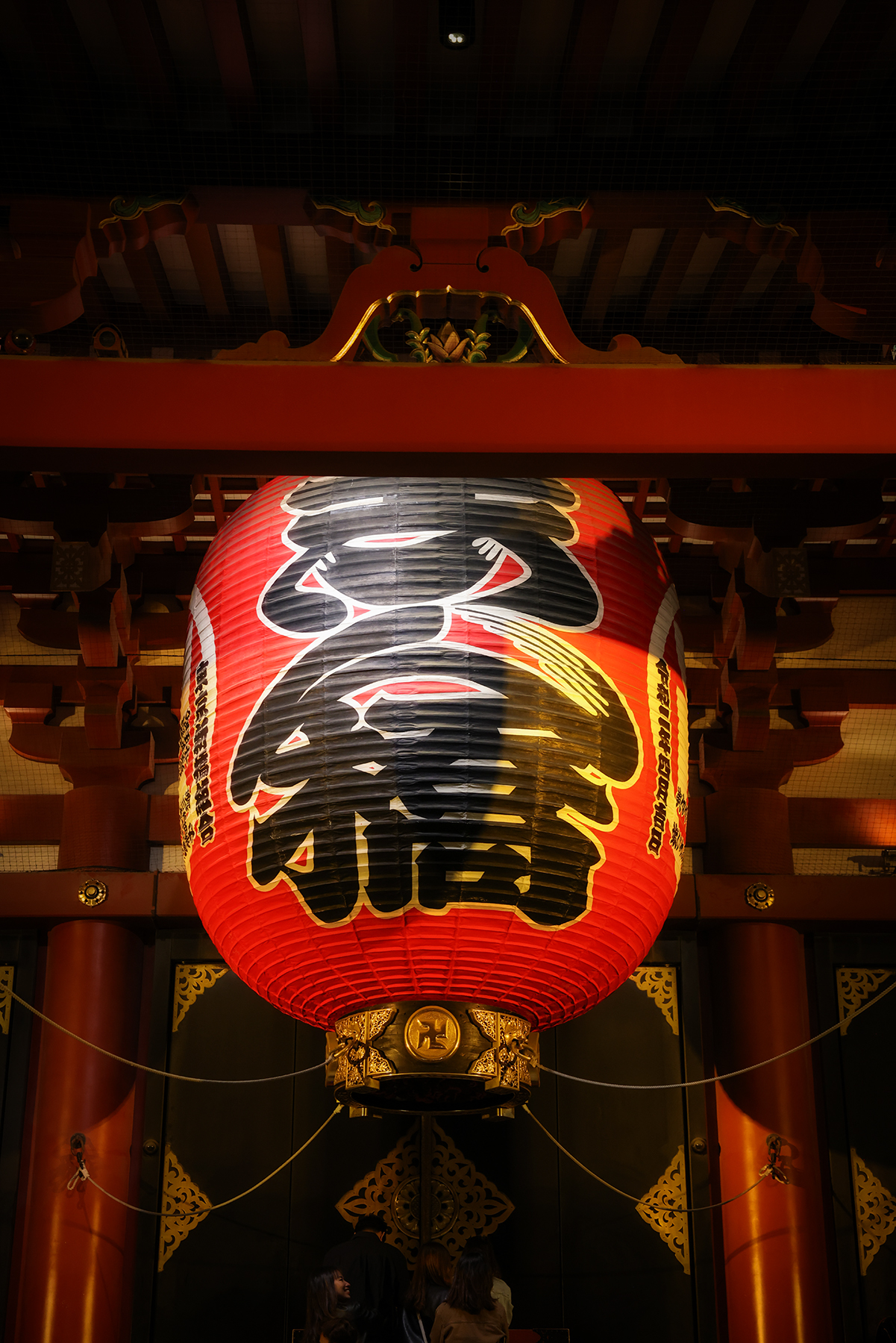
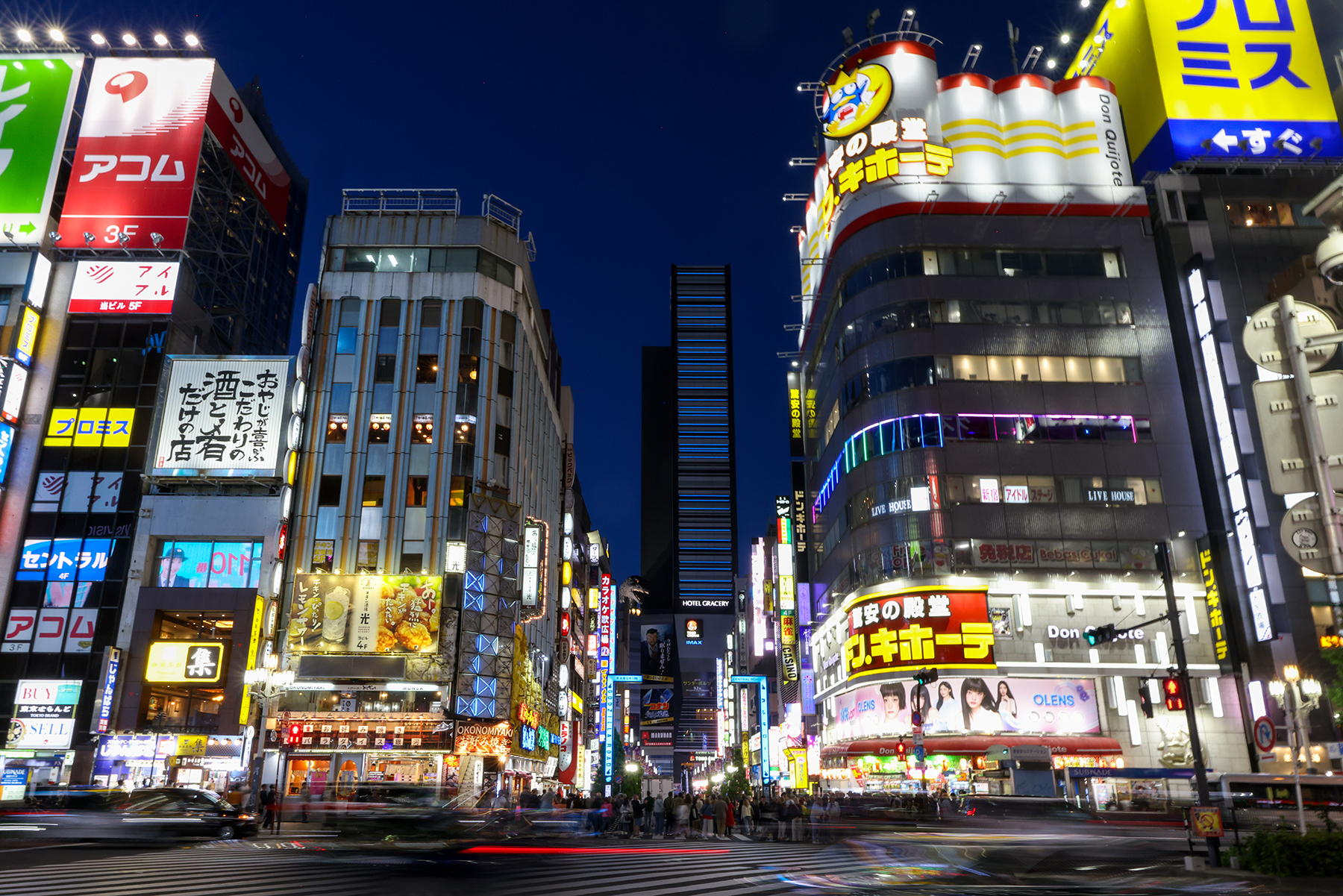
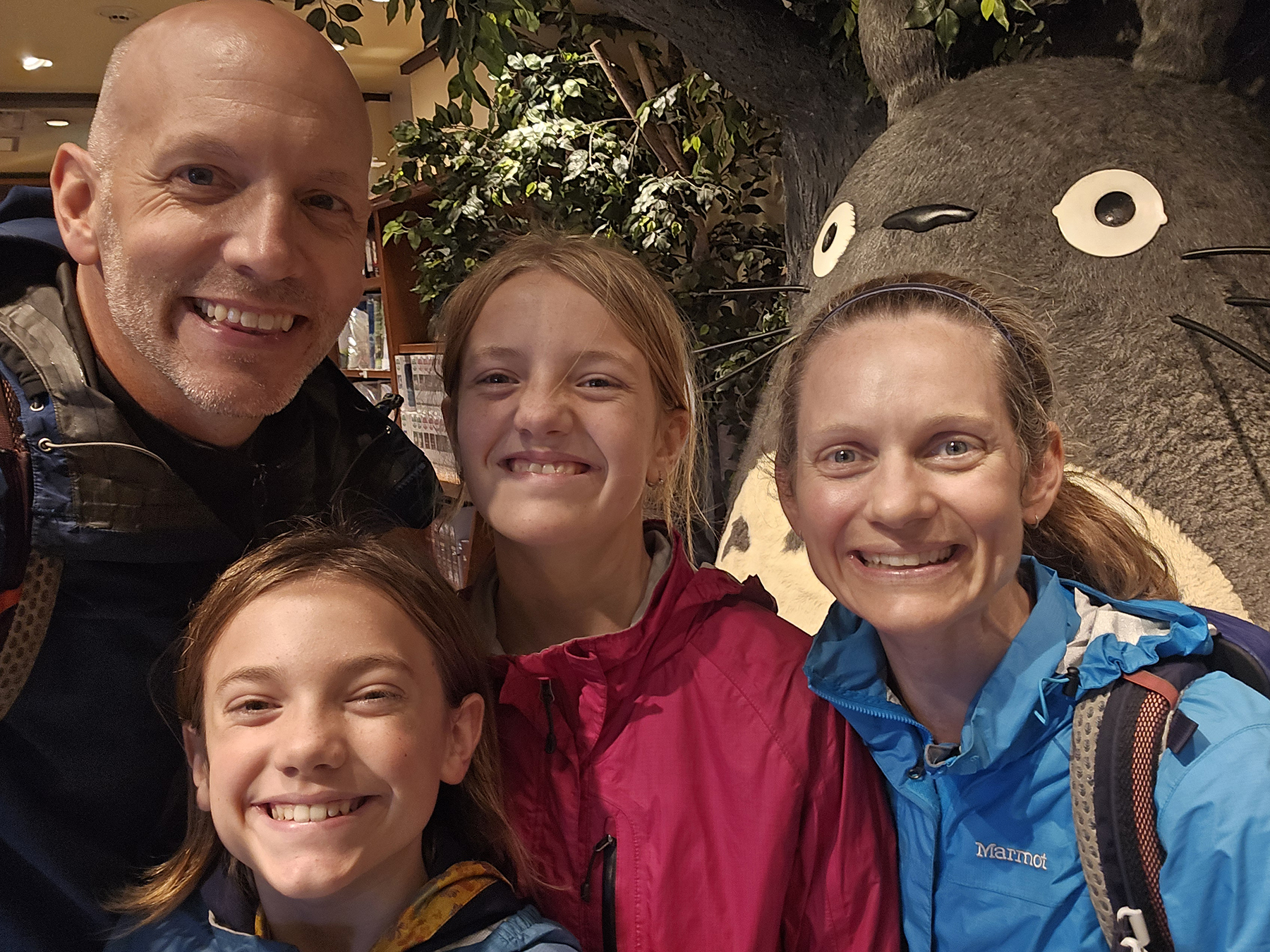
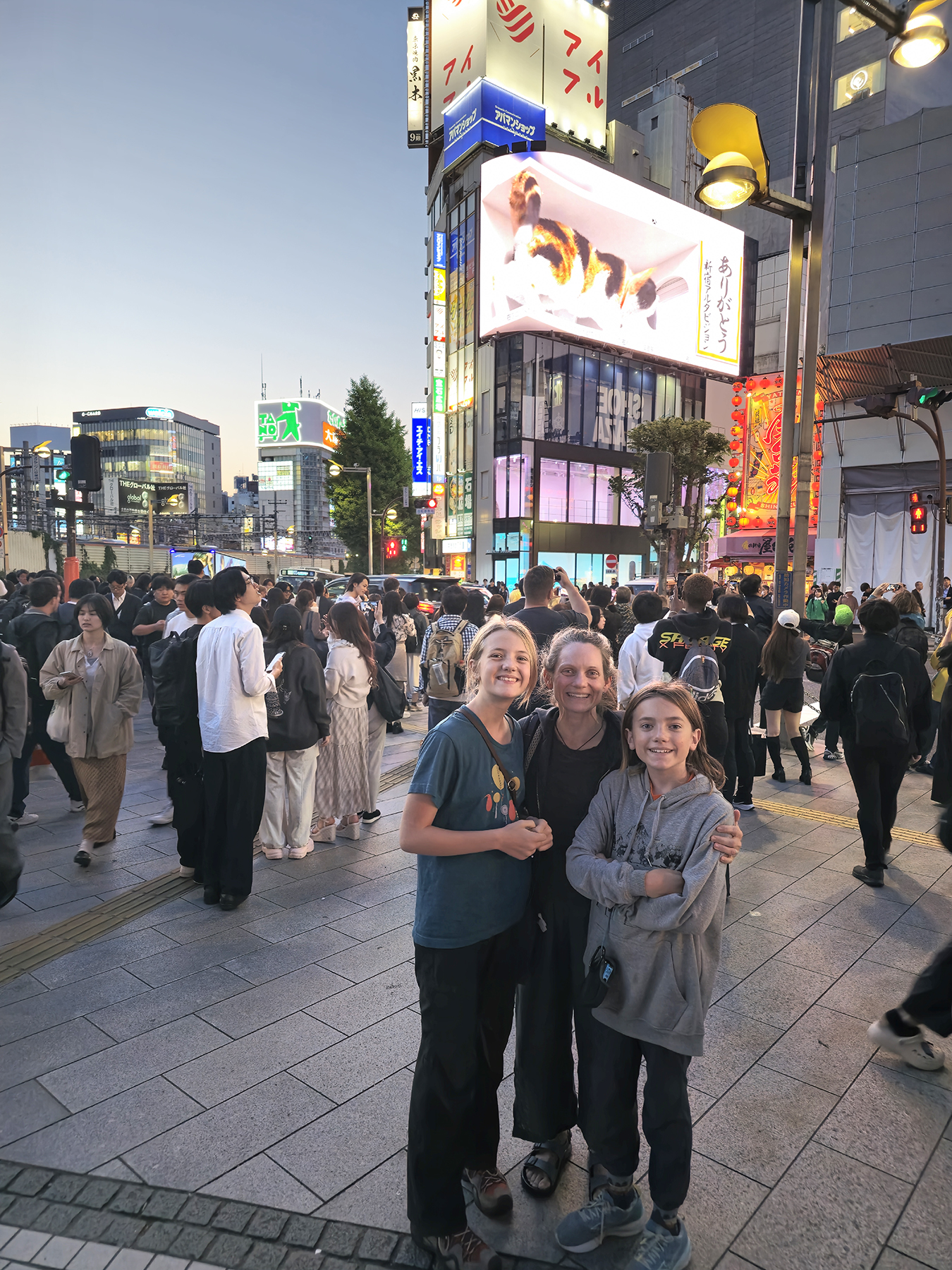
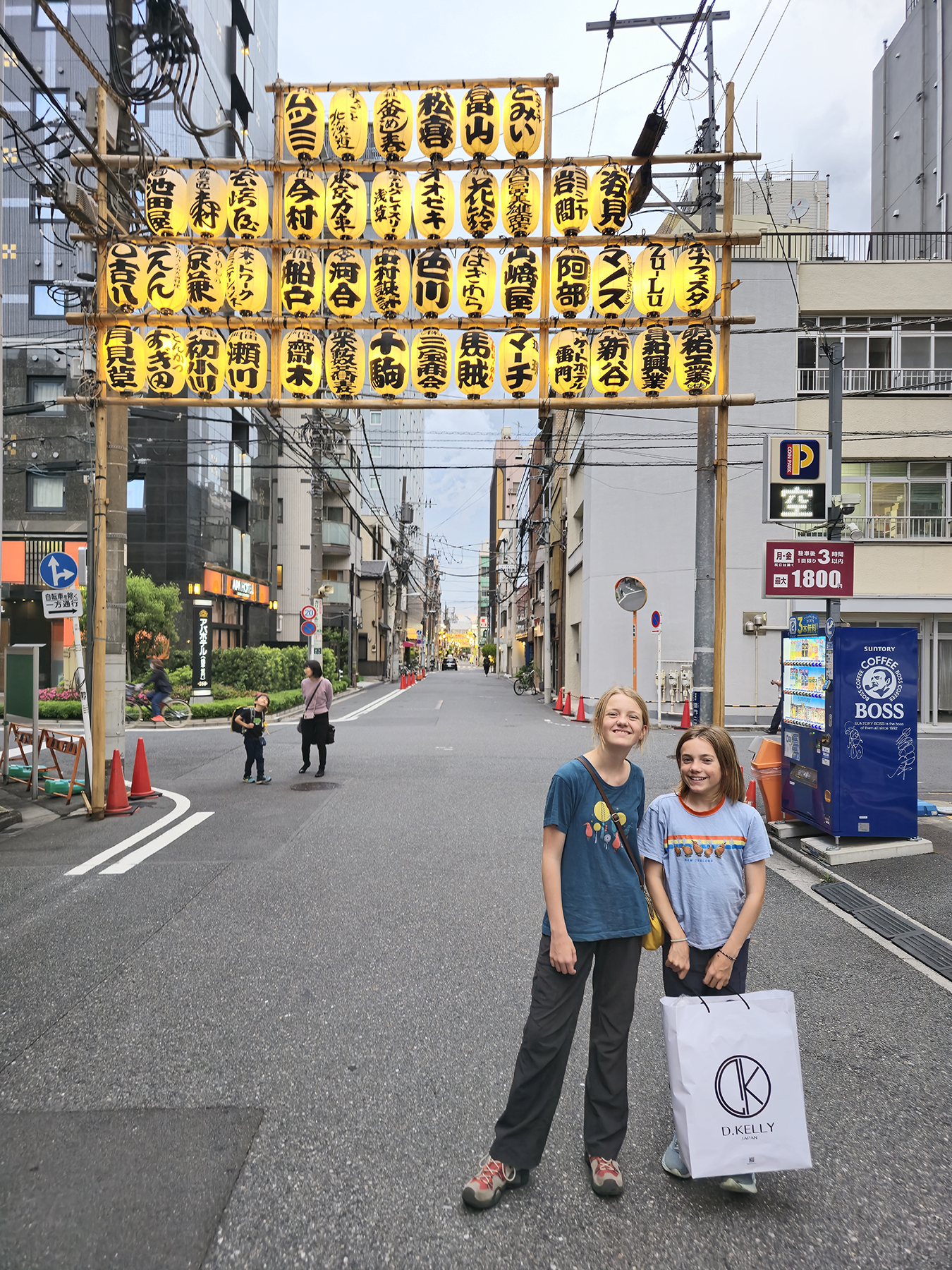
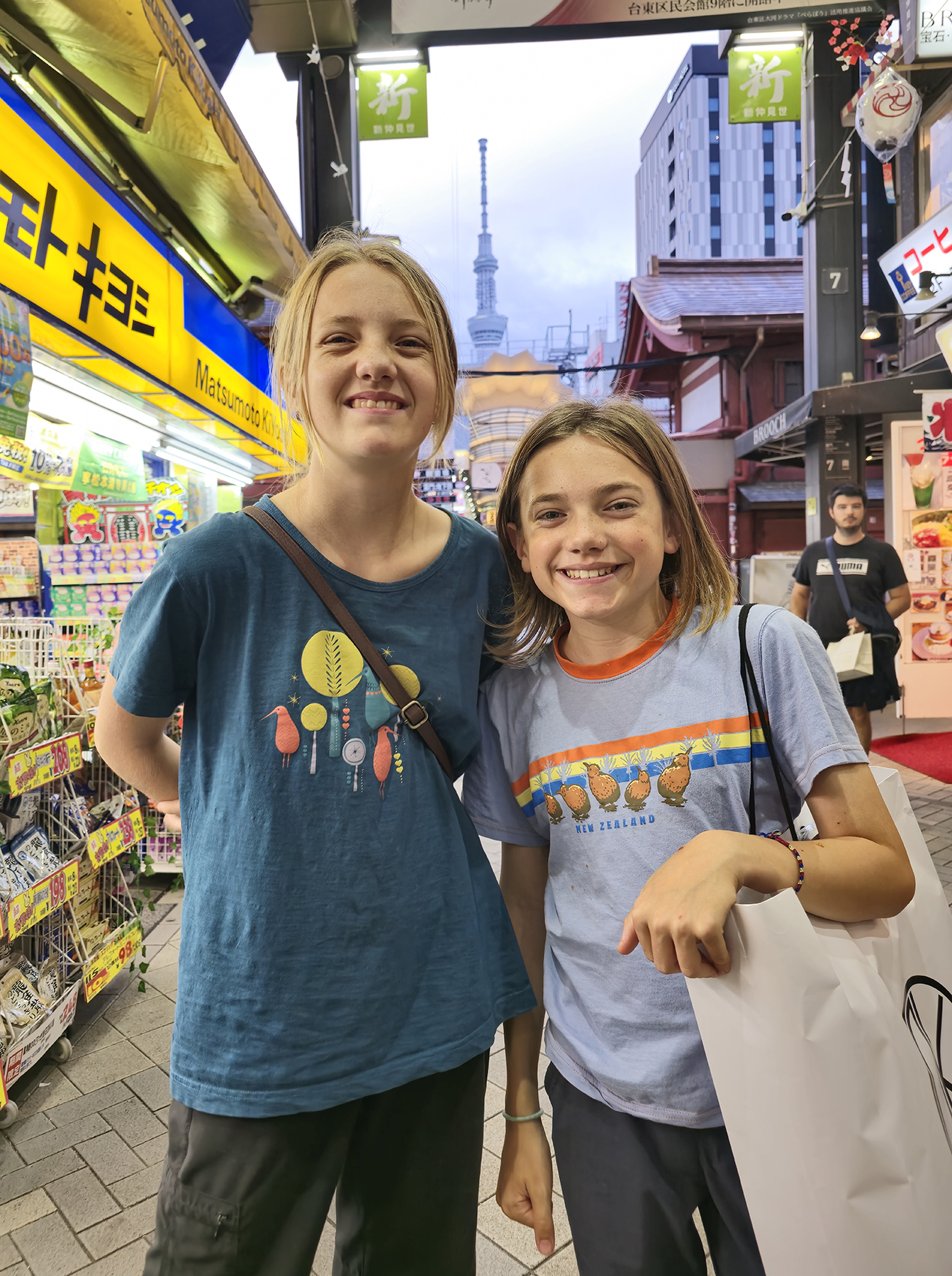
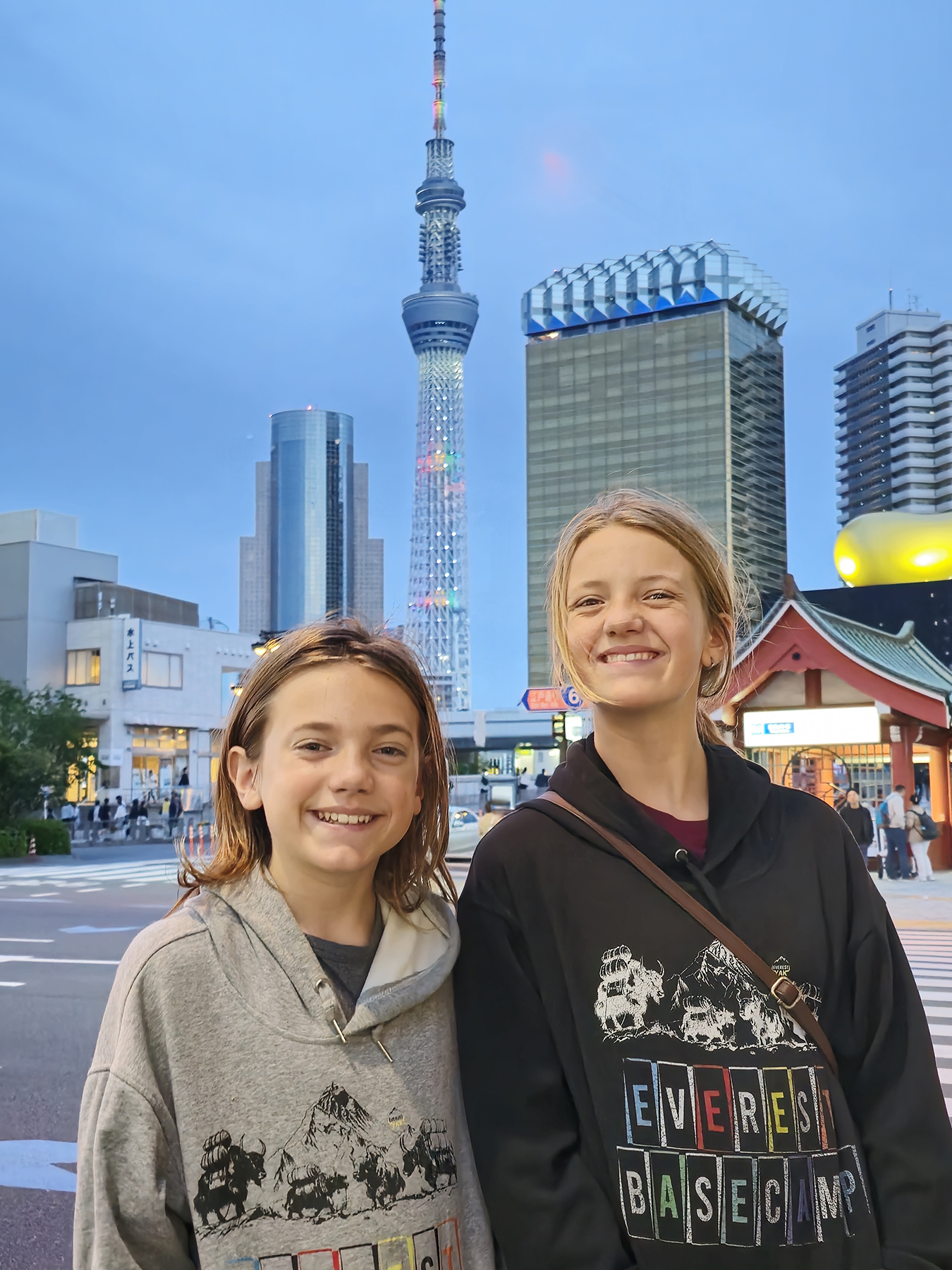
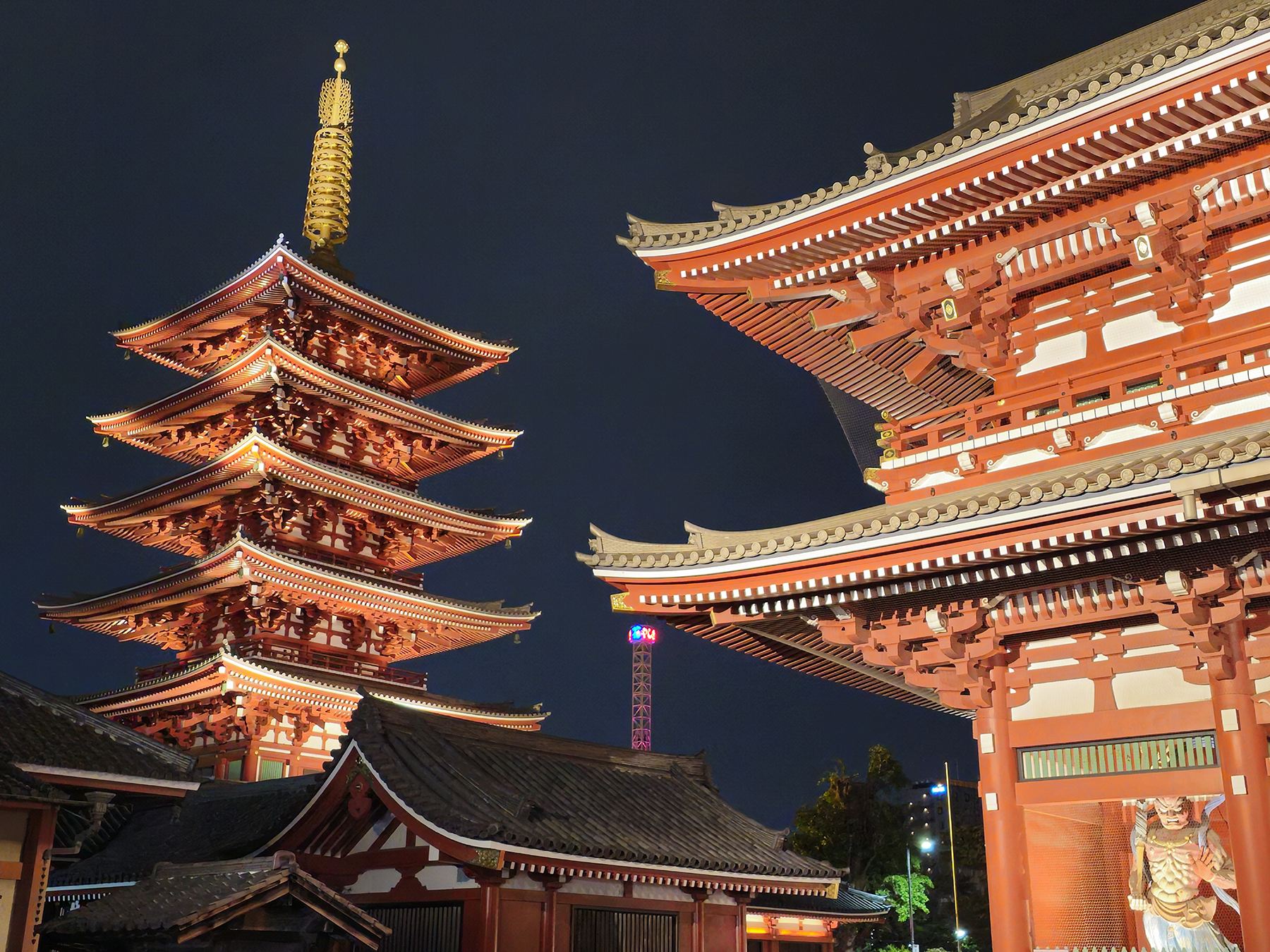
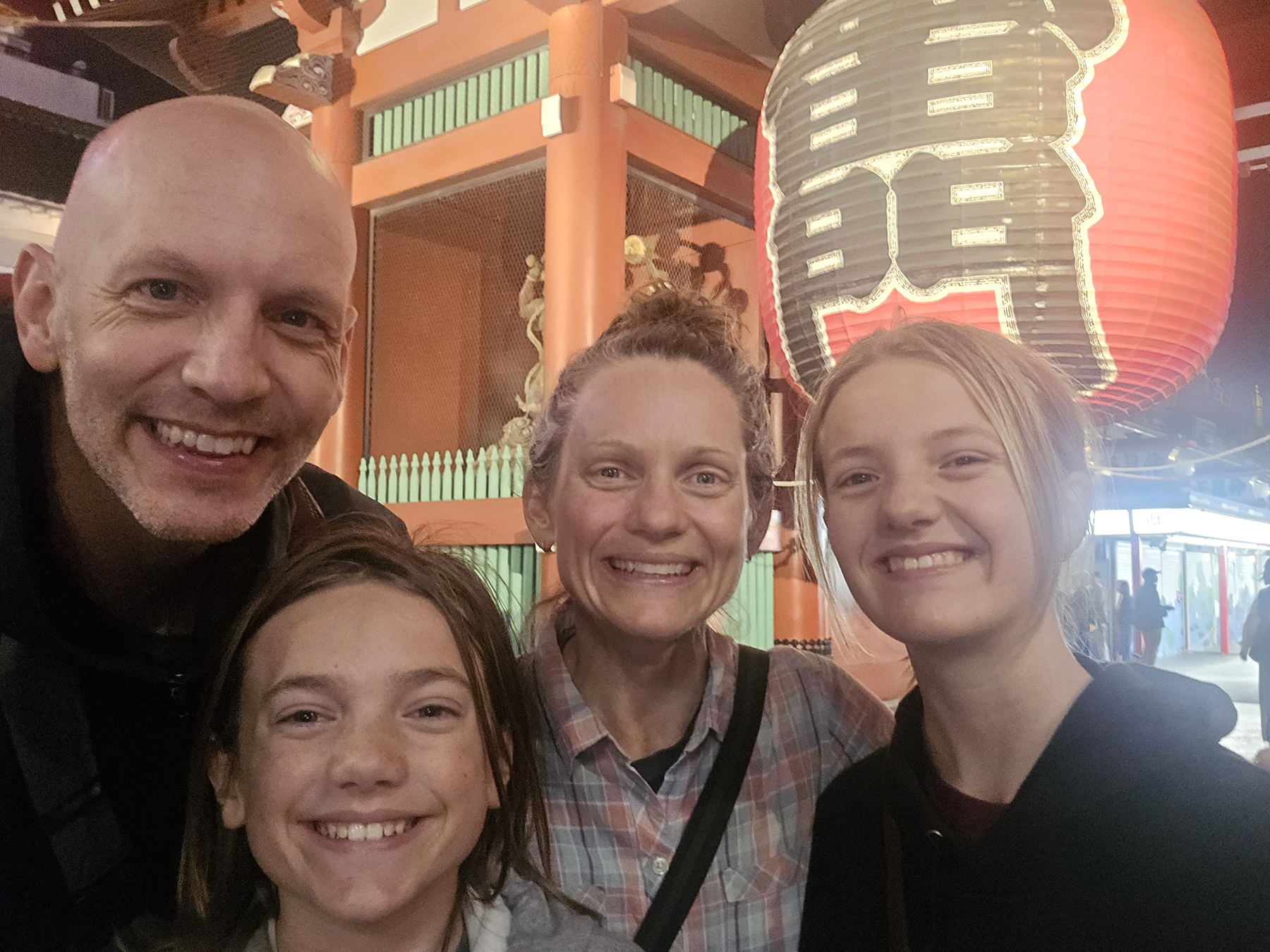
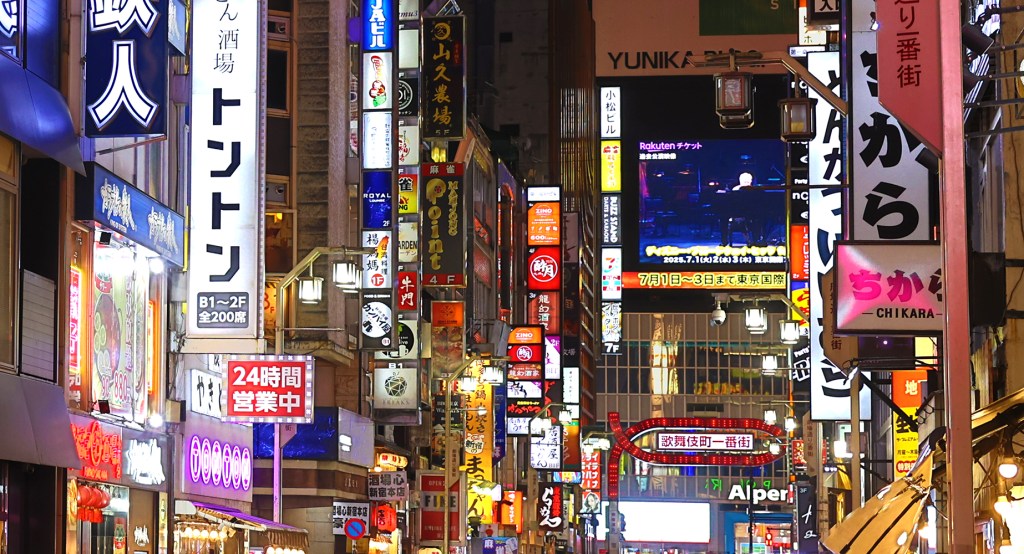
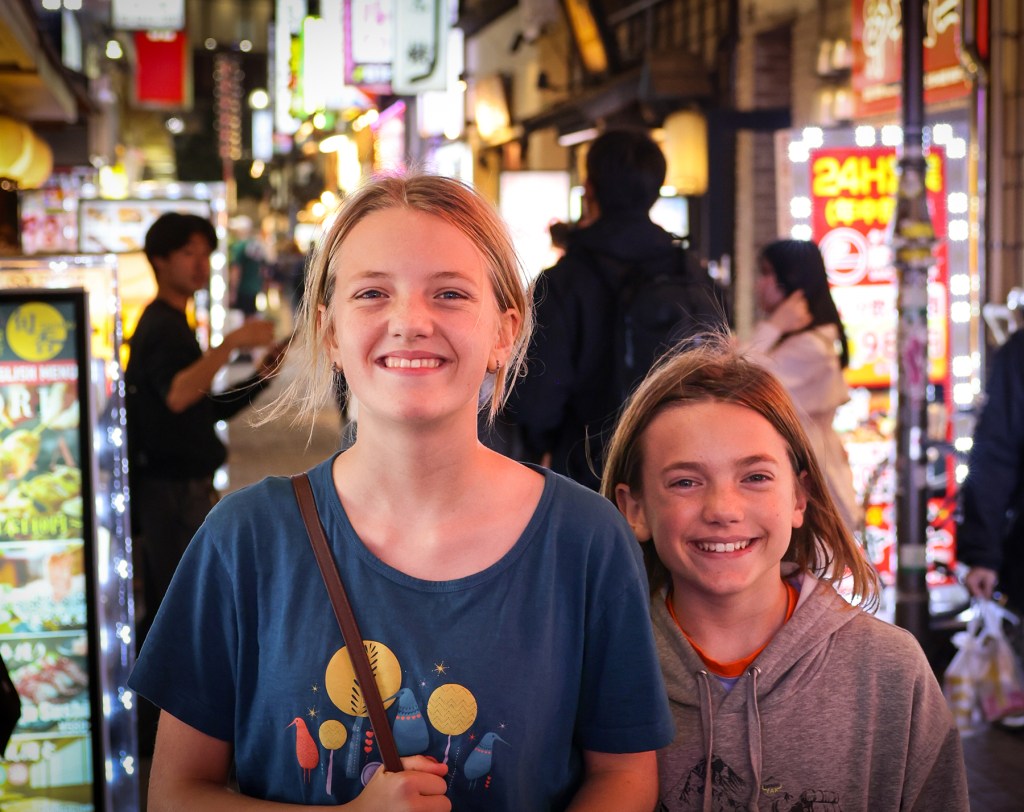
After our time in Yamagata came to an end, we took one final long train journey into the heart of Tokyo. H had been looking forward to our time here since day one of our adventure, and was thrilled to finally arrive in the futuristic capital. Our hotel was located in Asakusa, so we first explored the beautiful Sensō-ji temple at night time to avoid the enormous crowds. We then checked off some classic Tokyo experiences, scampering across the busy streets at the Shibuya crossing, eating gyoza in the atmospheric Golden Gai alleyway, and exploring the neon-lit Shinjuku cityscape, complete with a towering Godzilla overlooking the streets below. The family also loved our sushi-rolling class, and MB developed a deep and enduring love for Japanese curry. We also did some trinket shopping at the Studio Ghibli store and the always amusing and overwhelming Don Quijote, and found some beautiful ukiyo-e prints to ship home at an amazing shop that specializes in traditional woodblock printing.
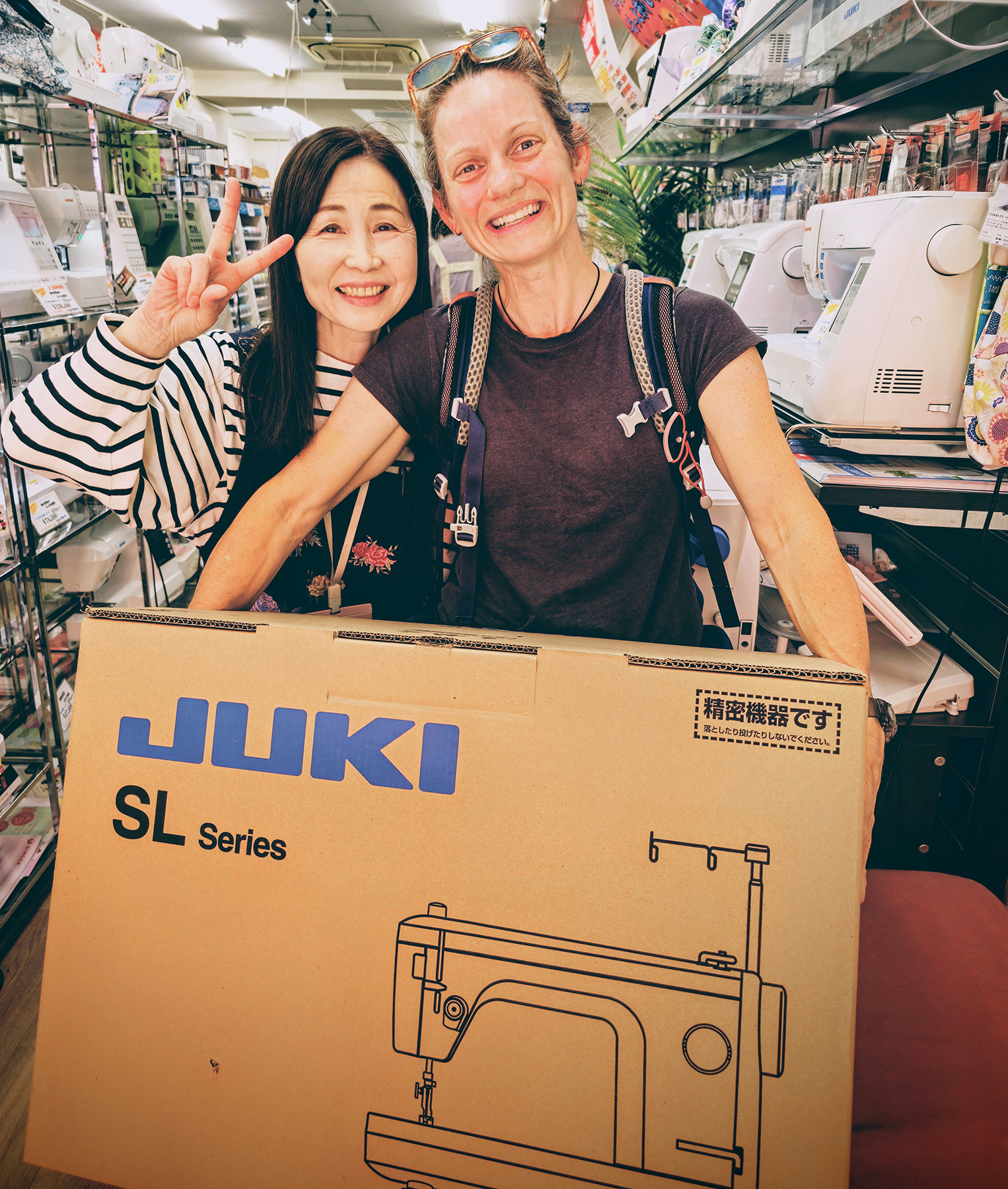
To complete our souvenir hunting experience, Sonya and I headed together into the Nippori Textile and Fabric District on a mission to make perhaps our most amusing purchase of the year. For the last several months, Sonya had been desperately missing her creative time crafting, and had instead filled her free time undertaking a deep-dive research project into the pros and cons of purchasing various Juki-branded sewing machines as a tourist in Japan. Armed with this extensive knowledge, we wandered about lost, attempting to track down an elusive Juki dealer and an amazing deal on what she promises me is the most glorious sewing machine that I could possibly imagine carrying through the streets of Tokyo. All of this makes perfect sense, especially when you consider how much easier our remaining month of travel will be with an additional sewing machine in our possession. Happily, we did manage to track down a sewing machine store that was still open during Golden Week, we did purchase the greatest sewing machine in the world (universe?), and we did get some interesting looks on the subway and streets as we transported Sonya’s new prize back to the hotel.

Thus we completed part one of our Tokyo adventure, to be continued after one final and surprising international destination. We’re heading back to Central Asia for one last bit of random exploration!
 Eight Boots Abroad
Leave a comment